June 30, 2026
The Industrial Logic Behind Hydrogen-Based Iron Reduction
Steel has shaped civilisations for centuries, but the process of making it has remained stubbornly carbon-intensive. For every tonne of steel produced through conventional blast furnace technology, approximately 1.8 to 2.0 tonnes of CO₂ are released into the atmosphere. Multiply that across global output, and the steel sector becomes responsible for roughly 7 to 9% of all human-caused carbon emissions worldwide — a figure that makes decarbonising this industry one of the most consequential industrial challenges of the coming decades.
The fundamental problem is chemical, not just operational. Traditional steelmaking uses metallurgical coal (also called coking coal) not simply as a fuel, but as a chemical reducing agent — the substance that strips oxygen atoms from iron ore to produce metallic iron. Replacing coal in this role requires substituting an entirely different reducing agent, and hydrogen is the most technically viable candidate. When hydrogen reacts with iron ore, the only byproduct is water vapour. The carbon emission disappears entirely at the reduction stage.
This is the core logic underpinning the global push toward hydrogen iron ore reduction systems, and it is why the recent environmental permit granted for the LKAB fossil-free sponge iron plant at Malmberget in northern Sweden carries significance that extends well beyond one company's balance sheet.
When big ASX news breaks, our subscribers know first
Understanding Direct Reduced Iron: The Technical Foundation of Green Steelmaking
What Is Sponge Iron and How Is It Produced?
Direct Reduced Iron, commonly called sponge iron due to its porous physical structure, is produced by removing oxygen from iron ore at temperatures below the ore's melting point. Unlike blast furnace iron production, DRI does not require the ore to liquefy, which dramatically reduces energy requirements and eliminates the need for coking coal as a structural process input.
In conventional DRI production, natural gas (primarily methane) serves as the hydrogen-rich reducing agent. The HYBRIT process replaces natural gas entirely with green hydrogen produced through electrolysis powered by fossil-free electricity. This single substitution transforms a carbon-emitting process into one that produces only water as a chemical byproduct.
The resulting sponge iron is then fed into an Electric Arc Furnace (EAF) rather than a traditional blast furnace. EAFs use electrical energy rather than combustion to melt and process iron, completing what is effectively a full-system replacement of conventional steelmaking infrastructure. Furthermore, green iron production at this scale represents a landmark shift in how the industry approaches decarbonisation.
The transition from blast furnace steelmaking to DRI combined with EAF processing is not an incremental upgrade. It represents a complete architectural change to the production system, requiring new capital equipment, different raw material specifications, redesigned logistics, and a fundamentally different energy supply chain.
Why Hydrogen Purity and Green Electricity Costs Are Critical Variables
One aspect of green hydrogen DRI production that receives limited mainstream coverage is the sensitivity of the economics to electricity price and hydrogen purity. Electrolysis-based hydrogen production is highly energy-intensive; the International Energy Agency estimates that producing one kilogram of green hydrogen requires approximately 50 to 55 kilowatt-hours of electricity. At average European industrial electricity prices, this makes green hydrogen production significantly more expensive than steam methane reforming using natural gas.
Sweden's structural advantage in this equation is real and measurable. The country's electricity mix is dominated by hydropower and nuclear, supplemented by growing wind capacity. Industrial electricity prices in Sweden are consistently among the lowest in continental Europe, creating cost conditions for green hydrogen production that are simply not replicable in Germany, Belgium, or the Netherlands without substantial subsidy support.
This is not a marginal difference. It is the central reason why hydrogen-based green steel projects are advancing in Sweden while comparable initiatives elsewhere in Europe face delays, capital shortfalls, and outright cancellations. Consequently, the broader steel and iron ore market is watching Sweden's progress with considerable interest.
The LKAB Fossil-Free Sponge Iron Plant Permit: What the Court Actually Approved
Breaking Down the June 2026 Environmental Ruling
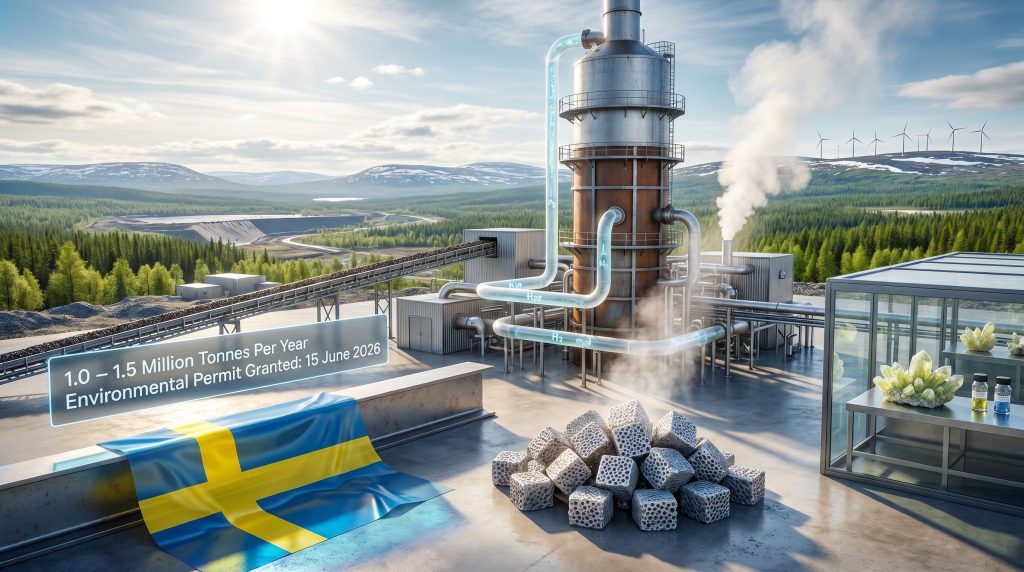
On 15 June 2026, the Land and Environmental Court in Umeå issued its ruling on LKAB's permit application, which had been submitted in May 2023 following years of technical preparation and environmental impact assessment work. The three-year review period reflects the complexity of the application, which covered not just the sponge iron demonstration facility but a broader suite of operational expansions at the Malmberget site in Gällivare.
The court found that permission could be granted on the basis that the potential environmental impacts of the approved activities could be adequately controlled through binding operational conditions. This standard of review is significant: it does not mean the project has zero environmental footprint, but rather that those impacts are manageable within a regulated framework.
The full scope of activities approved under the ruling includes:
- Continued iron ore mining operations at the Malmberget site
- Expansion of tailings dam infrastructure to accommodate increased processing volumes
- Construction and operation of the LKAB fossil-free sponge iron plant demonstration facility
- Development of an apatite extraction facility to recover critical minerals from iron ore processing waste
Production Targets and Development Timeline
| Parameter | Detail |
|---|---|
| Target annual sponge iron output | 1.0 to 1.5 million tonnes |
| Planned construction completion | 2028 |
| Production ramp-up period | 2029 |
| Permit application submitted | May 2023 |
| Environmental permit granted | June 15, 2026 |
| Pilot plant (Luleå) operational since | 2020 |
The Appeal Risk: Why the Permit Is Not Yet Final
A critical detail that warrants careful attention is that the June 2026 ruling remains subject to appeal through Sweden's environmental court system. The permit does not automatically become legally binding until the appeal window closes or any challenge is resolved. This introduces a layer of timeline uncertainty that investors and industry observers should factor into their assessments.
Equally important, the environmental permit and the Final Investment Decision (FID) are entirely separate milestones. Regulatory authorisation establishes the legal right to build and operate; it does not guarantee that construction capital will be committed. LKAB, SSAB, and Vattenfall must still reach internal alignment on project economics, cost allocation, risk sharing, and return expectations before a formal investment decision can be announced. Indeed, Swedish fossil-free sponge iron timelines have previously shifted, underscoring the importance of monitoring each milestone carefully.
The HYBRIT Consortium: Ownership, Strategy, and Competitive Position
How the Three-Partner Structure Creates Strategic Durability
HYBRIT's ownership architecture is unusual by global standards. All three partners carry either full or partial state ownership, which fundamentally alters the investment calculus compared to purely private-sector green steel ventures.
| Partner | Primary Role | Ownership Structure |
|---|---|---|
| LKAB | Iron ore mining and sponge iron production | 100% Swedish state-owned |
| SSAB | Downstream steelmaking and product commercialisation | Publicly listed, partial state interest |
| Vattenfall | Fossil-free electricity supply | 100% Swedish state-owned |
State ownership does not eliminate commercial discipline, but it does extend investment horizons and lower the effective cost of capital below what purely market-driven investors would accept for projects of this risk profile. This structural characteristic explains why HYBRIT continues to advance while several European private-sector green steel projects have retrenched or collapsed entirely.
The vertical integration of the consortium is also strategically significant. LKAB controls the ore body, Vattenfall supplies the electricity, and SSAB handles downstream processing and customer relationships. This eliminates the inter-party coordination costs and pricing disputes that can destabilise multi-supplier green hydrogen value chains.
The Apatite Dimension: LKAB's Critical Minerals Value Layer
Recovering Strategic Materials From Iron Ore Waste Streams
Perhaps the least-discussed aspect of the Malmberget expansion approval is the apatite extraction facility. Apatite is a phosphate mineral that occurs naturally within LKAB's iron ore deposits and has historically passed into tailings as an unrecovered waste product. The approved facility changes this entirely.
From processed apatite, two strategically significant material streams can be recovered:
- Phosphorus: A finite, non-substitutable input for global agriculture and fertiliser manufacturing. Unlike many industrial commodities, phosphorus has no synthetic alternative in food production systems.
- Rare Earth Elements (REEs): Neodymium, praseodymium, dysprosium, and related elements are critical inputs for permanent magnets used in electric vehicle motors, wind turbine generators, and defence electronics.
LKAB produced approximately 26 million tonnes of iron ore products in 2025, generating a substantial and consistent waste stream from which apatite recovery at meaningful commercial scale becomes economically viable. The approved facility transforms material that previously represented a disposal cost into a revenue-generating co-product. However, it is worth noting that rare earth processing challenges remain considerable, even when the raw material streams are well-established.
The rare earth content of LKAB's apatite streams has been described by the company as potentially constituting one of the largest known REE deposits in Europe. If commercial extraction proves economically viable at scale, it could make LKAB a meaningful contributor to European domestic rare earth supply at a time when the continent is actively seeking to reduce dependence on Asian processing capacity.
LKAB's strategic pivot is therefore dual-track: decarbonising iron production through HYBRIT while simultaneously building a critical minerals business from the same ore body. This is a capital-efficient diversification strategy that leverages existing infrastructure, processing knowledge, and geological assets.
European Green Steel: Why Sweden Succeeds Where Others Are Struggling
The Broader Sector Under Financial and Operational Pressure
Across Europe, the hydrogen-based steel transition has encountered far more resistance than early proponents anticipated. The fundamental barriers are financial and physical, not merely political.
Key structural challenges include:
- Capital intensity: Converting a single integrated steel plant from blast furnace to DRI plus EAF configuration typically requires investment measured in multiple billions of euros, with limited existing infrastructure transferable between systems.
- Green hydrogen economics: In most European energy markets, hydrogen produced from renewable electricity carries a significant cost premium over fossil fuel alternatives, directly increasing per-tonne production costs for green iron.
- Permitting timelines: Extended regulatory review periods across multiple European jurisdictions have increased project development costs and deterred patient capital.
- Offtake uncertainty: Steel customers face their own decarbonisation pressures but remain sensitive to price differentials between conventional and green steel products.
Comparative Project Status Across Europe
| Project | Country | 2026 Status | Primary Challenge |
|---|---|---|---|
| HYBRIT (LKAB/SSAB/Vattenfall) | Sweden | Environmental permit granted June 2026 | Investment decision pending |
| Stegra (formerly H2 Green Steel) | Sweden | Secured €1.4 billion additional funding, April 2026 | Construction completion financing |
| Multiple EU initiatives | Germany, Belgium, Netherlands | Delayed, scaled back, or cancelled | High hydrogen costs, capital constraints |
Sweden's combination of low-cost renewable electricity, state-anchored industrial ownership, and integrated ore-to-steel value chains creates a constellation of advantages that most European industrial regions cannot replicate without sustained policy intervention and subsidy structures. In addition, green iron production initiatives in other parts of the world further illustrate how geography and energy cost fundamentally shape project viability.
The next major ASX story will hit our subscribers first
What Must Still Happen Before the Plant Produces Its First Tonne
Three Outstanding Milestones Between Permit and Production
-
Appeal resolution: Until the appeal window closes and any legal challenges are resolved, the permit's operational status remains uncertain. Any successful appeal could require process modifications, additional environmental assessments, or revised operational conditions.
-
Final Investment Decision: Capital commitment from all three HYBRIT partners requires demonstrated project economics, secured green hydrogen supply agreements, potential offtake commitments from downstream steel buyers, and internal governance approvals across three distinct organisations.
-
Green hydrogen supply infrastructure: Consistent large-scale fossil-free hydrogen supply at commercially viable pricing is a prerequisite for economic operation. This requires either dedicated electrolysis capacity or long-term supply agreements with hydrogen producers, both of which involve significant additional capital and contractual complexity.
The pathway from environmental permit to operational demonstration plant involves navigating all three of these gates successfully, in roughly sequential order. The 2028 construction completion target is achievable in principle, but it assumes FID is reached in the near term and hydrogen supply arrangements are concluded without significant delay.
The Long-Term Industrial Transformation at Stake
Why Malmberget Matters Beyond One Production Site
If the LKAB fossil-free sponge iron plant reaches full operational status at its target output of 1.0 to 1.5 million tonnes of fossil-free sponge iron per year, the significance extends far beyond the Gällivare site. A successful commercial-scale demonstration of the HYBRIT process would establish a replicable industrial template for decarbonising iron production across LKAB's broader portfolio of mining operations, which collectively produced around 26 million tonnes of iron ore products in 2025.
The implications for European steel supply chain sovereignty are equally material. Domestic production of fossil-free sponge iron reduces European steelmakers' reliance on imported DRI from regions operating under less stringent environmental standards. As the EU's Carbon Border Adjustment Mechanism (CBAM) progressively raises the effective cost of carbon-intensive steel imports, domestically produced green iron gains structural price competitiveness that strengthens over time.
LKAB's carbon-free iron processes represent an evolution from raw ore exporter to producer of processed fossil-free iron, capturing substantially more industrial value per tonne within the Swedish economy. This simultaneously advances Europe's ambition to build a domestic critical minerals supply chain capable of supporting the continent's clean energy transition.
Disclaimer: This article is for informational purposes only and does not constitute financial or investment advice. Forward-looking statements regarding project timelines, production targets, and investment decisions involve inherent uncertainty and may not reflect actual outcomes. Readers should conduct independent research before making any investment decisions.
Want to Stay Ahead of the Next Major Mineral Discovery?
Discovery Alert's proprietary Discovery IQ model scans ASX announcements in real time, instantly identifying high-potential opportunities across iron ore, rare earths, and more than 30 other commodities — turning complex geological data into clear, actionable insights. Explore historic discoveries and their extraordinary returns, then begin your 14-day free trial at Discovery Alert to position yourself ahead of the broader market.