May 21, 2026
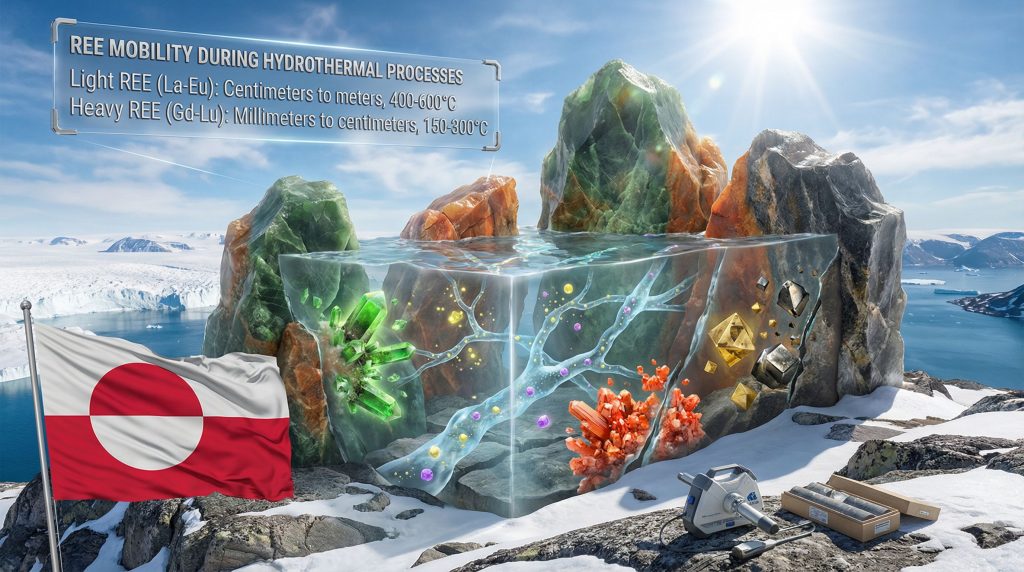
Greenland's Arctic landscape showcases extraordinary examples of hydrothermal reworking of rare earth elements, where complex geochemical reactions at elevated temperatures create natural laboratories for understanding critical mineral formation. These ancient geological environments preserve evidence of processes operating over millions of years, offering unprecedented opportunities to study how rare earth elements behave under extreme conditions. Furthermore, understanding these mechanisms provides crucial insights into deposit formation patterns that extend far beyond any single locality.
What Makes Greenland's Hydrothermal REE Systems Unique?
The Arctic landscape of Greenland hosts some of Earth's most extraordinary examples of alkaline magmatic systems, where unusual geochemical conditions create natural laboratories for studying critical mineral formation. These ancient geological environments preserve evidence of processes that operated over millions of years, offering unprecedented opportunities to understand how rare earth elements behave under extreme conditions.
Arctic Alkaline Complexes as Natural Mineral Laboratories
The Mesoproterozoic Gardar Province represents one of the world's most significant alkaline igneous provinces, formed approximately 1,300 to 1,100 million years ago across South Greenland. This geological framework encompasses numerous intrusive complexes characterized by extreme chemical differentiation and enrichment in incompatible elements including rare earth elements, niobium, and tantalum.
Within this province, the Ilímaussaq intrusion stands as one of Earth's largest agpaitic alkaline complexes. Agpaitic systems are distinguished by their unique chemistry where the molar ratio of (Na + K) / Al exceeds 1, creating silica-undersaturated conditions that favor the formation of exotic mineral phases such as nepheline, cancrinite, and sodalite.
These unusual mineralogical assemblages directly influence how rare earth elements become incorporated into crystal structures and subsequently mobilized during hydrothermal alteration. In addition, 3D geological modeling techniques help researchers understand these complex three-dimensional relationships.
Temperature-pressure conditions within these roof-zone environments create ideal circumstances for extensive fluid-rock interaction. Primary crystallization occurs at temperatures ranging from 800 to 1000°C, establishing the initial mineral framework. Consequently, subsequent cooling generates pressure gradients and thermal stress patterns that facilitate fracture development and fluid migration pathways crucial for element mobility.
Structural Controls on Fluid Migration Pathways
Fracture network development in alkaline roof-zones follows predictable patterns driven by fundamental physical processes. Thermal contraction gradients during magma cooling create systematic stress fields, while pressure release associated with volatile exsolution (fluorine, chlorine, water vapor) generates additional fracturing. Mechanical stress arising from density differences between intrusive rocks and surrounding host formations further contributes to structural pathway creation.
These fracture systems function as conduits for hydrothermal fluids, concentrating flow along discrete pathways and accelerating chemical interaction rates. Shear zone development within the roof-zone environment creates additional permeable corridors where fluid-rock reactions proceed most intensively. The resulting network of interconnected pathways controls the spatial distribution of alteration and element redistribution.
Carbonate vein systems within these structural frameworks serve as primary transport corridors for rare earth element migration. These veins form when CO2-rich fluids interact with existing fractures, creating chemically reactive environments where secondary mineral precipitation occurs. Moreover, the geometry and connectivity of these vein networks directly determine the efficiency of element transport and concentration processes.
When big ASX news breaks, our subscribers know first
Understanding the Two-Stage Hydrothermal Enrichment Model
Recent geological research has revealed that rare earth element mobility in alkaline systems follows a systematic two-stage progression, fundamentally different from single-event models previously proposed. This discovery reshapes understanding of how natural ore-forming processes operate and provides critical insights for exploration strategy development.
Primary Magmatic Crystallization Phase
Initial crystallization in alkaline roof-zone environments produces distinctive mineral assemblages dominated by pyrochlore and eudialyte phases. Pyrochlore, with the chemical formula (Na,Ca)₂(Nb,Ta,Ti)₂O₆(OH,F), serves as the primary host for niobium, tantalum, and rare earth elements during magmatic conditions. The calcium sites within pyrochlore crystal structures accommodate substantial light rare earth element substitution, creating significant reservoirs of critical elements.
Original rare earth element concentrations in primary pyrochlore typically range from hundreds to thousands of parts per million, depending on parent magma composition and crystallization conditions. Eudialyte phases contribute additional rare earth element storage capacity, particularly for heavy rare earth elements and yttrium. These primary minerals establish the initial distribution pattern for critical elements within the crystallizing magma.
Temperature conditions during this primary phase range from 800 to 1000°C, representing the high-temperature crystallization environment where initial mineral textures and chemical compositions become established. Pressure conditions reflect depth of emplacement and volatile content of the evolving magmatic system.
Stage 1 Hydrothermal Modification (High-Temperature)
The first stage of hydrothermal alteration involves fluorine-rich fluid infiltration that fundamentally modifies primary mineral assemblages. These aggressive, high-temperature fluids (exceeding 400°C) attack pyrochlore and eudialyte crystals from within, creating distinctive internal alteration textures visible under electron microprobe analysis.
Element leaching during this stage preferentially removes sodium, calcium, fluorine, and light rare earth elements (lanthanum, cerium, neodymium, samarium) from crystal structures. This selective extraction process creates chemical disequilibrium that drives continued mineral breakdown and element mobilization. Furthermore, internal replacement textures develop as original mineral phases undergo dissolution-reprecipitation reactions.
Fluorine-rich fluid composition enables aggressive dissolution of primary phases through formation of soluble metal-fluorine complexes. The high-temperature conditions maintain element solubility and prevent premature precipitation, allowing transported species to migrate significant distances from source locations.
Stage 2 Hydrothermal Redistribution (Lower-Temperature)
Secondary mineral precipitation characterizes the second stage of hydrothermal evolution, operating at temperatures between 200 and 400°C under more oxidizing conditions. This stage involves precipitation of distinctive fluorocarbonate phases including bastnaesite (CeFCO₃), synchysite ((Ca,REE)FCO₃), and fluorite (CaF₂), along with columbite ((Fe,Mn)(Nb,Ta)₂O₆) as replacement products.
Chimney structure development occurs during this redistribution phase, creating focused zones of secondary mineral concentration within and adjacent to roof-zone rocks. These structures represent areas of intense fluid flow where precipitation rates exceeded dissolution rates, leading to net element accumulation.
Vein filling processes distribute secondary minerals throughout the fracture network established during earlier stages. Element partitioning during this phase favors light rare earth element concentration in fluorocarbonate phases, while heavy rare earth elements tend to remain in residual primary minerals or form discrete secondary phases in immediate proximity to alteration zones.
Which Rare Earth Elements Move Most During Hydrothermal Reworking?
Understanding differential element mobility during hydrothermal processes provides crucial insights for exploration targeting and ore grade prediction. Recent research from scientific studies on rare earth mobility demonstrates that rare earth elements exhibit dramatically different transport characteristics based on their atomic properties and the specific conditions of fluid-rock interaction.
Light REE Mobility Characteristics
Light rare earth elements (lanthanum through europium) demonstrate exceptional mobility under hydrothermal conditions, capable of transport distances ranging from centimeters to meters from their original source minerals. This enhanced mobility results from preferential formation of hydroxyl-carbonate complexes at temperatures exceeding 400°C, creating stable dissolved species that remain in solution over extended periods.
Neodymium and cerium show particularly high mobility rates, forming stable complexes with carbonate and hydroxyl ligands that facilitate long-distance transport. These elements preferentially partition into secondary fluorocarbonate phases during precipitation, creating natural concentration mechanisms that can substantially upgrade ore quality relative to primary mineralogy.
The temperature window for optimal light rare earth element transport spans 400 to 600°C, corresponding to conditions where hydroxyl-carbonate complexes remain stable while precipitation kinetics allow controlled element redistribution. Outside this temperature range, either complex stability decreases (at lower temperatures) or precipitation becomes too rapid to allow significant transport (at higher temperatures).
Heavy REE Behavior Under Hydrothermal Conditions
Heavy rare earth elements (gadolinium through lutetium) plus yttrium exhibit substantially different behavior during hydrothermal alteration, with transport distances typically limited to millimeters or centimeters from source locations. This restricted mobility reflects different complexation chemistry and thermal stability characteristics compared to light rare earth elements.
Lower-temperature mobilization (150 to 300°C) characterizes heavy rare earth element transport, operating through fluoride complex formation rather than the hydroxyl-carbonate species that dominate light element chemistry. These fluoride complexes show reduced stability and shorter transport distances, leading to element concentration in immediate proximity to alteration zones.
Fractionation mechanisms between light and heavy rare earth elements create distinctive distribution patterns within altered zones. Light elements preferentially migrate to distal locations and precipitate in vein systems, while heavy elements accumulate in alteration halos surrounding primary mineral sources.
| Element Group | Mobility Range | Optimal Temperature | Primary Transport Mechanism |
|---|---|---|---|
| Light REE (La-Eu) | Centimeters to meters | 400-600°C | Hydroxyl-carbonate complexes |
| Heavy REE (Gd-Lu) | Millimeters to centimeters | 150-300°C | Fluoride complexes |
| Niobium | Moderate mobility | 300-500°C | Fluorine-bearing solutions |
How Do Fluorine-Rich Fluids Drive REE Mobilization?
Fluorine plays a fundamental role in rare earth element transport, functioning as a key complexing agent that dramatically enhances element solubility under hydrothermal conditions. Understanding fluorine chemistry provides essential insights into the mechanisms controlling element mobility and ore formation processes, particularly relevant for mineralogy and mining economics considerations.
Geochemical Mechanisms of Fluorine Transport
Fluorine-rich fluid generation occurs during late-stage magmatic evolution when volatile elements become concentrated in residual melts. As crystallization progresses, fluorine content increases dramatically in remaining liquid phases, eventually reaching saturation levels where separate F-rich fluids exsolve from the magma.
Aggressive dissolution of primary rare earth element-bearing phases results from the high reactivity of fluorine-bearing solutions. Fluoride ions readily attack silicate and oxide mineral structures, breaking chemical bonds and liberating contained elements into solution. However, pH conditions and oxidation states during fluid evolution control the specific dissolution mechanisms and determine which elements become preferentially mobilized.
Element solubility increases by several orders of magnitude in fluorine-rich systems compared to fluorine-poor conditions. This enhanced solubility enables transport of normally immobile elements over substantial distances, creating opportunities for natural ore upgrading and concentration processes.
Mineral Replacement Reactions
Pyrochlore alteration to columbite assemblages represents one of the most important replacement reactions in alkaline systems. This transformation involves selective removal of sodium, calcium, and rare earth elements while preserving niobium and tantalum in more stable oxide phases. The reaction proceeds through complex dissolution-reprecipitation mechanisms that create distinctive textural patterns.
Eudialyte breakdown provides another pathway for rare earth element liberation, involving decomposition of complex cyclosilicate structures and release of contained elements into solution. Secondary fluorocarbonate precipitation occurs when transported rare earth elements encounter carbonate-rich fluids under appropriate temperature and pressure conditions.
Replacement textures preserve evidence of original mineral compositions while documenting the progression of alteration processes. In addition, electron microprobe analysis reveals chemical gradients from unaltered cores to completely replaced rim zones, providing direct evidence for multi-stage fluid interaction.
Fluid Inclusion Evidence and Limitations
Microthermometry studies of fluid inclusions face significant challenges in alkaline systems due to leakage problems that affect measurement accuracy. Many fluid inclusions in these environments show evidence of post-entrapment modification, making direct determination of original fluid compositions difficult.
Chemical inference from mineral textures provides alternative approaches for reconstructing fluid evolution pathways. Analysis of mineral zoning patterns, replacement relationships, and paragenetic sequences allows indirect determination of fluid chemistry and thermal history.
Pressure-temperature evolution pathways can be constrained through thermodynamic modeling combined with textural analysis. These approaches provide frameworks for understanding the physical and chemical conditions responsible for element mobilization and redistribution.
What Are the Exploration Implications for Global REE Deposits?
Understanding hydrothermal reworking of rare earth elements in Greenland provides powerful tools for improving exploration success rates and resource evaluation accuracy. These insights apply globally to similar geological environments and can significantly enhance targeting strategies, contributing to broader mining industry evolution trends.
Targeting Hydrothermal Upgrade Zones
Identifying secondary enrichment areas requires systematic evaluation of structural controls and alteration patterns within alkaline complexes. Roof-zone environments represent primary targets where fluid-rock interaction reaches maximum intensity. Fracture network mapping becomes as important as traditional geochemical sampling in defining exploration priorities.
Structural geology mapping priorities should focus on:
- Identification of fracture corridors and shear zones
- Definition of carbonate vein systems and their connectivity
- Recognition of chimney structures and feeder zones
- Assessment of fault relationships and fluid pathway geometry
Geophysical signatures of fluid pathways can be detected through integrated magnetic and electromagnetic surveys that respond to alteration mineral assemblages. Ground-penetrating radar and resistivity methods may identify fracture networks and vein systems at appropriate scales.
Grade Enhancement Through Natural Processing
Understanding ore quality improvements through natural hydrothermal processing enables more accurate resource estimation and metallurgical planning. Natural upgrading can concentrate rare earth elements into fewer, simpler mineral phases, potentially reducing downstream processing complexity and costs.
Economic viability assessments must consider both primary and secondary mineralogy when evaluating deposit potential. Resources dominated by primary phases may require different processing approaches compared to hydrothermally upgraded zones where secondary fluorocarbonates predominate.
Metallurgical complexity considerations include:
- Multi-phase mineral assemblages requiring custom flowsheets
- Fluorocarbonate processing difficulties and reagent requirements
- Heavy rare earth element recovery optimization
- Waste stream management and environmental considerations
Comparative Analysis with Global Alkaline Systems
Canadian Shield analogues include complexes such as Nechalacho and other alkaline intrusions with similar geological characteristics. These deposits show comparable structural controls and alteration patterns, suggesting that process models developed in Greenland have broader applicability.
Australian rare earth provinces, including Mount Weld and other carbonatite-alkaline systems, demonstrate parallel evolution pathways and element redistribution mechanisms. Comparative studies reveal common themes in hydrothermal upgrade processes across different continental settings.
Scandinavian alkaline complexes provide additional examples of similar geological environments where hydrothermal reworking has influenced ore formation. These comparisons help establish global patterns and improve predictive capability for exploration targeting.
Why Processing Technology Remains the Critical Supply Chain Bottleneck
Despite significant advances in geological understanding and exploration capability, rare earth element supply chains remain constrained by downstream processing limitations. This bottleneck represents the critical factor determining strategic resource security for Western nations, particularly relevant for critical minerals supply considerations.
Complex Mineralogy Challenges
Multi-phase rare earth element mineral assemblages create significant challenges for conventional processing technologies. Primary pyrochlore, secondary fluorocarbonates, and residual phases each require different extraction approaches, necessitating integrated flowsheet designs that accommodate multiple mineral types simultaneously.
Custom flowsheet requirements for alkaline-hosted deposits often involve specialized reagents and processing conditions not employed in conventional rare earth operations. Fluorocarbonate mineral processing presents particular difficulties due to fluorine evolution and corrosion concerns that require specialized equipment and safety protocols.
The complexity of natural mineral assemblages means that even world-class geological resources may remain economically challenging without appropriate processing technology development and implementation.
Global Refining Capacity Distribution
China maintains control over approximately 90% of global rare earth element refining capacity, creating strategic vulnerabilities for other nations despite domestic mineral resources. This concentration reflects decades of technology development and infrastructure investment that Western countries have not matched.
Western technological gaps in midstream operations encompass critical steps between mining and final product manufacturing. These gaps include:
- Separation and purification technology
- Individual element isolation capabilities
- Alloy and magnet precursor production
- Quality control and specification compliance systems
Strategic implications for resource security extend beyond simple mineral availability to encompass the entire value chain from extraction through final product delivery. Furthermore, control over processing technology represents a more significant constraint than geological resource endowment.
Key Industry Reality: While geological understanding of hydrothermal rare earth element systems has advanced significantly, the lack of non-Chinese processing infrastructure means that even world-class deposits remain strategically limited until downstream capabilities are developed.
The next major ASX story will hit our subscribers first
Advanced Analytical Techniques Revealing Hydrothermal Processes
Modern analytical capabilities provide unprecedented insights into the mechanisms controlling rare earth element mobility during hydrothermal alteration. These techniques enable process-level understanding that directly supports improved exploration and development strategies.
Electron Microprobe Analysis Applications
Back-scattered electron imaging reveals alteration textures at microscopic scales, documenting the progression of mineral replacement reactions and element redistribution patterns. High-contrast imaging distinguishes between primary and secondary phases based on average atomic number differences, creating detailed maps of alteration intensity and distribution.
Quantitative mineral chemistry mapping provides spatial context for element mobility studies, showing how concentrations vary across individual mineral grains and between different phases. These maps reveal transport pathways and document the efficiency of natural concentration mechanisms.
Trace element distribution patterns within altered minerals preserve records of fluid chemistry evolution and thermal history. X-ray mapping capabilities enable simultaneous analysis of multiple elements, creating comprehensive datasets for geochemical modeling applications.
Textural Evidence for Fluid-Rock Interaction
Replacement rim development around primary minerals provides direct evidence for fluid infiltration and chemical exchange processes. These rims show systematic chemical and textural evolution from unaltered cores to completely replaced margins, documenting the progression of alteration reactions.
Zoning patterns in secondary minerals record changing fluid compositions and thermal conditions during precipitation. Oscillatory zoning, growth textures, and chemical gradients preserve detailed records of fluid evolution pathways that can be quantitatively analyzed.
Dissolution-precipitation relationships between coexisting phases reveal the mechanisms controlling element partitioning during hydrothermal alteration. Understanding these relationships enables prediction of ore grade distribution and metallurgical characteristics.
Geochemical Modeling of Element Transport
Thermodynamic calculations for rare earth element speciation provide frameworks for understanding fluid chemistry and transport mechanisms under different temperature and pressure conditions. These calculations predict which complexes dominate element transport and where precipitation should occur.
Fluid evolution pathway reconstruction uses mineral chemistry data combined with thermodynamic constraints to model the physical and chemical conditions responsible for observed alteration patterns. Mass balance approaches quantify element mobility and redistribution efficiency.
Key Parameters for Geochemical Modeling:
- Temperature and pressure evolution paths
- Fluid composition including pH and oxidation state
- Element speciation and complex stability
- Mineral saturation states and precipitation kinetics
- Water-rock ratios and fluid flow rates
Future Research Directions and Technological Applications
Advancing understanding of hydrothermal reworking of rare earth elements in Greenland and similar systems worldwide requires integration of multiple research approaches with practical technology development initiatives. Future investigations will likely focus on bridging fundamental process understanding with applied exploration and extraction technologies.
Enhanced Deposit Modeling Capabilities
Three-dimensional fluid flow simulation integration with geological models will enable more accurate prediction of alteration patterns and element distribution within complex deposit geometries. Advanced computational capabilities allow modeling of multi-phase flow, reactive transport, and thermal evolution simultaneously.
Predictive exploration algorithms incorporating structural geology, geochemistry, and geophysical data can identify high-priority targets more efficiently than traditional approaches. Machine learning applications in ore grade estimation show promise for integrating diverse datasets and improving resource evaluation accuracy.
Technological Integration Priorities:
- Real-time geochemical sensors for continuous monitoring
- Automated mineral identification and quantification systems
- Integrated geological-geophysical-geochemical modeling platforms
- Predictive algorithms for exploration targeting optimization
Biomimetic Processing Innovations
Learning from natural hydrothermal upgrading processes offers opportunities for developing more efficient and environmentally sustainable extraction technologies. Understanding how nature concentrates and purifies rare earth elements provides templates for industrial process design.
Low-temperature extraction technologies inspired by natural processes could reduce energy requirements and environmental impacts compared to conventional high-temperature approaches. Biological and bio-inspired separation mechanisms represent emerging research areas with significant potential.
Environmentally sustainable processing methods that minimize waste generation and toxic reagent usage align with increasing regulatory requirements and social acceptance criteria for mining operations.
Strategic Resource Development Planning
Integrated geological-metallurgical studies from early exploration stages through production planning ensure that deposit characteristics are properly understood and appropriate processing technologies are developed. This integration reduces technical risk and improves project economics.
Supply chain resilience considerations require evaluation of complete value chains rather than individual deposits or operations. Strategic planning must address processing capacity, technology transfer, and infrastructure development requirements, particularly considering ongoing rare earth talks between major powers.
Technology transfer opportunities between research institutions, government agencies, and industry enable more efficient development of critical capabilities and reduce duplication of effort.
Environmental and Sustainability Considerations
Responsible development of rare earth element resources in Arctic environments requires careful attention to environmental protection and sustainability principles. The unique characteristics of Greenland's ecosystems demand specialized approaches that minimize ecological impacts.
Natural System Preservation
Arctic ecosystem protection protocols must address the particular sensitivities of polar environments, including permafrost stability, wildlife migration patterns, and indigenous community relationships with the land. Climate change effects compound these challenges by altering baseline environmental conditions.
Minimal-impact exploration methodologies using remote sensing, portable analytical equipment, and reduced ground disturbance can provide necessary geological information while preserving ecosystem integrity. Seasonal restrictions and access limitations protect critical habitat during vulnerable periods.
Climate change effects on permafrost-hosted systems create additional considerations for long-term resource development planning. Changing thermal regimes may affect ore deposit stability and accessibility while altering environmental baseline conditions.
Sustainable Extraction Approaches
Biomimetic processing inspired by natural hydrothermal systems offers pathways for developing more sustainable extraction technologies. Understanding how natural processes concentrate and purify elements provides frameworks for reducing processing intensity and waste generation.
Reduced environmental footprint technologies that minimize energy consumption, water usage, and waste production align with sustainability objectives while potentially improving project economics. These approaches require integration of geological understanding with engineering innovation.
Circular economy integration strategies that maximize resource utilization efficiency and minimize waste streams represent important considerations for long-term sustainability. Recovery of by-products and recycling of process materials can significantly improve overall environmental performance.
Research findings from geological studies in Greenland continue to provide valuable insights into natural processes that could inspire sustainable extraction methods for future rare earth element development projects worldwide.
This analysis is based on current geological research and industry knowledge. Predictions regarding future technological developments and market conditions involve inherent uncertainties and should not be considered as definitive forecasts. Readers are advised to consult multiple sources and seek professional guidance for investment or technical decisions.
Ready to Invest in the Next Major Mineral Discovery?
Discovery Alert instantly alerts investors to significant ASX mineral discoveries using its proprietary Discovery IQ model, turning complex mineral data into actionable insights. Understand why historic discoveries can generate substantial returns by visiting Discovery Alert's dedicated discoveries page and begin your 30-day free trial today to position yourself ahead of the market.