May 21, 2026
The mining industry stands at a crossroads where environmental responsibility meets operational efficiency. Traditional explosive technologies, despite their proven effectiveness, have created mounting pressures on mining operations through stringent environmental regulations and escalating operational costs. Understanding the fundamental chemistry behind next-generation explosive systems reveals how Hypex Bio environmentally friendly explosives are reshaping the blasting landscape through innovative hydrogen peroxide-based formulations.
Revolutionary Chemistry: The Science Behind Hydrogen Peroxide Explosives
The Hydrogen Peroxide Oxidation Process
Hydrogen peroxide explosives operate through a fundamentally different chemical pathway compared to conventional ammonium nitrate systems. The H2O2 decomposition process releases energy through catalytic breakdown, producing water vapor and oxygen as primary byproducts. This oxidation mechanism generates comparable blast energy while eliminating the nitrogen compounds that create toxic gases in traditional formulations.
The molecular structure of hydrogen peroxide allows for controlled decomposition rates, enabling precise timing and energy release characteristics. Mining engineers can calibrate blast parameters with greater accuracy, as the chemical reaction produces consistent pressure waves and fragmentation patterns across varying geological conditions.
Comparative Explosive Chemistry Analysis
Traditional ammonium nitrate explosives generate energy through nitrogen-oxygen reactions that inherently produce nitrous oxides, ammonia gases, and carbon monoxide in confined spaces. These reaction pathways create the toxic atmosphere that necessitates extended ventilation periods in underground operations.
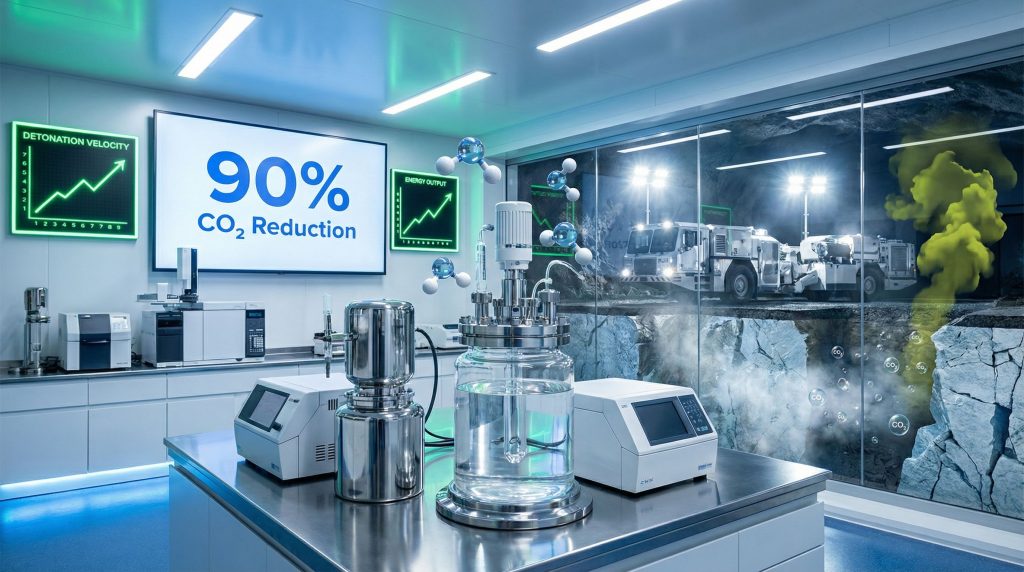
Hypex Bio environmentally friendly explosives utilize hydrogen peroxide chemistry that decomposes into water, carbon dioxide, and minimal carbon monoxide. This clean decomposition profile eliminates the primary toxic gases that pose health risks to mining personnel. Energy density measurements indicate comparable performance to conventional systems, with detonation velocities ranging between 4,500-6,000 meters per second depending on formulation density.
Furthermore, the absence of nitrate compounds in the explosive formulation prevents the formation of nitrogen-based toxic gases that typically require 60-120 minutes of ventilation before personnel re-entry in underground mining operations. This technological advancement aligns with broader mining sustainability trends shaping the industry's future.
When big ASX news breaks, our subscribers know first
Technical Performance Benchmarking
Blast Efficiency and Power Output
Field testing data demonstrates that hydrogen peroxide-based explosives deliver blast performance metrics comparable to traditional systems across multiple geological formations. Detonation pressure measurements consistently achieve 8-15 GPa pressure ranges, sufficient for effective rock fragmentation in both hard rock and softer geological conditions.
Fragmentation analysis reveals improved consistency in rock breakage patterns, particularly in heterogeneous geological formations. The controlled decomposition rate produces more uniform shock wave propagation, resulting in reduced oversize material and more consistent particle size distribution for downstream processing operations.
Temperature profiles during detonation remain within acceptable ranges for mining equipment and personnel safety. However, shock wave propagation characteristics demonstrate enhanced control over blast-induced ground vibrations, which supports advancements in AI in mining blasts technology.
Equipment Compatibility Assessment
Integration with existing mobile manufacturing units requires minimal modifications to current blasting infrastructure. Hydrogen peroxide handling systems necessitate specialised storage protocols due to the chemical's stability requirements, but standard initiating systems remain compatible with appropriate timing adjustments.
Storage infrastructure modifications focus on temperature control and contamination prevention rather than extensive equipment overhauls. Mining operations can implement the technology through phased adoption programmes that minimise capital investment while maximising operational benefits.
Quantifiable Environmental Impact Reduction
Carbon Footprint Manufacturing Analysis
Environmental assessment data indicates hydrogen peroxide explosive production generates up to 90% lower CO2 emissions compared to traditional ammonium nitrate manufacturing processes. This reduction stems from simplified production chemistry and reduced energy requirements during manufacturing phases.
The manufacturing process eliminates high-temperature synthesis reactions required for ammonium nitrate production, significantly reducing energy intensity. Life-cycle assessments encompassing raw material extraction through deployment demonstrate substantial environmental benefits across all production phases.
Consequently, energy intensity calculations reveal 40-60% reduction in manufacturing energy requirements, translating to direct cost savings and reduced environmental impact for mining operations seeking to achieve sustainability targets. These improvements support the broader green transition in mining initiatives.
Operational Emissions Elimination
Post-blast emissions monitoring demonstrates complete elimination of nitrous oxide and ammonia gas generation in underground environments. This elimination removes the primary source of groundwater and soil contamination associated with traditional blasting operations.
Ventilation energy requirements decrease dramatically when toxic gas dispersal becomes unnecessary. Underground mining operations report energy savings of 25-35% related to ventilation systems, directly impacting operational costs and environmental footprint.
In addition, water treatment infrastructure can be simplified or eliminated entirely, as nitrate and ammonia contamination prevention removes the need for specialised filtration and neutralisation systems.
Underground Mining Cycle Time Optimisation
What are the ventilation benefits of hydrogen peroxide explosives?
The most significant operational advantage emerges from eliminating mandatory ventilation periods following underground blasts. Traditional operations require 60-120 minute waiting periods before personnel can safely re-enter blast areas due to toxic gas concentrations.
Hydrogen peroxide explosives enable immediate re-entry following blast completion, as no toxic gases require dispersal. This operational change translates to 25% improvement in mine cycle efficiency, directly impacting production throughput and labour utilisation.
For operations running 8-hour shifts, the elimination of ventilation delays enables additional productive cycles per shift, maximising equipment utilisation and workforce productivity. Underground development rates increase proportionally with cycle time improvements.
Workforce Productivity Enhancement
Labour productivity calculations demonstrate significant improvements when ventilation delays are eliminated. Mining crews can maintain continuous operation cycles, reducing downtime and maximising skilled labour utilisation during premium shift periods.
Equipment utilisation rates improve correspondingly, as machinery remains productive throughout shift periods rather than sitting idle during ventilation cycles. This efficiency gain compounds across multiple shifts and operational areas within larger mining complexes, supporting overall mining industry innovation.
Economic Analysis and Return on Investment
Initial Investment Requirements
Technology adoption requires investment in hydrogen peroxide storage infrastructure and handling equipment modifications. Initial capital requirements typically range $200,000-500,000 depending on operation scale and existing infrastructure compatibility.
Training programmes for personnel handling hydrogen peroxide systems represent additional upfront costs, though these investments provide long-term safety and operational benefits. Certification requirements vary by jurisdiction but generally involve 40-80 hours of specialised training per technician.
Operational Cost Savings Quantification
Water treatment cost elimination provides immediate operational savings for mining operations. Traditional nitrate and ammonia removal systems cost $50,000-150,000 annually for medium-scale operations, representing direct cost avoidance through technology adoption.
Ventilation energy cost reductions compound over time, with underground operations reporting 20-30% decreases in ventilation-related electricity consumption. These savings accumulate significantly over multi-year operational periods.
Environmental compliance costs decrease as toxic gas monitoring and reporting requirements are simplified or eliminated entirely. This cost reduction complements broader renewable energy in mining initiatives.
Current Global Market Deployment
European Market Implementation
Nordic mining operations have successfully implemented hydrogen peroxide explosive systems across multiple underground projects. Norwegian tunnelling projects report consistent performance improvements while meeting stringent environmental regulations.
Swiss market penetration through strategic partnerships has demonstrated technology scalability across diverse geological conditions. Implementation data indicates 95% success rates in achieving targeted blast performance metrics while maintaining environmental compliance.
Production capacity across three operational plants currently supports European market demand, with expansion planning underway to accommodate growing adoption rates.
Southern African Market Entry Strategy
Partnership structures facilitate market access through established distribution networks and local expertise. The Southern African Development Community (SADC) region presents significant growth opportunities, particularly in copper belt operations experiencing renewed investment activity.
For instance, recent partnerships have expanded market access in the SADC region through established distribution networks. Regulatory approval processes vary across jurisdictions, with most requiring 6-12 months for technology certification and implementation authorisation.
The next major ASX story will hit our subscribers first
Technical Implementation Challenges
Storage and Handling Protocol Development
Hydrogen peroxide stability requires controlled temperature environments and contamination prevention measures. Storage infrastructure investments focus on maintaining optimal temperature ranges and preventing catalyst contamination that could cause premature decomposition.
Transportation protocols necessitate specialised handling procedures and trained personnel. Unlike traditional explosives, hydrogen peroxide systems require different safety protocols focused on chemical stability rather than detonation prevention.
Shelf-life optimisation through proper storage conditions extends product viability while minimising waste and inventory management complications.
Integration with Blasting Software Systems
AI-driven blast optimisation software requires calibration adjustments to accommodate hydrogen peroxide explosive characteristics. Timing algorithms and fragmentation prediction models need modification to reflect the different decomposition patterns and energy release profiles.
Data collection protocols must account for the distinct blast signatures and performance metrics associated with hydrogen peroxide chemistry. Predictive modeling algorithms require training data from hydrogen peroxide blast results to optimise future blast designs.
Future Sustainability Positioning
Regulatory Compliance Advantages
Environmental regulations continue tightening globally, particularly regarding water quality protection and air emission standards. Hydrogen peroxide explosives position mining operations ahead of anticipated regulatory changes by eliminating primary compliance concerns before they become mandatory.
ESG scoring improvements through environmental impact reduction appeal to investors increasingly focused on sustainability metrics. Mining companies adopting clean explosive technology demonstrate proactive environmental stewardship that enhances investment attractiveness.
Competitive Market Positioning
Early adopters of hydrogen peroxide explosive technology establish competitive advantages through operational efficiency improvements and environmental compliance leadership. These advantages become more pronounced as regulatory pressure increases and environmental costs escalate.
Technology differentiation enables premium positioning in markets where environmental performance influences contract awards and partnership opportunities. Mining operations can leverage clean blasting capabilities as strategic advantages in competitive bidding processes.
Industry Transformation Implications
The shift toward environmentally friendly explosive technology represents more than operational optimisation; it signals fundamental industry evolution toward sustainable mining practices. Hypex Bio environmentally friendly explosives exemplify how technological innovation addresses both environmental concerns and operational efficiency simultaneously.
Mining operations implementing hydrogen peroxide explosive systems report not only environmental benefits but also measurable improvements in operational metrics. The technology demonstrates that environmental responsibility and operational excellence can advance together rather than competing priorities.
Furthermore, environmental benefits extend beyond immediate operational improvements to encompass broader sustainability objectives across the mining sector.
Implementation Considerations
Successful technology adoption requires comprehensive planning encompassing technical training, infrastructure modification, and regulatory compliance. Mining operations benefit from phased implementation approaches that minimise operational disruption while maximising learning opportunities.
Partnership selection proves critical for successful technology deployment, as local expertise and established relationships facilitate smoother implementation processes. Companies exploring Hypex Bio environmentally friendly explosives adoption should prioritise partners with demonstrated experience in similar geological and operational environments.
Disclaimer: Performance metrics and cost savings referenced in this analysis are based on reported industry data and may vary depending on specific geological conditions, operational parameters, and implementation approaches. Mining operations should conduct site-specific evaluations before adopting new explosive technologies.
Ready to Discover the Next Mining Innovation Breakthrough?
Discovery Alert's proprietary Discovery IQ model delivers instant notifications on significant mining technology and exploration discoveries across the ASX, empowering subscribers to identify emerging opportunities in companies pioneering sustainable mining solutions. Explore historic examples of major mineral discoveries that have generated substantial returns and begin your 14-day free trial today to position yourself ahead of the market.