June 17, 2026
Energy markets operate as complex ecosystems where supply disruptions create cascading effects across global economic systems. When critical transportation corridors face closure or significant constraints, the resulting price volatility extends far beyond commodity trading floors, influencing monetary policy decisions, currency valuations, and international cooperation frameworks. Understanding how strategic petroleum reserves function within this dynamic environment reveals the intricate balance between national energy security and global economic stability. The recent IEA oil reserves release demonstrates how coordinated international responses attempt to moderate US economy and inflation pressures during major supply disruptions.
What Are Strategic Petroleum Reserves and Why Do Nations Maintain Them?
Strategic petroleum reserves represent one of the most significant policy innovations to emerge from the energy crises of the 1970s. These massive stockpiles serve as economic insurance policies, designed to buffer nations against supply shocks that could otherwise trigger severe economic disruptions.
The Economic Logic Behind National Oil Stockpiles
The foundation for modern strategic reserves stems from the 1973 Arab-Israeli War and subsequent OPEC embargo, which demonstrated how quickly energy supply disruptions could paralyze industrial economies. Oil prices quadrupled within months, creating inflationary pressures that persisted for years and fundamentally altered how policymakers approached energy security.
Following these crises, the International Energy Agency established a 90-day minimum reserve requirement for all member nations. This mandate ensures each country maintains sufficient stockpiles to cover three months of domestic consumption during emergency situations. The requirement reflects careful analysis of historical supply disruptions and the time typically needed to establish alternative supply chains or resolve geopolitical conflicts.
The economic rationale extends beyond simple supply replacement. Strategic reserves provide market confidence, reducing the risk premiums embedded in energy futures contracts. When traders know that coordinated reserve releases can supplement available supply, extreme price volatility becomes less likely, creating more stable conditions for business investment and consumer spending.
Global Distribution of Strategic Reserve Capacity
| Country/Region | Reserve Capacity (Days) | Storage Type | Management Model |
|---|---|---|---|
| United States | 140+ days | Underground salt caverns | Government-controlled |
| Germany | 90+ days | Mixed storage facilities | Government-controlled |
| Japan | 180+ days | Private + state combination | Mixed public-private |
| South Korea | 100+ days | Above-ground tanks | Government-controlled |
| China | 90+ days | Strategic + commercial | State-controlled |
Storage infrastructure varies significantly across different geological and economic conditions. Underground salt cavern storage, utilised extensively by the United States Strategic Petroleum Reserve, offers several advantages:
- Environmental protection from weather and potential sabotage
- Temperature stability that preserves crude quality
- Lower long-term operational costs compared to surface facilities
- Massive capacity potential in suitable geological formations
Above-ground tank facilities remain necessary for countries lacking appropriate geological features, though they require more intensive maintenance and security protocols. These systems offer greater accessibility for rapid deployment but involve higher operational expenses and environmental considerations.
The management model significantly affects response capabilities. Government-controlled reserves enable rapid coordinated releases during international crises, as demonstrated during recent IEA oil reserves release operations. Mixed public-private systems, such as Japan's approach combining 15 days of private sector reserves with one month of state-controlled stockpiles, provide flexibility while distributing storage costs across different stakeholders.
When big ASX news breaks, our subscribers know first
How Do Coordinated Reserve Releases Impact Global Oil Markets?
Market psychology plays a crucial role in determining the effectiveness of strategic reserve releases. When the IEA announced its largest-ever coordinated release of 400 million barrels in March 2026, the market response revealed important insights about trader expectations and price discovery mechanisms.
Market Psychology and Price Discovery Mechanisms
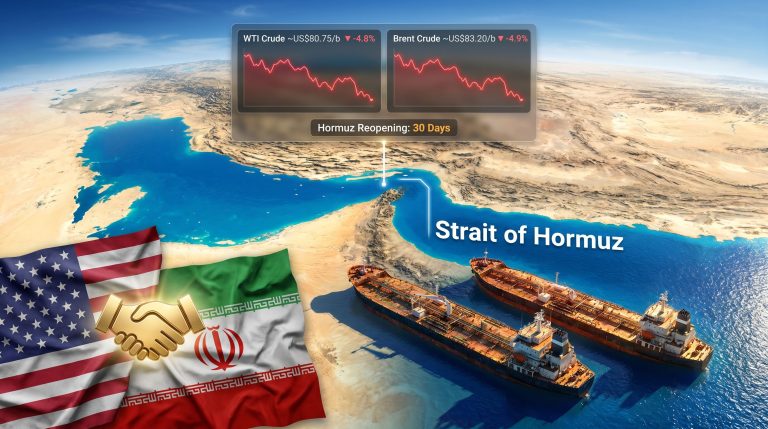
Despite the massive scale of the announced release, oil prices continued rising, with Brent crude jumping 9.2% to $100.37 per barrel and West Texas Intermediate surging 8.1% to $94.26 per barrel. This counterintuitive response reflects several market dynamics that influence oil price movements during geopolitical crises.
Structural vs. Temporary Disruption Assessment: Markets evaluated the Strait of Hormuz closure as potentially long-lasting rather than temporary, making even large reserve releases appear insufficient for sustained supply replacement.
Scale Relativity: The 400 million barrel release, while historically unprecedented, represented approximately four days of global consumption against a supply disruption affecting 20% of global oil supply daily.
Forward-Looking Price Discovery: Traders priced in expectations that reserves would eventually require replenishment, potentially creating future demand pressure even as immediate supply increased.
The persistence of price elevation despite reserve announcements demonstrates how market participants assess both the magnitude and duration of supply disruptions when establishing equilibrium prices. Furthermore, these dynamics illustrate the complex relationship between tariffs and market impact on energy security considerations.
Historical Precedents and Market Effectiveness
Examining previous coordinated releases provides context for understanding market response patterns:
2011 Libya Crisis Response:
- Release volume: 60 million barrels
- Supply disruption: Approximately 1.6 million barrels daily (1.7% of global supply)
- Market outcome: Provided temporary price moderation but failed to prevent sustained elevation as regional conflicts broadened
- Duration of effectiveness: 2-3 months before price pressures resumed
2022 Ukraine War Response:
- Release volume: 182.7 million barrels
- Supply disruption: Russian exports reduced by approximately 3-5% of global supply
- Market outcome: Initial success in moderating prices from $130+ back toward $90-100 range
- Key difference: Disruption was more gradual, allowing market adjustment time
2026 Iran Conflict Response:
- Release volume: 400 million barrels (219% larger than 2022 release)
- Supply disruption: 20% of global supply through Strait of Hormuz closure
- Market outcome: Insufficient to prevent price escalation past $100/barrel
- Implication: Reserve effectiveness diminishes as disruption scale increases beyond certain thresholds
What Economic Factors Drive the Scale of Emergency Oil Releases?
The decision to release 400 million barrels from strategic reserves reflected careful analysis of supply disruption magnitude and potential economic consequences. Understanding these factors reveals how policymakers balance reserve depletion against broader economic stability, particularly when considering commodities trading volatility and its impact on investment strategies.
Supply Disruption Calculations and Response Modeling
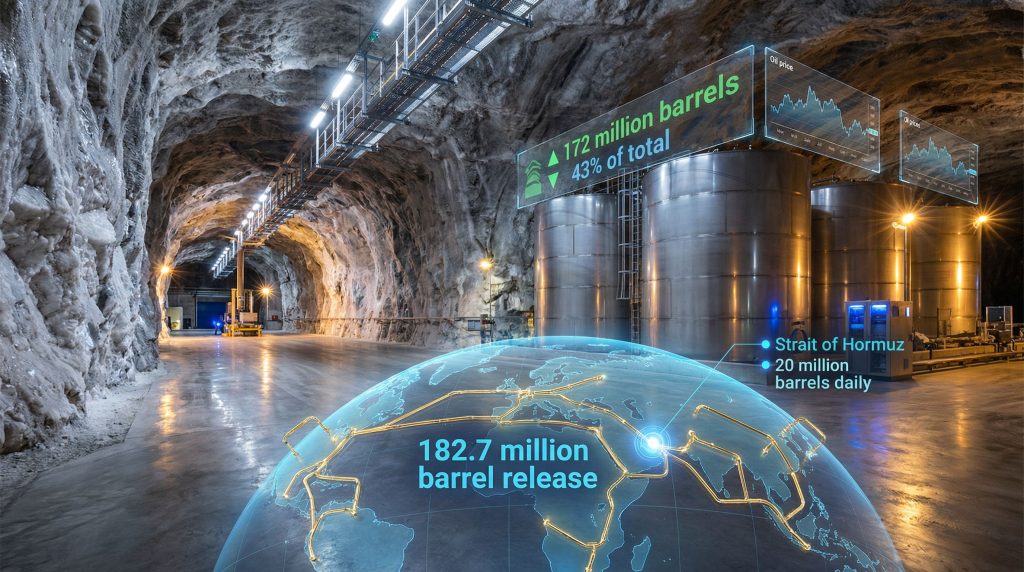
The Strait of Hormuz typically handles 20-25 million barrels daily, representing approximately one-fifth of global oil throughput. When this critical chokepoint becomes impassable, the arithmetic of replacement becomes challenging:
- Daily supply loss: ~20 million barrels
- Reserve release timeline: 120 days for U.S. contribution alone
- Daily release rate: Approximately 1.4 million barrels from U.S. reserves
- Coverage ratio: Reserve releases covered roughly 7% of lost daily supply
This calculation explains why markets remained sceptical about supply adequacy despite the unprecedented release scale. Alternative supply sources, including increased production from other regions and demand destruction through higher prices, must compensate for the remaining 93% of the disrupted flow.
Inflation Transmission Mechanisms Through Energy Markets
Energy price increases transmit through economic systems via multiple channels, creating compounding effects that extend far beyond direct fuel costs:
Direct Cost Pass-Through:
- Transportation and logistics expenses increase immediately
- Petrochemical feedstock costs affect manufacturing across industries
- Utility costs rise for electricity generation and heating
Monetary Policy Transmission:
- Central bank policy responses become more restrictive as inflation expectations rise
- Federal Reserve futures markets priced in only one additional rate cut for 2026, down from previous expectations of multiple cuts
- European Central Bank faced market expectations for potential rate increases as early as June 2026
Currency Market Impacts:
The energy crisis created significant currency volatility:
| Currency | Movement vs. USD | Economic Impact |
|---|---|---|
| Euro | Down 0.2% to $1.1539 | Import costs increase for energy-dependent Europe |
| Japanese Yen | Weakened to 159.12 per dollar | Energy import burden rises significantly |
| Australian Dollar | Down 0.4% to $0.7122 | Despite commodity exporter status, energy import concerns dominate |
How Do Different Countries Structure Their Reserve Release Strategies?
National implementation frameworks reflect varying strategic priorities, storage capabilities, and economic structures. The March 2026 coordinated release demonstrated these differences in practice, highlighting how global market trends influence national policy responses during energy crises.
National Implementation Frameworks
United States Leadership Model:
- Contribution: 172 million barrels (43% of total release)
- Timeline: 120-day completion schedule beginning March 2026
- Strategic rationale: Global market stability despite reduced U.S. import dependence
- Infrastructure advantage: Extensive salt cavern storage enables rapid deployment
German Solidarity Approach:
- Contribution: 19.51 million barrels (4.9% of total)
- Policy integration: Combined reserve release with domestic market regulation, including limiting petrol price increases to once daily
- Regulatory framework: Maintained legal compliance with 90-day domestic reserve requirements while participating in international coordination
South Korean Proportional Participation:
- Contribution: 22.46 million barrels (5.6% of total)
- Decision framework: Balanced national interests with international obligations
- Coordination emphasis: Close consultation with major economies to minimise domestic impact while supporting global stability
Timeline and Logistics Coordination
The complexity of coordinated releases extends beyond simple volume announcements. Japan's early independent action illustrates timing considerations, as policymakers released private sector reserves before formal IEA approval to address immediate market concerns.
This approach reflects several logistical realities:
- Transportation infrastructure must accommodate increased crude movements from storage facilities to refineries
- Refinery processing capacity constrains how quickly released crude can become available as finished products
- Market timing affects the psychological impact on traders and price discovery mechanisms
Austria's participation through emergency reserve releases combined with strategic gas reserve extensions demonstrates how countries adapt coordinated responses to their specific energy security profiles and infrastructure capabilities. However, the IEA oil stock release announcement emphasised the unprecedented nature of these measures.
What Are the Long-Term Economic Implications of Large-Scale Reserve Depletion?
Strategic reserve releases create future obligations that extend well beyond immediate crisis response. The 400 million barrel drawdown represents a significant depletion of emergency stockpiles that must eventually be replenished.
Reserve Replenishment Strategies and Market Timing
Replenishing strategic reserves presents policymakers with complex timing decisions that can significantly impact long-term energy costs and market dynamics:
Cost-Averaging Approaches:
- Gradual repurchasing spreads price risk over extended periods
- Reduces market disruption compared to large-volume purchases
- Extends replenishment timeline but provides budget predictability
Market Timing Considerations:
- Purchasing during price weakness maximises fiscal efficiency
- Creates potential conflict between market intervention and natural price discovery
- Requires balancing reserve adequacy against procurement costs
Budget Allocation Priorities:
- Reserve replenishment competes with other infrastructure investments
- Energy security spending must be weighed against alternative policy priorities
- Long-term fiscal planning becomes more complex with variable crude costs
Alternative Energy Security Models
The experience with large-scale reserve depletion accelerates discussions about alternative approaches to energy security:
Renewable Energy Transition Impact:
- Reduced petroleum dependence decreases strategic reserve requirements over time
- Electric vehicle adoption changes transportation fuel demand patterns
- Grid storage technologies may supplement traditional petroleum reserves
Regional Cooperation Frameworks:
- Bilateral and multilateral agreements can supplement IEA coordination
- Regional storage facilities may provide cost-effective alternatives to national stockpiles
- Cross-border pipeline and shipping arrangements enhance supply flexibility
Private Sector Partnership Evolution:
- Commercial inventory management can complement government reserves
- Market-based storage incentives may reduce public sector costs
- Industry expertise in logistics and trading enhances deployment effectiveness
How Do Financial Markets Price Energy Security Risk?
Financial markets incorporate energy security considerations through multiple mechanisms, from derivatives pricing to equity valuations and currency risk assessments. In addition, these considerations reflect broader concerns about international stability and supply chain resilience.
Volatility Premium Analysis in Oil Futures Markets
Options markets provide quantitative measures of energy security risk through volatility pricing:
Geopolitical Risk Premiums:
- Call option premiums increase dramatically during supply disruption scenarios
- Put option demand reflects hedging requirements for energy-intensive industries
- Volatility term structure shifts toward higher short-term premiums during crises
The March 2026 crisis demonstrated these dynamics clearly, with oil volatility reaching extreme levels despite coordinated policy responses. Markets priced in scenarios including potential $200 per barrel oil, as suggested by Iranian officials, even while reserve releases aimed to moderate prices.
Equity Market Sector Rotation:
Energy sector performance during reserve releases reveals complex investor psychology:
| Market Segment | March 12, 2026 Performance | Investor Logic |
|---|---|---|
| MSCI Asia-Pacific (ex-Japan) | Down 1.5% | Energy import dependency concerns |
| Energy Sector Equities | Mixed performance | Higher prices vs. supply disruption risks |
| Transportation Stocks | Significant declines | Direct cost exposure to fuel prices |
| Utility Companies | Varied by fuel mix | Natural gas vs. renewable exposure differences |
Investment Flow Patterns During Energy Crises
Capital allocation shifts during energy security crises reflect both immediate hedging needs and longer-term strategic positioning:
Infrastructure Investment Acceleration:
- Pipeline and storage facility development receives increased attention
- Renewable energy projects gain support as energy security measures
- Grid modernisation investments accelerate to support diversification
Sovereign Wealth Fund Positioning:
- Energy-exporting nations' funds benefit from higher commodity prices
- Energy-importing nations face fiscal pressures from increased import costs
- Strategic asset acquisitions focus on energy security infrastructure
ESG Investment Considerations:
- Environmental, social, and governance criteria become more complex during crises
- Energy security concerns may temporarily override climate transition priorities
- Investors balance immediate supply needs against long-term sustainability goals
The next major ASX story will hit our subscribers first
What Economic Models Predict Optimal Reserve Release Timing?
Economic modelling of strategic reserve releases involves complex game theory applications and scenario analysis that attempt to optimise timing and scale decisions. Consequently, the effectiveness of the IEA oil reserves release depends heavily on coordination mechanisms and market psychology.
Game Theory Applications in Coordinated Market Interventions
The decision to coordinate reserve releases involves strategic considerations that extend beyond simple supply replacement calculations:
Nash Equilibrium Analysis:
- Countries benefit most when others release reserves while they conserve their own stockpiles
- Coordination mechanisms overcome this free-rider problem through mutual commitments
- IEA framework provides institutional structure for sustained cooperation
First-Mover vs. Coordination Benefits:
Japan's early independent action illustrates the tension between immediate response and coordinated effectiveness. Early movers may capture psychological market benefits but risk depleting reserves without adequate partner support.
Information Asymmetry Impacts:
- Countries with superior intelligence about supply disruption duration may adjust their contributions accordingly
- Market effectiveness depends partly on convincing traders that releases will be sustained
- Communication strategies become as important as actual volume commitments
Scenario Planning for Future Energy Security Challenges
Climate Transition Integration:
- Traditional petroleum reserves may become less relevant as transportation electrifies
- Critical mineral stockpiles for battery production could become more strategically important
- Grid-scale storage technologies may complement or partially replace petroleum reserves
Technological Disruption Scenarios:
- Advances in extraction technology could reduce dependence on specific supply sources
- Transportation efficiency improvements may lower overall petroleum requirements
- Alternative fuel development could diversify energy security beyond petroleum focus
Demographic and Economic Projections:
- Growing global energy demand, particularly in developing economies, increases disruption consequences
- Urbanisation patterns affect transportation fuel requirements and infrastructure needs
- Economic development models influence energy intensity and security requirements
Frequently Asked Questions About Strategic Oil Reserve Economics
How Long Can Strategic Reserves Sustain Global Supply Disruptions?
Mathematical modelling of reserve sustainability reveals important limitations in current stockpile adequacy:
Global Reserve Capacity Analysis:
- Total IEA member reserves: Approximately 4 billion barrels
- Global daily consumption: ~100 million barrels
- Theoretical coverage: 40 days at full replacement
- Practical coverage: Significantly less due to logistics and quality constraints
Regional Variation in Adequacy:
- European nations generally maintain minimum 90-day requirements
- Asian economies often hold higher reserves due to import dependency
- North American reserves reflect both strategic and commercial inventory
The March 2026 release of 400 million barrels represented approximately 10% of total IEA strategic reserves, highlighting both the significant commitment involved and the limited number of similar interventions possible before reserve depletion becomes a serious concern.
What Triggers Activate Coordinated International Reserve Releases?
IEA Decision-Making Framework:
The International Energy Agency operates through consensus-building among member nations, with decisions requiring broad support rather than simple majority votes. Key trigger criteria include:
- Supply disruption threshold: Typically 5-7% of global supply over sustained periods
- Price impact assessment: Rapid price increases that threaten economic stability
- Alternative supply evaluation: Limited availability of replacement sources
- Duration projections: Disruptions expected to last weeks or months rather than days
Economic vs. Political Factors:
The March 2026 decision reflected both economic calculations (20% supply disruption) and political solidarity considerations. G7 energy ministers' support for proactive measures demonstrates how energy security transcends purely technical assessments to include broader alliance coordination.
The largest reserves release in IEA history occurred despite member nations already maintaining legally mandated 90-day domestic stockpiles, illustrating how extreme circumstances can justify extraordinary policy responses. Moreover, as detailed in the latest IEA oil market report, the ongoing market disruptions continue to challenge traditional energy security frameworks.
Strategic Reserves as Economic Policy Tools
Integration with Broader Macroeconomic Policy Frameworks
Strategic petroleum reserves function as critical components within comprehensive economic policy frameworks, coordinating with monetary and fiscal responses to supply shocks:
Monetary Policy Coordination:
- Reserve releases can buy time for central banks to assess inflation persistence
- Coordinated interventions may reduce the need for aggressive interest rate responses
- Energy price stability supports central bank credibility and policy effectiveness
Fiscal Policy Integration:
- Government revenues from reserve sales can offset budget impacts of energy subsidies
- Strategic reserve management requires long-term fiscal planning and budget allocation
- Coordination between energy policy and broader economic stimulus becomes crucial during crises
International Cooperation Benefits:
The IEA oil reserves release framework demonstrates how multilateral institutions can enhance individual national policy effectiveness. Collective action provides greater market impact than unilateral responses while distributing the burden of reserve depletion across multiple economies.
The future evolution of energy security architecture will likely integrate traditional petroleum reserves with broader resilience frameworks, including critical mineral stockpiles, grid-scale storage systems, and enhanced international cooperation mechanisms. As energy systems transition toward greater renewable integration, strategic reserve concepts may expand beyond petroleum to encompass the full spectrum of energy security requirements in an increasingly complex global economy.
This analysis is for educational purposes only and should not be considered as investment advice. Energy markets involve significant risks, and past performance of strategic reserve releases does not guarantee future effectiveness. Readers should consult with qualified professionals before making investment decisions.
Looking for Energy Investment Opportunities During Market Volatility?
Discovery Alert's proprietary Discovery IQ model provides real-time alerts on significant ASX mineral discoveries, including critical energy minerals like uranium and lithium that are essential for energy security. With energy markets experiencing unprecedented volatility and strategic considerations driving commodity prices, subscribers gain actionable insights into exploration breakthroughs that could benefit from increased demand for domestic resource development. Start your 14-day free trial today to position yourself ahead of market movements in the energy transition.