
June 15, 2026
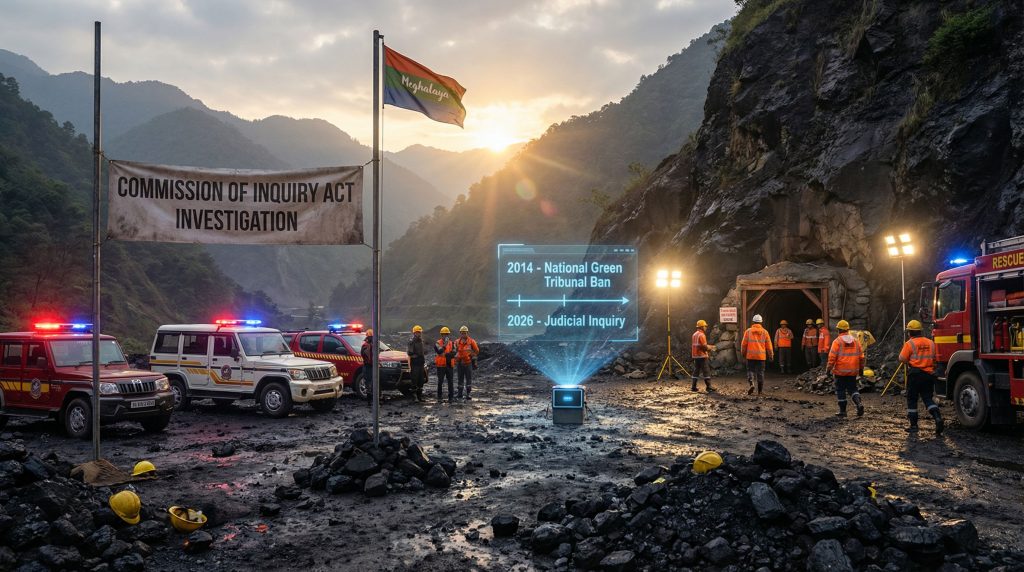
India's extractive industry governance faces mounting pressure as recent enforcement failures expose deep-rooted systemic challenges that have persisted despite regulatory prohibitions spanning over a decade. The complex interplay between federal policy directives, state-level implementation gaps, and local enforcement capacity continues to create dangerous operational environments in remote mining regions across the country, particularly as mining industry trends evolve globally.
Understanding Meghalaya's Mining Disaster and Its Regulatory Response
The Catastrophic Explosion in Remote Mining Operations
The devastating incident in the Mynsngat-Thangsko area of East Jaintia Hills district resulted in 27 confirmed fatalities, marking one of the deadliest illegal mining disasters in recent Meghalaya history. The explosion occurred in what authorities classify as rat-hole coal extraction operations, characterised by narrow tunnel networks that lack proper safety infrastructure and emergency protocols.
The tragedy triggered an extensive multi-agency rescue operation coordinated by the State Disaster Response Force (SDRF), district police, local administration, and community volunteers. Recovery operations extended across several days as teams navigated the challenging terrain and unstable underground conditions to retrieve all victims from the collapse site.
Government's Formal Judicial Investigation Framework
Chief Minister Conrad K. Sangma announced the establishment of a Judicial Inquiry Commission under the Commission of Inquiry Act, representing the state government's formal response to mounting pressure for accountability. The commission receives statutory authority to conduct comprehensive investigations, summon witnesses, and examine documentary evidence related to the incident.
A senior Home Department official outlined the inquiry's three-dimensional mandate: examining the specific circumstances that led to the explosion, identifying responsible parties across the operational chain, and developing comprehensive preventive measures. The judicial inquiry into illegal coal mine blast in Meghalaya represents a critical step towards eliminating future mining tragedies in the state's extractive sector.
When big ASX news breaks, our subscribers know first
Federal Mining Regulatory Architecture and Enforcement Mechanisms
National Green Tribunal's Comprehensive Mining Prohibition
The regulatory foundation for addressing illegal operations stems from the National Green Tribunal's 2014 complete prohibition of rat-hole mining across India, implemented with specific emphasis on Meghalaya's coal extraction activities. This ban emerged from environmental protection mandates and documented safety concerns related to unregulated extraction methodologies.
| Year | Regulatory Action | Authority | Enforcement Status |
|---|---|---|---|
| 2014 | Complete rat-hole mining ban | National Green Tribunal | Environmental protection mandate |
| 2015-2025 | Ongoing enforcement challenges | State authorities | Persistent illegal operations |
| 2026 | Judicial inquiry activation | Meghalaya government | Accountability mechanism response |
Despite 11 years of regulatory prohibition, enforcement gaps have allowed continued illegal extraction activities across multiple districts. Union Coal Minister G. Kishan Reddy's characterisation of these operations using formal policy terminology indicates federal-level recognition of organised criminal dimensions within the illegal mining sector.
Multi-Layered Legal Framework Applications
The statutory apparatus governing mining violations encompasses several legislative instruments that create overlapping jurisdictional authority. Furthermore, the framework reflects the broader global mining landscape challenges faced by regulatory bodies worldwide:
- Bharatiya Nyaya Sanhita (BNS): Criminal procedure provisions applicable to mining violations
- Mines and Minerals (Development and Regulation) Act: Primary regulatory statute governing extraction operations
- Explosives Substances Act: Governs unsafe handling of explosive materials in mining contexts
- Environmental Protection Act, 1986: Provides foundational authority for NGT jurisdiction and ban implementation
This complex regulatory architecture creates potential coordination challenges between federal policy directives and state-level implementation mechanisms, contributing to enforcement inconsistencies across jurisdictions.
Systemic Governance Challenges in East Jaintia Hills Region
Justice B.P. Katakey's Monitoring Documentation
Ongoing judicial monitoring reports document multiple incidents in the East Jaintia Hills district, including a fatal occurrence on January 14, 2026, highlighting the persistent nature of illegal mining risks in the region. This pattern demonstrates regulatory failure persistence despite judicial oversight mechanisms and administrative warnings.
The geographic concentration of incidents within a 3-4 week timeframe preceding the Mynsngat-Thangsko explosion reveals systematic enforcement inadequacies rather than isolated operational failures. Moreover, these challenges mirror issues with the mining claims framework seen in other jurisdictions globally.
Law Enforcement Response and Investigation Status
Police authorities arrested two suspected mine operators in connection with the incident. The investigation process has raised concerns about management red flags that should have been detected earlier:
- Shamehi War (42 years old) – Arrested and remanded to police custody
- Forme Chyrmang (36 years old) – Arrested and remanded to police custody
- Third suspect – Identity withheld pending ongoing search operations
Both individuals were remanded to three days' police custody as investigations continue into operational responsibility and criminal liability for the fatal explosion.
Federal-State Coordination Deficiencies
Union Coal Minister G. Kishan Reddy formally demanded comprehensive reporting from state authorities, indicating federal recognition of governance failure and escalation from state to Union government level. This executive-level attention demonstrates the political significance of enforcement gaps in India's mining sector.
"Multiple agencies involved in regulatory response create coordination difficulties, including SDRF, district police forces, district administration, Home Department, and Union Coal Ministry oversight."
Economic Incentives Sustaining Illegal Mining Operations
Risk-Reward Calculations in Unregulated Extraction
Despite 12 years of regulatory prohibition since the NGT ban, illegal operations persist due to fundamental economic drivers that outweigh enforcement deterrence mechanisms. Local communities demonstrate employment dependency on extractive industries where formal economic alternatives remain limited in remote mountainous regions.
Operators conduct risk-reward calculations that assess penalty likelihood against profit potential, with enforcement gaps reducing perceived apprehension risk relative to immediate economic returns. The minimal capital investment requirements for rat-hole operations create low barriers to entry compared to regulated mining infrastructure.
Market Demand Pressures and Supply Chain Economics
Continued national coal demand, despite renewable energy expansion policies, creates sustained market opportunity for unregulated extraction. Price premiums for illegally extracted coal reflect lower operational costs compared to regulated mining operations that must comply with safety, environmental, and tax requirements.
This supply-demand imbalance generates persistent economic incentives that regulatory prohibition alone has proven insufficient to eliminate without comprehensive alternative development strategies. In addition, the integration of AI in mining operations in legal operations creates further cost disparities.
Geographic and Administrative Enforcement Constraints
Remote area monitoring faces three specific impediments limiting enforcement effectiveness:
- Surveillance Technology Gaps: Limited satellite monitoring integration for illegal site detection in dispersed mountainous terrain
- Personnel Deployment Constraints: Insufficient law enforcement presence across geographically dispersed mining zones
- Communication Infrastructure Deficits: Real-time coordination limitations in areas lacking adequate connectivity
Preventive Governance Reforms and Technology Integration
Judicial Inquiry Scope and Accountability Mechanisms
The Commission of Inquiry possesses statutory authority to summon witnesses, examine documents, and make binding recommendations for policy reform and individual accountability. This investigative framework represents the state government's most comprehensive response to mounting pressure for systemic reform in mining governance.
The inquiry's three-dimensional mandate encompasses circumstantial investigation methodology, responsibility determination frameworks, and future prevention recommendation categories. Consequently, this could establish legal precedent for similar incidents across India's mining regions.
Advanced Monitoring and Detection Systems
Technology-enhanced surveillance solutions offer potential pathways to address enforcement gaps through:
- Satellite surveillance integration for real-time detection of unauthorised operations
- Digital compliance tracking mechanisms linking extraction activities to regulatory databases
- Communication infrastructure development enabling rapid response coordination in remote areas
Implementation of these technological solutions requires substantial investment in infrastructure development and inter-agency coordination protocols that current administrative structures have struggled to achieve.
Economic Transition Planning and Alternative Development
Sustainable prevention strategies must address underlying economic incentives through:
- Alternative livelihood development programmes reducing community dependency on illegal extraction
- Formal sector integration opportunities providing regulated employment pathways
- Investment redirection toward compliant operations that meet safety and environmental standards
The next major ASX story will hit our subscribers first
National Mining Sector Implications and Policy Precedents
Comparative Analysis with Other Coal-Mining States
The Meghalaya crisis reflects broader challenges in India's mining governance that extend beyond state boundaries. Similar enforcement difficulties in Chhattisgarh, Jharkhand, and Odisha suggest systemic inadequacies in the federal regulatory framework's implementation across diverse geographic and administrative contexts.
The judicial inquiry into illegal coal mine blast in Meghalaya may establish precedents for accountability mechanisms and prevention strategies applicable to other states facing similar challenges in mining sector governance. However, a detailed judicial probe will be essential to determine the full scope of systemic failures.
Environmental Justice and Community Safety Intersections
The intersection of environmental protection mandates with community economic needs creates complex policy challenges requiring integrated solutions that address both safety concerns and local development requirements. Sustainable approaches must balance NGT environmental directives with community livelihood security in mining-dependent regions.
Long-term Mining Sector Transformation Requirements
Legal precedent setting through the judicial process represents an opportunity to strengthen accountability mechanisms and deterrent effects for future illegal operations. The Commission of Inquiry Act utilisation demonstrates the state government's commitment to comprehensive investigation and systemic reform.
Economic transition planning becomes essential for regions historically dependent on illegal extraction, requiring coordinated federal-state investment in infrastructure development, education, and alternative industry development to reduce mining dependency. Furthermore, the judicial inquiry into illegal coal mine blast in Meghalaya must address these broader transformation requirements.
The judicial inquiry into illegal coal mine blast in Meghalaya will serve as a crucial test case for India's ability to reform its mining governance structures and prevent future tragedies through comprehensive accountability mechanisms.
Disclaimer: This analysis is based on available information and ongoing investigations. Final determinations regarding responsibility, causation, and prevention measures await completion of the formal judicial inquiry process.
Want to Stay Ahead of Mining Investment Opportunities?
Discovery Alert's proprietary Discovery IQ model delivers real-time alerts on significant ASX mineral discoveries, instantly empowering subscribers to identify actionable opportunities ahead of the broader market. Understand why major mineral discoveries can lead to substantial market returns by exploring Discovery Alert's dedicated discoveries page, showcasing historic examples of exceptional outcomes.