May 12, 2026

Global energy markets face unprecedented challenges as the IMF World Bank IEA energy export controls coordination framework responds to the most severe supply disruption in recent history. The current Middle East conflict has demonstrated how quickly geopolitical tensions can fragment international energy systems, requiring sophisticated institutional responses that balance national security concerns against global market stability. Understanding these oil price movements becomes crucial as multilateral institutions work to prevent fragmentation of international energy flows.
Understanding Multilateral Energy Crisis Response Frameworks
What Role Do Export Controls Play in Global Energy Market Stability?
Energy export restrictions operate through complex market mechanisms that extend far beyond simple supply reductions. When countries implement these controls during crises, they create artificial scarcity signals that amplify price volatility and distort global allocation patterns. The current Middle East conflict, which began February 28, 2026, has triggered what IEA leadership describes as the most severe global energy disruption on record, with over 80 oil and gas facilities damaged across the region.
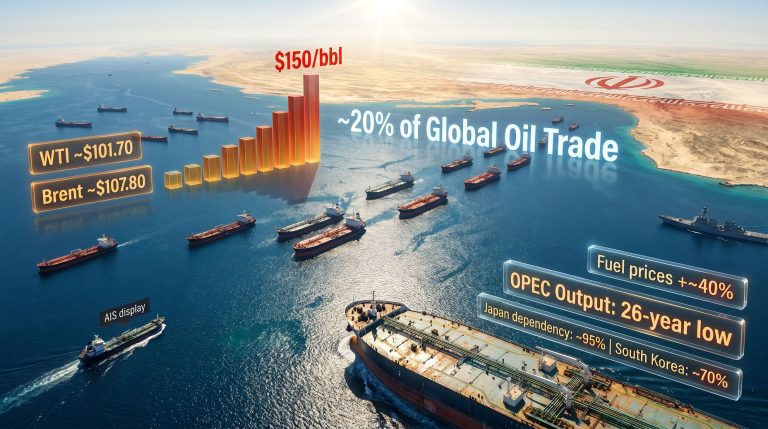
The price transmission effects demonstrate the interconnected nature of global energy markets. Oil prices have surged 50% since the conflict began, climbing from approximately $66-67 per barrel to over $100 per barrel following the breakdown of Islamabad peace negotiations. This price escalation occurs despite the IEA releasing 400 million barrels from strategic reserves, representing 20% of total member country stockpiles.
Key Market Impact Mechanisms:
- Supply elasticity reduction: Export controls remove flexible supply sources from global markets
- Price discovery distortion: Artificial scarcity creates parallel pricing structures between domestic and international markets
- Downstream commodity transmission: Energy restrictions cascade into fertilizer and agricultural markets
- Currency pressure amplification: Dollar-denominated energy costs create additional burdens for import-dependent economies
The Strait of Hormuz, carrying 20% of global oil and LNG flows, represents the critical chokepoint where geopolitical tensions translate into supply disruption. IMF Managing Director Kristalina Georgieva has emphasized that imposing export restrictions during such crises represents counterproductive policy, stating that countries must avoid measures that worsen market disequilibrium.
Export control effectiveness varies significantly based on implementation timing and scope. Historical analysis from the 1970s oil embargos reveals that unilateral restrictions typically fail to achieve energy security objectives while creating substantial spillover effects for other nations. However, the current crisis demonstrates similar patterns, with countries reportedly hoarding energy supplies rather than allowing market-clearing mechanisms to function effectively.
These OPEC production insights reveal how coordinated production decisions interact with emergency response mechanisms during major supply disruptions.
How Do IMF, World Bank, and IEA Institutional Mandates Intersect During Energy Emergencies?
The trilateral coordination between these institutions represents an evolution from traditional sector-specific responses toward integrated policy frameworks. Each organisation brings distinct capabilities and authorities that complement rather than overlap during crisis management.
Institutional Role Differentiation:
| Institution | Primary Function | Crisis Response Tools | Geographic Focus |
|---|---|---|---|
| IMF | Balance of payments stability | Rapid Credit Facility, forecasting | Global membership |
| World Bank | Development finance | Crisis Response Windows, concessional lending | Developing countries |
| IEA | Energy security coordination | Strategic reserve management, supply assessment | OECD members plus partners |
The IMF approaches energy crises primarily through macroeconomic stability frameworks, focusing on inflation management and current account support. During the current disruption, Managing Director Georgieva has been meeting with affected countries across Asia, Sub-Saharan Africa, and South Pacific island nations to assess balance-of-payments pressures from elevated energy import costs.
World Bank engagement centres on development impact mitigation, particularly for vulnerable populations facing energy access challenges. The institution's crisis response mechanisms activate automatically when commodity price shocks threaten poverty reduction goals and social protection systems.
IEA coordination operates through technical assessment and strategic reserve deployment. Chief Fatih Birol has indicated that the organisation maintains 80% of its strategic reserves (approximately 1.2 billion barrels) available for potential future releases, contingent on crisis severity assessments.
The institutional coordination demonstrates recognition that unilateral responses prove insufficient during systemic energy disruptions. As Georgieva noted, "when we act together, the impact of our action is higher," reflecting institutional understanding that integrated approaches generate superior outcomes compared to isolated interventions.
Furthermore, these global market trade impacts demonstrate how energy disruptions amplify existing trade tensions between major economic powers.
When big ASX news breaks, our subscribers know first
Strategic Reserve Management and Market Intervention Mechanisms
What Are the Economics Behind Strategic Petroleum Reserve Releases?
Strategic petroleum reserves function as price stabilisation mechanisms through multiple economic channels. The IEA's 1.6 billion barrel capacity across member countries provides substantial intervention capability, though effectiveness depends on release timing, magnitude, and market expectations about future supply restoration.
Regional Reserve Distribution:
- United States: 714 million barrels (143 days import coverage)
- Europe: 456 million barrels (90 days import coverage)
- Asia-Pacific: 430 million barrels (120 days import coverage)
The current 400 million barrel release represents a significant intervention, yet oil prices have remained above $100 per barrel due to continued supply disruption expectations and geopolitical escalation. This demonstrates that reserve releases operate as temporary supply bridges rather than permanent solutions to underlying production capacity losses.
Market Psychology Factor: Reserve releases affect both physical supply and market sentiment. The IEA's retention of 80% capacity signals institutional preparedness for prolonged disruption while avoiding panic-driven hoarding behaviours.
Economic Transmission Channels:
- Supply curve shifting: Releases increase short-run global supply, reducing price pressure from demand-supply imbalances
- Expectations management: Demonstrated intervention capacity influences speculative trading and storage decisions
- Fiscal impact mitigation: Reduced import costs preserve government budget space for counter-cyclical policies
- Current account stabilisation: Lower energy import bills reduce balance-of-payments pressures for developing economies
The IEA employs conditional release protocols based on disruption severity assessment. Chief Birol's statement that "we are assessing the situation, and if and when we decided it is the time, we are ready to act and act immediately" indicates decision-making frameworks tied to specific trigger mechanisms rather than automatic responses.
Historical effectiveness studies suggest 60-day periods of price moderation following major reserve releases, with diminishing returns beyond 90 days unless accompanied by supply restoration or demand management measures. The current crisis timeline, spanning from February 28 through April 14, 2026, approaches these effectiveness thresholds.
Additionally, monitoring global oil futures provides insight into how strategic reserve announcements influence market expectations and price formation mechanisms.
How Do Multilateral Institutions Address Asymmetric Energy Security Impacts?
Energy crises create disproportionate impacts across different economic structures and development levels. The IMF has identified Asia, Sub-Saharan Africa, and South Pacific island nations as experiencing heightened vulnerability during the current disruption, reflecting structural characteristics that amplify energy security risks.
Vulnerability Factors by Region:
- Small Island Developing States: Limited alternative supply routes and high import dependency
- Sub-Saharan Africa: Constrained fiscal space and limited strategic reserve capacity
- Landlocked economies: Dependence on transit routes that may face disruption during regional conflicts
- Net energy importers: Current account pressures from elevated import costs
The crisis has triggered multi-commodity price transmission effects, with natural gas and fertiliser prices rising alongside oil costs. This creates cascading impacts through agricultural supply chains, particularly affecting food security in developing economies with large rural populations.
Institutional Response Mechanisms:
- IMF Rapid Credit Facility: Emergency balance-of-payments support for countries facing external shocks
- World Bank Crisis Response Windows: Accelerated lending for social protection and infrastructure adaptation
- Regional development bank coordination: Mobilisation of additional financing capacity beyond bilateral sources
- Technical assistance provision: Policy advice on energy subsidy reform and market efficiency improvements
Critical Insight: Countries with diversified energy import sources and stronger fiscal positions demonstrate greater resilience, while those dependent on single supply routes or lacking foreign exchange reserves face acute adjustment pressures.
The coordination emphasises preventing IMF World Bank IEA energy export controls that would worsen asymmetric impacts. When large energy-producing countries implement restrictions, smaller import-dependent nations face price escalation and supply scarcity simultaneously, creating development setbacks that extend beyond the immediate crisis period.
According to international financial institutions, coordinated policy responses prove more effective than unilateral measures during global energy emergencies.
Policy Coordination Architecture During Global Energy Disruptions
What Institutional Mechanisms Enable Rapid Crisis Response Coordination?
The trilateral institutional response operates through established coordination protocols that activate during major commodity market disruptions. These mechanisms enable synchronised assessment, policy advice, and resource mobilisation across different institutional mandates and geographic coverage areas.
Coordination Components:
- Joint forecasting frameworks: Integrated macroeconomic and energy market projections
- Data sharing protocols: Real-time information exchange on trade flows, price movements, and policy responses
- Communication coordination: Synchronised public messaging to influence market expectations
- Resource mobilisation: Combined financing capacity exceeding $200 billion for energy security support
The IMF released updated forecasts on April 15, 2026, whilst the IEA published its monthly oil market report, demonstrating operational integration rather than independent institutional assessments. This coordination prevents conflicting signals that could amplify market volatility during crisis periods.
Emergency response protocols include trigger mechanisms based on supply disruption percentages, price level thresholds, and geographic impact assessments. The current crisis has activated comprehensive response modes across all three institutions, indicating disruption severity exceeding normal market volatility parameters.
How Do International Institutions Balance Market Intervention with Trade Policy Principles?
IMF World Bank IEA energy export controls create tension between national energy security objectives and international trade obligations. The institutional coordination addresses this challenge through policy frameworks that distinguish between temporary emergency measures and protectionist trade policies.
WTO Compatibility Framework:
- Emergency exception provisions: Temporary restrictions justified by national security or essential supply considerations
- Non-discrimination requirements: Export controls must apply equally across trading partners
- Transparency obligations: Notification and consultation procedures for emergency trade measures
- Proportionality standards: Restrictions must relate directly to emergency severity and duration
The IMF, World Bank, and IEA coordinate policy advice emphasising that IMF World Bank IEA energy export controls typically fail to achieve intended security objectives whilst creating negative spillovers for other countries. This guidance helps governments evaluate policy alternatives that preserve energy access without violating international trade commitments.
Alternative Policy Approaches:
- Strategic reserve utilisation: Domestic supply augmentation without restricting exports
- Demand management programmes: Energy efficiency and conservation measures
- Alternative supply development: Infrastructure investment for supply source diversification
- Regional cooperation agreements: Multilateral supply sharing arrangements during emergencies
In addition, the energy security outlook demonstrates how longer-term strategic planning must complement immediate crisis response mechanisms.
Macroeconomic Impact Assessment and Policy Response Design
What Are the Transmission Mechanisms from Energy Price Shocks to Economic Stability?
Energy price increases transmit through multiple economic channels, creating both direct and indirect effects on growth, inflation, and external balances. The current 50% price increase since February 28, 2026, generates impacts that extend far beyond energy-intensive industries.
Primary Transmission Channels:
- Direct inflation effects: Energy costs pass through to consumer prices via transportation, heating, and electricity
- Input cost pressures: Manufacturing and agricultural sectors face elevated production costs
- Currency depreciation: Energy-importing countries experience balance-of-payments deterioration
- Fiscal constraint: Government budgets face pressure from energy subsidy costs and reduced tax revenues
The IMF projects that prolonged energy disruption would generate more severe impacts on growth and inflation, though specific forecast revisions remain conditional on crisis duration and resolution prospects. Countries with flexible exchange rate regimes demonstrate superior adjustment capacity compared to those maintaining fixed currency pegs.
Sectoral Impact Distribution:
| Sector | Direct Exposure | Transmission Mechanism | Adjustment Capacity |
|---|---|---|---|
| Manufacturing | High | Input cost increases | Medium (substitution possible) |
| Transportation | Very High | Fuel cost pass-through | Low (limited alternatives) |
| Agriculture | High | Fertiliser and fuel costs | Low (production cycle constraints) |
| Services | Medium | Indirect cost transmission | High (demand flexibility) |
Central bank policy responses face challenges from supply-driven inflation that monetary tightening cannot directly address. The coordination between institutions emphasises fiscal policy tools and structural reforms that improve energy efficiency rather than relying primarily on monetary policy adjustment.
How Do Development Finance Institutions Adapt Lending During Energy Crises?
World Bank crisis response mechanisms automatically activate during major commodity price shocks, providing accelerated lending procedures and modified conditionality frameworks. These adaptations recognise that standard project timelines prove insufficient during acute external shocks requiring immediate policy responses.
Crisis Lending Modifications:
- Accelerated approval procedures: Reduced processing times for emergency financing
- Flexible conditionality: Policy requirements adapted to crisis-specific circumstances
- Increased lending limits: Higher borrowing capacity for affected countries
- Concessional pricing: Below-market interest rates for vulnerable economies
The coordination with IMF balance-of-payments support ensures that development lending complements rather than conflicts with macroeconomic stabilisation programmes. Countries receiving emergency assistance typically implement comprehensive policy packages addressing both immediate crisis effects and longer-term energy security improvements.
Financing Priority Areas:
- Social protection expansion: Programmes supporting populations affected by energy cost increases
- Infrastructure resilience: Investments improving energy supply diversification
- Efficiency improvements: Projects reducing energy intensity across economic sectors
- Alternative energy development: Accelerated deployment of domestic energy sources
Regional and Sectoral Impact Analysis
Which Economic Sectors Face Greatest Vulnerability During Energy Supply Disruptions?
Energy-intensive industries demonstrate the highest direct vulnerability to supply disruptions and price volatility. However, the broader economic impacts extend through interconnected supply chains and consumer spending patterns that amplify initial sector-specific effects.
Manufacturing Sector Analysis:
- Chemical production: Natural gas feedstock dependencies create production constraints
- Steel and aluminium: Energy costs represent 20-30% of total production expenses
- Cement manufacturing: Fuel-intensive processes with limited substitution options
- Automotive assembly: Supply chain disruptions from component supplier impacts
The agricultural sector faces dual pressures from elevated fuel costs and fertiliser price increases, with natural gas serving as a primary fertiliser production input. This creates food security implications that extend beyond immediate energy sector effects, particularly affecting developing economies with large rural populations.
Transportation and Logistics Impact:
- Maritime shipping: Fuel costs represent 50-60% of operational expenses during price spikes
- Aviation industry: Jet fuel price transmission with limited hedging capacity for smaller carriers
- Ground transportation: Consumer price effects through fuel cost pass-through
- Supply chain management: Logistics cost increases affecting all traded goods
Service sector exposure occurs primarily through indirect channels, including energy cost pass-through and reduced consumer spending on discretionary services. However, digital services demonstrate relative resilience compared to physical goods sectors.
How Do Geographic Factors Influence Energy Security Policy Responses?
Geographic characteristics create differential vulnerability patterns that influence both crisis impact severity and policy response effectiveness. Island nations, landlocked countries, and regions dependent on specific transportation routes face heightened exposure during supply disruptions.
South Pacific Island Vulnerabilities:
- Import dependency ratios approaching 100% for petroleum products
- Limited storage capacity preventing strategic reserve accumulation
- Transportation cost sensitivity to global shipping rate fluctuations
- Currency constraints limiting import financing during price spikes
Sub-Saharan Africa Exposure Factors:
- Infrastructure limitations restricting alternative supply route development
- Fiscal constraints preventing countercyclical policy responses
- Foreign exchange shortages during commodity price deterioration
- Regional conflict spillovers affecting cross-border trade arrangements
Arctic and remote regions face unique challenges during global supply chain disruptions, with seasonal accessibility constraints and extreme weather conditions complicating alternative supply arrangements. These areas typically maintain higher strategic reserves but face elevated costs for replenishment during crisis periods.
Policy Response Adaptations:
- Regional cooperation frameworks: Multilateral supply sharing agreements
- Infrastructure investment priorities: Alternative route development and storage expansion
- Financial mechanism design: Currency hedging and import financing facilities
- Emergency protocol establishment: Pre-positioned response capabilities for future disruptions
Future Policy Framework Development
What Lessons Emerge for Multilateral Energy Security Coordination?
The current crisis reveals both strengths and limitations in existing international energy security architecture. The successful trilateral coordination between IMF, World Bank, and IEA demonstrates institutional learning from previous disruptions, whilst highlighting areas requiring enhancement for future crisis preparedness.
Coordination Strengths Identified:
- Rapid activation: Institutional response mechanisms engaged within six weeks of conflict initiation
- Message consistency: Coordinated policy advice preventing market confusion
- Resource mobilisation: Combined financing capacity deployment exceeding individual institutional limits
- Technical integration: Joint forecasting and assessment procedures
Framework Enhancement Areas:
- Early warning systems: Enhanced indicators for energy market disruption detection
- Pre-positioned financing: Standby facilities activated automatically during crisis thresholds
- Regional institution integration: Broader coordination including development banks and commodity organisations
- Private sector engagement: Market maker coordination and supply chain resilience partnerships
The crisis demonstrates that IMF World Bank IEA energy export controls create negative-sum outcomes where national security measures reduce global welfare without achieving intended protection objectives. Future coordination frameworks should emphasise alternative policy tools that preserve energy access whilst addressing legitimate security concerns.
Consequently, the IMF policy coordination framework establishes precedents for enhanced multilateral crisis response capabilities.
How Might This Crisis Reshape International Energy Governance?
The unprecedented scale of current energy market disruption may catalyse structural reforms in international energy governance architecture. Existing institutions face pressure to adapt authorities and procedures to address evolving threat patterns and coordination requirements.
Potential IEA Reforms:
- Membership expansion: Including major developing economy energy consumers
- Reserve coordination: Enhanced joint management and deployment protocols
- Crisis authority: Streamlined decision-making during emergency periods
- Technology integration: Renewable energy coordination alongside traditional reserves
Enhanced IMF–World Bank–IEA Framework:
- Permanent coordination structures: Standing committees for energy security oversight
- Integrated assessment capabilities: Joint monitoring and forecasting systems
- Policy instrument coordination: Synchronised deployment of financial and technical tools
- Regional partnership expansion: Inclusion of commodity-focused international organisations
Climate transition integration represents a critical consideration for future energy governance evolution. The crisis highlights tensions between short-term fossil fuel security and long-term renewable energy transition objectives, requiring policy frameworks that address both imperatives simultaneously.
Governance Evolution Directions:
- Multilateral supply agreements: Coordinated strategic reserve management across broader country groups
- Technology cooperation frameworks: Joint investment in alternative energy infrastructure
- Financial mechanism integration: Combined crisis response and development finance tools
- Trade policy coordination: Synchronised approaches to emergency export control management
The next major ASX story will hit our subscribers first
Frequently Asked Questions
What triggers coordinated international energy crisis response?
Response triggers include supply disruptions affecting more than 10% of global trade, price increases exceeding 50% within 30 days, or threats to energy access in multiple developing countries simultaneously. The current crisis meets all these criteria.
How effective are strategic reserve releases in stabilising energy prices?
Historical analysis shows 60-day effectiveness in moderating price spikes, with diminishing returns beyond 90 days unless accompanied by demand management or supply restoration measures. Current IEA reserves provide substantial intervention capacity.
What financing is available for countries affected by energy price shocks?
IMF Rapid Credit Facility, World Bank Crisis Response Windows, and regional development bank emergency lending provide combined capacity exceeding $200 billion for energy security support through various financing instruments.
Why do energy export controls worsen global energy security?
Export controls fragment markets, reduce price discovery efficiency, and amplify volatility whilst disproportionately impacting energy-importing developing countries through higher costs and reduced supply access.
How do institutions coordinate policy advice during energy crises?
Through joint assessment protocols, synchronised forecasting releases, and coordinated public messaging that emphasises market-based solutions over protectionist trade measures.
This analysis examines institutional coordination mechanisms during energy market disruptions based on current crisis response patterns and established policy frameworks. Energy market conditions remain highly volatile and subject to rapid change based on geopolitical developments and policy interventions.
Looking to Navigate Energy Market Volatility and Discover Investment Opportunities?
As global energy markets face unprecedented disruption and institutional coordination efforts reshape international frameworks, investors must identify opportunities emerging from market volatility. Discovery Alert's proprietary Discovery IQ model delivers real-time insights into ASX mineral discoveries, helping you capitalise on energy transition opportunities whilst major institutions coordinate crisis responses. Begin your 14-day free trial today to position yourself ahead of shifting market dynamics and uncover actionable investment opportunities during these transformative times.