
July 30, 2026
Strategic Commodity Resilience: Analyzing Middle Eastern Conflict Impacts on Industrial Metal Markets
Global industrial metal markets face unprecedented complexity as energy supply chains experience disruption from Middle Eastern military operations. The impact of Iran war on copper market creates ripple effects through copper investment strategies that extend far beyond regional boundaries. Traditional commodity pricing models increasingly incorporate geopolitical risk premiums that reflect the interconnected nature of energy costs, transportation networks, and mining operations across international borders.
The relationship between regional conflicts and copper market dynamics extends beyond simple supply-demand calculations. Modern copper production relies heavily on energy-intensive processes, creating vulnerability to fuel cost fluctuations that can persist for months beyond initial disruptions. Furthermore, this systemic interdependence requires investors and industry participants to evaluate multiple transmission channels through which geopolitical tensions affect metal pricing.
Current market conditions suggest a fundamental shift toward risk-adjusted commodity valuations. Financial markets now price industrial metals with explicit consideration of supply chain security, energy cost volatility, and transportation route reliability. This evolution reflects lessons learned from previous commodity cycles where geopolitical events created lasting structural changes in production economics.
When big ASX news breaks, our subscribers know first
Critical Infrastructure Vulnerabilities in Copper Supply Chains
The Strait of Hormuz controls approximately one-fifth of global petroleum flows, creating indirect pressure on copper markets through energy cost transmission mechanisms. When this maritime corridor experiences operational constraints, copper smelting facilities worldwide encounter elevated operational expenses, particularly affecting energy-intensive pyrometallurgical processes.
Modern copper production requires substantial energy inputs across multiple stages. Smelting operations consume 2.5-3.0 megawatt-hours of electricity per tonne of refined copper, while roasting sulfide ores demands significant natural gas consumption for furnace heating. These energy requirements make copper production particularly sensitive to regional fuel price increases, especially when considering tariff impacts on copper pricing structures.
Transportation route diversification imposes significant cost penalties on copper concentrate movements. Alternative shipping pathways typically increase freight expenses by 15-25% compared to standard routes, while specialised marine insurance for conflict-affected regions commands premiums 200-400% above normal coverage rates. These additional costs create pricing floors that support higher copper valuations regardless of immediate demand conditions.
Regional Production Centre Analysis
Different copper-producing regions exhibit varying degrees of vulnerability to Middle Eastern energy disruptions. However, these variations significantly influence global copper supply forecasts across different territories:
• Chilean Operations: Primarily hydroelectric-powered smelters show lower direct energy cost exposure, though mining equipment relies heavily on diesel fuel imports
• Zambian Facilities: Hydroelectric generation provides some insulation, but sulfuric acid supplies depend on global sulfur markets linked to petroleum refining
• Chinese Smelters: Coal-dominated electricity generation creates different risk profiles, with natural gas used for specialised metallurgical processes
• Peruvian Operations: Mixed energy portfolio includes natural gas exposure, particularly for newer processing facilities
Energy Cost Escalation and Production Economics
Rising energy prices create cascading effects throughout copper production chains. Smelting operations face the most immediate impact, as electricity and natural gas represent 20-25% of total processing costs. When energy prices increase substantially, some facilities may reduce capacity utilisation or temporarily halt operations if spot prices exceed long-term contract coverage.
The sulfuric acid supply chain presents additional vulnerabilities for hydrometallurgical copper processing. Approximately 15-20% of global sulfuric acid originates from Middle Eastern petroleum refining operations as a byproduct. Disruptions to Gulf refinery operations can tighten acid availability for copper leaching facilities, particularly affecting African Copper Belt operations that process oxidised copper ores.
In addition, transportation fuel costs impact mining operations through equipment operation and concentrate hauling. Open-pit mines typically consume 15-20 litres of diesel per tonne of ore moved, while underground operations require additional fuel for ventilation and materials handling. A 30-45% increase in diesel prices, as experienced during regional conflicts, directly affects mine-site production costs, which could significantly influence upcoming copper price forecast projections.
Energy Input Cost Assessment
| Energy Source | Pre-Conflict Baseline | Current Premium Range | Production Stage Impact |
|---|---|---|---|
| Natural Gas | $8-12/MMBtu | +35-55% | Smelter furnace operations |
| Industrial Electricity | $0.08-0.15/kWh | +20-40% | Electrolytic refining |
| Marine Gas Oil | $650-750/tonne | +25-40% | Mining equipment operation |
| Heavy Fuel Oil | $450-550/tonne | +40-65% | Power generation at remote sites |
Federal Reserve Policy Implications and Dollar Strength
Rising energy costs reduce Federal Reserve rate reduction probabilities, creating headwinds for dollar-denominated commodities including copper. The 10-year Treasury yield increase to approximately 4.10% reflects market expectations that inflationary pressures from energy costs may persist beyond immediate conflict resolution periods.
Higher interest rates strengthen the US dollar, making copper more expensive for international buyers and potentially reducing demand from price-sensitive applications. However, strategic stockpiling behaviours and supply chain security considerations may offset traditional demand destruction patterns observed during previous economic slowdowns.
Industrial copper consumption typically declines 8-12% during recession periods, but current market conditions include additional factors that complicate standard demand forecasting. Consequently, government strategic reserve policies and corporate inventory building for supply security create demand layers that operate independently of traditional industrial consumption patterns.
Iran's Position in Global Copper Markets
Iran produced approximately 279,700 tonnes of copper in 2023, representing roughly 2% of global mine production. While this direct contribution appears modest, the country's position within broader Middle Eastern mining and logistics networks creates multiplier effects through regional supply chain disruptions.
The nation's substantial mineral reserves, including copper deposits and industrial minerals, represent long-term supply potential that forward-looking markets incorporate into price discovery mechanisms. Extended conflict scenarios could effectively remove this production capacity from global development pipelines, tightening future supply projections and affecting Argentinian copper systems as alternative sources gain prominence.
Iran's 87.9 million tonnes of iron ore production in 2023 demonstrates the country's broader significance in industrial minerals markets. Disruptions to Iranian mining operations create ripple effects across steel production and related copper-intensive infrastructure development projects globally.
Financial Market Positioning and Trading Dynamics
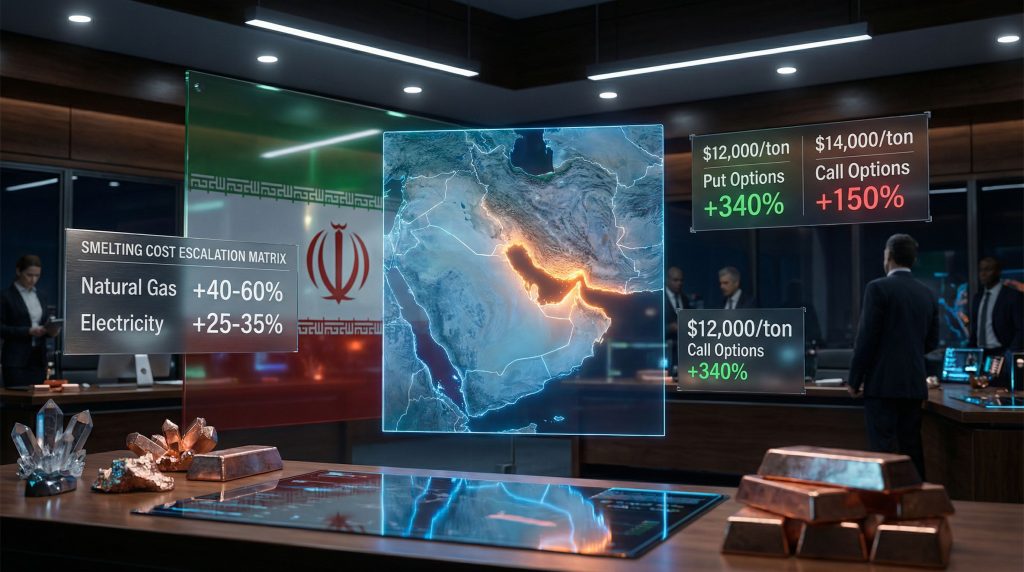
Options market activity reveals sophisticated positioning strategies as traders hedge against extended conflict scenarios. Put option volumes at $11,500-12,000 per tonne strike prices increased 250-350%, indicating widespread downside protection strategies among institutional participants.
Simultaneously, call option interest at $14,000-15,000 per tonne strikes expanded significantly, suggesting market participants also position for prolonged supply disruptions that could support higher prices. This dual positioning reflects uncertainty about conflict duration and economic impact magnitude.
Exchange inventory patterns show geographic divergence, with London Metal Exchange warehouses accumulating stocks while Shanghai inventories decline. For instance, this dispersion suggests regional markets price different risk scenarios, with Chinese participants focusing on domestic demand concerns while Western markets emphasise supply security premiums.
Options Market Activity Analysis
| Strike Price Range | Contract Type | Volume Change | Market Signal |
|---|---|---|---|
| $11,000-11,500/tonne | Put Options | +280-320% | Downside protection |
| $12,000-12,500/tonne | Put Options | +180-220% | Risk management |
| $14,000-14,500/tonne | Call Options | +120-160% | Upside positioning |
| $15,000+/tonne | Call Options | +60-100% | Extended conflict hedging |
The next major ASX story will hit our subscribers first
Regional Market Response Variations
Shanghai Futures Exchange copper prices exhibit different behaviour compared to London Metal Exchange benchmarks, reflecting distinct regional risk assessments. The SHFE-LME spread widening indicates Chinese market participants price scenarios emphasising domestic economic growth concerns over supply disruption premiums.
Yangshan copper premiums, which measure the cost advantage of importing refined copper into China, show compression despite global supply concerns. This pattern suggests adequate near-term copper availability in Asian markets, contrasting with tighter physical conditions in European and North American regions where energy costs create more pronounced operational pressures.
European copper premiums increased significantly as regional smelters face higher natural gas costs and potential supply allocation challenges. The premium structure reflects both higher production costs and buyer willingness to pay security-of-supply premiums during uncertain periods.
Long-Term Strategic Market Implications
Mining companies accelerate supply chain diversification initiatives, investing in processing facilities located outside traditional Middle Eastern energy-dependent corridors. These structural adjustments support higher long-term copper price floors as operational redundancy costs become incorporated into global production economics.
Critical minerals security frameworks gain momentum across developed economies, creating additional demand layers through government stockpiling programmes. These strategic reserve policies operate independently of traditional industrial demand cycles, providing price support during economic downturns while adding upward pressure during supply constraints.
Furthermore, infrastructure investment in alternative energy sources for mining operations accelerates as companies seek to reduce exposure to volatile fossil fuel markets. Solar and wind power projects at mine sites, while requiring substantial copper for construction, ultimately reduce operational exposure to petroleum price volatility.
Scenario Analysis: Three Conflict Duration Pathways
Short-Term Resolution Framework (2-4 weeks)
Copper prices likely return to $13,000-13,500 per tonne range as risk premiums normalise. Energy cost increases prove temporary, allowing smelter operations to resume normal capacity utilisation. Speculative trading positions unwind in orderly fashion without creating additional market volatility.
Medium-Term Escalation Scenario (2-6 months)
Sustained $14,000-15,000 per tonne copper pricing becomes established as energy costs remain elevated and supply chain modifications prove necessary. Alternative transportation routes become permanent fixtures, incorporating higher logistics costs into long-term production economics. In addition, mining companies implement accelerated energy diversification programmes.
Extended Regional Conflict Pathway (6+ months)
Potential copper pricing above $16,000 per tonne as structural supply chain changes become permanent features of global markets. Logistics networks undergo fundamental reorganisation, while strategic materials policies receive comprehensive government overhauls. Alternative energy infrastructure at mining operations advances rapidly.
How Does Middle East Conflict Affect Global Copper Trade?
The impact of Iran war on copper market creates complex trade disruptions beyond direct production effects. Maritime insurance costs for vessels traversing Middle Eastern waters increase dramatically, with commodity market analysts reporting premiums exceeding traditional coverage by several hundred percentage points.
Shipping route diversification becomes essential for maintaining supply chain security, but alternative pathways often increase transit times by 10-15 days and costs by 20-30%. These additional expenses ultimately affect global copper pricing structures and regional availability patterns.
Investment Strategy Framework
Risk-adjusted portfolio construction benefits from diversified mining equity exposure rather than direct commodity positions during geopolitical volatility periods. Companies operating outside Middle Eastern energy influence zones command valuation premiums reflecting lower operational risk profiles.
Industrial copper consumers optimise hedging strategies through layered approaches combining physical inventory increases, financial derivatives coverage, and supply contract diversification. This multi-faceted risk management addresses both price volatility and potential availability constraints during extended disruption periods.
Key Investment Considerations:
• Geographic Diversification: Mining operations with renewable energy sources or non-Middle Eastern energy supplies
• Vertical Integration: Companies controlling multiple supply chain stages reduce third-party logistics dependencies
• Technology Exposure: Firms developing energy-efficient processing technologies benefit from structural cost advantages
• Strategic Partnerships: Mining companies with government strategic reserve contracts provide demand stability
However, experts warn that geopolitical tensions could reshape commodity markets fundamentally, requiring investors to reconsider traditional risk assessment models when evaluating copper-related investments.
The impact of Iran war on copper market extends beyond immediate supply considerations to encompass fundamental changes in how global commodity markets assess and price geopolitical risks. Current developments suggest lasting modifications to energy-intensive industrial processes and supply chain security protocols that will influence copper market dynamics well beyond immediate conflict resolution.
Investment Disclaimer: The analysis presented reflects current market conditions and geopolitical developments that remain highly fluid. Commodity investments carry substantial risks, including complete loss of invested capital. Past performance does not guarantee future results, and forward-looking statements involve uncertainties that may materially affect actual outcomes. Investors should conduct independent due diligence and consult qualified financial advisors before making investment decisions based on geopolitical commodity analysis.
Ready to Capitalise on Copper Market Volatility?
Discovery Alert's proprietary Discovery IQ model delivers real-time notifications on significant ASX mineral discoveries, including copper finds, instantly empowering subscribers to identify actionable opportunities ahead of broader market movements during volatile geopolitical periods. Understand why major mineral discoveries can lead to substantial market returns by exploring historic examples of exceptional outcomes, then begin your 14-day free trial today to position yourself ahead of the market.