May 20, 2026
What Is In-Pit Sizing and Why Does It Matter for REE Operations?
The global appetite for rare earth elements has reached unprecedented levels, driven by the accelerating transition to clean energy technologies. Mining operations worldwide face mounting pressure to optimize their processing capabilities while managing increasingly complex geological environments. Traditional comminution approaches, developed decades ago for simpler ore bodies, struggle to maintain consistent performance when confronted with the variable mineralogy and challenging material properties that characterise many modern rare earth deposits.
In-pit sizing for rare earth elements represents a fundamental shift in how mining operations approach front-end material processing. Rather than relying on conventional multi-stage crushing circuits located away from the mining face, this technology positions specialised twin-shaft sizing equipment directly within or adjacent to the extraction point. The approach transforms raw ore into consistently sized, conveyable material before it ever leaves the pit environment.
Defining In-Pit Sizing Technology
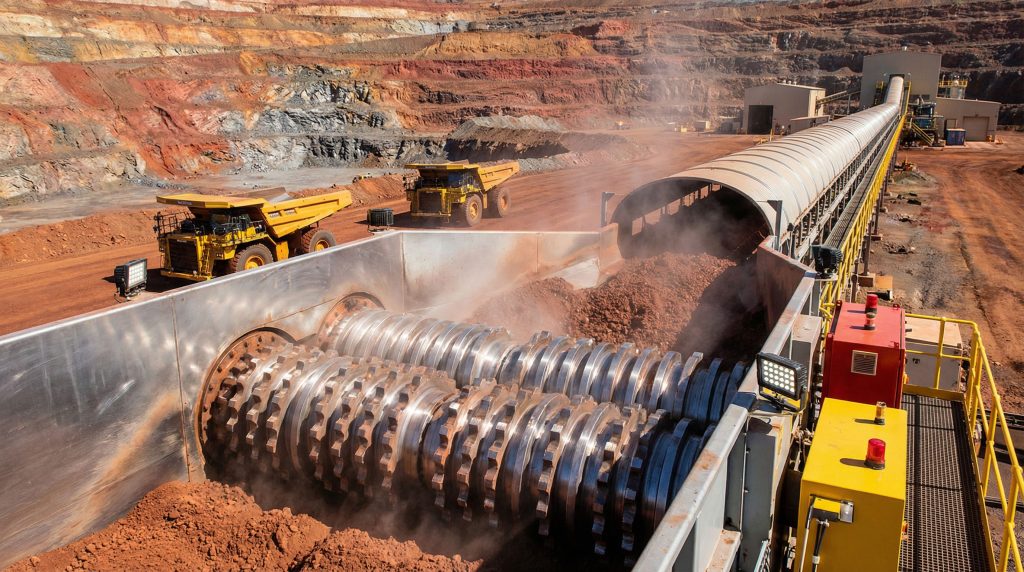
In-pit sizing for rare earth elements centres around the deployment of twin-shaft mineral sizers that condition ore to predetermined specifications at the point of extraction. These machines utilise counter-rotating shafts equipped with specially configured teeth to fracture and size material through a combination of crushing, shearing, and tension forces. Unlike traditional crushers that rely primarily on compression, sizers generate multiple fracture mechanisms simultaneously, creating more consistent particle size distribution while maintaining throughput stability.
The twin-shaft design incorporates self-cleaning capabilities that prove essential when processing materials with high clay content or elevated moisture levels. As the shafts rotate in opposite directions, they create a scraping action that prevents material buildup and maintains consistent gaps between teeth. This mechanism addresses one of the primary challenges faced by conventional crushing equipment when processing sticky or plastic materials common in weathered rare earth deposits.
Modern sizer configurations feature purpose-designed gearboxes that provide precise speed control and torque management across varying material conditions. The equipment can accommodate different tooth configurations, from standard arrangements suitable for typical hard rock processing to custom designs optimised for specific mineralogical challenges. Variable speed operation allows operators to adjust processing parameters in real-time based on changing ore characteristics or throughput requirements.
The REE Processing Challenge
Rare earth deposits present unique processing challenges that stem from their complex geological origins and distinctive mineralogy. Australian operations commonly encounter monazite and bastnäsite-dominated systems that contain intricate mixtures of clay minerals, weathered saprolite zones, and fresh rock intervals. This heterogeneous composition creates significant variability in material behaviour during processing.
Demand for rare earths has doubled over the past decade, with the International Energy Agency forecasting potential doubling again by 2050. Australia's rare earth potential holds significant promise as the nation contains substantial reserves, positioning the country as a crucial supplier outside China's traditional dominance. The US-Australia Critical Minerals Framework has established strategic cooperation to accelerate diversified production capabilities across Australian operations.
Clay mineral interactions represent one of the most challenging aspects of REE processing. When exposed to moisture fluctuations common in Australian climates, clay-rich materials exhibit plastic behaviour that can bind traditional crushing equipment and create irregular throughput patterns. Montmorillonite and kaolinite clays, frequently encountered in lateritic deposits, absorb water and expand, altering material flow characteristics and adhesion properties.
Weathered profile variations add another layer of complexity to mineralogy & mining economics considerations. Saprolite zones may contain partially weathered minerals with highly variable hardness characteristics, creating unpredictable wear patterns on conventional crushing equipment. Fresh rock intervals demand different processing approaches than weathered materials, yet both may be encountered within the same mining bench or even individual truck loads.
When big ASX news breaks, our subscribers know first
How Do Traditional REE Comminution Circuits Compare to In-Pit Sizing?
Traditional rare earth processing circuits follow established patterns developed for more predictable ore types, typically incorporating primary jaw crushers, secondary cone crushers, and tertiary crushing or milling stages depending on final product size requirements. These systems demand extensive structural and civil engineering works, multiple conveyor installations, and fixed plant locations that limit operational flexibility.
Conventional approaches generate substantial dust emissions and require significant power consumption in downstream milling operations. Multiple transfer points, often numbering five to seven stages, create opportunities for material degradation and equipment wear while complicating maintenance requirements. The rigid infrastructure demands of traditional circuits limit their adaptability to changing ore characteristics or mining sequences.
Conventional Processing Limitations
Multi-stage crushing requirements in traditional circuits create cascading effects when processing variable rare earth ores. Primary jaw crushers may perform adequately on harder fresh rock but struggle with sticky clay-rich materials, leading to reduced throughput and increased wear rates. Secondary cone crushers face similar challenges, with the added complexity of managing material that has already been partially processed and may exhibit different flow characteristics.
Capital expenditure for conventional crushing infrastructure typically involves substantial concrete foundations, steel structures, and permanent conveyor installations. These fixed assets represent significant upfront investment and limit the ability to relocate processing capabilities as mining operations expand or shift to new areas. The infrastructure intensity of traditional approaches makes them less suitable for satellite pit operations or distributed mining scenarios.
Material transfer point complications multiply in conventional circuits as ore moves through successive crushing stages. Each transfer point introduces opportunities for spillage, dust generation, and equipment blockages. Furthermore, maintenance access becomes challenging when multiple levels of conveyors and transfer chutes must be serviced regularly. The complexity of material flow management increases exponentially with the number of processing stages.
Power consumption inefficiencies emerge in downstream milling when conventional crushing fails to produce consistent feed sizes. Variable feed characteristics force mills to operate below optimal parameters, reducing overall plant efficiency and increasing specific energy consumption. The energy penalty compounds when considering the power required to operate multiple stages of conventional crushing equipment.
In-Pit Sizing Operational Advantages
In-pit sizing for rare earth elements reduces material handling complexity by consolidating multiple processing functions into a single operation positioned at the source. This approach can reduce total material handling costs by 15-25% compared to traditional truck-and-dump operations, with additional benefits including 30% reduction in dust emissions and 20% decrease in fuel consumption for haulage operations.
Consistent feed conditioning occurs early in the material-handling chain, improving downstream processing efficiency and reducing variability in plant performance. The proximity to extraction points minimises transportation requirements and enables real-time adjustment of processing parameters based on changing ore characteristics. Mobile deployment capabilities allow equipment to follow mining sequences and adapt to new extraction areas without major infrastructure modifications.
Self-cleaning design benefits prove particularly valuable when processing wet and sticky materials common in rare earth environments. The counter-rotating shaft configuration prevents material buildup that would halt conventional crushers, maintaining continuous operation even under challenging conditions. This reliability advantage translates directly into improved plant utilisation rates and reduced production delays.
| Parameter | Traditional Circuit | In-Pit Sizing |
|---|---|---|
| Capital Investment | High (fixed infrastructure) | Moderate (mobile equipment) |
| Material Transfer Points | Multiple (5-7 stages) | Reduced (2-3 stages) |
| Moisture Tolerance | Limited | Excellent |
| Operational Flexibility | Low | High |
| Dust Generation | Significant | Minimised |
| Power Consumption | High (multiple stages) | Optimised (single stage) |
| Maintenance Complexity | High (multiple systems) | Moderate (single system) |
| Equipment Mobility | Fixed location | Mobile deployment |
What Engineering Factors Determine Optimal Sizer Selection for REE Projects?
Selecting appropriate in-pit sizing equipment requires comprehensive evaluation of material properties, production requirements, and site-specific constraints. The assessment process begins with detailed characterisation of ore properties including size distribution, compressive strength measured in megapascals, abrasion index values, moisture content ranges, bulk density measurements, plasticity characteristics, oversize frequency patterns, and contaminant identification.
Material property assessment forms the foundation for equipment selection decisions. Geological characterisation must account for seasonal variations in moisture content, particularly important in Australian climates where wet and dry seasons significantly affect clay behaviour. Weathered profile mapping helps predict material property variations across the deposit and informs processing strategy development.
Material Property Assessment
Compressive strength measurements provide crucial input for determining appropriate sizer models and tooth configurations. Mineral deposit tiers often exhibit wide strength variations, from soft weathered materials measuring below 10 MPa to fresh rock intervals exceeding 100 MPa. This variability demands equipment capable of handling the full range without compromising performance on either end of the spectrum.
Abrasion index testing quantifies wear potential and guides selection of appropriate tooth materials and wear package designs. Highly abrasive gangue minerals common in some rare earth deposits require specialised wear-resistant alloys and may necessitate more frequent tooth replacement intervals. Understanding abrasion characteristics early in the design process prevents costly modifications later in the project lifecycle.
Moisture content analysis must consider both average values and seasonal fluctuations that affect material behaviour. Clay-rich rare earth ores may behave as free-flowing materials at low moisture levels but become plastic and sticky as moisture increases. Equipment selection must account for worst-case moisture scenarios while maintaining acceptable performance across the full moisture range.
Bulk density measurements influence conveyor design, structural requirements, and throughput calculations. Rare earth ores often exhibit lower bulk densities than typical hard rock materials, affecting equipment sizing and support structure specifications. Accurate density data ensures proper equipment selection and prevents overdesign that increases capital costs unnecessarily.
Performance Specification Development
Throughput targets must account for peak surge capacity requirements and feed rate variations typical in mining operations. Truck dumping creates intermittent feed patterns that equipment must accommodate without compromising product quality or causing system blockages. Surge capacity planning typically requires equipment rated 25-50% above average throughput requirements.
Product size requirements directly influence sizer model selection and tooth configuration design. Downstream processing capabilities determine maximum acceptable product sizes, while minimum size requirements affect selection of tooth spacing and shaft speeds. Consistent size distribution becomes increasingly important as downstream processes become more sophisticated and sensitive to feed variations.
Interface height considerations affect equipment positioning and integration with existing infrastructure. Discharge angles must accommodate downstream conveyor systems while maintaining adequate clearance for maintenance access. Structural limitations at existing operations may constrain equipment options and require custom modifications to standard designs.
Footprint constraints become critical factors in brownfield applications where space limitations restrict equipment placement options. Mobile sizer configurations offer advantages in confined spaces but may require different approaches to power supply and maintenance access. In addition, greenfield projects provide more flexibility but still must consider future expansion requirements and operational workflows.
Tooth Configuration and Wear Package Design
Standard tooth arrangements work well for typical hard rock applications but may require modification for rare earth processing challenges. Custom tooth designs address specific mineralogical characteristics such as unusual lump shapes, high clay content, or extremely abrasive components. Tooth height, pitch, and angle adjustments optimise performance for specific material conditions.
Breaker bar modifications accommodate unusual oversize frequency patterns or irregular lump shapes common in some rare earth deposits. Standard breaker bars may prove inadequate for materials with high clay content that tend to bridge rather than fracture cleanly. Custom breaker bar designs incorporate features that promote material flow and prevent bridging.
Wear-resistant materials selection balances performance requirements with cost considerations. Premium alloys provide extended service life in highly abrasive conditions but increase initial costs and may not be justified for less demanding applications. Material selection must consider total lifecycle costs including replacement frequency, downtime impacts, and inventory requirements.
Self-cleaning mechanisms require enhanced design attention for clay-rich rare earth environments. Standard self-cleaning features may prove insufficient for materials with high plasticity that tend to build up on equipment surfaces. Enhanced self-cleaning designs incorporate additional scraping elements, modified shaft profiles, or vibration systems to maintain clean operating surfaces.
Which REE Deposit Types Benefit Most from In-Pit Sizing Implementation?
Different rare earth deposit types present varying challenges that influence the suitability of in-pit sizing approaches. Lateritic deposits, weathered granitoid systems, carbonatite-hosted occurrences, and multi-pit operations each exhibit characteristics that affect processing requirements and equipment selection decisions. Critical minerals & energy transition considerations further emphasise the importance of efficient processing technologies.
Deposit type evaluation must consider geological complexity, material property variations, operational requirements, and economic factors. Understanding these relationships helps operators make informed decisions about processing approaches and equipment investments that align with specific deposit characteristics and operational objectives.
Lateritic and Weathered Granitoid Systems
Lateritic rare earth deposits develop through intensive weathering processes that create distinctive vertical profiles with varying material characteristics. Surface zones typically contain high clay concentrations with elevated moisture sensitivity, while deeper intervals may preserve more original rock texture with reduced clay content. This vertical variability creates processing challenges that conventional crushing struggles to address consistently.
Clay content management becomes critical in saprolite zones where montmorillonite and kaolinite minerals dominate the gangue assemblage. These clay minerals exhibit significant volume changes with moisture variations, affecting material flow characteristics and equipment performance. Seasonal moisture fluctuations common in Australian climates compound these challenges by creating time-dependent processing conditions.
Moisture fluctuation impacts extend beyond simple material handling concerns to affect downstream processing efficiency. High moisture content reduces mill effectiveness and may require additional drying steps that increase operating costs. However, in-pit sizing for rare earth elements helps stabilise moisture-related processing variations by providing consistent material preparation regardless of seasonal conditions.
Plastic material behaviour under varying conditions creates unpredictable operating scenarios for conventional equipment. Materials that flow freely during dry periods may become sticky and cohesive when moisture levels increase, leading to equipment blockages and production interruptions. The self-cleaning design of sizers specifically addresses these behavioural changes.
Carbonatite-Hosted Deposits
Carbonatite-hosted rare earth deposits present different challenges compared to lateritic systems, typically involving harder rock processing requirements with variable mineralogy within single operations. Fresh carbonatite may exhibit compressive strengths exceeding 150 MPa, demanding robust equipment capable of handling high-strength materials efficiently.
Variable mineralogy within single operations creates equipment selection challenges as different zones within the deposit may require different processing approaches. Some areas may contain soft, weathered material while adjacent zones feature fresh, hard rock. Equipment must handle this variability without compromising performance or requiring constant operational adjustments.
Abrasive gangue mineral considerations become important in carbonatite systems where calcite, dolomite, and other carbonate minerals may create significant wear challenges. While these minerals are generally less abrasive than silicates, their abundance in carbonatite systems can contribute to accelerated wear rates in conventional crushing equipment.
Scale flexibility requirements in carbonatite operations often involve processing different pit zones with varying tonnage requirements. In-pit sizing provides the operational flexibility to match equipment capacity with local production requirements while maintaining consistent product quality across all processing zones.
Multi-Pit Operations and Satellite Deposits
Equipment mobility requirements between locations become paramount in operations involving multiple satellite pits or phased development sequences. Traditional fixed crushing plants cannot accommodate the geographic distribution typical of many rare earth projects, where economic deposits may be scattered across large areas.
Consistent processing across varying ore types challenges conventional approaches when different pits produce materials with significantly different characteristics. Consequently, in-pit sizing provides standardised processing capability that adapts to local material conditions while maintaining consistent product specifications across all production areas.
Mining innovation trends increasingly favour operational efficiency in distributed mining scenarios. This requires equipment that can be relocated quickly and economically as mining sequences shift between different areas. Mobile sizer configurations eliminate the infrastructure requirements that limit conventional plant flexibility and reduce the time required to establish processing capability in new areas.
Infrastructure minimisation benefits become increasingly important as the number of satellite operations increases. Each traditional crushing plant requires substantial civil works, power infrastructure, and maintenance facilities. In-pit sizing reduces these requirements while providing processing capability that matches the scale of individual satellite operations.
How Does Equipment Customisation Address Specific REE Processing Challenges?
Standard sizer configurations provide adequate performance for many applications, but rare earth processing often demands specialised modifications to address unique material characteristics and operational requirements. Customisation focuses on moisture adaptation, abrasion resistance, and throughput optimisation to match equipment capabilities with specific processing challenges.
Equipment modifications must balance performance improvements with cost implications and maintenance complexity. Extensive customisation may provide superior performance but could complicate spare parts inventory and maintenance procedures. Successful customisation programmes identify the most critical performance factors and focus modifications on areas with the greatest impact.
Moisture-Adaptive Design Features
Enhanced self-cleaning mechanisms for wet conditions incorporate additional scraping elements, modified tooth profiles, and drainage systems designed specifically for high-moisture environments. These features prevent the material buildup that would halt conventional equipment when processing sticky clay-rich ores common in lateritic deposits.
Modified hopper configurations address material flow challenges created by sticky materials that tend to bridge or hang up in standard designs. Enhanced hopper designs may incorporate steeper angles, vibration systems, or air injection systems to promote consistent material flow regardless of moisture content variations.
Drainage system integration becomes essential in high-moisture environments where water management affects both equipment performance and environmental compliance. Integrated drainage systems collect and direct process water for treatment or reuse while preventing accumulation that could affect material flow or equipment operation.
Temperature-resistant components address the thermal cycling that occurs in mobile equipment exposed to varying climatic conditions. Australian operations may experience extreme temperature variations between seasons, affecting equipment performance and component longevity. Enhanced sealing systems, temperature-stable lubricants, and thermal expansion considerations ensure consistent performance across temperature ranges.
Abrasion-Resistant Modifications
Specialised wear liner materials address the accelerated wear rates that occur when processing highly abrasive rare earth ores. Premium alloy compositions provide extended service life but require careful selection to match specific abrasion mechanisms and operating conditions. Material selection must consider both initial cost and lifecycle economics.
Assessing REE deposit viability requires understanding of reinforced tooth designs that accommodate the high wear rates associated with abrasive gangue minerals while maintaining size reduction efficiency. Advanced tooth metallurgy may incorporate carbide inserts, hardfacing applications, or specialised alloy compositions designed for extreme wear conditions. Design modifications must balance wear resistance with fracture toughness to prevent premature failures.
Extended maintenance intervals become achievable through improved wear part durability that reduces the frequency of component replacements. Extended intervals reduce production interruptions and lower maintenance labour requirements, but may require higher initial component costs. Economic analysis must consider total lifecycle costs rather than initial purchase prices.
Cost-effective wear part replacement strategies involve standardising wear components where possible and maintaining adequate inventory levels to support extended operation between major maintenance shutdowns. Predictive maintenance systems help optimise replacement timing and prevent unexpected failures that could interrupt production.
Throughput Optimisation Solutions
Variable speed control systems enable real-time adjustment of processing parameters to match changing ore characteristics or production requirements. Automated speed control can respond to feed rate variations, material hardness changes, or moisture fluctuations to maintain optimal performance without operator intervention.
Surge capacity management addresses the intermittent feed patterns typical in truck-dumping operations where material arrives in discrete loads rather than continuous streams. Enhanced surge capacity may involve larger hoppers, buffer conveyors, or automated feed rate control systems that smooth out feeding irregularities.
Integration with upstream loading equipment optimises the interface between mining and processing operations. Coordinated control systems can adjust loading rates to match processing capacity or modify processing parameters to accommodate available material characteristics. This integration improves overall operational efficiency.
Data-driven mining operations enhance downstream conveyor compatibility through modifications that ensure consistent material transfer from sizers to subsequent processing equipment. These modifications may involve discharge chute design, belt speed matching, or dust suppression systems that maintain material quality during transfer operations.
What Are the Economic Benefits of In-Pit Sizing for REE Mining Operations?
Economic evaluation of in-pit sizing requires comprehensive analysis of capital expenditure reductions, operating cost optimisation, and production efficiency gains compared to traditional processing approaches. The economic case strengthens when considering the full lifecycle costs and benefits rather than focusing solely on initial equipment acquisition costs.
Financial analysis must account for the unique characteristics of rare earth projects including long development timelines, complex permitting requirements, and variable commodity prices. In-pit sizing can provide economic advantages that improve project economics and reduce financial risks associated with rare earth development.
Capital Expenditure Reduction
Elimination of fixed crushing plant infrastructure represents one of the most significant capital savings opportunities associated with in-pit sizing. Traditional crushing plants require extensive concrete foundations, structural steel, building enclosures, and permanent conveyor systems that represent substantial upfront investment.
Reduced structural and civil engineering requirements lower both direct construction costs and indirect expenses associated with extended construction timelines. Mobile in-pit sizing equipment can be deployed more rapidly than fixed plants, potentially accelerating project timelines and reducing carrying costs during development phases.
Minimised conveyor system complexity reduces both capital costs and ongoing maintenance requirements. Traditional multi-stage crushing requires extensive conveyor networks with multiple transfer points, each adding cost and complexity. In-pit sizing consolidates material handling into simpler, more manageable systems.
Lower initial equipment investment compared to traditional circuits may provide better alignment with available project financing and reduce overall project risk. Mobile equipment also retains residual value that can be recovered through resale or redeployment to other projects, providing financial flexibility not available with fixed infrastructure.
Operating Cost Optimisation
Reduced diesel consumption through shorter haulage distances provides immediate operating cost savings that compound over the project lifecycle. Traditional approaches require hauling raw ore from pits to centralised crushing facilities, while in-pit sizing processes material at the source, eliminating or significantly reducing haulage requirements.
Lower maintenance costs emerge from simplified material handling systems with fewer transfer points and reduced equipment complexity. Single-stage processing eliminates the maintenance burden associated with multiple crushing stages while reducing spare parts inventory requirements and specialised maintenance expertise needs.
Decreased power consumption in downstream processing occurs when consistent feed preparation improves mill efficiency and reduces specific energy requirements. Well-prepared feed allows downstream equipment to operate at optimal parameters, reducing overall plant power consumption and associated costs.
Improved labour efficiency through automated systems reduces ongoing operational labour requirements. Mobile sizer operations typically require fewer operators than traditional multi-stage crushing plants while providing better working conditions and reduced exposure to dust and noise hazards.
Production Efficiency Gains
Consistent feed quality to downstream processes improves overall plant performance and reduces variability that can impact product quality and recovery rates. Stable feed characteristics enable optimisation of downstream processing parameters and reduce the need for frequent operational adjustments.
Reduced equipment downtime from material handling issues translates directly into improved plant availability and increased production. Simplified material handling reduces the number of potential failure points and maintenance requirements that can interrupt production.
Enhanced ore recovery through better size control may improve overall project economics by maximising the value extracted from available reserves. Consistent size preparation can improve liberation characteristics and downstream separation efficiency.
Improved mill utilisation rates result from more consistent feed preparation that allows downstream equipment to operate closer to design capacity. Better feed preparation reduces the variability that forces conservative operating parameters and limits throughput.
Industry studies indicate that in-pit sizing can reduce total material handling costs by 15-25% compared to traditional truck-and-dump operations, with additional benefits including 30% reduction in dust emissions and 20% decrease in fuel consumption for haulage operations. These improvements compound over the project lifecycle to provide substantial economic benefits.
The next major ASX story will hit our subscribers first
How Do Site-Specific Factors Influence In-Pit Sizing Implementation?
Site-specific evaluation determines the optimal approach for implementing in-pit sizing technology while addressing unique constraints and opportunities associated with individual projects. Factors including project development stage, environmental requirements, and existing infrastructure significantly influence implementation strategies and equipment selection decisions.
Successful implementation requires comprehensive assessment of site conditions, regulatory requirements, and operational constraints that may affect equipment performance or deployment strategies. Early identification of site-specific factors enables proactive design modifications and reduces the risk of implementation challenges.
Greenfield vs. Brownfield Considerations
Greenfield operations provide maximum flexibility for optimising in-pit sizing implementation without constraints imposed by existing infrastructure or operational commitments. Design integration opportunities enable coordination between mining plans, equipment selection, and supporting infrastructure to maximise operational efficiency and minimise costs.
Equipment placement optimisation in greenfield projects can consider factors including pit development sequences, haul road layouts, power supply locations, and maintenance facility positioning. This comprehensive approach ensures that in-pit sizing equipment integrates seamlessly with overall operational plans and provides maximum benefit throughout the project lifecycle.
Infrastructure compatibility planning in greenfield projects enables coordination between processing equipment requirements and supporting systems including power supply, water management, communications, and maintenance facilities. Integrated planning reduces costs and improves operational efficiency compared to retrofit approaches.
Brownfield operations face retrofit challenges including space constraints, existing infrastructure limitations, and operational continuity requirements that complicate implementation. Successful brownfield implementation requires careful evaluation of existing systems and development of integration strategies that minimise disruption to ongoing operations.
Structural limitations in existing operations may constrain equipment options and require custom modifications to standard designs. Foundation requirements, clearance restrictions, and integration with existing conveyor systems must be addressed during equipment selection and modification processes.
Environmental and Regulatory Compliance
Dust emission control capabilities of in-pit sizing provide significant environmental advantages compared to traditional crushing approaches. The reduced number of material transfer points and enclosed processing environment minimise dust generation and improve compliance with increasingly stringent environmental regulations.
Noise reduction benefits become important considerations in operations located near sensitive receptors or subject to strict noise limitations. In-pit sizing typically generates lower noise levels than traditional crushing plants and may enable operations in areas where conventional approaches would face regulatory challenges.
Water management in wet processing environments requires coordination between equipment design and site drainage systems. In-pit sizing equipment must integrate with overall water management strategies to ensure environmental compliance while maintaining processing efficiency.
Environmental impact minimisation through reduced truck traffic provides both regulatory and community relations benefits. Shorter haulage requirements reduce diesel emissions, road wear, and traffic impacts that often become contentious issues in mining projects located near populated areas.
Power Supply and Utilities Integration
Electrical infrastructure requirements for mobile equipment differ from those for fixed plants, potentially providing cost savings and implementation advantages. Mobile equipment can utilise temporary power connections that require less infrastructure investment than permanent installations required for fixed crushing plants.
Backup power considerations for continuous operation may require different approaches for mobile equipment compared to fixed installations. Portable generator systems or redundant mobile power supplies can provide operational continuity without the infrastructure requirements of fixed backup systems.
Maintenance facility access requirements must accommodate the mobility of in-pit sizing equipment while providing adequate support for routine maintenance and component replacement. Mobile maintenance units or strategically located service facilities may provide better support than centralised maintenance shops designed for fixed equipment.
Communication system integration enables remote monitoring and control capabilities that improve operational efficiency and reduce on-site labour requirements. Modern communication systems can provide real-time performance data and enable predictive maintenance programmes that reduce downtime and extend equipment life.
What Maintenance and Service Strategies Optimise In-Pit Sizing Performance?
Effective maintenance strategies maximise equipment availability while controlling lifecycle costs through proactive component replacement, predictive monitoring, and optimised service procedures. The mobile nature of in-pit sizing equipment creates both challenges and opportunities for maintenance programme development.
Maintenance programme design must balance equipment reliability requirements with operational constraints including remote locations, limited maintenance windows, and specialised component requirements. Successful programmes emphasise prevention over reactive maintenance to minimise production disruptions.
Preventive Maintenance Protocols
Scheduled wear part inspection and replacement cycles prevent unexpected failures that could interrupt production during critical operational periods. Inspection intervals must account for material abrasiveness, operating hours, and seasonal variations that affect wear rates in rare earth processing applications.
Lubrication system monitoring becomes critical in mobile equipment exposed to varying environmental conditions and duty cycles. Automated lubrication systems with condition monitoring capabilities detect contamination, degradation, or system failures before they cause component damage.
Performance monitoring through real-time data collection enables trend analysis and predictive maintenance scheduling based on actual equipment condition rather than arbitrary time intervals. Data collection systems can monitor power consumption, vibration levels, temperature patterns, and throughput rates to identify developing problems.
Predictive maintenance using vibration and temperature analysis provides early warning of bearing failures, shaft misalignment, or other mechanical problems that could cause catastrophic failures. Advanced monitoring systems can provide weeks or months of advance notice for many potential failures.
Spare Parts Management
Critical component inventory strategies must balance carrying costs with the risk of extended downtime when components fail unexpectedly. High-value components with long lead times require strategic inventory management to prevent production losses that could exceed component costs.
Local supplier network development reduces dependence on distant suppliers while providing faster response times for routine maintenance requirements. Local suppliers can stock frequently replaced items and provide emergency repair services that minimise downtime impacts.
Emergency repair capabilities for remote operations may require on-site welding facilities, machining equipment, or mobile repair units that can address failures without transporting equipment to central maintenance facilities. Emergency repair capability becomes increasingly important for operations with multiple satellite locations.
Lifecycle cost optimisation through strategic purchasing involves balancing component quality with cost considerations over the equipment's operating life. Premium components may provide better value despite higher initial costs when total lifecycle expenses are considered.
Operator Training and Support
Equipment operation certification programmes ensure that operators understand proper operating procedures and can recognise early signs of equipment problems. Well-trained operators prevent many maintenance problems through proper operation and early problem identification.
Troubleshooting and basic maintenance training enable operators to address minor problems without requiring specialised maintenance personnel. This capability becomes particularly valuable in remote operations where maintenance support may not be immediately available.
Safety protocol implementation for mobile equipment addresses the unique hazards associated with mobile processing equipment including moving machinery, high voltage electrical systems, and material handling operations. Comprehensive safety training reduces accident risks and ensures regulatory compliance.
Performance optimisation techniques for varying ore conditions help operators adjust equipment parameters to maintain optimal performance as material characteristics change. Understanding the relationship between material properties and optimal operating parameters improves both productivity and equipment longevity.
What Future Developments Are Shaping In-Pit Sizing Technology for REE Applications?
Technological advancement continues to enhance in-pit sizing capabilities through automation, advanced materials, and digital integration that improve performance while reducing operational complexity. These developments particularly benefit rare earth applications where material variability and operational challenges demand sophisticated equipment responses.
Future technology trends focus on autonomous operation, predictive maintenance, and integrated process optimisation that reduce labour requirements while improving consistency and efficiency. These capabilities align well with the remote locations and challenging conditions common in rare earth mining operations.
Automation and Remote Operation
Autonomous equipment operation capabilities eliminate the need for on-site operators while providing more consistent operation than human operators can achieve. Automated systems can adjust operating parameters continuously based on real-time material property measurements and performance feedback.
Remote monitoring and control system integration enables centralised operation of multiple pieces of equipment from a single control centre. This capability becomes particularly valuable for operations with multiple satellite pits where individual equipment operators would be economically impractical.
Artificial intelligence for optimal performance adjustment can analyse complex relationships between material properties, operating parameters, and performance outcomes to optimise equipment operation continuously. AI systems can identify optimal settings faster than human operators and maintain consistent performance despite changing conditions.
Integration with mine planning and scheduling systems enables coordinated optimisation of mining and processing operations. Automated systems can adjust processing parameters based on planned mining sequences or modify mining plans based on processing capability and constraints.
Advanced Materials and Design Innovation
Next-generation wear-resistant materials promise extended service life in demanding rare earth processing applications. Advanced ceramics, metal matrix composites, and nanostructured materials provide superior wear resistance while maintaining fracture toughness necessary for reliable operation.
Improved tooth designs for extended service life incorporate lessons learned from years of operational experience in diverse applications. Advanced computer modelling enables optimisation of tooth geometry for specific material conditions while manufacturing advances enable production of complex shapes with superior properties.
Enhanced self-cleaning mechanisms address the specific challenges associated with clay-rich rare earth ores. Advanced designs may incorporate active cleaning systems, specialised surface treatments, or novel geometric features that prevent material buildup even under extreme conditions.
Modular design concepts enable rapid deployment and configuration changes to match specific application requirements. Standardised modules can be combined in different configurations to provide optimal performance for varying conditions while simplifying manufacturing, inventory, and maintenance requirements.
Integration with Digital Mining Technologies
Real-time ore grade monitoring and sorting capabilities enable selective processing based on material quality rather than treating all mined material identically. Integration with ore sorting systems can improve downstream processing efficiency and reduce processing costs for low-grade materials.
Predictive maintenance through IoT sensor networks provides comprehensive equipment health monitoring that extends beyond traditional vibration and temperature measurements. Advanced sensor networks can monitor multiple parameters simultaneously and use machine learning algorithms to predict failures with greater accuracy.
Integration with autonomous haulage systems creates fully automated material handling chains that eliminate human intervention from pit to processing plant. Coordinated operation of mining, hauling, and processing equipment optimises overall system performance while reducing labour requirements.
Data analytics for continuous process optimisation analyse operational data to identify improvement opportunities and optimise equipment performance automatically. Advanced analytics can identify subtle relationships between operating conditions and performance outcomes that human operators might miss.
How Can REE Operators Evaluate In-Pit Sizing Feasibility for Their Operations?
Feasibility evaluation requires systematic assessment of technical compatibility, economic benefits, and implementation requirements specific to individual rare earth operations. The evaluation process must consider both current operational requirements and future expansion plans to ensure that equipment selection provides long-term value.
Comprehensive evaluation involves multiple phases including preliminary screening, detailed technical assessment, economic analysis, and implementation planning. Each phase provides increasing levels of detail and confidence while requiring progressively greater investment in evaluation resources.
Technical Assessment Framework
Geological and mineralogical evaluation requirements include comprehensive characterisation of deposit variability, material property ranges, and processing challenges that may affect equipment selection and performance. This evaluation must consider the full range of materials that equipment will encounter throughout the project lifecycle.
Material testing protocols for equipment selection involve laboratory testing of representative samples under conditions that simulate equipment operating parameters. Testing should include various moisture conditions, size distributions, and contamination levels that represent actual operating conditions.
Throughput modelling and capacity planning must account for surge requirements, availability factors, and production variability typical in mining operations. Conservative modelling approaches prevent overcommitment of equipment capability while ensuring adequate capacity for peak production requirements.
Integration assessment with existing infrastructure evaluates compatibility with current operations and identifies modifications necessary for successful implementation. This assessment must consider power supply, material handling, maintenance support, and operational workflow implications.
Economic Evaluation Methodology
Capital cost comparison with traditional alternatives requires comprehensive analysis including equipment costs, installation requirements, infrastructure modifications, and indirect costs associated with each approach. Fair comparison must consider equivalent production capacity and service life assumptions.
Operating cost modelling over mine life should include maintenance costs, power consumption, labour requirements, and consumable costs for each alternative. For instance, sensitivity analysis helps identify critical assumptions and assess risks associated with different approaches.
Risk assessment for equipment performance must consider the potential for equipment failures, performance degradation, and changing operating conditions over the project lifecycle. Risk mitigation strategies can reduce potential impacts and improve project economics.
Return on investment calculation frameworks should consider tax implications, financing costs, and opportunity costs associated with capital allocation decisions. Comprehensive financial analysis enables informed decision-making about equipment selection and implementation strategies that optimise long-term value.
Rare earth mining opportunities continue to evolve as the global demand for these critical materials drives innovation in processing technologies. In-pit sizing represents a significant advancement in making these operations more efficient, environmentally responsible, and economically viable for the future of sustainable mining practices.
Looking to Capitalise on Rare Earth Processing Breakthroughs?
Discovery Alert delivers instant notifications on significant ASX rare earth and mineral discoveries through its proprietary Discovery IQ model, transforming complex mining developments into actionable investment opportunities. Understand why major mineral discoveries can lead to substantial market returns by exploring Discovery Alert's dedicated discoveries page, showcasing historic examples of exceptional outcomes.