August 1, 2026
What Makes In-Situ Copper Recovery Wellfield Operations Unique?
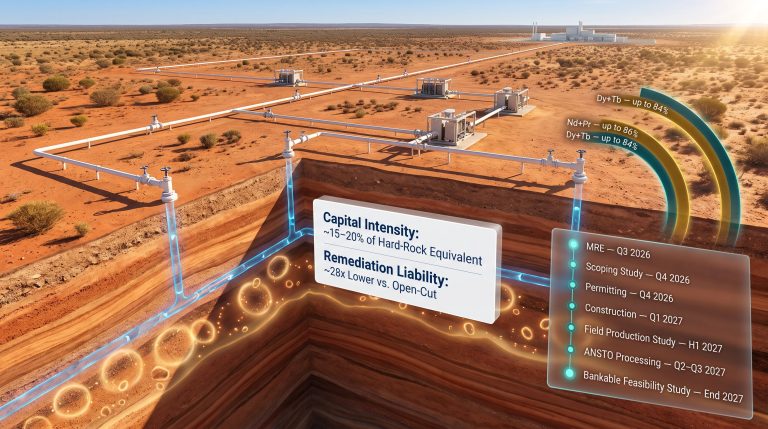
The copper mining industry has witnessed a fundamental technological transformation with the emergence of in-situ copper recovery (ISCR) systems, representing a paradigm shift from traditional extraction methodologies. These Florence Copper wellfield operations utilize subsurface solution mining techniques that eliminate the need for massive open-pit excavations, instead relying on carefully engineered injection and recovery well networks to dissolve copper minerals directly within their geological formations.
Furthermore, this innovative approach demonstrates how modern mining industry evolution continues to reshape resource extraction methodologies worldwide.
Fundamental Principles of ISCR Technology
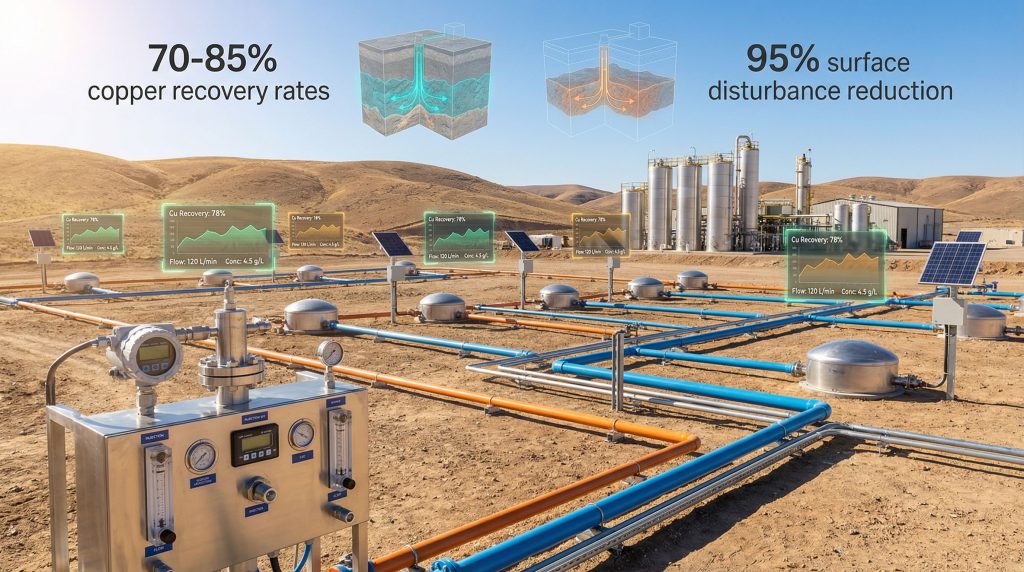
In-situ copper recovery operates on the principle of chemical dissolution rather than physical extraction. The process involves injecting acidified solutions through strategically positioned injection wells into copper-bearing ore bodies. These solutions percolate through the mineralised zone, where acid reacts with copper minerals including chalcocite, chrysocolla, and other secondary copper species, creating copper-enriched pregnant leach solutions (PLS).
The recovered solutions move through natural hydrogeological gradients and are captured by recovery wells positioned at lower elevations or strategic points within the ore body. This methodology represents a significant departure from conventional mining approaches that require extensive overburden removal and physical ore processing.
Operational Advantages Over Conventional Mining
Environmental Impact Reduction:
• Minimal surface disturbance compared to open-pit operations
• Reduced waste rock generation and tailings production
• Lower water consumption per pound of copper produced
• Decreased air quality impacts from dust generation
• Preservation of surface topography and ecosystems
Energy Efficiency Benefits:
• Elimination of large-scale excavation equipment requirements
• Reduced transportation needs for ore and waste materials
• Lower overall energy consumption per unit of copper production
• Simplified infrastructure requirements
The Florence Copper wellfield operations exemplify these principles in practice. Construction activity reached completion in late 2025, with wellfield acidification commencing in early November 2025. By early December 2025, mining solutions were successfully circulating throughout all production wells within the commercial wellfield, demonstrating the rapid deployment capabilities of ISCR technology.
When big ASX news breaks, our subscribers know first
How Do Wellfield Acidification Processes Drive Copper Recovery?
Wellfield acidification represents the critical initiation phase of in-situ copper recovery operations, establishing the chemical conditions necessary for sustained copper dissolution and recovery. This process requires precise engineering of solution chemistry, injection parameters, and monitoring protocols to optimise metal recovery whilst maintaining operational control.
Moreover, comprehensive mineral exploration insights provide essential geological understanding that informs acidification strategy development.
Chemical Engineering Behind Solution Mining
The acidification process typically employs dilute sulfuric acid solutions injected into the upper portions of copper ore bodies. The acid concentration and injection rates must be carefully calibrated based on ore body characteristics, mineral composition, and hydrogeological properties. As acidified solutions contact copper minerals, oxidation-reduction reactions occur that dissolve copper into the aqueous phase.
Key Chemical Reactions:
• Primary copper minerals undergo acid leaching to release copper ions
• Secondary copper minerals dissolve more readily under acidic conditions
• pH buffering from host rock minerals affects acid consumption rates
• Iron oxidation states influence copper solubility and recovery efficiency
The Florence Copper wellfield operations acidification timeline demonstrates the effectiveness of proper chemical engineering. Injection flowrates met or exceeded project expectations during the initial phase, resulting in faster acidification than originally modelled. This accelerated progress indicates favourable subsurface conditions and effective acid distribution throughout the well network.
Flow Rate Optimisation Strategies
Optimal flow rate management requires balancing injection pressure, solution distribution, and copper dissolution kinetics. Higher injection rates can accelerate acidification but may create preferential flow paths that bypass mineralised zones. Lower rates ensure thorough solution contact but extend the time required to achieve target copper grades.
Critical Flow Parameters:
• Injection pressure management to prevent formation fracturing
• Recovery well spacing calculations based on hydrogeological modelling
• Solution circulation efficiency monitoring
• Pressure differential optimisation between injection and recovery zones
The Florence project achieved target solution grades within approximately eight weeks of acidification initiation, indicating successful flow rate optimisation. The grade of copper recovered in solution continued to increase throughout the commissioning period, demonstrating sustained chemical reaction progress and effective solution management.
"Successful wellfield acidification requires comprehensive understanding of ore body geometry, mineral distribution patterns, and hydrogeological characteristics to optimise acid injection protocols and achieve target copper recovery grades within acceptable timeframes."
What Are the Critical Success Factors for Wellfield Commissioning?
Wellfield commissioning represents the transition from construction to operational status, requiring systematic validation of all engineering systems and achievement of performance benchmarks. This phase determines whether theoretical design parameters translate into practical operational success under real-world geological conditions.
Additionally, understanding copper price dynamics becomes crucial during commissioning as market conditions influence project viability and operational decisions.
Pre-Production Testing Protocols
Comprehensive testing protocols must validate wellfield integrity, solution management systems, and copper recovery capabilities before commencing commercial production. These protocols include pressure testing to confirm well construction quality, pump performance verification under design conditions, and solution chemistry baseline establishment.
Essential Testing Components:
• Well integrity verification through pressure testing procedures
• Cement seal placement confirmation to prevent groundwater contamination
• Pump system capacity validation under operating conditions
• Solution chemistry monitoring equipment calibration
• Environmental monitoring system activation
Commercial Scale-Up Challenges
The transition from pilot-scale testing to commercial operations requires demonstrating that laboratory results scale effectively to field conditions. Key challenges include maintaining solution chemistry consistency across larger well networks, achieving uniform acid distribution throughout the ore body, and managing increased solution volumes without operational complications.
Critical Commissioning Milestones:
- Wellfield pressure testing completion with acceptable integrity results
- Solution chemistry stabilisation achieving target pH and copper concentrations
- Recovery grade threshold achievement suitable for downstream processing
- Flow rate consistency validation across all production wells
- SX/EW plant integration readiness for solution processing
Florence Copper wellfield operations commissioning success is evidenced by the smooth transition from construction to early-stage operations. The project team achieved circulation of mining solutions in all production wells within the commercial wellfield by early December 2025, approximately four weeks after acidification initiation.
Performance Monitoring Systems
Continuous monitoring capabilities enable real-time optimisation of wellfield performance and early detection of operational issues. These systems track solution grade progression, flow rate stability, and chemical parameter trends to guide operational adjustments and maintain target performance levels.
Monitoring Technologies:
• Automated solution grade analysis at recovery wells
• Flow measurement systems for injection and recovery circuits
• Pressure monitoring across the wellfield network
• Environmental compliance parameter tracking
• Equipment performance diagnostics and predictive maintenance indicators
The Florence project demonstrates effective monitoring implementation, with continuous tracking showing that average solution grade reached levels required for SX/EW plant operations during the initial commissioning period.
How Does SX/EW Plant Integration Optimise Copper Production?
Solvent extraction and electrowinning (SX/EW) plant integration transforms copper-bearing solutions from wellfield operations into high-purity copper cathode products. This processing stage requires precise coordination between wellfield output characteristics and plant design parameters to optimise overall production efficiency and product quality.
Consequently, successful integration must align with broader global copper supply forecast trends to ensure market competitiveness.
Solvent Extraction Process Engineering
The solvent extraction process concentrates copper from pregnant leach solutions through selective organic-aqueous phase separation. Organic extractants preferentially bind copper ions from the aqueous solution, creating a copper-loaded organic phase that can be stripped to produce concentrated copper electrolyte.
Process Optimisation Factors:
• Organic extractant selection based on copper concentration ranges
• Phase separation kinetics and mixing intensity optimisation
• Copper loading capacity maximisation in organic phase
• Reagent recovery and recycling system efficiency
• Impurity rejection to maintain electrolyte purity
Electrowinning Cathode Production
Electrowinning converts concentrated copper electrolyte into metallic copper cathode through controlled electrochemical deposition. This process requires precise current density management, electrolyte chemistry control, and cathode quality assurance to meet commercial copper specifications.
Critical Performance Parameters:
| Parameter | Typical Range | Monitoring Frequency |
|---|---|---|
| Solution Grade (g/L Cu) | 2.5-4.0 | Continuous |
| Extraction Efficiency (%) | 95-98 | Daily |
| Cathode Purity (%) | 99.95+ | Per batch |
| Current Density (A/m²) | 250-350 | Hourly |
| Energy Consumption (kWh/kg Cu) | 1.8-2.2 | Daily |
Florence Copper's SX/EW plant commissioning has progressed without significant issues as of January 2026. Plant operations were expected to commence shortly after this milestone, with first copper cathode production anticipated within weeks of plant startup. This timeline indicates successful integration between wellfield solution characteristics and plant design specifications.
What Economic Factors Drive ISCR Project Viability?
Economic viability of in-situ copper recovery projects depends on capital efficiency, operating cost structure, and production economics compared to alternative mining methods. These factors determine project competitiveness and investment attractiveness in various commodity price environments.
Furthermore, strategic copper-uranium investment opportunities often incorporate ISCR technologies to maximise resource extraction efficiency.
Capital Investment Requirements
ISCR projects typically require lower initial capital investments compared to equivalent open-pit mining operations due to reduced infrastructure requirements and elimination of large-scale earth moving equipment. However, wellfield development costs can be significant depending on ore body geometry and required well density.
Major Capital Components:
• Wellfield development including drilling and completion costs
• SX/EW plant construction and equipment installation
• Solution management and distribution systems
• Environmental monitoring and mitigation infrastructure
• Electrical and utilities infrastructure
Operating Cost Structure Analysis
Operating costs for ISCR operations differ significantly from conventional mining due to chemical reagent consumption, reduced labour requirements, and different energy consumption patterns. Acid consumption represents a major variable cost component that fluctuates with ore characteristics and recovery efficiency.
Primary Operating Cost Elements:
• Sulfuric acid consumption for leaching operations
• Electrical energy for pumping and processing systems
• SX/EW reagents and consumables
• Labour costs for automated operations
• Maintenance and equipment replacement
• Environmental monitoring and compliance
Production Economics Modelling
Production economics modelling must account for ramp-up periods, seasonal variations, and long-term ore grade decline. ISCR operations typically experience gradual production increases during initial years as acidification expands throughout the ore body and solution chemistry stabilises.
Economic Modelling Considerations:
• Annual production capacity progression during ramp-up
• Unit cost evolution as operations mature
• Copper price sensitivity analysis
• Operating cost inflation adjustments
• Tax and royalty impacts on project economics
How Do Regulatory Frameworks Shape Wellfield Operations?
Regulatory compliance requirements significantly influence ISCR project design, operational procedures, and cost structures. Environmental protection standards, groundwater monitoring protocols, and operational safety requirements create specific obligations that must be integrated into project development and ongoing operations.
Environmental Permitting Requirements
Environmental permitting for ISCR operations focuses primarily on groundwater protection, air quality maintenance, and waste management protocols. Regulatory agencies typically require comprehensive environmental impact assessments, groundwater monitoring plans, and containment system designs to prevent environmental contamination.
Key Regulatory Areas:
• Groundwater protection through well casing and cementing standards
• Air quality compliance for processing plant emissions
• Waste management for spent solutions and solid wastes
• Surface water protection from potential contamination
• Wildlife and habitat impact mitigation measures
Operational Safety Standards
Safety regulations for ISCR operations address chemical handling procedures, well integrity monitoring, and emergency response planning. These requirements ensure worker safety during acid handling, solution processing, and equipment maintenance activities.
Safety Compliance Requirements:
• Chemical handling and storage safety protocols
• Well integrity monitoring to prevent blowouts
• Personal protective equipment standards
• Emergency response and containment planning
• Employee training and certification requirements
Florence Copper's progression to operational status indicates successful navigation of regulatory requirements, with construction completion and operational commencement proceeding according to permitted timelines.
The next major ASX story will hit our subscribers first
What Are the Future Technological Developments in ISCR?
Technological advancement in in-situ copper recovery continues to focus on automation, monitoring sophistication, and process optimisation. These developments aim to improve recovery efficiency, reduce operating costs, and enhance environmental performance through advanced control systems and predictive analytics.
Advanced Monitoring Technologies
Next-generation monitoring systems integrate Internet of Things (IoT) sensors, real-time data analytics, and machine learning algorithms to optimise wellfield performance. These technologies enable predictive maintenance, automated parameter adjustment, and enhanced recovery efficiency through continuous optimisation.
Emerging Monitoring Capabilities:
• IoT sensor networks for comprehensive parameter tracking
• Machine learning algorithms for performance optimisation
• Predictive maintenance systems to minimise downtime
• Automated solution chemistry adjustment systems
• Remote operation capabilities for improved safety
Process Enhancement Innovations
Process innovation focuses on enhanced leaching chemistry, automated solution management, and improved copper recovery efficiency. Research continues into alternative lixiviants, enhanced dissolution kinetics, and optimised flow patterns to maximise metal recovery whilst minimising reagent consumption.
Innovation Areas:
• Enhanced acid formulations for improved dissolution rates
• Automated injection and recovery system controls
• Advanced solution routing optimisation
• Copper recovery enhancement technologies
• Environmental impact reduction methodologies
"Future ISCR operations will likely incorporate artificial intelligence-driven optimisation, autonomous wellfield management, and advanced environmental monitoring to achieve higher recovery rates and reduced environmental footprints."
Case Study Analysis: Commercial Wellfield Performance Benchmarks
Commercial wellfield performance analysis provides insights into operational capabilities, production scaling potential, and long-term sustainability of ISCR technology. Real-world performance data enables validation of theoretical models and identification of optimisation opportunities.
However, comprehensive analysis requires understanding broader industry context, as demonstrated by recent Taseko Florence copper developments and commercial copper production milestones.
Production Ramp-Up Scenarios
ISCR operations typically follow predictable ramp-up patterns as acidification expands throughout ore bodies and solution chemistry stabilises. Production capacity increases gradually during initial years, reaching design capacity as wellfield maturation progresses.
Typical Production Progression:
• Year 1: 20-30% of design capacity during initial acidification
• Year 2: 60-75% of design capacity as solution circulation optimises
• Year 3+: 85-95% of design capacity under steady-state conditions
Florence Copper wellfield operations rapid achievement of target solution grades within two months of acidification initiation suggests potential for accelerated ramp-up compared to typical industry timelines.
Operational Efficiency Metrics
Efficiency measurement in ISCR operations focuses on solution recovery ratios, copper extraction rates, and equipment utilisation. These metrics guide operational optimisation and identify areas for performance improvement.
Key Performance Indicators:
• Solution recovery efficiency relative to injection volumes
• Copper extraction percentage from total contained metal
• Wellfield productivity per active production well
• Equipment availability and utilisation rates
• Energy consumption per pound of copper produced
Investment Implications for ISCR Technology Adoption
Investment analysis of ISCR technology requires evaluation of technical execution capabilities, regulatory compliance requirements, and market positioning advantages. These factors determine investment attractiveness and risk-return profiles for ISCR project development.
Market Position Analysis
ISCR technology provides strategic advantages in processing low-grade copper deposits that may be uneconomic for conventional mining methods. This capability enables development of copper resources previously considered marginal, potentially expanding global copper supply capacity.
Strategic Advantages:
• Low-grade ore processing economic viability
• Reduced environmental impact profile
• Lower capital intensity compared to open-pit mining
• ESG investment criteria alignment
• Operational flexibility and scalability
Risk Assessment Framework
Risk analysis for ISCR investments must consider technical execution uncertainties, regulatory compliance challenges, and commodity price sensitivity. Geological characterisation accuracy, well performance consistency, and environmental compliance represent primary risk factors.
Primary Risk Categories:
• Technical risks: Wellfield performance below design parameters
• Regulatory risks: Environmental compliance requirements
• Market risks: Copper price volatility impact on economics
• Operational risks: Equipment failure and maintenance challenges
• Financial risks: Capital cost overruns and production delays
Florence Copper's successful commissioning demonstrates effective risk mitigation through comprehensive geological characterisation, robust well design, and systematic operational procedures. The project's smooth transition to operational status indicates successful technical execution and regulatory compliance achievement.
Investment decisions involving ISCR technology should consider project-specific geological conditions, regulatory requirements, and market dynamics. This analysis is for informational purposes only and does not constitute investment advice. Prospective investors should conduct independent due diligence and consult qualified professionals before making investment decisions.
Looking for Opportunities in Next-Generation Copper Recovery Technologies?
Discovery Alert's proprietary Discovery IQ model instantly identifies significant ASX mineral discoveries, including breakthrough technologies like ISCR operations that are transforming the copper industry. Stay ahead of the market by receiving real-time alerts on copper exploration and mining technology developments, empowering you to make informed investment decisions as these revolutionary extraction methods gain commercial traction across Australia's mining sector.