
May 19, 2026
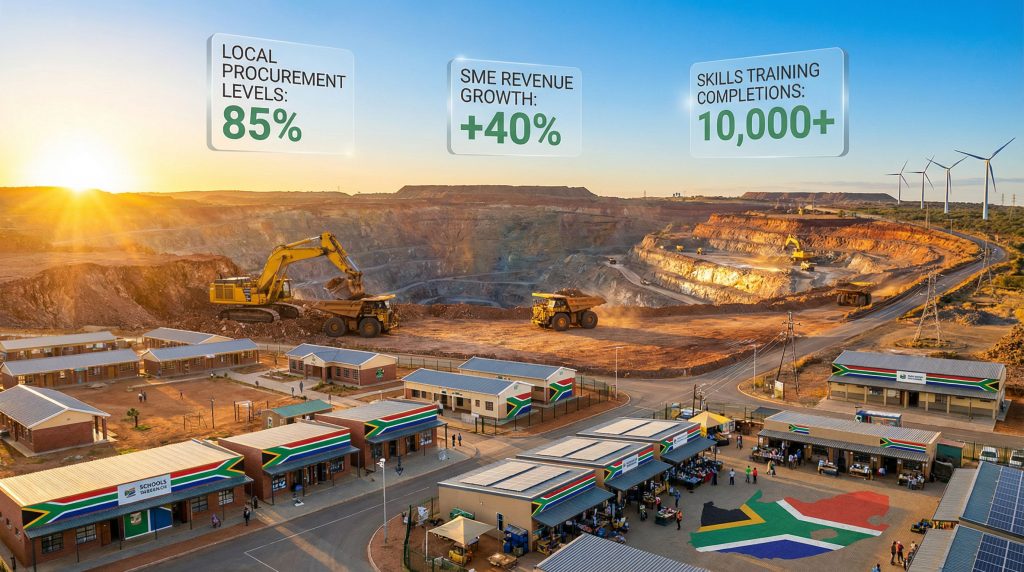
Resource extraction industries worldwide face mounting pressure to demonstrate value beyond traditional extraction metrics. South Africa's mining sector exemplifies this challenge, where conventional approaches to community development have struggled to address systemic economic inequalities despite substantial resource wealth. The transformation toward inclusive economic growth in South African mining requires fundamental shifts in how companies, communities, and government stakeholders collaborate to create sustainable development outcomes.
Understanding Community-Centered Economic Development in Mining Regions
Mining communities across South Africa continue experiencing persistent unemployment despite decades of extraction activities in their regions. Current development approaches through isolated funding mechanisms including Social and Labour Plans, Corporate Social Investment initiatives, and Socio-Economic Development programs have created fragmented interventions that fail to address interconnected systemic challenges.
The concept of inclusive economic growth in South African mining extends beyond traditional job creation within mining operations. It encompasses comprehensive economic ecosystem development that creates diversified income opportunities, builds local capacity for entrepreneurship, and establishes infrastructure supporting long-term community resilience independent of mining lifecycle constraints.
Furthermore, examining industry evolution insights reveals how global mining trends are reshaping community engagement approaches. The regional economic impact of mining operations demonstrates the importance of coordinated development strategies.
Critical Infrastructure Deficits Affecting Mining Communities:
- Energy security gaps constraining both operational efficiency and local economic activity
- Water infrastructure limitations restricting agricultural and manufacturing development potential
- Transportation bottlenecks limiting market access for community-based enterprises
- Skills development programs misaligned with broader economic diversification requirements
Measuring Transformation Beyond Compliance Frameworks
Traditional measurement approaches focus primarily on regulatory compliance rather than comprehensive impact assessment. Inclusive development requires tracking economic multiplier effects, local business revenue growth, community ownership levels in development initiatives, and regional economic diversification indicators across multiple time horizons.
Table: Comprehensive Impact Measurement Framework
| Time Horizon | Economic Indicators | Social Indicators | Sustainability Indicators |
|---|---|---|---|
| Short-term (1-3 years) | Local procurement percentages, direct job creation | Skills training program completions, infrastructure access improvements | Resource efficiency gains, waste reduction measures |
| Medium-term (3-7 years) | SME revenue growth, supply chain integration | Education outcome improvements, healthcare access expansion | Ecosystem restoration progress, renewable energy adoption |
| Long-term (7+ years) | Regional GDP contribution, export diversification | Community institutional capacity, decision-making autonomy | Sustainable resource management, climate resilience |
When big ASX news breaks, our subscribers know first
Addressing Systemic Challenges Through Coordinated Investment
Fragmented funding approaches through separate Corporate Social Investment, Social and Labour Plan commitments, and Socio-Economic Development funds have proven insufficient for addressing complex, interconnected community development challenges. Industry practitioners recognise that unemployment remains a dominant pressure point in mining communities, while energy and water insecurity, infrastructure backlogs, and weak spatial planning continue constraining economic development potential.
The limitations of isolated programmatic investments become apparent when examining the scale of infrastructure deficits affecting mining regions. Consequently, energy security challenges impact both mining operations and local economic activities, while water infrastructure limitations constrain agricultural development and small-scale manufacturing opportunities that could diversify local economies.
However, implementing effective mining investment strategies requires understanding how traditional approaches can evolve to support broader economic development objectives.
Regional Collaboration Models Emerging in Practice
Mining companies operating within shared geographic regions increasingly recognise that individual company interventions cannot address systemic challenges affecting entire districts. Collaborative approaches involve multiple mining houses coordinating resources and strategic planning to address shared infrastructure constraints and economic development objectives.
The Impact Finance Network represents one emerging model where Anglo American partners with Impact Capital Africa and Edge Growth to identify innovative businesses and coordinate investor networks seeking social investment opportunities in mining regions. In addition, this approach moves beyond traditional corporate giving toward structured investment in sustainable economic development.
"Collaborative regional development requires companies to align on shared outcomes while coordinating diverse funding sources and activities to achieve systemic change rather than isolated project impacts."
Multi-Stakeholder Partnership Frameworks for Sustainable Development
Effective collaboration for inclusive economic growth in South African mining requires structured governance mechanisms that coordinate diverse stakeholder interests while maintaining accountability for shared development outcomes. This involves moving beyond traditional consultation processes toward shared decision-making authority over development priorities and resource allocation.
Furthermore, leveraging appropriate capital raising methods can help finance these comprehensive development initiatives through innovative funding structures.
Regional development initiatives demonstrate strongest outcomes when they integrate:
- Cross-company resource coordination for infrastructure projects serving multiple mining operations and communities
- Government partnership alignment connecting mining investment with broader regional development strategies
- Community development trust structures ensuring local ownership and long-term benefit distribution
- Impact investor networks providing blended capital supporting both operational requirements and community development objectives
Governance Structures Supporting Inclusive Growth
Successful multi-stakeholder collaboration relies on transparent governance structures establishing clear accountability mechanisms for achieving shared development outcomes. This includes defining decision-making processes that balance mining company operational requirements with community development priorities and government regulatory frameworks.
Community participation mechanisms must extend beyond consultation toward structured engagement processes providing communities with decision-making authority over development priorities affecting their regions. Therefore, this requires establishing institutional capacity within communities to effectively participate in resource allocation decisions and project oversight responsibilities.
Local Economic Development Through Value Chain Integration
Domestic value chain enhancement represents a critical component of inclusive economic growth in South African mining. This involves prioritising local procurement opportunities, establishing skills development programs creating transferable capabilities, and supporting downstream processing initiatives capturing additional value within host communities.
For instance, South Africa's mining sector has demonstrated significant potential for achieving inclusive growth through strategic value chain integration and community development initiatives.
Supplier Development and Local Business Growth
Mining companies increasingly establish comprehensive supplier development programs extending technical assistance and capacity building support to local enterprises. These initiatives create preferential procurement policies favouring community businesses while providing mentorship networks connecting local suppliers with established industry participants.
Supplier Development Program Components:
- Technical Assistance Programs – Providing business development support, quality management training, and operational efficiency consulting
- Financial Access Mechanisms – Establishing revolving loan funds and connecting local businesses with appropriate financing sources
- Market Linkage Development – Creating procurement opportunities and connecting community businesses with broader supply chain networks
- Capacity Building Initiatives – Developing entrepreneurship skills, management capabilities, and technical competencies aligned with market opportunities
Provincial investment coordination plays an essential role in creating enabling environments supporting local economic development through regulatory streamlining, infrastructure investment alignment, and market development initiatives that benefit both mining operations and broader economic diversification efforts.
Innovation in Mining-Community Development Finance
Traditional financing approaches for mining community development often separate operational investment from social development funding, creating misaligned incentives and fragmented outcomes. Innovative financing mechanisms combine mining investment requirements with community development objectives through blended capital structures supporting integrated development approaches.
Impact finance models create funding structures aligning mining company returns with measurable community development outcomes. However, implementing such frameworks requires a comprehensive investment strategy guide that addresses both operational and social development requirements.
Blended Finance Approaches for Regional Development
Blended finance mechanisms combine different types of capital including mining company investment, development finance institution funding, government infrastructure investment, and private sector participation to create comprehensive regional development programs addressing both immediate operational requirements and long-term community sustainability.
Small and Medium Enterprise development programs supported through these financing approaches provide:
- Seed capital for community-based business development
- Technical assistance supporting business plan development and market entry strategies
- Market access facilitation connecting local enterprises with regional and national supply chains
- Performance monitoring ensuring sustainable business growth and job creation outcomes
Performance Measurement and Impact Assessment
Comprehensive impact measurement for inclusive economic growth in South African mining requires tracking outcomes across multiple dimensions and time horizons. This extends beyond traditional compliance reporting toward strategic impact assessment examining economic multiplier effects, community resilience indicators, and regional development outcomes.
Strategic Impact Measurement Beyond Compliance
Mining companies demonstrate growing appetite for moving from compliance-driven, isolated interventions toward deliberate, collaborative approaches requiring comprehensive performance measurement frameworks. This involves tracking local business development outcomes, skills transfer effectiveness, infrastructure improvement impacts, and community institutional strengthening indicators.
Key Performance Indicator Categories:
- Economic Development Metrics: Local procurement growth, SME revenue increases, employment diversification, regional GDP contribution
- Social Development Indicators: Education outcome improvements, healthcare access expansion, community decision-making capacity
- Environmental Sustainability Measures: Resource efficiency improvements, ecosystem restoration progress, renewable energy adoption
- Institutional Strengthening Assessments: Community organisation capacity, governance structure effectiveness, long-term sustainability planning
Regular impact assessment enables continuous program improvement and demonstrates measurable outcomes supporting continued investment in inclusive development approaches. Consequently, this data also supports policy advocacy for enabling regulatory frameworks supporting collaborative mining-community development initiatives.
The next major ASX story will hit our subscribers first
Policy Framework Integration for Enabling Environments
Government policy frameworks play crucial roles in supporting inclusive economic growth in South African mining through tax structures incentivising local value creation, regulatory streamlining supporting small business development, and infrastructure investment coordination maximising synergies between mining operations and community development requirements.
Domestic beneficiation policies can support inclusive development by creating market incentives for local processing and manufacturing activities that generate employment opportunities extending beyond direct mining operations. Therefore, this requires coordinated policy development connecting mining sector requirements with broader economic development objectives.
Market Development and Regulatory Support
Policy interventions supporting inclusive growth include improving market access for community-based enterprises, establishing quality standards enabling local businesses to compete effectively in broader supply chains, and creating procurement preferences supporting local economic development while maintaining competitive market dynamics.
Regional development authorities provide platforms for coordinating mining company investment with government infrastructure development and community development priorities. Furthermore, this coordination ensures maximum impact from combined public and private sector investment in mining region development.
Technology Integration and Future Development Opportunities
Emerging technologies create new opportunities for inclusive development in South African mining through digital platforms connecting local businesses with broader markets, automation systems requiring new skills development programs, and data analytics improving development program effectiveness and impact measurement.
Digital technology platforms can support community business development by providing market access, financial services, training programs, and business development support services accessible to entrepreneurs in mining regions. In addition, this technological integration supports economic diversification while building community capacity for participating in digital economy opportunities.
Climate Transition and Economic Diversification
Global energy transition trends create opportunities for South African mining communities to participate in renewable energy development, critical mineral processing for clean energy technologies, and green technology manufacturing supporting global sustainability objectives while diversifying local economic activity.
Climate adaptation requirements also create opportunities for collaborative infrastructure development addressing both mining operational needs and community resilience requirements through integrated water management, renewable energy systems, and sustainable transportation networks.
Future Development Opportunities:
- Renewable Energy Projects – Community-owned solar and wind installations supporting both mining operations and local energy access
- Critical Mineral Processing – Local value addition for minerals required in clean energy technology manufacturing
- Green Technology Manufacturing – Small-scale manufacturing supporting renewable energy and efficiency technology supply chains
- Ecosystem Services Development – Community-based natural resource management creating income opportunities while supporting environmental restoration
Implementing Comprehensive Development Strategies
Successful implementation of inclusive economic growth strategies in South African mining requires sustained commitment from all stakeholders, innovative financing mechanisms aligning diverse interests, and governance structures ensuring equitable benefit distribution across mining communities and regional economies.
The transformation from compliance-driven social investment toward strategic inclusive development represents both an operational necessity for mining sustainability and an opportunity to demonstrate how resource extraction can drive broad-based economic prosperity supporting long-term community and industry success.
However, the industry must continue to invest in local economic development to achieve meaningful and sustainable outcomes for communities.
Regional collaboration models, blended finance approaches, comprehensive impact measurement systems, and supportive policy frameworks create enabling environments where mining operations contribute to sustainable economic development extending well beyond traditional extraction activities. Therefore, this transformation requires continued innovation in stakeholder engagement, resource coordination, and outcome measurement supporting evidence-based development program improvement.
Disclaimer: This analysis presents general frameworks for inclusive economic development in mining regions. Specific program design and implementation should consider local conditions, regulatory requirements, and stakeholder priorities. Development outcomes depend on sustained commitment from all participants and appropriate governance structures supporting collaborative resource allocation and accountability.
Looking to Capitalise on Mining Sector Growth?
Discovery Alert delivers instant notifications on significant ASX mineral discoveries using its proprietary Discovery IQ model, helping investors identify actionable opportunities in mining companies driving inclusive economic development. Begin your 14-day free trial at Discovery Alert today and secure your market-leading advantage in this transformative sector.