May 19, 2026
Why Commodity Investing Has Always Been Structurally Flawed
For most of modern investing history, gaining exposure to physical commodities has required accepting a fundamental compromise. Investors have had to choose between instruments that approximate commodity prices rather than track them directly, each carrying its own layer of distortion, cost, or counterparty complexity. The result is a persistent gap between what investors think they are buying and what they actually own.
That gap is now closing. The metals.io tokenized physical metals investment platform represents a structural shift in how commodities can be accessed, held, and priced, not just for institutional participants, but for anyone with a smartphone and a view on global demand trends.
When big ASX news breaks, our subscribers know first
Why Traditional Commodity Exposure Has Always Been Broken
The Equity Proxy Problem: Buying a Miner Is Not Buying the Metal
The most common route to commodity exposure for retail investors has historically been through mining equities. Yet buying shares in a copper or nickel miner is fundamentally different from owning the underlying metal. Mining companies carry extraction risk, management risk, jurisdictional risk, and balance sheet risk. Their share prices correlate with equity market sentiment, not necessarily with the commodity they produce.
A gold miner may provide leveraged upside when gold prices rise, but not always. If energy costs surge, as they have in recent cycles, the cost of extraction increases regardless of what the spot price of gold is doing. Industry figures confirm that energy represents one of the top three operating costs for approximately 70 to 80 percent of mining companies globally. When margins compress, mining company performance suffers even as the underlying commodity may remain well supported.
The same logic applies to oil majors, base metal producers, and battery material miners. A major integrated energy company generates revenue from fuel stations, chemical divisions, and refining operations. Its share price reflects the entire business, not the barrel price an investor was hoping to track.
Derivatives Markets: Powerful but Inaccessible to Most Investors
Futures markets offer a more direct route to commodity price exposure, but access has historically been restricted. Fund managers without a specific derivatives licence cannot use futures contracts. Retail investors face margin requirements, contract size minimums, and platform restrictions. Furthermore, derivatives are instruments of their own complexity, carrying risks that diverge considerably from simple price tracking.
The Hidden Cost of Rolling Futures: Contango, Backwardation, and Slippage Explained
A structural drag exists within futures-based commodity exposure that is poorly understood by most retail investors. Futures contracts have expiry dates, meaning investors must periodically close one contract and open the next, a process called rolling. Two market conditions determine the cost of each roll.
When futures prices are higher than spot prices, the market is in contango. Each roll into the next contract costs money, effectively creating a silent ongoing drag on returns. In backwardation, near-term prices exceed forward prices, which may sound advantageous but typically signals significant market stress and volatility. Neither condition delivers the clean, uncluttered spot price exposure that commodity investors actually want.
This is precisely the problem that a physically backed, tokenized structure is designed to eliminate. Understanding the full range of CFD risks and benefits is equally important for investors evaluating alternative commodity instruments.
How Tokenized Physical Metals Investment Works: A Structural Overview
From Warehouse to Wallet: The Physical Backing Model
The foundational principle of any credible tokenized commodity product is straightforward: the token must be backed by real, physically stored metal. There is no alternative mechanism for achieving genuine spot price exposure. Any product claiming to deliver spot price tracking without holding the physical underlying asset cannot do so accurately, because banks and financial intermediaries use derivatives to construct synthetic price performance, not physical storage.
In the metals.io model, physical metal is held in a bonded warehouse, which means the metal is stored tax-free and remains in custody for as long as the associated token exists, whether that is one year or thirty years. The metal is not rehypothecated, split between uses, or partially allocated to derivatives positions. It simply sits in storage, continuously providing the price exposure the token holder purchased.
What Spot Price Exposure Actually Means in a Tokenised Framework
Spot price exposure, also referred to as cash price exposure, means the investor's token value moves in line with the current market price for immediate physical delivery of the metal. There are no roll costs, no derivative premiums, and no synthetic performance gaps. The price the investor tracks is the same price quoted on the London Metal Exchange or equivalent exchange benchmark for that specific metal.
Delta-One Tracking: Why 1:1 Physical Backing Is Non-Negotiable
Delta-one tracking means the token tracks the underlying metal price on a one-for-one basis. If the metal rises by five percent, the token rises by five percent. This relationship only holds if the physical backing is complete and uncompromised. A structure that holds 90 percent physical backing and deploys the remaining 10 percent elsewhere has broken the delta-one relationship and introduced performance risk.
| Concept | Traditional Futures | Mining Equity | Tokenized Physical Metal |
|---|---|---|---|
| Direct spot price exposure | Rolling costs apply | Equity market correlation | Spot-linked, no roll |
| Physical backing | No | No | Yes, stored in bonded warehouse |
| Retail accessibility | Limited | Via broker | Via smartphone or wallet |
| Regulatory oversight | Exchange-regulated | ASX/LSE regulated | FCA-regulated custodian |
| Counterparty risk | Clearing house | Company management | Custodian and independent audit |
What Is Metals.io and How Does the Platform Operate?
Platform Architecture: Tezos Blockchain, Etherlink Smart-Rollup, and RWA Infrastructure
Metals.io is built on the Tezos blockchain, incorporating Etherlink smart-rollup technology as its core infrastructure layer. This positions the platform within the real-world asset tokenisation sector, where blockchain infrastructure is used to represent ownership of physical, off-chain assets in digital form. The combination of Tezos and Etherlink provides a scalable, energy-efficient settlement environment suited to high-integrity commodity products.
Which Metals Are Available? Copper, Nickel, Cobalt, Lithium, Gold, and Uranium
The metals.io tokenized physical metals investment platform currently offers tokenized exposure to copper, nickel, cobalt, lithium, gold, and uranium. The selection is significant because several of these metals, particularly cobalt and lithium, have never previously been accessible to retail or most institutional investors through any regulated financial instrument. There is no cobalt futures contract, and the growing critical minerals demand from the energy transition has made this access gap increasingly costly for investors.
Fractional Token Ownership: Why Buying 1 Kilogram of Nickel Is Now Possible for Any Investor
One of the structural advantages of tokenisation is fractional ownership. Physical metal acquisition at meaningful quantities requires significant capital and creates logistics, insurance, and storage obligations. Token structures remove all of those barriers. An investor can purchase exposure to one kilogram of nickel, or even a fraction of a kilogram, at a cost accessible from relatively small capital amounts. This democratises an asset class that has previously been reserved for large industrial buyers and commodity trading houses.
The Role of Archax as FCA-Regulated Custodian
The custody function on the metals.io platform is performed by Archax, a company regulated by the UK Financial Conduct Authority. FCA regulation requires custodians to submit to criminal background checks on all personnel, maintain ongoing compliance reporting obligations, and participate in annual regulatory examinations.
These are the same oversight standards applied to traditional financial institutions in the UK, providing a credibility benchmark that distinguishes metals.io from unregulated or lightly structured digital asset products.
FCA regulation is not cosmetic. It means the custodian is subject to the same fit-and-proper standards, continued education requirements, and compliance infrastructure that govern mainstream financial services firms. For tokenized commodity investors, the regulatory status of the custodian, not just the token issuer, is the primary trust signal.
How Does Physical Backing Actually Work Behind the Scenes?
LME-Grade Metal Specification: Why Chemical Certification Matters
Not all metal is created equal for pricing purposes. The London Metal Exchange approves specific grades of metal for trading and delivery against its contracts. LME-specification metal has been chemically analysed, tested, and certified to meet defined purity and composition standards. This is critical because only LME-approved, above-ground warehouse stocks can be legitimately priced against published LME spot benchmarks.
A common misconception, and an area where investor caution is warranted, involves projects that price in-ground mineral resources at current spot prices. Unextracted metal carries no specification, has not been processed, and cannot be delivered. It has no valid claim to exchange spot pricing. The metal underpinning metals.io tokens is LME-specification material, verifiably meeting exchange-grade chemical standards.
Bonded Warehouse Storage: Tax-Free Custody and What It Means for Investors
Bonded warehouses operate outside the normal customs and tax framework, meaning metal held within them is stored tax-free until it enters commercial circulation. For investors holding metal as a financial instrument rather than for industrial use, this is an important structural feature. The metal can remain in bonded storage indefinitely without triggering tax liability on the physical commodity itself.
Monthly Custodian Reporting: Cathode Numbers, Unique Identifiers, and Transparency Protocols
Copper and nickel are typically stored in the form of cathodes, large flat sheets of refined metal produced through electrolytic refining. Each cathode carries a unique identifier, a creation date, and a chemical specification record. The metals.io custodian publishes monthly reports that allow token holders to verify that the physical metal backing their position is physically present, correctly identified, and held to specification.
This level of traceability matches the transparency standards established by exchange-traded commodity structures listed on traditional securities exchanges, an important benchmark for investor confidence.
Transparency Checklist for Evaluating Any Tokenised Metal Platform:
- Is the custodian independently regulated by a recognised financial authority?
- Are monthly holdings reports published and accessible to token holders?
- Is each unit of physical metal uniquely identifiable by cathode number, creation date, and specification?
- Does the metal meet LME or equivalent exchange specification?
- Are the roles of issuer, custodian, trustee, and pricing provider held by separate, independent entities?
Why Diversified Counterparty Roles Protect Investors Better Than Single-Entity Models
A critical structural lesson from the history of commodity securitisation is that concentrating all operational roles within a single entity creates concentrated risk. When the issuer, custodian, market maker, trustee, and pricing provider are all the same organisation, the oversight function disappears. The metals.io model separates these roles across independent entities, applying the same principle that gold ETC structures have used to maintain investor trust over many years.
The more independent eyes that observe a structure, the more transparent it becomes. Single-entity models that handle all functions internally introduce the kind of opacity that has preceded financial product failures historically. Separation of roles is not bureaucratic overhead. It is the architecture of trustworthiness.
What Macro Forces Are Driving Demand for Critical Metal Exposure Right Now?
The 18-to-20-Year Mine Development Lag: Why Supply Cannot React Quickly
The single most important structural feature of industrial metal supply is the timeline between discovery and production. Regardless of the commodity involved, the average time from identifying a new mine deposit to achieving commercial output is 18 to 20 years. This means a copper discovery announced today will not contribute meaningful supply until the early 2040s.
This timeline has profound implications for the current investment thesis. As of 2026, there is no near-term supply response mechanism capable of addressing rising demand from electrification, AI infrastructure, and population growth. New discoveries cannot be fast-tracked through the exploration, permitting, development, and production cycle on any compressed timeline.
Copper's Supply Deficit Trajectory: Peak Production Estimates and the 2033 to 2034 Constraint
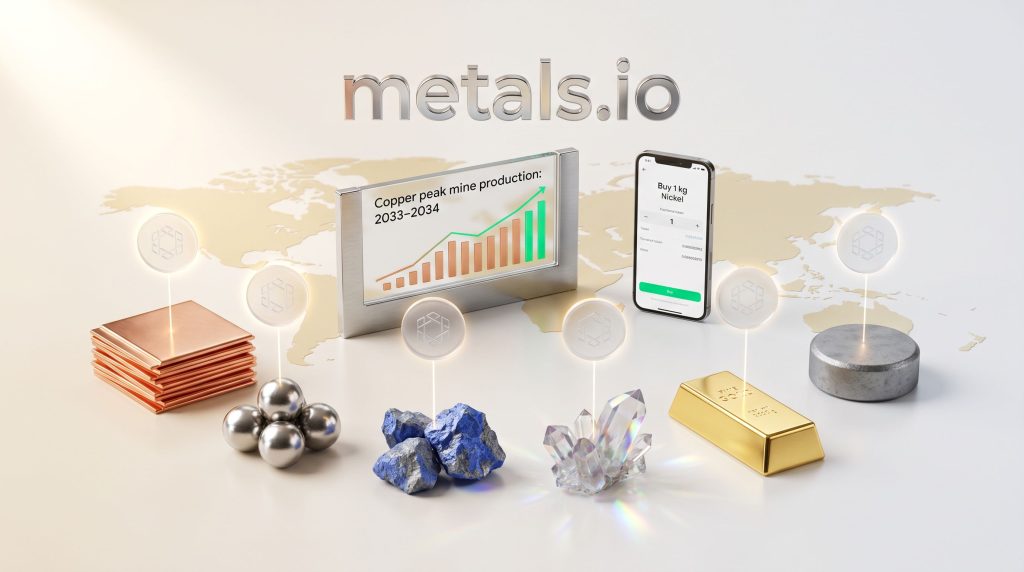
Current industry analysis places peak global copper mine production at approximately 2033 to 2034. Beyond that point, without major new mine developments entering production, total output begins a structural decline precisely as demand from grid modernisation, electric vehicles, AI data centres, and industrial electrification continues to rise. The copper supply crunch represents a multi-decade structural imbalance, not a short-term disruption.
AI Infrastructure, Grid Modernisation, and the Per-Capita Electricity Demand Surge
Per-capita electricity consumption has risen dramatically over recent decades and is accelerating. Where previous generations went to bed with minimal electrical devices, today's consumer household runs televisions, tablets, gaming consoles, smartphones, and smart home systems simultaneously. Multiply that per-capita increase across a growing global population and the demand pressure on electricity infrastructure becomes significant.
AI data centres represent an additional and largely unmodelled demand vector. Large-scale computing infrastructure requires enormous quantities of copper for power distribution, cooling systems, and high-speed data transmission. Grid modernisation programmes across North America, Western Europe, and Asia require extensive copper cabling and aluminium transmission infrastructure. These are not speculative demand sources. They are funded infrastructure programmes already underway.
How ESG-Driven Capital Withdrawal Starved Industrial Metal Mining of Funding
An underappreciated dynamic in the critical metals supply shortage is the role that ESG investment mandates played in withdrawing capital from mining as a sector. In the years following the peak of ESG screening adoption, many asset managers applied broad exclusions that failed to distinguish between thermal coal mining and copper or nickel production. The practical result was that legitimate, strategically important mining projects were cut off from institutional capital alongside genuinely harmful industries.
The consequence is now visible in project development pipelines. Insufficient investment flowed into mine development during a critical window, and the 18-to-20-year lead time means that funding shortfall cannot be corrected quickly. The supply tightness of the 2030s is, in part, a downstream consequence of capital allocation decisions made in the early 2020s.
The Expanding Global Middle Class: Air Conditioning, EVs, and the Copper Intensity of Everyday Life
A dimension of commodity demand that receives insufficient attention in mainstream analysis is the copper intensity embedded in everyday consumer goods across emerging markets. An air conditioning unit installed for the first time in a household in India or sub-Saharan Africa contains copper piping, copper wiring, and copper components throughout. When hundreds of millions of households make that transition simultaneously, the aggregate demand impact is substantial.
Electric vehicle penetration adds another layer. New electric car sales in the UK have reached approximately 20 percent of total vehicle sales, and similar trajectories are observed across Western Europe, China, and increasingly Southeast Asia. Each electric vehicle contains significantly more copper than an internal combustion engine equivalent.
Data Snapshot:
- Average time from copper mine discovery to commercial production: 18 to 20 years
- Copper peak mine production currently estimated at: 2033 to 2034
- Energy costs represent a top-three operating expense for approximately 70 to 80 percent of miners
- New electric vehicle sales in the UK have reached approximately 20 percent of total car sales
- Global energy consumption still sourced from fossil fuels: approximately 80 percent
The next major ASX story will hit our subscribers first
Why Industrial and Strategic Metals Have Been Impossible to Access Until Now
Cobalt and Lithium: No Futures Market, No ETF, No Prior Retail Access
For all the investor discussion surrounding battery metals and the energy transition, a fundamental market access problem has persisted: there is no cobalt futures contract, and no exchange-traded fund offering direct spot exposure to lithium exists in a form accessible to most investors. The investment case for these metals has been widely acknowledged, but the instruments to act on that case have been absent.
Institutional commodity desks at the world's largest asset managers have historically had no mechanism for obtaining spot cobalt or spot lithium exposure. This is not a minor inconvenience. It means that an entire category of critical metals has been effectively uninvestable through conventional financial channels regardless of how compelling the supply-demand thesis appeared. The ongoing lithium market challenges further illustrate just how structurally underserved this space has been for investors seeking direct exposure.
Why Institutional Investors Have Historically Had No Spot Exposure to Battery Metals
The absence of futures markets or regulated spot instruments for battery metals means that even sophisticated institutional investors have been unable to express a direct view on cobalt or lithium prices. Physical trading desks at commodity houses have access, but regulated fund structures, pension portfolios, and most wealth management mandates have not. The tokenized physical metals model fills this gap for the first time.
The Wallet Problem: Why Institutional Adoption of Tokenized Assets Is Still Early-Stage
Despite the structural advantages of tokenised commodity exposure, the institutional adoption curve remains constrained by a practical infrastructure barrier. As of 2026, very few institutional investors have operational digital asset wallets integrated into their custody and portfolio management systems. Before large capital allocators can hold tokenised metals meaningfully, they must first establish wallet infrastructure, which represents the primary on-ramp challenge for mainstream institutional adoption.
How Private Banks and Wealth Managers Could Use Metal Tokens as Structured Product Collateral
Once wallet infrastructure is in place, a significant secondary use case opens for private banks and wealth managers. Metal tokens held in a wallet can be used as collateral for structured products designed for high-net-worth clients. A private bank could construct a structured note offering capital protection with upside participation in battery metal performance, using tokenised copper or cobalt as the underlying price exposure mechanism. This application of tokenised metals as structured product building blocks could accelerate institutional adoption considerably.
How Does Metals.io Compare to Other Commodity Investment Vehicles?
A Comparative Framework Across Five Investment Structures
| Investment Vehicle | Spot Price Accuracy | Retail Access | Storage Required | Regulatory Clarity | Liquidity |
|---|---|---|---|---|---|
| Tokenized Physical Metal (metals.io) | High | High | Outsourced | FCA-regulated custodian | Platform-dependent |
| Commodity ETC (e.g., gold ETC) | High | High | Outsourced | Exchange-listed | High |
| Mining Equity | Low, equity-correlated | High | None | Exchange-listed | High |
| Physical Futures | Medium, roll drag applies | Low | None | Exchange-regulated | High |
| Direct Bullion Ownership | High | Low, high minimums | Investor responsibility | Varies | Low |
The table above illustrates that tokenised physical metals occupy a unique position: high spot price accuracy combined with high retail accessibility, a combination that has not previously existed for industrial metals. Gold ETCs have offered this combination for precious metals, but no equivalent existed for copper, nickel, cobalt, or lithium before tokenised platforms emerged.
One additional nuance worth noting involves the substitute metal dynamic. If copper becomes too expensive for certain applications, aluminium absorbs demand. Major high-voltage transmission cables are already built from aluminium rather than copper due to weight and cost considerations. Similarly, in catalytic converter chemistry, platinum and palladium have historically served as substitutes for each other as relative pricing shifts. Understanding these substitution dynamics is part of building an informed view on specific metal positions.
What Are the Real Risks of Tokenized Commodity Investments?
Custody and Counterparty Risk: What Happens if the Custodian Fails?
The FCA-regulated status of the custodian provides meaningful protection, but investors should understand the mechanism through which they would access their metal exposure in a custodian failure scenario. The separation of roles across independent entities, issuer, custodian, trustee, and pricing provider, is designed specifically to ensure that no single point of failure can compromise the entire structure.
Redemption Rules, Minimum Thresholds, and Exit Liquidity Considerations
Tokenised commodity platforms are not exchange-listed instruments with the same liquidity depth as major ETCs. Exit liquidity depends on platform-specific mechanisms, secondary market development, and redemption frameworks established by the issuer. Investors should consequently review the specific terms governing redemption, minimum thresholds, and the timeline for converting tokens back into cash or physical metal.
Jurisdictional Regulatory Uncertainty: How Different Markets Treat Tokenized Real World Assets
The regulatory treatment of tokenised real-world assets varies significantly across jurisdictions. While the custody function on metals.io is FCA-regulated in the UK, token ownership, transfer, and taxation may be treated differently in the investor's home jurisdiction. This is an area of active regulatory development globally, and investors should seek appropriate advice for their specific circumstances.
The "Too Good to Be True" Test: Red Flags Investors Should Screen For
Investor Warning: A critical distinction exists between tokens backed by metal held in LME-approved above-ground warehouse stocks and tokens that reference in-ground mineral resource estimates. In-ground resources have not been extracted, processed, or certified. They cannot be priced at spot. Always verify whether a tokenized commodity product references physically stored, exchange-specification metal before investing.
Additional red flags to screen for include platforms that concentrate all operational roles within a single entity, products that fail to publish regular custodian holdings reports, and any structure where the physical storage location and metal specification cannot be independently verified.
The EV Battery Metals Investment Basket: A New Portfolio Construction Concept
Copper, Nickel, Cobalt, and Lithium as the Four Pillars of Energy Transition Exposure
The four metals most central to battery technology and the energy transition, copper, nickel, cobalt, and lithium, now have published benchmark prices on the LME or equivalent exchanges. This pricing liquidity is a prerequisite for any investable tokenised product, because continuous, transparent pricing feeds are required to maintain fair value for token holders. The fact that all four of these critical metals carry recognised exchange pricing makes them suitable for tokenisation in a way that many other industrial materials are not.
How Investors Could Construct a Customised Critical Metals Allocation Using Tokens
For the first time, individual investors can construct a personalised battery metals basket without accessing derivatives, without holding shares in mining companies, and without paying the roll costs of futures exposure. The flexibility to weight individual metals according to personal conviction, whether an investor has a particularly strong view on copper versus cobalt, represents a portfolio construction capability that was previously available only to the largest commodity hedge funds with their own physical metal accounts.
Hypothetical EV Metals Basket Allocation Model:
| Metal | Hypothetical Weighting | Primary Use Case |
|---|---|---|
| Copper | 40% | Grid infrastructure, EV motors, wiring |
| Nickel | 25% | Battery cathode chemistry |
| Cobalt | 20% | Battery stability and energy density |
| Lithium | 15% | Battery anode and electrolyte |
Note: This is an illustrative framework only and does not constitute investment advice. Actual allocations should reflect individual risk profiles and current market conditions.
A further development that could add significant institutional utility would be the creation of third-party indexes built on tokenised metal components. An independent indexing company constructing an EV metals basket from tokenised physical holdings would provide a template allocation that wealth managers and retail investors could adopt, adjust, or use as a benchmark. No such product has existed in this form previously.
Is Tokenized Commodity Investment Becoming a Mainstream Asset Class?
Where the Market Stands in 2025 to 2026: Tokenized Gold as the Proof of Concept
Tokenised gold has served as the proof of concept for the broader tokenised physical commodity category. The mechanics of physical backing, custodian reporting, delta-one tracking, and blockchain settlement were established and refined through gold tokenisation before being extended to industrial metals. The lessons learned in building credible gold token products provided the structural template that the metals.io tokenized physical metals investment model has applied to copper, nickel, cobalt, lithium, and uranium.
The Road to Mainstream Adoption: Wallet Infrastructure, Institutional On-Ramps, and Regulatory Clarity
Three conditions need to be met for tokenised commodities to achieve mainstream asset class status. First, wallet infrastructure must become standard within institutional portfolio management systems. Second, regulatory clarity around tokenised real-world asset ownership, reporting, and taxation must mature across major jurisdictions. Third, secondary market liquidity for tokenised commodities must deepen sufficiently to satisfy institutional liquidity requirements.
All three conditions are works in progress. The trajectory is positive, however the timeline to full mainstream adoption likely extends through the latter part of this decade and into the early 2030s.
A Long-Term Vision: Mine-to-Token Supply Chain Integration
The most ambitious long-term application of tokenised physical metals would see mining companies tokenise their refined output directly as metal enters a bonded warehouse for the first time. Under this model, the pathway from mine production to investor ownership would be compressed and direct, eliminating intermediary layers and placing retail and institutional investors at the very centre of the industrial commodity cycle.
Miners would benefit from faster balance sheet recognition of metal sales. Investors would gain exposure to freshly refined, specification-certified metal with complete provenance documentation.
How Tokenized Metals Could Democratise Hard Asset Exposure for Investors Globally
The ultimate democratising proposition of the metals.io tokenized physical metals investment approach is straightforward: anyone with a smartphone and modest capital can now hold a position in the physical commodities that underpin the global economy. The copper in the token is the same copper that will be drawn into wiring, wound into motors, and shaped into the infrastructure of electrification. It is not a derivative of that copper, not a share in a company that mines copper, and not a futures contract on copper to be delivered at a future date. It is the metal itself, held in regulated custody, priced at spot, and accessible from a wallet.
Frequently Asked Questions: Metals.io and Tokenized Physical Metals
What is metals.io?
Metals.io is a blockchain-based platform built on Tezos infrastructure that enables investors to gain exposure to physically backed commodity tokens, including copper, nickel, cobalt, lithium, gold, and uranium. Each token is linked to real metal held in custody by a regulated third party.
Is metals.io regulated?
The custody function on the metals.io platform is handled by Archax, which is regulated by the UK Financial Conduct Authority. Regulatory oversight covers custody operations, compliance, and ongoing reporting obligations.
How is tokenized metal different from a gold ETF?
Both structures involve physical backing, but tokenised metals operate on blockchain infrastructure, enabling fractional ownership, broader access, and potential integration with digital finance applications. Furthermore, tokenised platforms like metals.io also extend coverage to industrial metals such as copper, cobalt, and nickel that are not available through traditional exchange-traded products.
What is LME-spec metal and why does it matter?
LME-specification metal has been chemically analysed, tested, and approved for listing on the London Metal Exchange. This certification ensures the metal meets defined purity and quality standards, making it suitable for pricing against published exchange benchmarks. Only LME-spec, above-ground warehouse stocks can legitimately be priced at LME spot.
Can retail investors buy tokenized copper or nickel?
Yes. The metals.io platform is designed to allow retail investors to purchase fractional token amounts representing physical metal exposure, with entry points accessible from relatively small capital amounts, potentially as little as the equivalent of one kilogram of metal.
What are the main risks of tokenized commodity investments?
Key risks include custodian counterparty exposure, platform liquidity constraints, jurisdictional regulatory variation, and the need to verify that tokens are backed by physically stored, exchange-specification metal rather than unextracted resource estimates.
What blockchain does metals.io use?
Metals.io is built on the Tezos blockchain, using Etherlink smart-rollup technology as part of its tokenisation infrastructure.
Key Takeaways: What Tokenized Physical Metals Mean for the Future of Commodity Investing
- Tokenised physical metals represent the first mechanism for retail and institutional investors to achieve direct spot price exposure to industrial metals without derivatives, equity proxies, or futures roll costs.
- Physical backing held in regulated, bonded warehouse custody is the foundational requirement for credible tokenised commodity products. Any product claiming spot price exposure without physical backing should be approached with significant caution.
- Critical metals including copper, nickel, cobalt, and lithium face structural supply constraints rooted in the 18-to-20-year mine development timeline, constraints that are unlikely to resolve before the mid-2030s.
- The ESG capital withdrawal from mining in the early 2020s compounded existing supply pipeline problems, creating a long-duration structural deficit that cannot be corrected quickly.
- Regulatory oversight of the custody function, not just the token issuer, is the primary trust signal investors should evaluate when assessing any tokenised commodity product.
- The institutional adoption curve remains early-stage, with wallet infrastructure representing the primary on-ramp barrier for large capital allocators.
- A mine-to-token model represents the long-term frontier of this asset class, potentially integrating investors directly into the commodity supply chain from the point of refining.
This article is intended for informational and educational purposes only. Nothing contained herein constitutes investment advice or a recommendation to buy or sell any financial instrument, token, commodity, or security. Always conduct your own due diligence and consult a qualified financial advisor before making investment decisions.
Want to Know Which ASX Companies Are Exploring the Critical Metals Powering This Structural Shift?
Discovery Alert's proprietary Discovery IQ model delivers real-time alerts the moment significant mineral discoveries — including copper, nickel, cobalt, and lithium — are announced on the ASX, instantly translating complex geological data into actionable investment intelligence for both short-term traders and long-term investors. Explore Discovery Alert's discoveries page to see how historic ASX mineral discoveries have generated substantial returns, and begin your 14-day free trial today to position yourself ahead of the market.