
June 4, 2026
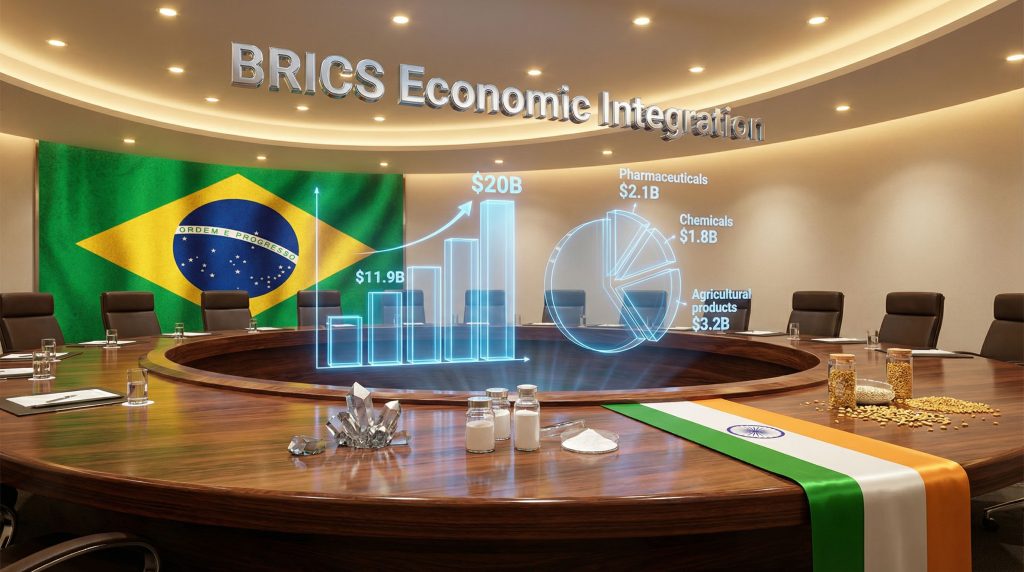
The global trade landscape is witnessing a fundamental transformation as emerging economies forge stronger bilateral partnerships outside traditional Western-dominated frameworks. This shift reflects a broader reconfiguration of international commerce, where nations in the Global South are establishing direct trade corridors that bypass conventional economic powerhouses. India Brazil trade agreements represent a pivotal example of this trend, with momentum behind these partnerships stemming from shared developmental goals, complementary resource bases, and a collective desire to reduce dependency on established trade routes.
The Emergence of BRICS-Led Trade Corridors
South-South cooperation has evolved beyond diplomatic rhetoric to become a concrete economic strategy. Countries within emerging market blocs are creating integrated supply chains that leverage their respective comparative advantages. These partnerships focus on sectors where traditional suppliers have maintained pricing premiums, particularly in pharmaceuticals, agricultural products, and critical minerals strategy.
The strategic importance of these corridors extends beyond mere trade volume increases. They represent a systematic approach to economic diversification that reduces vulnerability to external shocks and sanctions. For participating nations, these partnerships offer opportunities to access markets previously dominated by established players while building resilient supply chains that can withstand geopolitical tensions.
Why Emerging Market Partnerships Drive Global Supply Chain Diversification
Modern supply chain architecture increasingly favours flexibility over efficiency, driving emerging economies to establish multiple sourcing and distribution channels. This trend has accelerated following recent global disruptions that exposed the fragility of concentrated supply networks. Emerging market partnerships provide natural hedging mechanisms against supply chain vulnerabilities through geographic and political diversification.
The competitive advantage of South-South partnerships lies in their ability to offer cost-effective alternatives to traditional suppliers whilst maintaining quality standards. This dynamic is particularly evident in sectors like pharmaceuticals and agriculture, where emerging economies can leverage lower production costs and regulatory flexibility to capture market share from established suppliers.
When big ASX news breaks, our subscribers know first
What Economic Factors Drive India-Brazil Commercial Expansion?
The economic rationale for enhanced India-Brazil cooperation rests on fundamental complementarities between the two economies. Brazil's resource abundance in critical minerals and agricultural products aligns with India's manufacturing capabilities and domestic market demands. This natural synergy creates opportunities for value-added trade that extends beyond simple commodity exchange.
Recent developments in bilateral relations demonstrate the practical implementation of these economic complementarities. Brazil's decision to introduce a 10-year multiple entry visa system for Indian tourists represents a significant facilitation measure that will enhance business mobility between the two nations. Furthermore, the easing of business visa requirements for Indian professionals reflects recognition of the growing commercial opportunities that bilateral cooperation presents.
Bilateral Trade Volume Analysis: From Current Levels to Future Targets
The expansion of India-Brazil trade reflects broader trends in South-South commercial integration. Current bilateral trade demonstrates significant growth potential, particularly in sectors where both countries possess competitive advantages. The pharmaceutical sector exemplifies this potential, where India's manufacturing expertise meets Brazil's substantial healthcare market requirements.
According to diplomatic sources, Brazil's public healthcare system requires substantial pharmaceutical supplies, creating opportunities for Indian exporters who are competitively positioned due to their pricing advantages. This sector represents a clear win-win arrangement where India's cost-effective production capabilities can address Brazil's healthcare procurement needs whilst generating export revenues.
Sectoral Complementarity in Pharmaceutical and Agricultural Markets
The pharmaceutical sector stands out as a prime example of how complementary capabilities can drive bilateral trade expansion. India's generic drug manufacturing industry, with its established quality standards and cost competitiveness, aligns perfectly with Brazil's healthcare system requirements. This relationship offers mutual benefits through improved healthcare access in Brazil and market expansion opportunities for Indian pharmaceutical companies.
Agricultural trade flows demonstrate another dimension of sectoral complementarity. Brazil's position as a major agricultural exporter, combined with India's large domestic market and processing capabilities, creates opportunities for value-added agricultural trade. This relationship can extend beyond raw commodity exchange to include technology transfer and joint development of agricultural processing facilities.
Critical Minerals Strategy and Resource Security Frameworks
The critical minerals sector represents perhaps the most strategically important aspect of India-Brazil cooperation. Brazil's development of its critical minerals energy security potential, combined with India's manufacturing capabilities, creates opportunities for integrated supply chains in strategic materials. Recent diplomatic discussions have focused on memoranda of understanding in this field, reflecting the priority both nations place on resource security.
India's interest in Brazil's substantial mineral deposits across the Latin American continent reflects broader strategic considerations about supply chain security in critical materials. This cooperation can extend beyond simple extraction to include processing, value addition, and technology development in advanced materials applications.
Key Sectors for Bilateral Cooperation:
• Pharmaceuticals: India's manufacturing expertise meets Brazil's healthcare procurement needs
• Critical Minerals: Brazil's resource base supports India's manufacturing requirements
• Agriculture: Complementary production and processing capabilities
• Technology Transfer: Joint development in manufacturing and processing technologies
How Do Preferential Trade Agreements Impact Emerging Market Integration?
The framework for India Brazil trade agreements extends beyond bilateral arrangements to encompass broader regional integration mechanisms. These partnerships demonstrate how emerging economies can create preferential trading arrangements that facilitate commerce whilst maintaining sovereignty over domestic policies.
The effectiveness of such arrangements depends on their ability to address practical barriers to trade, including regulatory differences, payment mechanisms, and dispute resolution procedures. Recent developments suggest that both countries are focusing on practical measures that can deliver immediate benefits to businesses engaged in bilateral trade.
MERCOSUR-India Framework Evolution Since 2004
The relationship between India and MERCOSUR, of which Brazil is a founding member, has evolved significantly since initial engagement began two decades ago. This evolution reflects changing global mining landscape dynamics and the increasing importance of South-South cooperation in international commerce.
The framework has progressively expanded from basic trade facilitation to encompass investment protection, technology transfer, and strategic resource cooperation. This evolution demonstrates how emerging market partnerships can mature beyond simple commodity exchange to create integrated economic relationships.
Investment Protection Mechanisms and Bilateral Treaty Structures
Recent developments in India-Brazil cooperation include significant private sector partnerships that demonstrate the growing confidence between the two economies. The aerospace sector exemplifies this trend, with major manufacturers from both countries exploring joint production arrangements.
One notable development involves collaboration between Indian and Brazilian aerospace companies to establish manufacturing facilities for regional transport aircraft. This partnership represents a new model of technology transfer and industrial cooperation that can serve as a template for other sectors.
Tax Harmonisation Through Double Taxation Avoidance Agreements
The fiscal framework supporting bilateral trade requires careful attention to tax treatment and regulatory compliance. Both countries have developed mechanisms to prevent double taxation whilst ensuring appropriate revenue collection from cross-border commercial activities.
These agreements create certainty for businesses engaged in bilateral trade and investment, reducing compliance costs and eliminating potential tax disputes that could discourage commercial engagement.
What Role Do Critical Minerals Play in Modern Trade Diplomacy?
Critical minerals have emerged as a central component of contemporary trade relations, reflecting their importance in advanced manufacturing, renewable energy infrastructure, and defence applications. The strategic value of these materials extends beyond their commercial price to encompass national security and economic resilience considerations.
For emerging economies like India and Brazil, cooperation in critical minerals represents an opportunity to reduce dependency on traditional suppliers whilst building integrated supply chains that serve both domestic and export markets.
Brazil's Lithium and Rare Earth Resource Positioning
Brazil's mineral resources provide a foundation for strategic partnerships with manufacturing-focused economies. The country's geological endowments in lithium, rare earth elements, and other critical materials position it as a potential alternative to traditional suppliers in these strategic sectors.
The development of these resources requires substantial investment in extraction, processing, and transportation infrastructure. International partnerships can provide the capital, technology, and market access necessary to develop these resources effectively.
India's Manufacturing Hub Strategy for Value-Added Processing
India's approach to critical minerals cooperation focuses on creating integrated supply chains that add value beyond raw material extraction. This strategy aligns with broader industrial policy goals of developing advanced manufacturing capabilities in strategic sectors.
The integration of Brazilian mineral resources with Indian processing and manufacturing capabilities can create competitive advantages in global markets for advanced materials and components.
Supply Chain Resilience in Post-Pandemic Global Economics
Recent global disruptions have highlighted the importance of supply chain diversification and resilience. Critical minerals supply chains, in particular, have demonstrated vulnerability to geopolitical tensions and logistics disruptions.
Strategic partnerships between resource-rich and manufacturing-focused emerging economies offer natural solutions to supply chain resilience challenges. These relationships can provide alternative sourcing options whilst building strategic reserves of critical materials.
How Are Visa Liberalisation Policies Accelerating Business Mobility?
The facilitation of business travel and professional mobility represents a crucial enabler of bilateral trade expansion. Recent visa policy reforms demonstrate both countries' commitment to reducing bureaucratic barriers that can impede commercial relationships.
Brazil's announcement of a 10-year multiple entry visa system for Indian tourists marks a significant step toward enhanced people-to-people connectivity. This policy change, announced in conjunction with high-level diplomatic visits, reflects recognition that business relationships often develop through sustained personal and professional interactions.
10-Year Multiple Entry Visa System Impact on Trade Facilitation
Long-term visa arrangements reduce transaction costs for businesses engaged in bilateral trade by eliminating the need for frequent visa applications and reducing travel planning uncertainties. This administrative simplification can encourage more frequent business interactions and facilitate the development of long-term commercial relationships.
The impact extends beyond direct business travel to encompass tourism, cultural exchange, and educational cooperation, all of which can contribute to broader bilateral understanding and commercial opportunities.
Professional Services Integration and Skills Transfer Mechanisms
The easing of business visa requirements for Indian professionals reflects Brazil's recognition of the value that Indian expertise can bring to various sectors of the Brazilian economy. This policy change facilitates knowledge transfer and professional collaboration across multiple industries.
Professional mobility enables technology transfer, capacity building, and the development of local expertise in emerging sectors. These interactions often lead to long-term commercial partnerships and joint venture opportunities.
Tourism-Commerce Nexus in Bilateral Economic Relations
Tourism serves as an important economic sector in its own right whilst also facilitating broader commercial relationships. Business tourism, in particular, creates opportunities for companies to explore new markets, establish partnerships, and assess investment opportunities.
The expansion of tourism infrastructure and services also creates demand for various goods and services, contributing to bilateral trade in sectors ranging from hospitality to transportation equipment.
What Investment Patterns Define India-Brazil Corporate Partnerships?
Corporate partnerships between Indian and Brazilian companies demonstrate the practical implementation of bilateral cooperation frameworks. These partnerships span multiple sectors and represent various models of international business collaboration.
Recent developments in aerospace cooperation illustrate the potential for technology-intensive partnerships that combine the capabilities of both countries. These arrangements often involve joint production, technology transfer, and shared market access strategies.
Aerospace Manufacturing Collaboration Models
The aerospace sector exemplifies high-value industrial cooperation between emerging economies. Recent partnerships involve the establishment of manufacturing facilities that combine Brazilian aerospace expertise with Indian manufacturing capabilities and market access.
These collaborations demonstrate how emerging market partnerships can compete effectively in global markets for sophisticated manufactured products. The aerospace sector requires significant technological capabilities, quality standards, and certification processes that both countries have developed.
Healthcare Sector Joint Ventures and Market Access Strategies
Healthcare sector cooperation extends beyond pharmaceutical trade to encompass medical devices, healthcare services, and biotechnology development. Joint ventures in this sector can leverage India's cost-effective manufacturing with Brazil's market access and regulatory expertise.
The healthcare sector offers particular opportunities for emerging market cooperation due to the universal need for affordable, quality healthcare solutions. Partnerships can focus on developing products and services specifically designed for emerging market conditions and requirements.
Infrastructure Development Through Public-Private Partnerships
Infrastructure development represents a significant opportunity for bilateral cooperation, particularly in sectors like transportation, energy, and telecommunications. These projects often involve complex financing arrangements and technology transfer components.
Public-private partnerships can facilitate infrastructure development by combining government policy support with private sector efficiency and innovation. These arrangements can also serve as vehicles for technology transfer and capacity building.
The next major ASX story will hit our subscribers first
How Do Trade Monitoring Mechanisms Address Non-Tariff Barriers?
Effective trade relationships require robust mechanisms for monitoring implementation, resolving disputes, and addressing non-tariff barriers that can impede commerce. These systems become particularly important in South-South trade relationships where regulatory frameworks may differ significantly.
The development of effective trade monitoring requires cooperation between government agencies, private sector organisations, and international bodies. These mechanisms must balance trade facilitation objectives with legitimate regulatory requirements.
Dispute Resolution Frameworks in South-South Trade
Dispute resolution mechanisms provide essential infrastructure for maintaining commercial relationships when disagreements arise. Effective systems combine informal consultation procedures with formal arbitration mechanisms.
The design of these systems must consider the legal and regulatory differences between participating countries whilst providing fair and efficient resolution procedures. Alternative dispute resolution mechanisms often prove more effective than traditional litigation for commercial disputes.
Regulatory Harmonisation Across Different Legal Systems
Regulatory harmonisation efforts focus on reducing unnecessary differences in standards, procedures, and requirements that can create barriers to trade. These initiatives must balance harmonisation benefits with legitimate domestic regulatory objectives.
Mutual recognition agreements represent one approach to regulatory harmonisation that maintains domestic regulatory sovereignty whilst facilitating trade. These agreements acknowledge that different regulatory systems can achieve equivalent outcomes.
Digital Trade Facilitation and Cross-Border Payment Systems
Digital infrastructure increasingly determines the efficiency of international trade relationships. Electronic documentation, automated customs procedures, and digital payment systems can significantly reduce transaction costs and processing times.
Cross-border payment systems require particular attention in emerging market partnerships where traditional banking relationships may be limited. Alternative payment mechanisms can facilitate trade whilst reducing foreign exchange risks and transaction costs.
What Are the Geopolitical Implications of Enhanced India-Brazil Cooperation?
The strengthening of India-Brazil economic ties reflects broader shifts in global power dynamics and the emergence of alternative economic frameworks. These partnerships demonstrate the growing confidence of emerging economies in pursuing independent foreign policy objectives.
The geopolitical significance extends beyond bilateral relationships to encompass broader questions about global trade architecture and the role of emerging economies in international governance structures.
BRICS Economic Integration and Alternative Financial Systems
Enhanced bilateral cooperation between BRICS members contributes to the development of alternative economic frameworks that reduce dependency on traditional Western-dominated institutions. These developments include alternative payment systems, trade financing mechanisms, and investment frameworks.
The success of these alternative frameworks depends on their ability to provide efficient, reliable services whilst maintaining compatibility with global financial systems. Gradual development and testing through bilateral relationships can build confidence in these systems.
Reducing Dependency on Traditional Western Trade Partners
Diversification of trade relationships provides emerging economies with greater policy autonomy and reduced vulnerability to external pressures. This diversification process requires careful management to avoid disrupting existing beneficial relationships.
The development of alternative trade relationships can also encourage innovation and competition in traditional markets, potentially benefiting consumers and businesses through improved products and services. However, considerations about tariff impact on investments remain crucial in this transition.
Climate Technology Transfer and Sustainable Development Goals
Cooperation in clean technology and sustainable development represents an important dimension of modern economic partnerships. These collaborations can accelerate the deployment of environmentally sustainable technologies whilst creating new commercial opportunities.
Technology transfer in renewable energy, energy efficiency, and environmental management can help both countries meet their climate commitments whilst developing competitive advantages in emerging green technology markets.
How Will Sectoral Agreements Transform Future Trade Dynamics?
Sectoral cooperation agreements provide frameworks for deep integration in specific industries whilst maintaining flexibility in other areas. These arrangements can serve as building blocks for broader economic integration over time. The mining industry evolution particularly benefits from such targeted approaches.
The effectiveness of sectoral agreements depends on their ability to address the specific requirements and challenges of particular industries whilst providing mechanisms for adaptation as market conditions change.
Pharmaceutical Export Expansion in Latin American Markets
The pharmaceutical sector represents a clear opportunity for Indian companies to expand their presence in Latin American markets through Brazilian partnerships. These arrangements can combine Indian manufacturing capabilities with Brazilian market knowledge and regulatory expertise.
Market expansion strategies must consider regulatory requirements, distribution networks, and local preferences whilst maintaining quality standards and cost competitiveness.
Agricultural Technology Transfer and Food Security Cooperation
Agricultural cooperation can address food security challenges whilst creating commercial opportunities for technology providers and agricultural producers. These partnerships can focus on crop development, processing technology, and sustainable farming practices.
Technology transfer in agriculture requires careful adaptation to local conditions, including climate, soil conditions, and farming practices. Successful programmes combine technological innovation with local knowledge and experience.
Clean Energy Infrastructure Development Partnerships
Clean energy partnerships can accelerate the deployment of renewable energy technologies whilst creating opportunities for industrial cooperation. These arrangements can combine resource availability with manufacturing capabilities and market access.
The development of clean energy infrastructure requires substantial capital investment and long-term commitments. International partnerships can provide the scale and risk sharing necessary for successful project development.
What Challenges Could Limit Trade Agreement Implementation?
Despite the significant opportunities presented by enhanced India-Brazil cooperation, several challenges could limit the effective implementation of India Brazil trade agreements. Understanding these potential obstacles is essential for developing mitigation strategies.
Implementation challenges often arise from differences in regulatory frameworks, business practices, and infrastructure capabilities. Addressing these challenges requires sustained commitment from both government and private sector stakeholders.
Currency Volatility and Exchange Rate Risk Management
Currency volatility represents a significant challenge for bilateral trade, particularly for long-term contracts and investment commitments. Both countries have experienced periods of significant exchange rate fluctuation that can affect the competitiveness of traded goods.
Risk management strategies include currency hedging mechanisms, local currency trade arrangements, and the development of bilateral payment systems that reduce exposure to major currency volatility.
Logistics Infrastructure Gaps in Inter-Continental Trade
The geographic distance between India and Brazil creates logistics challenges that can increase transportation costs and delivery times. Limited direct shipping routes and air cargo connections can constrain trade growth in time-sensitive sectors.
Infrastructure development requires coordination between multiple stakeholders, including port authorities, shipping companies, and customs agencies. Public-private partnerships can facilitate infrastructure improvements whilst sharing investment costs and risks.
Regulatory Compliance Costs for Small and Medium Enterprises
Small and medium enterprises often face disproportionate challenges in complying with international trade regulations and standards. These compliance costs can prevent smaller companies from participating in bilateral trade opportunities.
Trade facilitation measures should include specific provisions for reducing compliance burdens on smaller enterprises, including simplified procedures, technical assistance, and shared compliance resources.
Common Implementation Challenges:
• Financial Risk Management: Currency volatility and payment security concerns
• Infrastructure Limitations: Transportation and logistics capacity constraints
• Regulatory Complexity: Differences in standards and compliance requirements
• Market Access Barriers: Distribution networks and local partnership requirements
How Do These Agreements Position Both Nations for 2030 Economic Goals?
The strategic partnership between India and Brazil aligns with both countries' broader economic development objectives for the remainder of this decade. These agreements provide frameworks for achieving specific sectoral targets whilst contributing to overall economic growth and diversification.
The success of these partnerships will be measured not only by trade volume increases but also by their contribution to technological advancement, employment creation, and economic resilience.
Contribution to India's Economic Expansion Targets
Enhanced trade relationships with major emerging economies like Brazil support India's broader economic expansion goals by providing new markets for Indian products and services. These partnerships can contribute to export growth whilst facilitating technology transfer and investment.
The diversification of trade relationships reduces India's dependence on any single market or partner, providing greater resilience against external economic shocks. This diversification strategy aligns with broader policy objectives of achieving sustained economic growth.
Brazil's Re-Industrialisation Strategy and Export Diversification
Partnerships with manufacturing-focused economies like India can support Brazil's efforts to develop value-added industries beyond traditional commodity exports. These relationships can facilitate technology transfer and provide access to global supply chains.
Export diversification reduces Brazil's vulnerability to commodity price fluctuations whilst creating opportunities for higher-value economic activities. International partnerships can provide the technology and market access necessary for successful industrial development. As outlined in a comprehensive analysis by The Hindu, Brazil's presidential visit to India with 260 firms demonstrates the serious commercial intent behind these partnerships.
Technology Transfer Mechanisms for Industrial Upgrading
Technology transfer represents a crucial component of successful economic partnerships between emerging economies. These transfers can accelerate industrial development whilst creating competitive advantages in global markets.
Effective technology transfer requires appropriate intellectual property frameworks, skilled workforce development, and supportive infrastructure. Partnerships should include specific provisions for capacity building and knowledge transfer.
The evolution of India Brazil trade agreements demonstrates the potential for emerging economies to create mutually beneficial partnerships that support their respective development objectives. As these relationships mature, they may serve as models for broader South-South cooperation frameworks that reshape global trade patterns.
This analysis is based on publicly available information and diplomatic announcements. Future developments in bilateral trade relationships may differ from current expectations due to changing economic conditions, policy modifications, or unforeseen circumstances.
Looking to Capitalise on Emerging Market Investment Opportunities?
Discovery Alert's proprietary Discovery IQ model delivers real-time alerts on significant ASX mineral discoveries, helping investors identify actionable opportunities in critical minerals and emerging market supply chains before they hit mainstream attention. Begin your 14-day free trial today and explore our discoveries page to understand how major mineral finds can generate substantial returns in shifting global trade landscapes.