August 11, 2026
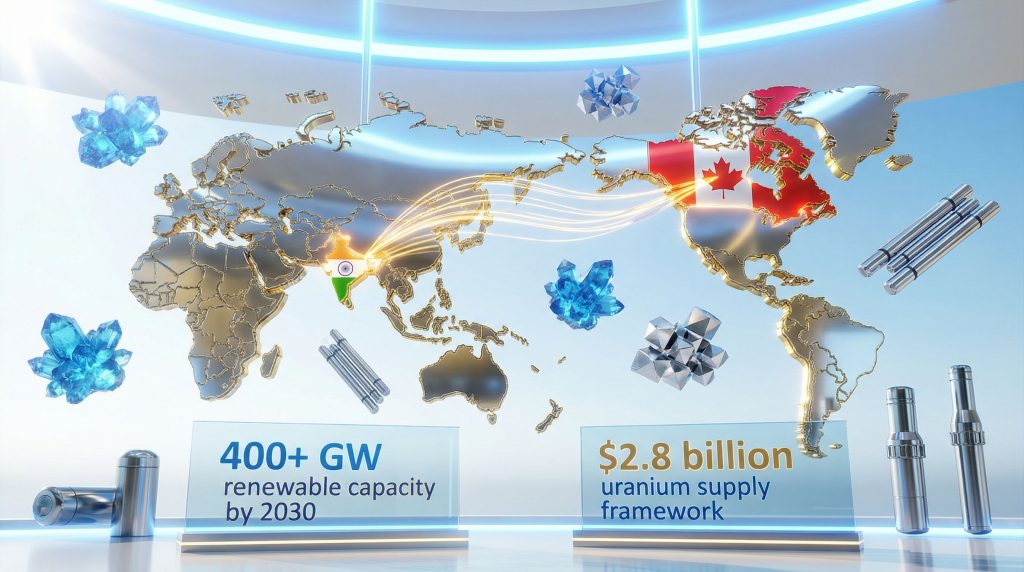
The growing importance of strategic resource partnerships has never been more evident as nations seek to diversify their energy portfolios and reduce dependence on volatile supply chains. The India-Canada energy partnership represents a sophisticated model of bilateral cooperation that extends far beyond traditional commodity trading, encompassing technology transfer, investment integration, and comprehensive strategic alignment across multiple critical sectors.
This transformation reflects a broader shift toward friend-shoring in strategic resources, where democratic allies prioritise collaboration to enhance collective energy security while advancing clean energy transition goals.
Understanding the Strategic Architecture of Modern Energy Diplomacy
Contemporary energy partnerships between democratic allies reflect sophisticated strategic planning that addresses multiple vulnerability points simultaneously. The India-Canada energy partnership exemplifies this evolution, combining immediate supply security with long-term technological capability building across nuclear, critical minerals, and clean energy sectors.
Strategic Partnership Components Analysis:
• Nuclear fuel cycle integration spanning uranium supply, technology transfer, and nuclear waste management
• Critical minerals supply chain diversification targeting electronics and renewable energy manufacturing
• Clean technology collaboration in hydrogen, carbon capture, and grid modernisation
• Investment flow coordination through pension funds and sovereign wealth mechanisms
• Regulatory harmonisation facilitating cross-border energy infrastructure development
The partnership's comprehensive scope addresses both nations' strategic vulnerabilities while creating competitive advantages in global energy transition markets. Furthermore, this approach differs fundamentally from traditional resource extraction relationships by emphasising mutual technological advancement and industrial capability development.
When big ASX news breaks, our subscribers know first
Nuclear Energy Foundation: Beyond Uranium Supply Agreements
Canada's position as the world's second-largest uranium producer provides strategic leverage in global nuclear fuel markets, particularly as demand increases from countries expanding nuclear capacity to meet climate commitments. The proposed decade-long uranium supply framework between Canada and India represents a $2 billion commitment that extends far beyond commodity trading.
Nuclear Cooperation Framework Elements:
| Component | Strategic Value | Implementation Timeline |
|---|---|---|
| Uranium supply security | Price stability, volume guarantee | 2026-2036 |
| Small Modular Reactor technology | Distributed generation capability | 2027-2030 |
| Nuclear waste management | Long-term disposal expertise | 2028-2035 |
| Advanced reactor research | Next-generation technology | 2026-2040 |
India's nuclear expansion strategy targets 22,480 MW installed capacity by 2031, requiring substantial uranium imports to fuel existing and planned reactors. Canadian uranium supplies offer diversification from traditional suppliers while providing access to advanced reactor technologies suitable for India's distributed energy requirements.
However, the collaboration addresses India's baseload power needs as renewable energy capacity scales to 500 GW by 2030, where nuclear provides grid stability for intermittent solar and wind generation. This nuclear-renewable hybrid approach represents sophisticated grid planning that balances emissions reduction with reliability requirements.
Critical Minerals Strategy: Manufacturing Competitiveness Through Resource Security
The partnership's critical minerals dimension targets India's manufacturing ambitions under Production Linked Incentive schemes, particularly in electronics, automotive, and renewable energy equipment sectors. Canada's geological advantages in lithium, cobalt, nickel, and rare earth elements create opportunities for vertically integrated supply chains.
Critical Minerals Priority Matrix:
• Battery manufacturing ecosystem: Lithium hydroxide, cobalt sulfate, and nickel sulfate for electric vehicle and energy storage applications
• Renewable energy equipment: Rare earth elements for permanent magnets in wind turbines and solar tracking systems
• Electronics manufacturing: High-purity silicon, germanium, and gallium for semiconductor fabrication
• Infrastructure development: Copper concentrates and refined products for electrical grid expansion
India's domestic critical minerals reserves remain largely underdeveloped, with limited processing capacity for value-added products. Canadian mining companies possess advanced extraction and processing technologies that could accelerate India's critical minerals self-reliance objectives while ensuring supply security for strategic industries.
The partnership creates opportunities for joint ventures in mineral processing facilities located in India, combining Canadian technical expertise with Indian manufacturing scale and market access. For instance, establishing a battery-grade lithium refinery would reduce transportation costs while building domestic processing capabilities for strategic materials.
Technology Transfer Mechanisms: Clean Energy Innovation Acceleration
Beyond resource supply, the India-Canada energy partnership emphasises technology collaboration in emerging clean energy sectors, positioning both nations as leaders in global energy transition markets. The collaboration leverages Canada's clean technology innovation ecosystem with India's massive deployment market.
Technology Collaboration Priority Areas:
• Hydrogen production systems: Electrolysis technology for industrial decarbonisation applications
• Carbon capture and storage: Direct air capture systems for cement, steel, and petrochemical industries
• Grid modernisation solutions: Smart grid technologies for renewable energy integration
• Energy storage systems: Utility-scale battery systems and pumped hydro storage
• Biofuel production: Advanced biofuel technologies for aviation and heavy transport sectors
Canadian clean technology companies have developed commercially viable solutions in hydrogen production, carbon management, and grid integration that address India's industrial decarbonisation challenges. Technology transfer agreements facilitate knowledge sharing while creating market opportunities for Canadian innovators.
Additionally, the partnership includes provisions for joint research and development programmes, co-funded by both governments, targeting technology solutions specifically adapted to Indian market conditions and deployment scales. The integration of PEM technology benefits within these collaborative frameworks demonstrates the partnership's commitment to advanced clean energy solutions.
Investment Architecture: Pension Fund Capital and Strategic Infrastructure
Canadian institutional investors have already committed approximately $73 billion to Indian markets, with significant portions targeting energy infrastructure and clean technology ventures. This investment flow creates stakeholder alignment that extends beyond government-to-government agreements.
Investment Pattern Analysis:
| Investor Category | Investment Focus | Capital Commitment |
|---|---|---|
| Pension funds | Renewable energy projects | $28 billion |
| Private equity | Critical minerals processing | $15 billion |
| Venture capital | Clean energy startups | $8 billion |
| Infrastructure funds | Transmission and distribution | $22 billion |
Canadian pension funds, particularly the Canada Pension Plan Investment Board and Ontario Teachers' Pension Plan, have established significant positions in Indian renewable energy projects, transmission infrastructure, and energy storage facilities. These long-term capital commitments provide stable financing for large-scale energy infrastructure development.
The investment architecture includes risk-sharing mechanisms and currency hedging arrangements that address traditional barriers to cross-border energy infrastructure financing. Government-backed investment protection agreements provide additional security for long-term capital commitments.
Regulatory Framework: CEPA and Energy Sector Integration
The anticipated Comprehensive Economic Partnership Agreement provides the regulatory framework for scaling energy trade beyond current levels, with specific provisions for energy sector cooperation. The agreement targets doubling bilateral trade by 2030, with energy and critical minerals forming the largest component.
CEPA Energy Provisions Framework:
• Streamlined regulatory approvals for cross-border energy infrastructure projects
• Investment protection mechanisms including dispute resolution and currency convertibility
• Technology transfer facilitation through reduced intellectual property restrictions
• Joint financing frameworks for large-scale energy and infrastructure ventures
• Standards harmonisation for equipment certification and operational procedures
The regulatory framework addresses traditional barriers to energy sector cooperation, including complex approval processes, technology transfer restrictions, and investment protection concerns. Harmonised standards facilitate equipment interoperability and reduce certification costs for energy infrastructure projects.
The next major ASX story will hit our subscribers first
Geopolitical Implications: Friend-Shoring and Supply Chain Resilience
The India-Canada energy partnership represents broader trends toward friend-shoring in critical resource supply chains, reducing dependence on geopolitically unstable regions while creating alternative supply routes. This approach reflects lessons learned from recent supply chain disruptions and geopolitical tensions.
Strategic Autonomy Indicators:
• Supply source diversification reducing single-country dependencies
• Democratic alliance strengthening in critical resource sectors
• Technology standard setting influence in clean energy systems
• Investment flow redirection toward stable, allied nations
• Strategic reserve coordination for critical materials and fuels
The partnership creates precedents for other middle-power nations seeking strategic resource relationships outside traditional great power frameworks. This model demonstrates how complementary economies can achieve mutual strategic autonomy through comprehensive cooperation.
Regional implications extend beyond bilateral benefits, influencing broader multilateral frameworks including QUAD energy cooperation, Arctic development strategies, and Indo-Pacific economic integration initiatives. The success of this partnership contributes to energy transition security across the broader democratic alliance network.
Market Dynamics and Investment Opportunities
The partnership creates significant market opportunities across multiple sectors, driven by complementary strengths and substantial investment commitments. Canadian companies gain access to India's rapidly growing energy market, while Indian firms access advanced technologies and stable resource supplies.
Market Opportunity Assessment:
• Nuclear services market: $8 billion opportunity in reactor construction, fuel supply, and waste management
• Critical minerals processing: $12 billion market for extraction, processing, and manufacturing integration
• Clean technology deployment: $25 billion market for hydrogen, carbon capture, and grid modernisation
• Energy infrastructure: $35 billion opportunity in transmission, distribution, and storage systems
Investment opportunities span the entire energy value chain, from upstream resource extraction to downstream manufacturing and technology deployment. Joint ventures and strategic partnerships create pathways for companies to access new markets while sharing technology and operational expertise.
For instance, the partnership's approach to addressing Canada's energy transition challenges whilst supporting India's clean energy goals demonstrates the mutual benefits of such strategic cooperation.
Implementation Challenges and Risk Mitigation Strategies
Despite strategic alignment, several factors could constrain partnership effectiveness, requiring proactive management and policy coordination. Successful implementation depends on addressing regulatory complexity, infrastructure limitations, and market volatility concerns.
Risk Assessment Framework:
• Regulatory complexity: Multiple jurisdictions and approval processes creating project delays
• Infrastructure bottlenecks: Transportation and processing capacity limitations affecting supply chains
• Technology transfer restrictions: National security considerations limiting knowledge sharing
• Market volatility: Commodity price fluctuations affecting long-term contract viability
• Political risk: Electoral cycles potentially affecting policy continuity and commitment levels
Risk mitigation strategies include establishing institutional mechanisms for ongoing dialogue, creating buffer capacities in critical supply chains, and developing alternative implementation pathways for key partnership components.
Success Metrics and Performance Indicators
Partnership success requires comprehensive measurement frameworks extending beyond simple trade volume increases to encompass technology transfer effectiveness, supply chain resilience improvements, and strategic autonomy advancement.
Performance Measurement Framework:
| Metric Category | Key Indicators | Target Timeline |
|---|---|---|
| Trade volume | Energy trade growth from $2B to $10B | 2026-2030 |
| Technology transfer | Completed agreements and deployment rates | Annual assessment |
| Supply diversification | Reduced concentration indices | Quarterly monitoring |
| Investment flows | Capital commitment and project completion | Bi-annual review |
| Strategic autonomy | Import dependency reduction rates | Annual evaluation |
Success indicators include quantitative measures of trade and investment growth alongside qualitative assessments of technology transfer effectiveness, institutional capacity building, and strategic objective achievement.
Long-term partnership sustainability depends on maintaining political commitment across electoral cycles, ensuring private sector engagement, and adapting to changing global energy market conditions while preserving core strategic objectives.
What Does This Mean for Global Energy Markets?
The India-Canada energy partnership demonstrates how middle powers can create strategic autonomy through complementary resource relationships, establishing frameworks for comprehensive cooperation that extend far beyond traditional commodity trading to encompass technology transfer, investment integration, and long-term strategic alignment in critical sectors.
Moreover, this partnership model offers valuable lessons for other nations seeking to strengthen their energy security through strategic alliances. The success of such comprehensive cooperation frameworks may well define the future landscape of international energy relationships in an increasingly multipolar world.
As highlighted in recent analyses of diplomatic relations between the two nations, the economic partnership represents a significant step toward enhanced bilateral trade relationships that could reshape regional energy dynamics.
Ready to Capitalise on Strategic Resource Partnerships?
Discovery Alert's proprietary Discovery IQ model delivers real-time alerts on significant ASX mineral discoveries, instantly empowering subscribers to identify actionable opportunities in critical minerals and strategic resources ahead of the broader market. Understanding how major mineral discoveries can lead to substantial market returns becomes crucial as nations seek diversified resource partnerships—explore Discovery Alert's discoveries page to see historic examples of exceptional outcomes and begin your 14-day free trial today.