May 13, 2026
What Does India's 640% Coal Ministry Budget Surge Signal for Energy Security Strategy?
The intersection of fiscal policy and energy security has rarely produced such dramatic realignment as witnessed in India's Budget 2026 allocation for coal ministry operations. This extraordinary surge reflects a fundamental recalibration of strategic priorities, where energy independence takes precedence over short-term fiscal constraints. The magnitude of this investment signals a recognition that energy security forms the foundation of economic sovereignty, particularly for nations seeking to reduce external dependencies while maintaining industrial competitiveness.
Decoding the ₹3,635 Crore Allocation Framework
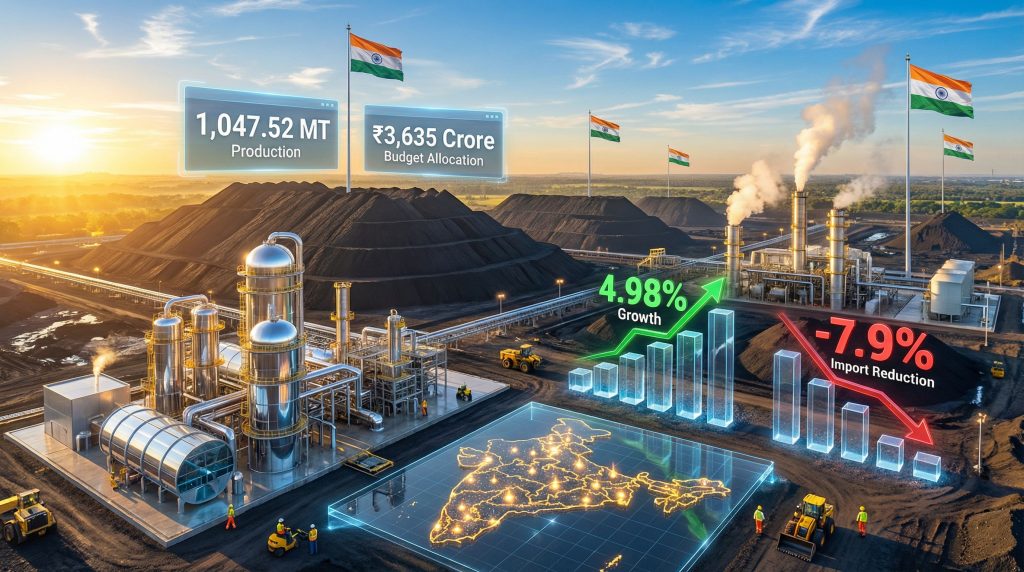
The Budget 2026 allocation for coal ministry represents a paradigm shift from incremental funding to transformational investment. The ₹3,635 crore allocation for FY 2026-27 marks a 640% increase from the revised estimate of ₹490 crore in 2025-26, demonstrating unprecedented fiscal commitment to coal sector development. This allocation architecture incorporates both direct ministry funding and supplementary financing through the National Mineral Exploration Trust Fund, which contributes an additional ₹755 crore specifically designated for coal and lignite exploration schemes.
The funding structure reveals sophisticated financial engineering designed to maximise resource utilisation while maintaining budgetary discipline across other sectors. The original 2025-26 allocation of ₹501 crore proved insufficient for planned exploration targets, necessitating this dramatic expansion to address accumulated infrastructure deficits and accelerate production capacity development. Furthermore, these coal supply challenges have prompted strategic reassessment of domestic production capabilities.
Key Budget Components:
- Direct Ministry Allocation: ₹3,635 crore
- NMETF Supplementary Funding: ₹755 crore
- Total Demand BE 2026-27: ₹4,390 crore
- Capital vs. Revenue Expenditure Split for mining infrastructure
Strategic Implications of National Mineral Exploration Trust Fund Integration
The integration of National Mineral Exploration Trust Fund resources into coal ministry operations represents a strategic consolidation of exploration financing mechanisms. This approach enables sustained investment in geological mapping and resource assessment without depleting general budget allocations, creating a dedicated funding stream for long-term mineral exploration activities.
NMETF allocation demonstrates the government's commitment to systematic resource development rather than ad-hoc project funding. The ₹750 crore allocation in RE 2025-26 and ₹755 crore in BE 2026-27 specifically target exploration of coal and lignite schemes, ensuring continuity in geological assessment programs essential for future production planning.
This integration creates synergies between exploration activities and production planning, enabling more efficient capital deployment and reducing the time lag between resource identification and commercial extraction. Additionally, the dedicated fund mechanism provides predictable financing for multi-year exploration projects that require sustained investment to yield meaningful results, whilst supporting broader mining innovation trends.
Coal Gasification Investment as Economic Diversification Tool
The substantial allocation toward coal gasification technology represents India's strategic pivot toward value-added coal utilisation rather than simple combustion for electricity generation. Coal gasification converts solid coal into synthesis gas through thermochemical processes, creating feedstock for chemical production, synthetic fuels, and ammonia synthesis.
This investment approach addresses multiple economic objectives simultaneously: reducing import dependency for chemical feedstocks, creating higher-value products from domestic coal resources, and establishing industrial clusters around coal processing facilities. The gasification pathway enables coal to serve as both energy source and industrial raw material, maximising economic returns from domestic reserves.
Economic Benefits of Gasification Investment:
- Methanol production for chemical industry feedstock
- Ammonia synthesis reducing fertiliser import requirements
- Synthetic fuel production addressing petroleum product imports
- Industrial clustering opportunities in coal-rich regions
When big ASX news breaks, our subscribers know first
How Will the ₹3,500 Crore Coal Gasification Push Transform India's Import Dependency?
India's strategic emphasis on coal gasification through dedicated investment represents a comprehensive approach to import substitution that extends far beyond simple energy production. The transformation potential lies in creating domestic alternatives to imported chemicals, fertilisers, and synthetic fuels that currently strain the trade balance while exposing the economy to volatile international commodity markets.
Syngas Production Capacity Targets vs. Current Infrastructure Gaps
Coal gasification produces synthesis gas, a mixture of carbon monoxide and hydrogen that serves as the foundation for numerous chemical processes. The current infrastructure landscape reveals significant capacity gaps that justify the substantial investment allocation, as India's existing gasification facilities operate at scales insufficient to meaningfully impact import substitution goals.
The technical requirements for large-scale gasification involve high-temperature processing facilities operating at 800-1200°C, sophisticated gas cleaning systems, and downstream chemical synthesis infrastructure. These capital-intensive installations require sustained investment over multiple years to achieve operational capacity, explaining the concentrated budget allocation toward gasification development. However, this approach must consider energy security insights to ensure strategic alignment with broader energy transition goals.
Technical Infrastructure Requirements:
- Gasification reactor systems capable of processing various coal grades
- Gas cleaning and conditioning equipment for syngas purification
- Chemical synthesis facilities for methanol and ammonia production
- Integration with existing industrial facilities for feedstock supply
Import Substitution Economics: Trade Balance Impact Analysis
The economic rationale for coal gasification investment becomes apparent when analysing India's import profile for chemical feedstocks and synthetic materials. Current import volumes for chemicals, fertilisers, and synthetic fuels represent significant foreign exchange expenditure that domestic production could substantially reduce.
The decline in coal imports from 264.53 MT in FY24 to 243.62 MT in FY25 demonstrates India's growing capacity for import substitution through enhanced domestic production. This 7.9% reduction in import volumes translates to reduced foreign exchange expenditure and improved energy security through reduced external dependency.
Import Reduction Indicators:
- Coal import decline: 20.91 MT reduction year-over-year
- Foreign exchange savings from reduced coal imports
- Potential chemical feedstock import substitution through gasification products
- Fertiliser import reduction through domestic ammonia production
Technology Transfer Requirements for Production Goal Achievement
Achieving substantial gasification capacity requires access to proven technologies and operational expertise that India must acquire through technology transfer agreements or indigenous development programs. The investment allocation must account for licensing costs, technical collaboration expenses, and knowledge transfer activities essential for successful project implementation.
International gasification technology providers possess decades of operational experience that India requires to accelerate deployment timelines and minimise technical risks. The budget allocation enables strategic partnerships with technology leaders while building domestic technical capabilities for future projects. Moreover, this aligns with evolving BHP coal strategy considerations across the global mining sector.
Technology transfer encompasses not only equipment supply but also operational training, maintenance protocols, and process optimisation techniques that determine long-term project success. This comprehensive approach requires sustained investment in human capital development alongside physical infrastructure construction.
What Economic Drivers Justify Such Massive Coal Sector Investment Expansion?
The fundamental economic drivers supporting India's coal sector investment expansion stem from the intersection of energy security requirements, industrial competitiveness considerations, and strategic autonomy objectives. These drivers create compelling rationale for concentrated investment despite opportunity costs associated with alternative energy technologies.
Energy Security vs. Climate Transition: Budget Allocation Trade-offs
India's energy security framework reveals the critical role coal plays in maintaining grid stability and industrial operations. With coal contributing 55% to the national energy mix and fueling 74% of electricity generation, the sector's strategic importance transcends environmental considerations in the immediate term. This dependency creates economic vulnerabilities that justify substantial investment to enhance domestic production capabilities.
The Economic Survey emphasises that India's position as the fifth-largest coal reserve holder combined with being the second-largest consumer globally creates unique strategic imperatives. The production milestone of 1,047.52 MT in FY25, representing a 4.98% increase from the previous year's 997.83 MT, demonstrates the sector's growth trajectory and capacity for further expansion.
Energy Security Metrics:
| Metric | FY24 | FY25 | Growth Rate |
|---|---|---|---|
| Total Production (MT) | 997.83 | 1,047.52 | 4.98% |
| Domestic Supply (MT) | Not specified | 1,025.33 | 5.38% |
| Coal Imports (MT) | 264.53 | 243.62 | -7.9% |
Manufacturing Competitiveness Through Domestic Coal-to-Chemical Pathways
Industrial competitiveness increasingly depends on access to reliable, cost-effective feedstocks and energy sources. Coal-to-chemical pathways enable India to leverage domestic coal resources for producing industrial inputs traditionally imported at higher costs and subject to international price volatility.
The steel industry exemplifies this dynamic, where Indian manufacturers rely heavily on coking coal imports that expose operations to international price fluctuations. Domestic coal processing and gasification capabilities reduce this vulnerability while creating opportunities for industrial clustering around coal processing facilities. Additionally, tariff market impacts create further incentives for domestic production capability development.
Industrial Applications:
- Steel production: Reduced coking coal import dependency
- Cement manufacturing: Domestic coal provides cost-competitive energy source
- Chemical synthesis: Syngas from gasification enables domestic chemical production
- Fertiliser manufacturing: Ammonia production via coal gasification
Employment Generation Potential in Coal-Adjacent Industries
The coal sector investment creates multiplier effects across related industries, generating employment opportunities that extend beyond direct mining operations. Coal gasification facilities require skilled technicians, chemical engineers, and support personnel, while transportation and logistics networks create additional employment in coal-producing regions.
Regional development benefits concentrate in coal-rich states including Odisha, Chhattisgarh, and Jharkhand, where mining operations anchor local economies. Enhanced investment in coal infrastructure creates opportunities for economic diversification while maintaining employment levels in traditional mining communities.
The transition toward value-added coal processing generates higher-skilled employment opportunities compared to traditional mining operations, supporting workforce development and regional economic advancement in coal-dependent areas.
How Does India's Coal Production Milestone of 1,047.52 MT Shape Future Budget Priorities?
The achievement of 1,047.52 MT coal production in FY25 represents more than a statistical milestone; it demonstrates India's capacity to expand domestic energy production while reducing import dependency. This production level, characterised by the Economic Survey as the highest coal production the country has ever achieved, establishes a foundation for strategic budget allocation toward infrastructure consolidation and efficiency improvements.
Production Efficiency Gains vs. Infrastructure Investment Requirements
The 5.38% growth in domestic coal supply reaching 1,025.33 MT in FY25 indicates that production infrastructure operates with increasing efficiency. However, sustaining this growth trajectory requires continued investment in mechanised mining equipment, transportation networks, and processing facilities to maintain competitive production costs and output quality.
The production-to-consumption ratio improvement over the past decade, where production growth has consistently outpaced consumption growth according to the Economic Survey, suggests that marginal infrastructure investments yield compounding returns through improved operational efficiency. Furthermore, this aligns with the Indian government's emphasis on coal gasification as a strategic priority.
Infrastructure Investment Priorities:
- Mining mechanisation for productivity enhancement
- Coal evacuation infrastructure including rail and slurry pipelines
- Washery capacity expansion for higher-grade coal production
- Processing infrastructure for value-added coal products
Regional Mining Capacity Distribution and Budget Allocation Logic
India's coal production concentrates in specific geological regions that require targeted infrastructure investment to maximise resource extraction efficiency. The major coal-producing states including Odisha, Chhattisgarh, and Jharkhand possess substantial reserve bases that justify concentrated budget allocation for capacity expansion and infrastructure development.
Regional allocation logic considers factors including reserve quality, extraction complexity, transportation accessibility, and environmental constraints. Budget priorities align with geological assessments that identify areas with highest production potential and most favourable extraction economics.
The National Mineral Exploration Trust Fund allocation specifically targets exploration of coal and lignite schemes, ensuring systematic geological assessment across potential mining regions to identify future production sites and reserve additions. Additionally, the comprehensive budget allocation overview provides broader context for these strategic investments.
Export Potential Development Through Surplus Production Management
India's domestic coal supply of 1,025.33 MT representing 97.9% of total production indicates minimal current export orientation, with production focused primarily on domestic consumption requirements. However, continued production growth creates potential for export development, particularly for value-added coal products and processed materials.
Export potential development requires investment in port infrastructure, quality improvement facilities, and international marketing capabilities. The budget allocation enables infrastructure development that positions India as a potential coal exporter rather than solely focusing on domestic consumption requirements.
With coal contributing 55% to India's national energy mix and powering 74% of electricity generation, the ministry's budget surge reflects the sector's continued centrality to economic planning despite global energy transition pressures.
What Are the Macroeconomic Risks of Heavy Coal Sector Budget Concentration?
Concentrated investment in coal sector development, while addressing immediate energy security requirements, creates macroeconomic risks that warrant careful consideration in budget planning processes. These risks encompass opportunity costs, technological obsolescence potential, and environmental transition challenges that could impact long-term economic returns.
Opportunity Cost Analysis: Coal vs. Renewable Energy Investment Ratios
The substantial budget allocation toward coal development necessarily reduces available funding for alternative energy technologies, creating opportunity costs that may impact India's long-term energy transition capabilities. While coal investment addresses immediate energy security requirements, reduced renewable energy investment could delay technological advancement in solar, wind, and energy storage systems.
Renewable energy technologies exhibit declining cost curves and increasing efficiency improvements that may eventually provide more favourable economic returns compared to coal infrastructure investments. The budget allocation strategy must balance immediate energy security requirements against long-term technological competitiveness considerations.
Investment Allocation Considerations:
- Coal infrastructure: Immediate energy security benefits
- Renewable energy: Long-term cost competitiveness potential
- Energy storage: Grid stability and renewable integration requirements
- Transmission infrastructure: System integration for diverse energy sources
Carbon Transition Timeline Conflicts with Long-term Coal Infrastructure Spending
International climate commitments and carbon transition requirements create potential conflicts with substantial coal infrastructure investments that possess decades-long operational lifespans. Coal gasification facilities and mining infrastructure represent long-term capital commitments that may face obsolescence pressure as carbon pricing mechanisms and environmental regulations evolve.
The budget allocation approach must consider asset utilisation timelines and potential stranded asset risks if climate policies accelerate coal phase-out requirements. However, coal gasification technology may provide transition pathway benefits by enabling cleaner coal utilisation compared to direct combustion applications.
Strategic planning requires balancing immediate energy requirements against evolving environmental constraints that may impact coal sector economics over infrastructure operational lifespans.
Global Market Volatility Impact on Coal-Dependent Budget Planning
Heavy concentration of budget allocation toward coal sector development creates exposure to international coal market volatility that could impact economic returns on infrastructure investments. Global coal price fluctuations, trade policy changes, and international demand shifts may affect the economic viability of coal-focused development strategies.
Diversified energy investment approaches provide hedging benefits against commodity market volatility, while concentrated coal investment creates correlation risks with international energy markets. Budget planning must account for scenarios involving adverse coal market conditions that could impact investment returns.
How Will Coal Ministry's Enhanced Funding Compare to Other Energy Sector Allocations?
The 640% increase in coal ministry allocation to ₹3,635 crore represents a dramatic shift in energy sector budget priorities that requires comparison with allocations to renewable energy, power transmission, and other energy-related ministries to understand strategic implications.
Cross-Ministry Energy Budget Distribution Analysis
Energy sector budget allocation encompasses multiple ministries including New and Renewable Energy, Power, Petroleum and Natural Gas, and Coal, each addressing different components of India's energy infrastructure requirements. The coal ministry's enhanced funding position must be evaluated within this broader allocation framework to assess strategic balance and priority setting.
The magnitude of coal ministry allocation increase suggests a strategic prioritisation of domestic fossil fuel development over alternative energy technologies, at least in terms of immediate budget commitment. This allocation pattern reflects policy emphasis on energy security through domestic resource utilisation rather than technology diversification.
Ministry Allocation Comparison Framework:
- Ministry of Coal: ₹3,635 crore allocation focus
- Ministry of New and Renewable Energy: Comparative allocation analysis required
- Ministry of Power: Transmission and distribution infrastructure funding
- Ministry of Petroleum and Natural Gas: Exploration and refining capacity investment
Coal vs. Renewable Energy Ministry Funding Disparities
The coal ministry's substantial budget increase creates funding disparities with renewable energy sector allocations that may impact India's energy transition timeline and technological development capabilities. While coal investment addresses immediate energy security requirements, reduced relative investment in renewable energy could delay cost competitiveness achievement and technological advancement.
Renewable energy sector funding typically supports solar manufacturing, wind energy development, energy storage systems, and grid integration infrastructure. Comparative funding levels determine the pace of renewable energy deployment and cost reduction achievement through scale effects and technological learning.
Infrastructure Ministry Coordination for Coal Transportation Networks
Coal sector development requires coordination with railway, shipping, and highway infrastructure ministries to ensure adequate transportation capacity for increased coal production and distribution. The coal ministry's enhanced funding must align with transportation infrastructure investment to avoid bottlenecks that could limit production utilisation.
Railway infrastructure particularly critical for coal transportation, as rail networks carry the majority of coal shipments from mining regions to consumption centres. Coordination between coal ministry investment and railway capacity expansion ensures optimal utilisation of production infrastructure investments.
The next major ASX story will hit our subscribers first
What Implementation Challenges Could Affect Coal Ministry Budget Utilisation?
Successful utilisation of the ₹3,635 crore allocation requires addressing implementation challenges that could delay project completion, increase costs, or reduce economic returns on coal sector investments. These challenges encompass technical, regulatory, and institutional factors that require proactive management to achieve budget objectives.
Project Execution Capacity vs. Funding Availability Mismatches
The dramatic funding increase from ₹490 crore to ₹3,635 crore may exceed existing project execution capacity within coal sector institutions, creating implementation bottlenecks that delay budget utilisation and project completion. Successful deployment requires scaling project management capabilities, technical expertise, and contractor availability commensurate with funding availability.
Coal India Limited and related institutions must rapidly expand project development and execution capabilities to effectively utilise enhanced budget allocation. This scaling challenge requires hiring additional technical personnel, engaging qualified contractors, and establishing project monitoring systems capable of managing multiple simultaneous developments.
Execution Capacity Requirements:
- Technical project management personnel for gasification projects
- Specialised contractors for coal processing infrastructure
- Equipment procurement and installation coordination
- Quality control and project monitoring systems
Environmental Clearance Bottlenecks for Coal Gasification Projects
Coal gasification projects require comprehensive environmental clearances that involve multiple regulatory agencies and extensive impact assessments. The clearance process timeline may constrain project implementation schedules and delay budget utilisation, particularly for large-scale gasification facilities with complex environmental footprints.
Environmental clearance requirements encompass air quality impact assessments, water resource utilisation studies, waste management plans, and community consultation processes. These requirements, while necessary for environmental protection, create approval timelines that may extend beyond budget execution periods.
Streamlined clearance processes and proactive environmental planning become critical for successful budget utilisation within planned timeframes while maintaining environmental compliance standards.
Technology Acquisition Timelines for Advanced Coal Processing
Advanced coal gasification and processing technologies often require international technology transfer agreements, equipment imports, and technical collaboration arrangements that involve extended negotiation and procurement timelines. These acquisition processes may delay project implementation and impact budget utilisation schedules.
Technology transfer agreements involve intellectual property negotiations, licensing arrangements, and technical training programmes that require months or years to complete. The budget allocation timeline must account for these acquisition periods to ensure realistic project implementation schedules.
How Might Global Energy Markets React to India's Coal Investment Strategy?
India's substantial coal sector investment creates ripple effects across international energy markets that extend beyond domestic energy security considerations. The strategic implications encompass commodity pricing, geopolitical relationships, and international climate policy dynamics that influence global energy market structure.
International Coal Price Implications of Reduced Indian Import Demand
India's enhanced domestic coal production capacity, evidenced by the 7.9% decline in imports from 264.53 MT to 243.62 MT, creates potential for further import reduction that could impact international coal market pricing dynamics. Reduced Indian import demand removes a significant buyer from international markets, potentially creating downward pressure on global coal prices.
International coal exporters including Australia, Indonesia, and South Africa may experience reduced demand from India as domestic production capacity expands and gasification technologies enable more efficient coal utilisation. This demand reduction could necessitate market adjustments and pricing strategies among international suppliers.
The scale of India's coal consumption as the second-largest consumer globally means that import reduction policies create meaningful impacts on international trade volumes and pricing structures across Asian coal markets.
Geopolitical Responses to India's Energy Self-Sufficiency Push
India's strategic emphasis on energy independence through enhanced coal production creates geopolitical implications for energy exporting nations and international energy security frameworks. Reduced Indian energy import dependency may alter diplomatic relationships and trade partnerships that traditionally centred on energy supply arrangements.
Energy exporting nations may respond through diversified export strategies, enhanced competitive offerings, or alternative partnership arrangements to maintain market share in Indian energy markets. These responses could influence regional energy trade patterns and diplomatic relationships across South Asia and broader Indo-Pacific regions.
Climate Finance Access Challenges from Continued Coal Expansion
International climate finance institutions increasingly condition funding availability on renewable energy transitions and coal phase-out commitments. India's substantial coal sector investment may create challenges for accessing international climate finance for other development projects, potentially affecting broader infrastructure and environmental programmes.
Multilateral development banks and climate finance mechanisms prioritise projects that align with global carbon reduction objectives, potentially creating funding constraints for nations pursuing coal expansion strategies. India may need to balance coal investment with renewable energy development to maintain access to international climate finance resources.
What Long-term Economic Scenarios Could Emerge from This Budget Approach?
The Budget 2026 allocation for coal ministry creates multiple potential economic scenarios that depend on execution success, market conditions, and technological developments over the coming decades. These scenarios range from successful energy independence achievement to potential stranded asset creation, with varying implications for India's economic development trajectory.
Best-Case Scenario: Energy Independence and Industrial Growth Acceleration
Successful implementation of coal sector investment could achieve substantial energy independence while creating industrial clustering opportunities around coal gasification and processing facilities. This scenario involves efficient project execution, successful technology transfer, and market conditions that support coal-to-chemical production economics.
Energy independence through enhanced domestic coal production reduces foreign exchange requirements for energy imports while creating stable, predictable energy costs for industrial operations. Coal gasification success enables domestic chemical production, fertiliser manufacturing, and synthetic fuel production that substitutes for imports across multiple sectors.
Best-Case Outcomes:
- Energy import dependency reduction below 20%
- Industrial competitiveness improvement through stable energy costs
- Chemical sector import substitution achieving trade balance improvement
- Regional economic development in coal-producing states
- Employment generation across coal-adjacent industries
Risk Scenario: Stranded Asset Creation in Coal Infrastructure
Accelerated global energy transition, technological obsolescence, or adverse market conditions could create stranded asset risks for coal infrastructure investments with multi-decade operational lifespans. This scenario involves faster-than-expected renewable energy cost reductions, international carbon pricing mechanisms, or technological breakthroughs that reduce coal competitiveness.
Stranded asset risks encompass gasification facilities, mining infrastructure, and transportation networks that become economically unviable before recovering their capital costs. These risks increase with longer infrastructure lifespans and higher capital intensity.
Risk Mitigation Strategies:
- Flexible infrastructure design enabling multiple fuel sources
- Diversified technology portfolio including cleaner coal technologies
- Staged investment approaches enabling mid-course corrections
- Integration with renewable energy systems for hybrid operations
Transition Pathway: Coal as Bridge Fuel vs. Permanent Energy Solution
A intermediate scenario positions coal investment as transition pathway technology that provides energy security during renewable energy scaling while gradually reducing relative importance as alternative technologies mature. This approach requires strategic planning for eventual technology transition while maximising near-term economic benefits.
Bridge fuel strategies involve maintaining coal capacity for grid stability and industrial requirements while simultaneously investing in renewable energy technologies and energy storage systems. Coal gasification technologies may provide cleaner utilisation pathways that extend coal's economic viability during energy transition periods.
Key Takeaways: Strategic Implications for India's Energy Economic Future
The Budget 2026 allocation for coal ministry represents a definitive strategic choice prioritising energy security through domestic resource development over diversified technology investment approaches. This allocation signals confidence in coal's continued economic viability while acknowledging the need for substantial infrastructure investment to optimise resource utilisation.
Budget 2026 Coal Allocation as Economic Security Investment
The ₹3,635 crore allocation functions as economic security investment that reduces vulnerability to international energy market volatility while creating opportunities for industrial development through domestic resource utilisation. This investment approach treats energy independence as foundational infrastructure comparable to transportation, telecommunications, or defence capabilities.
Economic security benefits encompass reduced foreign exchange exposure, predictable energy costs for industrial operations, and reduced geopolitical vulnerability through energy supply diversification. These benefits justify substantial public investment despite opportunity costs associated with alternative energy technologies.
Critical Success Factors for Maximising Return on Coal Sector Investment
Successful return on coal sector investment requires addressing multiple critical factors including project execution efficiency, technology transfer success, environmental compliance achievement, and market development for value-added coal products.
Critical Success Factors:
- Efficient project execution within budget and timeline constraints
- Successful technology transfer and domestic capability development
- Environmental compliance and community acceptance achievement
- Market development for gasification products and chemicals
- Coordination with transportation and industrial infrastructure development
- Workforce development and technical capacity building
Timeline Expectations for Measurable Energy Security Improvements
Energy security improvements from coal sector investment require multi-year timelines for infrastructure development, technology deployment, and operational optimisation. Realistic expectations involve gradual improvements over 5-10 year periods rather than immediate transformation.
Near-term improvements may include reduced coal import dependency, enhanced domestic production capacity, and initial gasification facility operations. Medium-term benefits encompass substantial import substitution, industrial competitiveness improvement, and regional economic development in coal-producing areas.
Timeline Framework:
- Years 1-2: Project planning, technology acquisition, construction initiation
- Years 3-5: Infrastructure completion, initial operations, capacity ramp-up
- Years 5-10: Full operational capacity, measurable import substitution, economic impact assessment
Disclaimer: This analysis is based on publicly available budget documents and government statements. Investment outcomes depend on successful project execution, market conditions, and technological developments that may vary from current expectations. Readers should consider multiple perspectives and consult official government publications for the most current information.
Further Exploration:
Readers interested in deeper analysis can explore additional perspectives through comprehensive budget documentation and detailed ministry allocation analysis from government sources.
Ready to Capitalise on India's Energy Security Investment Surge?
Discovery Alert's proprietary Discovery IQ model delivers real-time alerts on significant ASX mineral discoveries, instantly empowering subscribers to identify actionable opportunities ahead of the broader market in energy, coal, and resource sectors. Begin your 14-day free trial today and position yourself to benefit from the next major discovery that could mirror the transformative returns seen in India's strategic resource investments.