July 21, 2026
India's Critical Minerals Revolution: The Geological Foundation
The global energy transition is fundamentally reshaping mineral demand patterns, creating unprecedented opportunities for nations with strategic geological advantages. As electric vehicle adoption accelerates and renewable energy deployment scales, the world increasingly relies on a narrow set of critical minerals energy security that enable these technologies to function. This dependency has exposed significant supply chain vulnerabilities, particularly in rare earth elements and titanium-based compounds that form the backbone of clean energy infrastructure.
India's position in this evolving landscape represents a compelling intersection of geological abundance and strategic necessity. With the country targeting 500 GW of renewable energy capacity and ambitious electric vehicle deployment goals, Andhra Pradesh rare earth mining has become a national imperative. The concentration of these resources along specific coastal regions creates unique opportunities for integrated mining and processing operations that could fundamentally alter global supply dynamics.
When big ASX news breaks, our subscribers know first
Strategic Importance of Rare Earth Elements in India's Energy Transition
Critical Minerals Driving Clean Technology Adoption
The foundation of modern clean energy technologies relies heavily on rare earth elements and titanium compounds that enable essential functionalities. Permanent magnet motors in electric vehicles require neodymium and dysprosium oxides to achieve the magnetic field strengths necessary for efficient operation. Wind turbine generators similarly depend on these same rare earth elements to produce electricity at scale, with a single large wind turbine containing 600-800 kilograms of rare earth materials.
Solar panel manufacturing utilises various rare earth compounds in inverter systems and tracking mechanisms, while energy storage systems increasingly incorporate scandium and yttrium in advanced battery chemistries. Furthermore, the strategic importance of these materials extends beyond their technical applications to their economic impact on India's manufacturing competitiveness.
Current import dependencies reveal significant vulnerabilities in India's supply chain resilience. Titanium dioxide pigment imports constitute approximately 75% of domestic consumption, with the majority sourced from Chinese suppliers who control critical processing capabilities. This dependency becomes particularly concerning given that titanium dioxide represents a $2.5 billion annual market in India, primarily serving paint, coating, and plastics industries.
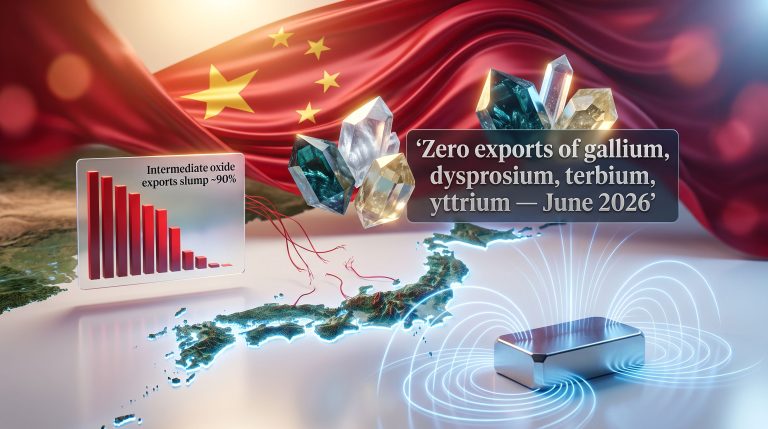
China's dominance in rare earth processing extends beyond simple market share to encompass 90% of global separation and purification capacity. This concentration creates systemic risks for countries attempting to build domestic clean energy manufacturing, as disruptions in Chinese supply chains can halt production across multiple industries simultaneously.
Government Policy Framework Supporting Domestic Mining
India's strategic response to critical mineral dependencies has crystallised through comprehensive policy initiatives designed to build domestic production capacity. The Union Budget announcement establishing rare earth corridors across four southern states represents a ₹25,000 crore commitment to critical minerals development, with specific focus on integrated mining and processing operations. Moreover, government intervention in mining has created structured pathways for responsible resource development.
The Department of Atomic Energy's regulatory framework for beach sand mining addresses the unique challenges of monazite extraction, which contains radioactive thorium alongside valuable rare earth oxides. This dual-use regulatory approach ensures both commercial viability and nuclear material security, creating a structured pathway for responsible resource development.
Strategic alignment with Atmanirbhar Bharat initiatives positions critical minerals development within broader manufacturing self-reliance objectives. In addition, the integration of mining approvals with downstream processing requirements creates incentives for value-added operations rather than simple ore exports.
Andhra Pradesh's Geological Advantage in Critical Minerals
Comprehensive Resource Assessment and Reserve Distribution
Andhra Pradesh's geological endowment in beach sand minerals represents one of India's most significant concentrations of critical materials. The state's 970-kilometre coastline contains extensive placer deposits formed through millions of years of granitic weathering and coastal deposition processes, positioning it at the forefront of Andhra Pradesh rare earth mining development.
| Mineral Type | State Share of National Reserves | Key Applications |
|---|---|---|
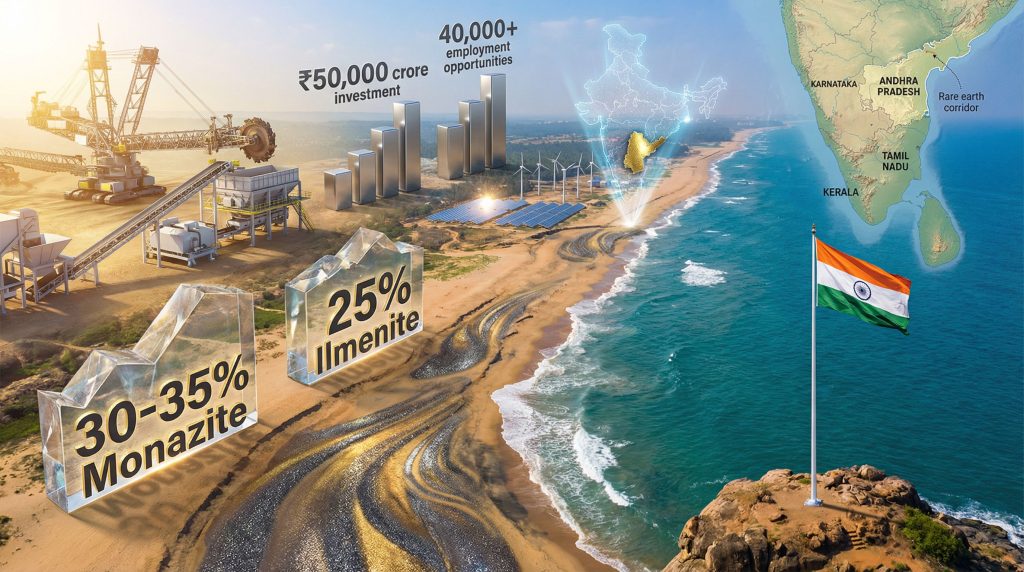
| Monazite | 30-35% | Rare earth oxides, nuclear fuel |
| Ilmenite | 25% | Titanium dioxide pigment |
| Rutile | 25% | Aerospace-grade titanium |
| Zircon | 25% | Ceramics, foundry applications |
The mineralogical composition of these deposits reveals exceptional quality characteristics that enhance their commercial viability. Monazite concentrates contain 55-60% rare earth oxides, significantly higher than global averages of 45-50%, while maintaining thorium content of 8-10% that enables nuclear fuel applications under appropriate regulatory frameworks.
Ilmenite grades averaging 52-55% titanium dioxide provide feedstock suitable for both pigment and titanium metal production. This dual-purpose capability allows processing facilities to optimise production based on market conditions, enhancing economic returns compared to single-product operations.
Coastal Mining Zones and Inland Exploration Areas
The distribution of mineral resources across Andhra Pradesh's coastal districts creates opportunities for sequential development phases that can optimise infrastructure utilisation and environmental management. Northern districts including Srikakulam and Vizianagaram contain the highest concentration of monazite deposits, while central coastal regions show greater ilmenite and rutile abundance.
Recent geological surveys have identified additional mineral diversity in the Rayalaseema region, including:
• Niobium deposits with concentrations suitable for steel alloy applications
• Scandium occurrences that could support aluminium alloy development
• Lithium-bearing pegmatites relevant to battery material supply chains
• Rare earth element concentrations in inland weathering zones
These discoveries expand the scope of Andhra Pradesh's critical minerals potential beyond coastal mining to encompass broader geological provinces. Furthermore, the integration of coastal and inland resources creates opportunities for diversified mining operations that can serve multiple industrial applications, complementing global Greenland critical minerals developments.
Key Development Projects Transforming Mining Operations
Approved Mining Blocks and Operational Framework
The Andhra Pradesh Mineral Development Corporation has secured Department of Atomic Energy approvals for 10 major beach sand deposits covering thousands of hectares across five coastal districts. These approvals represent the culmination of extensive geological assessments, environmental impact evaluations, and regulatory compliance processes.
District-wise development priorities include:
- Srikakulam: Primary monazite extraction with integrated rare earth processing
- Vizianagaram: Combined ilmenite and rutile operations for titanium applications
- Visakhapatnam: Port-integrated facilities for export-oriented production
- Kakinada: Processing hub development with downstream manufacturing
- Krishna: Environmental demonstration projects for sustainable mining practices
Additional blocks currently in advanced clearance stages could expand operational capacity by 200-300% within the next five years, subject to successful completion of environmental and regulatory approvals. This expansion aligns with broader mining industry evolution trends towards sustainable resource development.
Processing Infrastructure and Value Chain Integration
The development of integrated processing capabilities represents a critical success factor for Andhra Pradesh rare earth mining operations. Collaboration frameworks with Indian Rare Earths Limited provide access to established separation and purification technologies, while creating opportunities for technology transfer and capacity building.
"The integration of mining and processing operations within single complexes can reduce transportation costs by 40-60% while enabling real-time quality control and production optimisation," according to industry reports on AP's strategic push to titanium sectors.
Proposed processing facilities will incorporate multiple separation techniques including:
• Hydrometallurgical extraction for initial rare earth concentration
• Solvent extraction systems for individual element separation
• High-temperature reduction for titanium metal production
• Chemical purification for nuclear-grade materials
Single-window clearance mechanisms established by the state government aim to reduce approval timelines from 18-24 months to 8-12 months, accelerating project development while maintaining environmental and safety standards.
Import Substitution Strategy and Economic Impact
Reducing China Dependency Through Domestic Production
India's current import patterns reveal significant opportunities for domestic substitution across multiple critical mineral categories. Titanium dioxide pigment imports totalling $1.8 billion annually represent the largest immediate substitution target, with domestic production capacity currently meeting only 25% of national demand.
"Current import statistics show India sources nearly two-thirds of its titanium dioxide requirements from China, despite possessing some of the world's largest titanium mineral reserves," highlighting the potential for domestic substitution through Andhra Pradesh rare earth mining initiatives.
Rare earth oxide imports present additional substitution opportunities:
• Neodymium oxide: 850 tons annually for permanent magnet production
• Dysprosium oxide: 120 tons annually for high-performance magnets
• Yttrium oxide: 180 tons annually for electronics and lighting
• Cerium oxide: 2,200 tons annually for polishing and catalytic applications
The development of domestic separation and purification capabilities could reduce rare earth import costs by 30-40% while providing supply chain security for critical manufacturing sectors. This reduction supports broader decarbonisation in mining objectives.
Economic Multiplier Effects and Job Creation Projections
Investment projections for Andhra Pradesh's critical minerals sector indicate potential capital deployment of ₹50,000 crores across mining, processing, and downstream manufacturing operations. This investment scale positions the initiative among India's largest industrial development projects.
Employment generation estimates include:
• Direct mining employment: 8,000-10,000 positions across operational sites
• Processing facility jobs: 12,000-15,000 technical and operational roles
• Downstream manufacturing: 20,000-25,000 positions in titanium and rare earth applications
• Service sector employment: 15,000-18,000 supporting roles in logistics, maintenance, and administration
The 40,000+ total employment target represents significant economic impact for coastal districts, with average wages in mining and processing operations typically exceeding regional averages by 50-70%. Furthermore, reports indicate that AP is gearing up to explore rare earth minerals with comprehensive workforce development programmes.
Manufacturing cluster development for titanium and rare earth applications could attract additional investment of ₹25,000 crores from automotive, aerospace, and clean energy companies seeking secure material supplies.
Regulatory Compliance and Environmental Framework
Environmental and Regulatory Standards
Beach sand mining operations require comprehensive environmental management systems that address coastal zone protection, groundwater management, and ecosystem preservation. The regulatory framework combines multiple authorities including the Ministry of Environment, Department of Atomic Energy, and state pollution control boards.
Key environmental compliance requirements include:
• Environmental Impact Assessments with detailed coastal ecosystem studies
• Groundwater monitoring systems to prevent saltwater intrusion
• Air quality management for dust control and processing emissions
• Waste management protocols for radioactive materials and chemical byproducts
• Biodiversity preservation measures for coastal wildlife protection
Atomic Energy Act compliance for monazite extraction involves specialised handling procedures, radiation monitoring, and nuclear material accounting systems. These requirements necessitate trained personnel and certified equipment, adding operational complexity while ensuring safety standards.
Technology Transfer and Processing Innovation
The development of advanced processing capabilities requires technology partnerships and knowledge transfer from established rare earth producers. International collaboration opportunities exist with countries including Australia, Canada, and the United States, which have developed alternative processing technologies outside Chinese control.
Critical technology requirements include:
- Selective extraction techniques for individual rare earth elements
- Thorium separation and management for nuclear applications
- Titanium reduction technologies for metal production
- Environmental remediation systems for processing waste management
Research and development infrastructure development involves partnerships with Indian Institutes of Technology, National Institute of Technology centres, and Council of Scientific and Industrial Research laboratories to build indigenous technological capabilities.
The next major ASX story will hit our subscribers first
Strategic Implications for India's Clean Energy Future
Defence and Clean Energy Applications
The strategic importance of rare earth elements extends beyond commercial applications to encompass critical defence technologies including missile guidance systems, radar components, and electronic warfare capabilities. Domestic production provides supply chain security for sensitive applications where import dependencies create strategic vulnerabilities.
Clean energy sector applications include:
• Electric vehicle motors: Neodymium-iron-boron permanent magnets
• Wind turbine generators: High-strength magnetic assemblies
• Solar panel inverters: Rare earth-enhanced power electronics
• Energy storage systems: Advanced battery cathode materials
India's 500 GW renewable energy target requires approximately 12,000-15,000 tons of rare earth elements for wind and solar installations, representing domestic production opportunities worth $8-10 billion at current market prices.
What Are the Long-term Market Positioning and Export Opportunities?
Andhra Pradesh's entry into global rare earth markets could fundamentally alter supply dynamics by providing alternative sources to Chinese dominance. Southeast Asian manufacturing centres including Vietnam, Thailand, and Malaysia represent immediate export markets for processed rare earth products.
Regional market opportunities include:
• Electronics manufacturing in Southeast Asian industrial centres
• Automotive production requiring permanent magnet motors
• Renewable energy projects across South and Southeast Asia
• Industrial applications in chemical processing and metallurgy
The development of regional processing hub capabilities could position India as the primary rare earth supplier for Asian manufacturing operations, capturing value-added processing margins while building strategic partnerships.
Integration with global clean energy supply chains requires quality certifications, environmental standards compliance, and technological compatibility with international manufacturing systems. Success in these areas could establish India as a preferred alternative supplier for companies seeking to diversify away from Chinese sources.
Investment Risks and Strategic Considerations
Market Dynamics and Price Volatility
Rare earth markets historically exhibit significant price volatility driven by supply disruptions, demand fluctuations, and geopolitical factors. Recent price cycles have shown 300-500% variations in individual rare earth oxide prices over 2-3 year periods, creating both opportunities and risks for new producers.
Critical risk factors include:
• Chinese market manipulation through production quotas and export restrictions
• Technology substitution reducing demand for specific rare earth elements
• New supply sources from other countries affecting market balance
• Economic downturns impacting clean energy investment and demand
Mitigation strategies involve diversified product portfolios, long-term supply contracts, and integrated downstream operations that reduce exposure to raw material price swings.
What Are the Main Operational and Regulatory Challenges?
The complexity of beach sand mining operations creates multiple operational risk categories including environmental compliance, technology deployment, and workforce development. Successful project execution requires coordination across numerous regulatory authorities and stakeholder groups.
Key operational challenges include:
- Seasonal weather patterns affecting coastal mining operations
- Radioactive material handling requiring specialised expertise
- Processing technology optimisation for local ore characteristics
- Infrastructure development in coastal areas with limited industrial base
Financial projections indicate breakeven periods of 5-7 years for integrated mining and processing operations, depending on market conditions and operational efficiency. This timeline requires sustained investment commitment and operational excellence throughout development phases.
Consequently, the success of Andhra Pradesh rare earth mining initiatives will depend on careful risk management, technological innovation, and strategic market positioning. However, the potential rewards include energy security, economic development, and strategic autonomy in critical mineral supply chains.
Disclaimer: This analysis contains forward-looking statements and projections based on current information and industry trends. Actual results may vary significantly due to market conditions, regulatory changes, technological developments, and other factors beyond the scope of this assessment. Investment decisions should be based on comprehensive due diligence and professional financial advice.
Looking to Capitalise on India's Critical Minerals Revolution?
Discovery Alert's proprietary Discovery IQ model delivers real-time notifications on significant ASX mineral discoveries, including rare earth and critical minerals companies that could benefit from India's growing domestic production needs. Begin your 14-day free trial today to identify actionable investment opportunities ahead of the broader market, positioning yourself to benefit from the global critical minerals supply chain transformation.