June 8, 2026
How India's Fuel Pricing Mechanism Actually Works
Few economic relationships are as misunderstood by the general public as the connection between global crude oil benchmarks and what drivers pay at the fuel pump. In large, import-dependent economies, retail fuel prices are not simply a reflection of international market rates. They are the output of a layered policy architecture that incorporates currency movements, taxation priorities, corporate margin requirements, and political timing. Nowhere is this more apparent than in India, where the structure of petroleum product pricing has evolved into one of the most complex in the developing world.
Understanding this mechanism is essential context for evaluating any forecast about whether India fuel prices are expected to drop, and what would actually need to happen for that expectation to materialise at the pump.
The Role of State-Owned Oil Marketing Companies
India's retail fuel prices are set by three major state-owned oil marketing companies (OMCs): Indian Oil Corporation (IOC), Bharat Petroleum Corporation Limited (BPCL), and Hindustan Petroleum Corporation Limited (HPCL). These entities function as the pricing conduit between global crude markets and the Indian consumer, but they are not passive intermediaries. They absorb cost shocks, manage margins, and respond to government direction in ways that fundamentally alter how international price movements reach the retail level.
Since the implementation of a daily price revision system in 2017, OMCs theoretically update petrol and diesel prices every day based on a 15-day rolling average of international benchmark prices. In practice, however, this mechanism has been repeatedly suspended or modulated during periods of political sensitivity, including the current episode where four successive price increases were delayed throughout a state election window before being implemented once conditions allowed.
The Four Variables That Shape What You Pay at the Pump
Indian pump prices are the product of four distinct variables operating simultaneously. Understanding each one reveals why a fall in global crude does not guarantee consumer relief.
| Pricing Variable | Mechanism | Consumer Impact |
|---|---|---|
| Global crude benchmarks (Brent/WTI) | Sets the foundational import cost | High crude = high base price |
| INR/USD exchange rate | Converts dollar-denominated oil into rupee cost | Rupee depreciation amplifies crude cost |
| Refining and distribution margins | Applied by OMCs on top of import cost | Margins compressed during high-cost periods are later rebuilt |
| Central and state government taxes | Excise duty (central) + VAT (state) | Can offset or eliminate crude price benefits |
Central government excise duties typically account for a substantial share of the final pump price, while state-level value-added taxes layer additional costs on top, with VAT rates varying considerably across different Indian states. Furthermore, as outlined in India's fuel import tax structure, the compounding effect of these taxes means that even a significant correction in global crude prices may only partially flow through to consumers.
Even when international crude prices fall, Indian consumers may not see relief at the pump if the government uses the margin window to recover excise duty revenues or if OMCs are rebuilding profit margins eroded during high-cost periods.
When big ASX news breaks, our subscribers know first
What Is Driving the Expectation That India Fuel Prices Will Drop
The Geopolitical Shock Behind the Current Price Surge
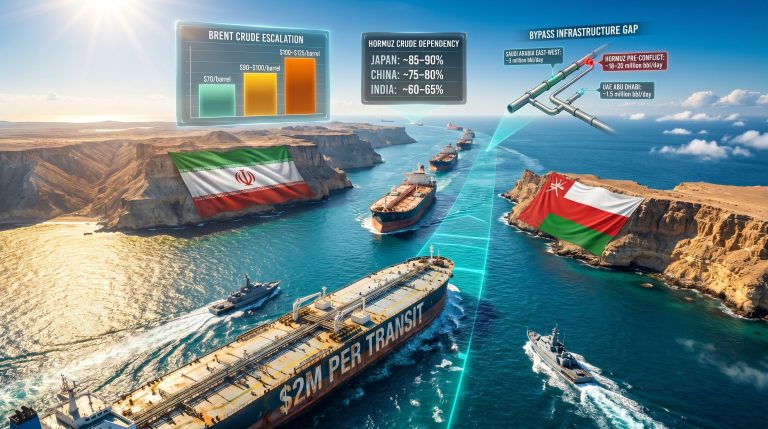
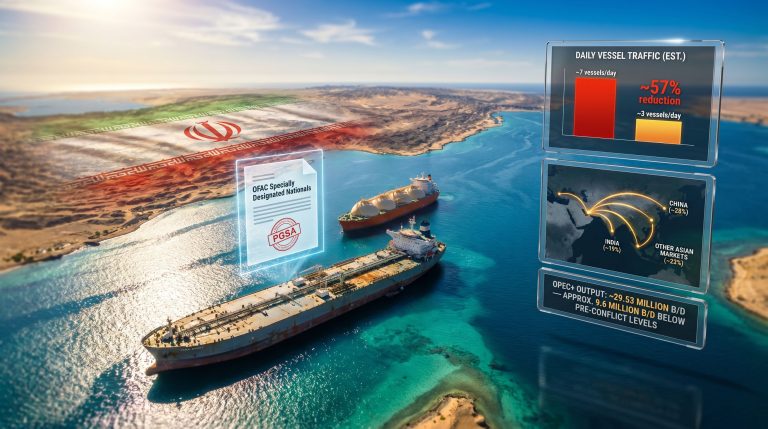
The current spike in global oil prices traces directly to the US-Israeli military conflict with Iran, which began escalating in early 2026 and severely disrupted energy transit through the Persian Gulf region. The Strait of Hormuz, a narrow waterway connecting the Persian Gulf to the Gulf of Oman, serves as the single most critical chokepoint in global energy logistics. Before the conflict erupted in February 2026, this corridor handled roughly one-fifth of the world's entire oil and gas supplies. Restrictions to vessel movements through this passage sent an immediate and severe shock through global commodity markets.
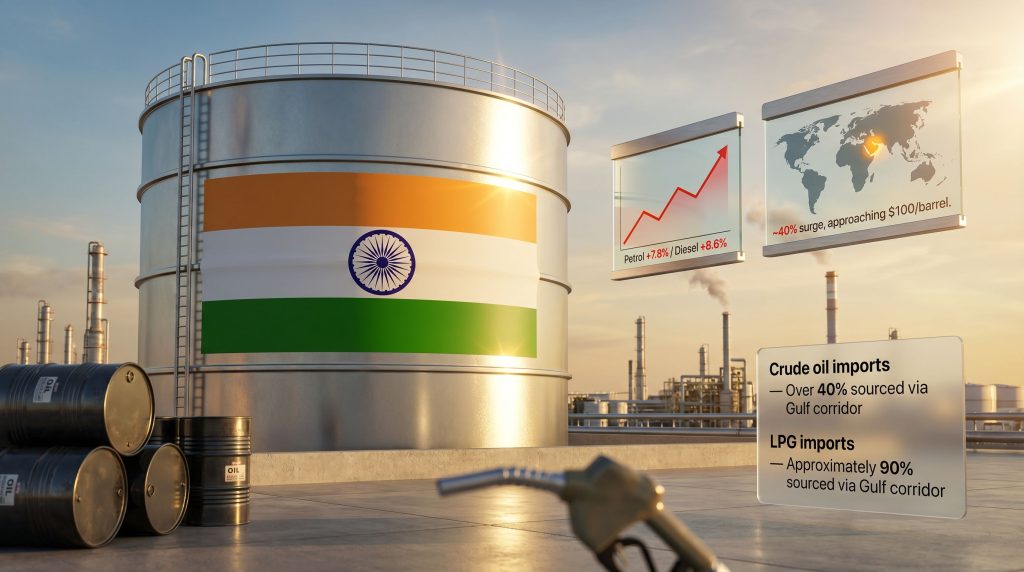
Consequently, global crude prices surged approximately 40%, pushing Brent crude toward the $100 per barrel threshold. The speed of this price movement caught markets off guard and placed import-dependent economies like India under severe fiscal stress almost immediately. These geopolitical oil price drivers are now central to understanding the broader outlook for Indian consumers.
India's Import Exposure: The Numbers Behind the Vulnerability
India's dependence on Gulf energy supplies is not marginal. It is structural and deep, built over decades of refinery configuration and long-term supply agreements oriented toward Middle Eastern producers.
| Import Category | Pre-Conflict Gulf Dependency |
|---|---|
| Crude oil imports | Over 40% sourced via Gulf corridor |
| Liquefied petroleum gas (LPG) | Approximately 90% sourced via Gulf corridor |
| Global crude price movement | Approximately 40% surge, approaching $100/barrel |
The LPG exposure deserves particular attention. Unlike crude oil, which feeds industrial and transport sectors, LPG is a household cooking fuel used across hundreds of millions of Indian homes, particularly in rural areas. A supply disruption affecting LPG availability carries immediate and politically sensitive consequences that go well beyond fuel station economics.
The currency dimension adds further complexity. The Indian Rupee has experienced downward pressure against the US Dollar during the crisis period, which mechanically increases the rupee cost of every barrel imported regardless of what happens to the dollar-denominated price of crude. This currency amplification effect means India's effective import cost increase has been even sharper than the headline crude price movement suggests. In addition, these Asian energy import pressures are being felt across the region, not solely within India's borders.
Why the Oil Minister's Price Drop Forecast Has Analytical Weight
India's Oil Minister Hardeep Singh Puri publicly stated that oil prices cannot remain elevated for an extended period and are expected to decline in the months ahead. This forecast is not simply political optimism. It reflects several observable dynamics in the global energy market.
First, geopolitical oil price spikes driven by conflict or supply disruption have historically proven self-correcting over medium-term horizons. Markets adapt through supply substitution, demand compression, and diplomatic resolution. The severity and duration of the current disruption remain uncertain, but the directional tendency of such shocks is well-documented.
Second, non-Gulf producers, particularly in the Western Hemisphere, possess meaningful capacity to partially compensate for reduced Middle Eastern supply. The Minister specifically referenced the United States and Canada as expected sources of compensating supply, a view consistent with the structural shift in global oil production that has occurred over the past decade as North American output expanded dramatically.
Third, India holds strategic petroleum reserves covering approximately 76 to 80 days of domestic consumption, distributed across underground storage facilities. This buffer does not eliminate exposure but provides a critical demand-side cushion that allows policymakers time to negotiate alternative supply arrangements without facing an immediate supply emergency.
How Much Have Indian Fuel Prices Already Risen
The Four-Stage Price Hike Timeline Since Mid-May
Indian state-owned retailers implemented four consecutive fuel price increases in the weeks following the intensification of Gulf supply disruptions. These hikes were delayed during a period of state elections, a pattern consistent with the established tendency of Indian governments to shield consumers from fuel price increases during politically sensitive periods before implementing accumulated cost pass-throughs once the electoral window closes.
The cumulative result of these four increases:
| Fuel Type | Price Increase Since Mid-May |
|---|---|
| Petrol | Approximately +7.8% |
| Diesel | Approximately +8.6% |
Why Diesel Price Increases Carry Disproportionate Economic Weight
While petrol price increases attract significant public attention, diesel price movements carry considerably greater macro-economic consequences in the Indian context. Diesel powers the commercial transport sector that moves goods across the subcontinent, fuels agricultural equipment during planting and harvest seasons, and drives backup power generation across industries and small businesses.
When diesel prices rise by 8.6%, the cost increase propagates through supply chains in ways that eventually surface as broader inflationary pressure on food prices, manufactured goods, and logistics costs. This transmission effect means the economic impact of the current price environment extends well beyond what consumers experience at the fuel station.
Will India Fuel Prices Actually Drop? The Conditions and Constraints
Scenario 1: Geopolitical De-escalation Opens the Path Down
The most constructive scenario for Indian consumers involves a negotiated reduction in Gulf hostilities that restores normal or near-normal vessel transit through the Strait of Hormuz. India's foreign ministry has formally expressed deep concern over the ongoing conflict and called for immediate de-escalation and diplomatic resolution.
If this pathway materialises, global crude could retrace a meaningful portion of its recent gains, OMCs would face renewed pressure to reduce retail prices, and the political incentive to deliver consumer relief would intensify particularly ahead of any forthcoming electoral cycles.
Scenario 2: Conflict Expansion Creates a Worse Outcome
The Oil Minister explicitly acknowledged that the situation could become significantly more concerning if the conflict expands beyond its current geographic scope. A broader regional escalation could further constrain Strait of Hormuz transit, push crude prices higher still, and begin drawing down India's strategic reserves at a rate that creates genuine supply stress rather than a manageable buffer position.
However, under this scenario, further fuel price increases rather than reductions would be the more likely near-term outcome. The oil market disruption risks stemming from such escalation would ripple far beyond India alone.
Scenario 3: Crude Falls, But Consumers Wait for the Benefit
Perhaps the most underappreciated scenario involves a situation where global crude prices correct but Indian consumers do not receive the corresponding benefit promptly or fully. This outcome is not hypothetical. It has occurred repeatedly across previous oil price cycles.
Several structural factors make this scenario genuinely probable:
- OMCs carry significant margin debt accumulated during high-cost periods when retail prices were held below cost recovery levels, and they have a strong institutional incentive to use falling crude windows to rebuild profitability rather than immediately reduce prices
- The Indian government recently increased excise duties on petrol and diesel, establishing a new fiscal baseline that may absorb part of any crude price decline before it reaches consumers
- The INR/USD exchange rate represents an independent variable that could remain unfavourable even if crude prices fall, particularly if global risk sentiment keeps pressure on emerging market currencies
- State-level VAT structures create an additional layer where consumers in high-tax states benefit less from any crude correction than the headline price movement would suggest
A drop in global crude prices is a necessary but not sufficient condition for Indian retail fuel prices to fall. Government fiscal priorities and OMC margin recovery objectives are independent variables that can delay or dilute consumer-level price relief.
The Broader Macro Picture: India's Energy Security Strategy in a Disrupted World
Diversifying Away From Gulf Dependency
The current crisis has accelerated conversations that India's energy policymakers have been having for years regarding the structural risks of concentrated Gulf import dependency. The practical response to this vulnerability has taken several forms.
Russia emerged as a significant alternative supplier following the 2022 sanctions environment, with deeply discounted crude flowing into Indian refineries at volumes that partially offset Gulf supply. The interaction between this Russia-India trade relationship and the current Gulf disruption creates a complex supply picture, as Indian refiners attempt to simultaneously manage reduced Gulf access while maintaining Russian imports within the constraints of the broader geopolitical environment.
Western Hemisphere producers, particularly the United States and Canada, represent another diversification avenue. The Minister's explicit reference to these suppliers suggests active engagement is underway to secure compensating volumes, though logistics and refinery configuration factors affect how quickly such substitution can be scaled.
Strategic Petroleum Reserves: What 76-80 Days Actually Means
India's strategic petroleum reserve system, managed through the Indian Strategic Petroleum Reserves Limited (ISPRL), operates underground storage facilities at Visakhapatnam, Mangaluru, and Padur in southern India. The current 76 to 80 day coverage figure provides a useful buffer but is not unlimited protection.
If the conflict persists and alternative supply arrangements cannot fully compensate for Gulf disruptions, reserve drawdowns would eventually compress this window. For context, the International Energy Agency recommends member countries maintain a minimum of 90 days of net import coverage. India's current position sits modestly below this benchmark, underscoring both the adequacy of the short-term buffer and the medium-term vulnerability if disruptions persist.
Renewable Energy as a Structural Demand-Side Buffer
India's long-term response to petroleum import vulnerability runs through its ambitious renewable energy expansion programme. The country has set aggressive targets for solar and wind capacity deployment, with the intention of gradually reducing the role of fossil fuel imports in the domestic energy mix. However, there is a critical timeline mismatch that matters for understanding the current crisis.
Renewable energy capacity, however rapidly it expands, cannot address the near-term fuel price volatility that Indian consumers are experiencing today. The structural hedge that solar and wind provide operates over a five to ten year horizon, not the coming months that the Oil Minister's forecast addresses.
Electric vehicle adoption adds another medium-term dimension, with growing penetration in two-wheeler and three-wheeler segments already beginning to exert modest downward pressure on petrol demand in urban markets. According to the Society of Indian Automobile Manufacturers, this trend will accelerate over the next decade, but again, its impact on the current pricing environment is limited.
FAQ: India Fuel Prices Expected to Drop
When are India fuel prices expected to drop?
No confirmed timeline has been provided. The Oil Minister's public statements point toward a correction within the coming months, conditional on geopolitical stabilisation and restoration of normal energy flows through disrupted Gulf corridors.
Why did Indian fuel prices rise so sharply in recent weeks?
State-owned oil retailers implemented four successive price increases since mid-May to offset costs arising from Gulf supply disruptions. Petrol is now approximately 7.8% higher and diesel approximately 8.6% higher than pre-hike levels.
Does a fall in global crude oil prices guarantee cheaper petrol in India?
Not automatically. Indian retail fuel prices are shaped by the rupee-dollar exchange rate, government excise duties, and OMC margin management strategies. Moreover, India's fuel import taxes introduce an additional layer of complexity that can delay or absorb the benefit of any crude price decline before it reaches consumers.
How exposed is India to Gulf energy supplies?
Before the current conflict, India sourced more than 40% of its crude oil imports and approximately 90% of its LPG imports through the Gulf corridor, making it among the most exposed major economies to Middle Eastern supply disruptions.
What does India's 76-80 day reserve actually cover?
The reserve provides coverage for 76 to 80 days of total domestic petroleum consumption across India's economy, offering a meaningful near-term buffer while alternative supply arrangements are pursued and diplomatic efforts continue.
Could fuel prices rise further before they fall?
Yes. The Oil Minister specifically identified broader regional escalation as the primary risk factor that could sustain or intensify supply disruptions, making further price increases a genuine possibility if the conflict expands beyond its current scope.
The next major ASX story will hit our subscribers first
Key Takeaways: India Fuel Price Outlook at a Glance
| Factor | Current Status | Consumer Implication |
|---|---|---|
| Global crude price | Approximately 40% above pre-conflict levels | Elevated import cost baseline |
| Strait of Hormuz access | Significantly restricted | Ongoing supply constraint |
| Strategic petroleum reserve | 76-80 days of coverage | Near-term buffer exists |
| OMC margin position | Rebuilding after high-cost period | May delay retail price cuts |
| Government excise policy | Recently increased | Absorbs part of crude correction |
| Western Hemisphere supply | Being actively sourced | Partial offset, not full replacement |
| Geopolitical trajectory | Uncertain, de-escalation called for | Primary variable for price outlook |
The overall picture for consumers is one of cautious, conditional optimism. The structural case for lower crude prices over the medium term is credible, grounded in both historical precedent for geopolitical oil price spikes correcting and the observable capacity of alternative suppliers to partially compensate for Gulf supply losses.
The critical qualification is that even a global crude correction may not translate quickly or fully to Indian pump prices. The interaction between government fiscal priorities, OMC margin recovery dynamics, and currency movements creates a pricing environment where the journey from cheaper crude to cheaper petrol is neither automatic nor linear.
Consumers and analysts monitoring this situation should watch not only international crude benchmarks but also government excise policy signals and OMC quarterly margin data as leading indicators of when, and how much, relief might actually reach the forecourt. India fuel prices are expected to drop in the medium term, but the precise timing and scale of any relief will depend on factors well beyond the movement of global crude alone.
Disclaimer: This article contains forward-looking statements and analysis based on publicly available information as of the date of publication. Forecasts regarding oil price movements, geopolitical outcomes, and fuel pricing decisions involve significant uncertainty. This content is intended for informational purposes only and does not constitute financial, investment, or energy procurement advice. Readers should consult appropriate professional advisers before making decisions based on energy price expectations.
Want To Stay Ahead of the Commodity Shifts Driving Today's Market Volatility?
The same geopolitical forces reshaping India's fuel price outlook are creating significant discovery opportunities across ASX-listed energy and resources stocks — and Discovery Alert's proprietary Discovery IQ model delivers real-time alerts the moment significant mineral discoveries hit the ASX, turning complex commodity data into actionable insights for traders and investors alike. Explore historic discovery returns on Discovery Alert's discoveries page and begin your 14-day free trial today to position yourself ahead of the broader market.