
May 21, 2026
Regional power market dynamics across Asia-Pacific reveal a complex landscape where fuel security concerns increasingly drive policy decisions. The interconnected nature of energy supply chains means that disruptions in one sector can rapidly cascade through multiple markets, compelling governments to maintain strategic flexibility in their generation portfolios. This interconnectedness has become particularly pronounced as geopolitical tensions continue to reshape traditional supply routes and pricing mechanisms, with india mulls mandate to raise imported coal generation becoming a critical component of regional energy security planning. Furthermore, the tariff impact on investments across global markets adds additional complexity to energy policy decisions.
India's Coal Import Regulatory Framework Under Section 11
India's electricity sector operates under a comprehensive regulatory framework designed to ensure grid stability during peak demand periods. The Section 11 provisions of the Electricity Act provide the central government with extraordinary powers to direct utilities during supply emergencies, creating a mechanism that has proven essential for managing seasonal demand fluctuations.
The regulatory architecture encompasses several key components that work together to maintain system reliability. Emergency directive authority allows the government to compel utilities to increase generation levels, while fuel cost pass-through provisions provide economic relief by permitting utilities to recover higher imported coal expenses through adjusted tariffs. Additionally, power exchange participation enables utilities to monetise surplus electricity generation, and operational concessions offer flexibility measures to enhance overall plant economics.
The previous emergency mandate remained operational for more than three years, demonstrating the government's commitment to maintaining adequate reserve capacity. This extended duration, from approximately June 2022 until June 30, 2025, encompassed multiple seasonal demand cycles and provided valuable insights into the effectiveness of such regulatory interventions.
Historical Implementation and Precedent Setting
The regulatory framework's evolution reflects lessons learned from previous crisis periods. During the Russia-Ukraine conflict in 2022, India faced simultaneous challenges of sharply increased summer power demand and accelerated coal inventory drawdown at utilities. International coal prices surged following geopolitical disruptions, creating an environment where domestic coal supplies proved insufficient to meet the demand increase. These challenges paralleled the broader trade war market effects that have reshaped global energy markets.
This precedent established several important principles for emergency implementation:
- Proactive vs. reactive approaches: Current discussions focus on pre-emptive planning rather than crisis response
- Stakeholder consultation processes: Power ministry coordination with private utility operators
- Economic impact assessment: Balancing energy security with cost recovery mechanisms
The regulatory structure also provides for graduated responses, allowing authorities to calibrate interventions based on specific market conditions and demand projections.
When big ASX news breaks, our subscribers know first
Peak Summer Demand Projections and Market Vulnerabilities
The Central Electricity Authority has identified potential power shortages of 10-12GW during peak summer demand scenarios, highlighting the critical importance of maintaining adequate reserve capacity. This projection takes into account multiple variables including temperature forecasts, cooling demand patterns, and available generation resources across different fuel types.
India's dependence on coal-fired generation, which accounted for approximately 86% of overall generation in January 2026, creates both stability and vulnerability within the power system. While this high percentage ensures consistent baseload capacity, it also exposes the grid to fuel supply disruptions and price volatility in international markets. In addition, concerns about india mulls mandate to raise imported coal generation reflect broader energy security considerations.
The India Meteorological Department's forecast of above-normal temperatures for summer 2026 compounds these concerns. Early onset summer conditions typically drive air conditioning demand surge, creating peak load scenarios that stress the transmission and generation infrastructure.
Grid Stability Requirements and Operating Reserves
Maintaining grid reliability during peak demand periods requires sophisticated balancing of multiple generation sources. The technical challenges include:
| Operating Requirement | Challenge | Mitigation Strategy |
|---|---|---|
| Peak demand coverage | 10-12GW potential shortfall | Emergency capacity activation |
| Reserve margin maintenance | Seasonal demand variability | Flexible generation resources |
| Fuel supply security | Import price volatility | Diversified fuel portfolio |
The grid's operating reserve margins must account for both planned maintenance schedules and unplanned outages, while also providing sufficient headroom for demand forecast uncertainty.
International Coal Price Volatility and Policy Triggers
Recent developments in international coal markets demonstrate the complex interplay between geopolitical events and energy security considerations. The US-Iran conflict has disrupted Qatar LNG supplies following Iranian retaliatory strikes, creating ripple effects across Asia-Pacific energy markets that extend far beyond the immediate conflict zone. However, the broader context of US tariff-driven inflation continues to influence global commodity pricing structures.
Current price indicators reflect this market stress across multiple coal quality grades:
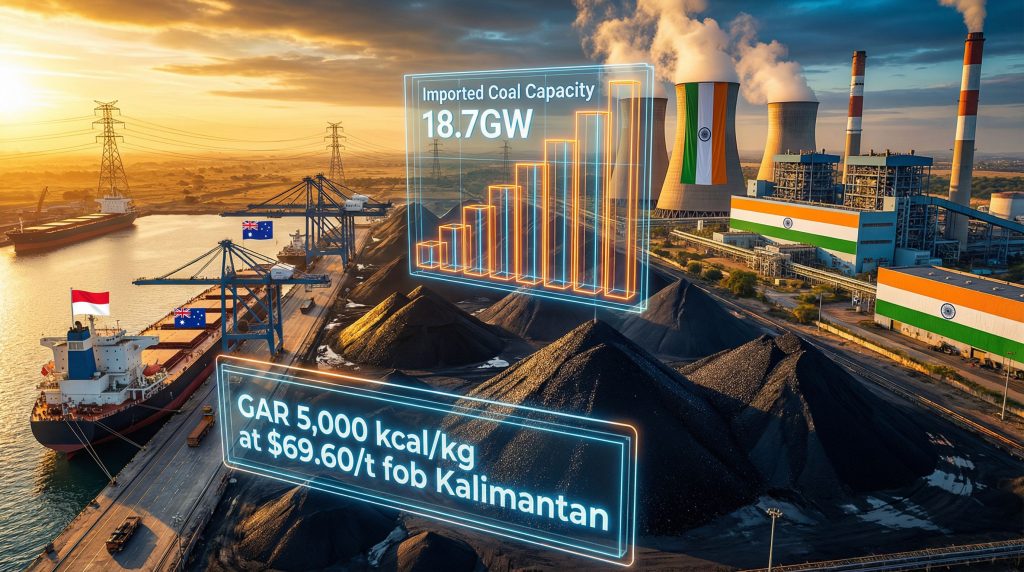
- Indonesian GAR 5,000 kcal/kg: $69.60/t fob Kalimantan (highest since early January 2025)
- Indonesian GAR 4,200 kcal/kg: $54.31/t fob Kalimantan (highest since June 2024)
- South African NAR 5,500 kcal/kg: Peak of $89.69/t fob RBCT (February 20, 2026)
- Australian NAR 5,500 kcal/kg: $86.65/t fob Newcastle maximum, subsequently easing to $85.97/t
LNG Supply Disruption Effects on Coal Markets
The disruption to LNG supplies through the Strait of Hormuz, which handles approximately 20% of global LNG supply, has created substitution demand for coal-fired generation across multiple markets. This substitution effect operates through several mechanisms alongside oil market volatility that further complicates regional energy planning.
Direct substitution: Utilities switch from gas-fired to coal-fired generation when LNG becomes unavailable or prohibitively expensive.
Precautionary stockpiling: Countries with dual-fuel capability build coal inventories as insurance against potential LNG shortfalls.
Market psychology effects: Price premiums reflect risk perception even when physical supply remains adequate.
Taiwan's response exemplifies this dynamic, with the state-owned utility Taipower seeking approximately 960,000 tonnes of thermal coal for January-March delivery and another 1.52 million tonnes for March-August delivery through tenders issued since October 2025. The official confirmation that India does not plan to increase coal power beyond 2035 adds strategic context to these short-term capacity utilisation decisions.
India's Imported Coal Generation Infrastructure
India maintains 18.7GW of imported coal-fired generation capacity, representing 9% of the country's coal-based generation and 4% of total power capacity. This infrastructure serves as a strategic reserve during peak demand periods, despite operating at persistently low utilisation rates during normal market conditions.
The economic constraints limiting capacity utilisation stem primarily from long-term power purchase agreement structures that fail to provide adequate fuel cost pass-through mechanisms. When international coal prices surge beyond contracted assumptions, utilities face significant cost pressures that can render generation economically unviable without regulatory intervention.
Long-term Power Purchase Agreement Constraints
The fundamental challenge facing imported coal-fired plants lies in the mismatch between volatile fuel costs and fixed tariff structures. Long-term PPAs typically establish tariff rates at contract inception based on fuel price assumptions that may quickly become outdated during periods of market volatility.
This creates a structural impediment to capacity utilisation:
- Cost recovery gaps: When coal prices exceed PPA assumptions, utilities absorb losses
- Generation economics: Plants become uneconomical to operate despite grid demand
- Capacity underutilisation: Available generation remains offline due to economic constraints
Consequently, Section 11 emergency provisions address these constraints by temporarily allowing fuel cost pass-through, providing the economic basis for increased generation during crisis periods.
Emergency Generation Activation Mechanisms
The implementation framework for emergency generation activation encompasses multiple regulatory tools designed to optimise system reliability while managing economic impacts. These mechanisms operate through coordinated intervention across fuel cost recovery, market participation, and operational flexibility domains.
Fuel cost pass-through provisions represent the most direct intervention, allowing utilities to recover incremental coal costs through tariff adjustments that would normally be prohibited under standard PPA terms. This mechanism addresses the core economic barrier to imported coal generation during high-price periods, particularly as india mulls mandate to raise imported coal generation during peak demand scenarios.
Power exchange participation provides revenue optimisation opportunities by enabling utilities to sell surplus electricity on wholesale markets. This creates positive economic incentives for generation increases beyond what might be achieved through cost recovery alone.
Operational concessions offer additional flexibility measures that can include relaxed maintenance schedules, extended operating permits, or modified environmental compliance timelines during emergency periods.
Comparison with 2022 Emergency Response
The current evaluation of emergency measures differs fundamentally from the 2022 crisis response in both context and urgency. The earlier period was characterised by actual fuel shortages and immediate supply constraints, while current discussions reflect precautionary planning based on demand projections and risk assessment.
| Crisis Factor | May 2022 | March 2026 | Policy Implication |
|---|---|---|---|
| Stockpile levels | Inventory depletion | ~200mn tonnes record levels | Less acute intervention need |
| Demand pressure | Sharp summer increase | Projected 10-12GW shortfall | Preventive vs. reactive response |
| Price environment | Russia-Ukraine surge | US-Iran conflict elevation | Both periods face cost pressures |
| Production capacity | Insufficient for surge | Meeting bulk requirements | Greater self-sufficiency in 2026 |
A utility official explained the distinction, noting that the 2022 situation involved India facing a sharp increase in summer power demand that exacerbated inventory drawdown at utilities, with domestic coal supplies unable to meet the sharp increase in demand.
Domestic Coal Supply Security Analysis
India's domestic coal supply position has strengthened considerably compared to previous crisis periods. Combined coal stockpiles across power plants, coal producers, in-transit inventory, ports, and stockyards are estimated at approximately 200 million tonnes, representing record levels that provide substantial buffer capacity against demand surges.
This inventory position reflects improved domestic production capabilities and more effective supply chain management. Coal-fired power generation continues to dominate India's electricity mix at approximately 86% of overall generation, indicating the strategic importance of maintaining adequate coal supplies across the system.
Production Capacity and Import Dependency
The evolution of India's coal supply security reflects broader strategic objectives around energy independence and import substitution. Domestic production capacity has expanded to meet the bulk of incremental generation requirements, reducing reliance on imported supplies except during peak demand scenarios or emergency situations. This strategic shift parallels Australia's energy export challenges in maintaining market share in the region.
Thermal coal import trends show a declining trajectory, with India importing 160.15 million tonnes in 2025, down 3% from the previous year. Of this total, power utilities likely imported approximately 50 million tonnes, representing a relatively small portion of total fuel requirements.
The government's domestic coal blending initiatives aim to further reduce imported coal dependency by optimising the use of indigenous resources. These efforts include:
- Quality improvement programmes: Enhancing domestic coal characteristics through beneficiation
- Logistics optimisation: Improving transportation and delivery systems
- Technology upgrades: Implementing advanced combustion technologies for lower-grade coals
The next major ASX story will hit our subscribers first
Asia-Pacific Regional Market Dynamics
The interconnected nature of Asia-Pacific energy markets creates complex feedback loops between coal and LNG demand across multiple countries. Taiwan's strategic response to LNG supply concerns demonstrates how regional utilities are adapting to geopolitical uncertainties through fuel diversification strategies.
Taiwan imported 52 million tonnes of thermal coal in 2025, down 9.4% compared with 2024, reflecting the country's broader energy transition priorities. However, the utility's maintenance of the 2.1GW Hsinta coal-fired power plant as emergency backup capacity illustrates the continued strategic value of coal generation flexibility.
South Korean Market Response Patterns
South Korea's power market dynamics provide additional insight into regional adaptation strategies. Despite entering the spring shoulder season when electricity demand typically eases, coal-fired output has remained firm due to escalating geopolitical tensions in the Middle East.
Coal-fired generation in South Korea averaged 20.7GW on March 3, 2026, representing a 4.8GW increase from the previous year. This sustained output level reflects the economic competitiveness of coal relative to spiking LNG prices, even during periods of reduced seasonal demand.
The persistence of coal generation during shoulder periods indicates how price relationships between fuels can override normal seasonal patterns, creating opportunities for coal-fired plants that might otherwise reduce output.
Supply Chain Vulnerabilities and Risk Assessment
The concentration of global LNG supply through critical chokepoints creates systemic vulnerabilities that extend across multiple fuel markets. The Strait of Hormuz's handling of approximately 20% of global LNG supply makes it a critical vulnerability point for energy security across Asia-Pacific importers.
Indonesian supply policy changes add additional complexity to coal market dynamics. The revision of RKAB output quota validity periods from three years back to one year has created uncertainty around production planning and export availability. Combined with delays in producers receiving their 2026 output quotas, these policy changes have contributed to supply tightness and elevated prices. For instance, research suggests that India may not be the promised land for Australia's metallurgical coal exports after all, highlighting shifting regional supply relationships.
Weather-Related Disruption Factors
Beyond geopolitical risks, weather-related supply disruptions continue to affect coal availability across key producing regions. These disruptions interact with policy-driven supply constraints to create compounded effects on market availability and pricing.
The Indonesian energy ministry's initial indication that 2026 output could be slashed to around 600 million tonnes from 790 million tonnes produced in 2025 created additional market uncertainty, though the ministry later indicated that final output targets remain under review.
Policy Timeline and Implementation Framework
The government's evaluation process for potential emergency measures involves comprehensive inter-ministerial consultations between the power ministry and utility stakeholders. This collaborative approach aims to balance energy security imperatives with economic efficiency considerations while ensuring that india mulls mandate to raise imported coal generation decisions reflect comprehensive risk assessment.
Current discussions remain in the evaluation phase, with no final decision taken as of the assessment date. The timing of any potential directive implementation would need to account for summer peak season preparation requirements and the lead times necessary for utilities to adjust their operational planning.
Stakeholder Perspective Analysis
Private utility concerns centre primarily around operational flexibility and cost recovery mechanisms. The ability to pass through fuel costs during emergency periods provides essential economic protection, while power exchange participation offers revenue optimisation opportunities.
Government priorities focus on maintaining grid reliability while optimising economic efficiency. The balance between energy security assurance and foreign exchange impact management requires careful calibration of policy interventions.
Market participant expectations emphasise the importance of policy predictability and regulatory clarity. Clear communication regarding the conditions and duration of potential mandates helps utilities plan procurement and operational strategies.
Long-term Strategic Energy Implications
India's approach to imported coal utilisation reflects broader energy transition considerations. Coal's role as a bridge fuel during renewable energy expansion requires maintaining generation optionality while gradually reducing overall system dependence on fossil fuels.
Grid modernisation requirements will increasingly focus on flexibility and reliability enhancement as variable renewable generation expands. The ability to rapidly activate coal-fired capacity during supply emergencies or peak demand periods will remain valuable even as the overall energy mix evolves.
Economic and Trade Balance Considerations
Import cost management remains a critical consideration for India's trade balance and currency stability. The ability to rely primarily on domestic coal supplies while maintaining imported coal capacity as strategic reserve provides optimal flexibility for managing both energy security and economic objectives.
Regional energy cooperation initiatives through SAARC and bilateral partnerships may offer additional options for supply diversification and emergency resource sharing during crisis periods.
Investment and Market Psychology Implications
The regulatory framework's flexibility demonstrates sophisticated risk management approaches that extend beyond simple supply adequacy measures. The ability to activate underutilised capacity through temporary economic incentives provides valuable system reliability benefits without requiring permanent infrastructure investments.
Market psychology effects of emergency preparedness can stabilise expectations even when actual implementation proves unnecessary. The demonstrated capability to respond rapidly to supply constraints or demand surges provides confidence for both domestic and international market participants.
Investment implications for the power sector include the strategic value of maintaining dual-fuel capability and flexible generation portfolios. The economic viability of imported coal-fired capacity during emergency periods supports continued maintenance of this infrastructure even during periods of low utilisation.
Conclusion: Balancing Security with Economic Optimisation
India's evaluation of renewed coal import mandates illustrates the complex intersection of energy security planning, economic optimisation, and regulatory flexibility in modern power systems. The substantially improved domestic stockpile position compared to previous emergency periods provides greater strategic flexibility while maintaining the option for proactive intervention during peak demand scenarios.
The government's careful evaluation process demonstrates maturity in policy development, moving from reactive crisis management toward anticipatory planning that accounts for multiple risk scenarios. This evolution reflects both learning from previous experiences and adaptation to changing market dynamics.
The regulatory framework's strategic use of emergency powers provides a valuable tool for managing the transition between coal dependency and domestic resource optimisation. As international market volatility continues to influence policy decisions, the balance between imported coal utilisation and domestic supply maximisation will remain central to India's comprehensive energy security strategy.
Disclaimer: This analysis is based on available market information and regulatory developments as of the assessment date. Energy policy decisions involve complex economic and technical considerations that may change based on evolving market conditions and government priorities. Investment and operational decisions should consider current regulatory guidance and professional consultation.
Looking to Capitalise on Asia-Pacific Energy Market Shifts?
Discovery Alert's proprietary Discovery IQ model delivers real-time alerts on significant mining and energy sector discoveries across the ASX, instantly empowering subscribers to identify actionable opportunities ahead of the broader market amidst these dynamic regional energy transitions. Begin your 14-day free trial at Discovery Alert today and secure your market-leading advantage whilst energy security concerns continue reshaping investment landscapes.