June 12, 2026
India's manufacturing landscape stands at a critical juncture where regional specialisation increasingly determines competitive advantage. While established industrial corridors have historically dominated production capabilities, emerging states are leveraging unique resource endowments to capture value-added manufacturing opportunities. This transformation reflects deeper structural shifts in how industrial policy, infrastructure development, and resource proximity converge to create new centres of economic activity, particularly evident in Odisha investment proposals for aluminium and steel sectors.
How Regional Manufacturing Ecosystems Drive Industrial Transformation
The evolution of India's industrial geography reveals how states transition from raw material suppliers to integrated manufacturing hubs. This transformation involves complex dynamics between resource availability, infrastructure development, and policy frameworks that collectively determine a region's manufacturing competitiveness.
Odisha's industrial trajectory exemplifies this transition. The state produces approximately 60% of India's total mineral output, including substantial bauxite reserves estimated at 3.3 billion tonnes according to Geological Survey of India assessments. Furthermore, iron ore price trends significantly impact production volumes, which fluctuate based on regulatory frameworks and market conditions.
The State-Level Single Window Clearance Authority represents a systematic approach to reducing administrative friction in investment processes. This institutional mechanism consolidates approvals across multiple agencies including environmental clearance, land acquisition, pollution control, and industrial licensing. However, the effectiveness of such systems depends on digital integration levels and interagency coordination protocols.
Manufacturing diversification strategies require careful analysis of existing industrial capabilities versus emerging opportunities. For instance, states transitioning from commodity-based economies face challenges in developing downstream processing capabilities, skilled workforce requirements, and market access for value-added products.
Infrastructure and Logistics Considerations
Industrial competitiveness increasingly depends on comprehensive logistics networks rather than individual facility efficiency. Transportation costs for bulk materials, power supply reliability, and port connectivity collectively determine manufacturing viability for different sectors.
Railway freight rates for moving raw materials to processing facilities significantly impact cost structures. In addition, road connectivity quality affects just-in-time delivery capabilities essential for modern manufacturing operations. Power tariff structures for industrial consumers vary substantially across states, influencing location decisions for energy-intensive operations.
Port proximity provides advantages for export-oriented manufacturing, particularly in metals processing where transportation costs represent substantial portions of total delivered costs. Consequently, container handling capacity and specialised bulk material facilities determine throughput capabilities for different industrial sectors, including iron haulage operations that ensure efficient material flow.
When big ASX news breaks, our subscribers know first
Understanding Investment Approval Mechanisms and Economic Impact
Industrial investment approvals generate economic effects extending far beyond direct capital deployment. The multiplier effects of manufacturing investments create employment opportunities, infrastructure demand, and supply chain development that transform regional economic structures.
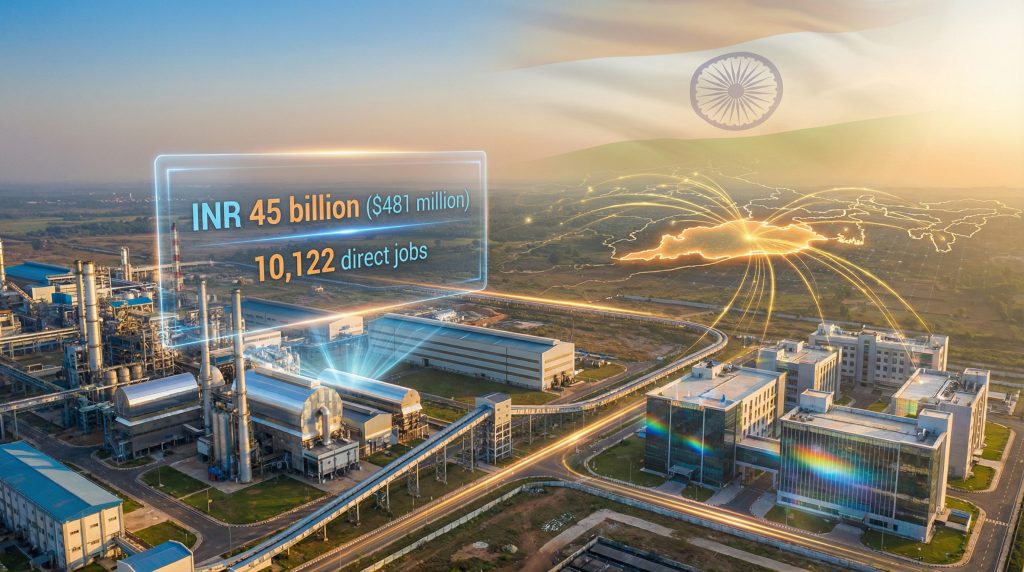
Recent approvals encompassing Odisha investment proposals for aluminium and steel include INR 45 billion in total investment value across 23 distinct projects, distributed among 11 districts. These projects span metals processing, pharmaceuticals, chemicals, textiles, and services sectors, indicating diversification beyond traditional mining-based economic activity.
Direct employment generation reaches 10,122 positions across approved projects. Furthermore, manufacturing employment typically generates additional indirect employment through supply chain requirements and induced consumption effects. Economic multiplier analysis suggests total employment impact may reach 2.5 to 3 times direct employment figures when accounting for supplier networks and local service demand.
Sectoral Investment Distribution Analysis
The distribution of approved investments reveals strategic priorities in industrial development. Metal processing operations received substantial allocation, reflecting advantages in raw material access and existing industrial infrastructure. However, pharmaceutical and chemical investments indicate efforts to develop higher value-added manufacturing capabilities.
| Sector Category | Investment Focus | Employment Potential | Value Chain Position |
|---|---|---|---|
| Metals Processing | Aluminium downstream, Steel value addition | High direct employment | Mid to downstream |
| Pharmaceuticals | Active ingredient manufacturing | Moderate, skilled workforce | Upstream to finished products |
| Chemicals | Specialty chemicals, Acid production | Moderate employment | Intermediate products |
| Textiles | Fibre processing, Finished goods | High labour intensity | Complete value chain |
| Services/Tourism | Technology delivery, Logistics | Knowledge-based employment | Support services |
Geographic distribution across multiple districts suggests balanced regional development objectives rather than concentrated industrial clustering. Consequently, this approach may distribute economic benefits more broadly but could limit agglomeration economies that concentrated development typically generates.
Moreover, understanding bauxite project benefits provides valuable insights into how mineral resource projects contribute to regional economic development and industrial diversification.
Company-Specific Investment Patterns
Several established industrial companies received approvals for expansion or new facility development. Pidilite Industries Limited approved adhesives manufacturing operations, leveraging existing market presence in construction and industrial applications. In addition, Century Plyboards received clearance for wood-based manufacturing, expanding their integrated forest product operations.
Paradeep Phosphates Limited obtained approval for sulphuric acid production, supporting chemical processing capabilities in the region. Furthermore, steel sector expansions through Scan Steels Ltd and other operators indicate confidence in regional market development and infrastructure capabilities.
Technology and services investments include PricewaterhouseCoopers Services LLP establishing technology delivery capabilities, reflecting growing demand for professional services supporting industrial expansion. These developments align with broader industry evolution trends across the manufacturing sector.
Metal Processing Opportunities and Competitive Dynamics
India's metals sector faces increasing pressure to develop downstream processing capabilities rather than exporting raw or semi-processed materials. This transformation requires substantial capital investment, technical expertise, and market access for finished products.
Aluminium consumption in India reaches approximately 1.4 to 1.5 million tonnes annually, with downstream applications in automotive, construction, electrical, and packaging sectors. Consequently, domestic consumption growth provides market opportunities for regional processing facilities serving national demand rather than export markets exclusively.
The recent Odisha government's approval of 23 industrial projects worth Rs 4,510 crore demonstrates the state's commitment to industrial development. Furthermore, these initiatives are part of broader infrastructure development programmes that support manufacturing growth.
What Makes Aluminium Value Chain Development Attractive?
Aluminium processing involves multiple stages from primary smelting through rolled products, extrusions, and fabricated components. Each stage requires different technical capabilities, capital intensity, and market proximity considerations.
Primary aluminium production in India benefits from domestic bauxite availability and relatively lower power costs in certain regions. However, downstream processing operations require proximity to end-user markets and logistics networks capable of handling finished product distribution.
Value addition opportunities in electrical applications include transformer components, transmission line hardware, and electrical enclosures. Furthermore, agricultural equipment applications encompass irrigation systems, storage facilities, and processing equipment where aluminium's corrosion resistance provides advantages.
Global aluminium prices typically fluctuate between $1,800 to $2,500 per tonne on the London Metal Exchange, creating volatility in raw material costs for downstream processors. Consequently, price risk management becomes critical for maintaining processing margins during commodity cycles.
Steel Sector Integration Strategies
India's crude steel production exceeds 120 million tonnes annually, making it the world's second-largest steel producer. Regional steel processing focuses on serving construction, automotive, and infrastructure development demand within reasonable transportation distances.
Steel downstream applications require different processing capabilities including hot rolling, cold rolling, coating, and specialised forming operations. For instance, each application serves specific end-user requirements with varying quality specifications and delivery timelines.
Construction sector demand, representing over 50% of steel consumption, drives regional processing investments. Furthermore, proximity to major infrastructure projects and urban development areas influences location decisions for steel processing operations.
Automotive sector requirements for high-quality steel products create opportunities for specialised processing facilities serving original equipment manufacturers. However, technical specifications and quality standards in automotive applications require substantial investment in processing equipment and quality systems.
Regional Manufacturing Competitiveness and Market Positioning
Manufacturing competitiveness depends on multiple factors including raw material costs, labour availability, infrastructure quality, and market access. Regional advantages in specific factors must overcome disadvantages in others to achieve overall competitive positioning.
Transportation cost analysis reveals significant impacts on manufacturing economics. Rail freight costs for bulk materials, road transportation for finished goods, and port access for export markets collectively determine delivered cost competitiveness.
Power supply reliability and pricing structures vary substantially across Indian states. Industrial power tariffs range from competitive levels in surplus regions to premium pricing in deficit areas. Consequently, manufacturing operations requiring consistent power supply often invest in backup generation capabilities, adding to operational costs.
Workforce Development and Skills Requirements
Manufacturing expansion requires workforce capabilities matching technological requirements and production standards. Skill development programmes must align with specific industry needs rather than general technical education approaches.
Metal processing operations require specialised skills in metallurgy, quality control, and equipment maintenance. Furthermore, pharmaceutical manufacturing demands expertise in process chemistry, regulatory compliance, and sterile production techniques.
Technical education institutions and industrial training programmes must develop curricula supporting specific manufacturing requirements. In addition, industry-academia collaboration facilitates practical training aligned with actual production environments and quality standards.
Key workforce development priorities include:
• Technical skills training for manufacturing processes
• Quality control and regulatory compliance expertise
• Equipment maintenance and troubleshooting capabilities
• Safety protocols and environmental compliance procedures
• Digital systems integration for modern manufacturing operations
Economic Multiplier Effects and Regional Development Impact
Manufacturing investments generate economic effects extending throughout regional economies. Direct employment in manufacturing facilities creates demand for supplier services, transportation, housing, and consumer goods that amplify initial investment impacts.
Supply chain development opportunities emerge as manufacturing operations require raw materials, components, maintenance services, and logistics support. Consequently, local supplier development reduces transportation costs and delivery times while creating additional employment opportunities.
Infrastructure investment requirements include power generation and distribution capacity, transportation network improvements, and water supply systems. However, these investments serve manufacturing operations while providing broader regional development benefits.
Employment Quality and Wage Considerations
Manufacturing employment quality varies significantly across sectors and skill levels. Production workers typically receive wages above agricultural employment but below service sector positions requiring specialised skills.
Employment categorisation and typical wage ranges:
• Production operators: Entry-level manufacturing positions with structured advancement opportunities
• Technical specialists: Quality control, maintenance, and process optimisation roles requiring specialised training
• Supervisory positions: Team leadership and production management responsibilities
• Engineering staff: Process engineering, project management, and technical development roles
Benefits beyond direct wages include health insurance, skills development opportunities, and career advancement pathways not typically available in informal employment sectors.
The next major ASX story will hit our subscribers first
Investment Risk Assessment and Market Dynamics
Manufacturing investments face multiple risk categories including market demand volatility, raw material price fluctuations, regulatory changes, and technological obsolescence. Risk assessment frameworks must evaluate both sector-specific and regional factors affecting investment viability.
Commodity price volatility affects both raw material costs and finished product pricing. Metal processing operations face particular exposure to global commodity cycles influenced by international supply and demand dynamics beyond regional control.
Market demand sustainability requires analysis of consumption growth patterns, competitive pressures, and import substitution opportunities. Furthermore, domestic market protection through tariff structures may provide temporary advantages but long-term competitiveness depends on operational efficiency.
Investors should carefully assess investment risk indicators when evaluating manufacturing projects, as these provide critical insights into potential challenges and success factors.
How Can Financial and Operational Risks Be Mitigated?
Successful manufacturing operations implement comprehensive risk management strategies addressing financial, operational, and market uncertainties. Diversified product portfolios reduce dependence on single market segments or customer relationships.
Critical risk management considerations:
• Raw material supply chain diversification and long-term contracting strategies
• Market demand forecasting and customer relationship management
• Technology upgrading and modernisation planning
• Environmental compliance and sustainability requirements
• Financial hedging for commodity price and foreign exchange exposure
Operational excellence programmes focus on continuous improvement in productivity, quality, and cost management. Consequently, these capabilities become increasingly important as markets mature and competitive pressures intensify.
The approved investment portfolio representing Odisha investment proposals for aluminium and steel represents a significant step toward industrial diversification and value addition. However, success will ultimately depend on execution capabilities, market development, and sustained commitment to operational excellence across multiple manufacturing sectors.
This analysis is based on publicly available information and industry data. Investment decisions should consider comprehensive due diligence and professional financial advice. Manufacturing sector investments involve substantial risks including market volatility, regulatory changes, and operational challenges.
Ready to Discover the Next Major Mineral Investment Opportunity?
Discovery Alert's proprietary Discovery IQ model delivers real-time notifications on significant ASX mineral discoveries, instantly empowering investors to identify actionable opportunities in metals and commodities sectors ahead of the broader market. Understand why major mineral discoveries can lead to substantial market returns and begin your 14-day free trial today to position yourself ahead of the competition.