
July 22, 2026
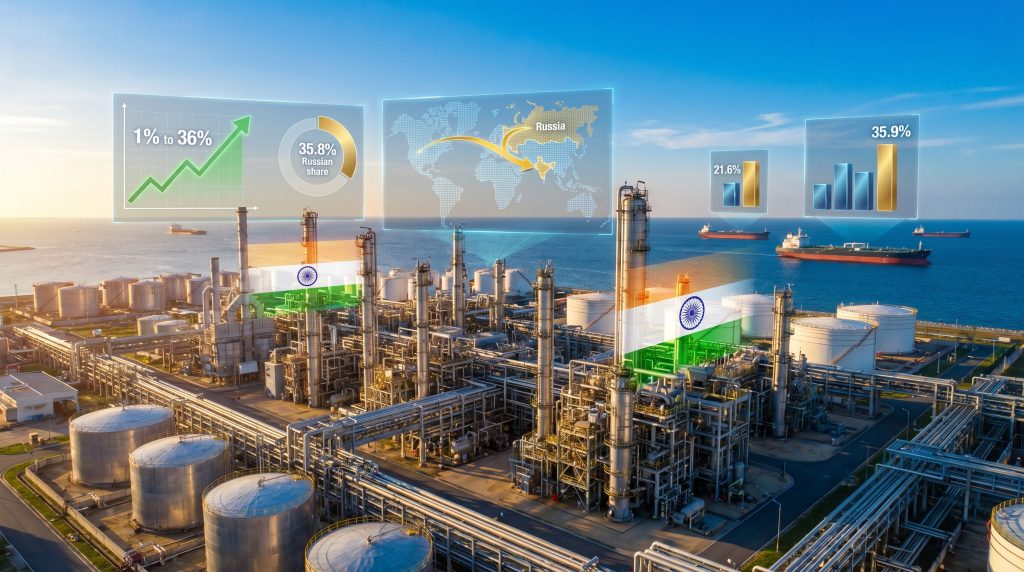
The global energy landscape has undergone profound structural shifts as traditional supply chains face unprecedented disruption. When established trading corridors collapse and geopolitical tensions reshape commodity flows, emerging markets must rapidly adapt their procurement strategies to maintain energy security. The intersection of sanctions regimes, regional conflicts, and economic pragmatism creates complex dynamics that can fundamentally alter decades-old supplier relationships within months. Furthermore, India oil trade with Russia exemplifies how oil price movements and geopolitical tensions intersect to reshape global energy markets.
Russia's Emergence as India's Primary Energy Partner
Russia's transformation into India's dominant crude oil supplier represents one of the most dramatic shifts in global energy trade patterns witnessed in recent years. The scale and speed of this transition reflects both crisis-driven necessity and strategic opportunism in international commodity markets.
Import Volume Transformation
Russian crude deliveries to India reached extraordinary levels during the March 2026 crisis period, hitting 2.25 million barrels per day (bpd), according to shipping data reported by Reuters. This figure represented approximately 50% of India's total crude imports of 4.5 million bpd during that month, demonstrating Russia's overwhelming dominance during the supply disruption.
The annual trajectory shows Russia maintaining its position as India's top supplier, though with some volatility based on geopolitical factors. For the fiscal year ending March 2026, Russian imports comprised 33% of India's total crude purchases, down from a peak of 36% in the previous year. However, this 6.2% annual decline in Russian volumes reflected deliberate supply diversification efforts as India oil trade with Russia balanced energy security with diplomatic considerations.
Strategic Supply Diversification Beyond Crisis Management
India's increased reliance on Russian oil extends beyond simple crisis response to represent calculated long-term positioning. The shift altered fundamental supplier rankings that had persisted for decades, with traditional Middle Eastern suppliers losing substantial market share to Moscow's offerings.
The price advantages driving this transformation stem from Russia's need to maintain market access despite international sanctions. While specific discount levels fluctuate based on market conditions, these price concessions have consistently provided Indian refiners with significant cost advantages compared to traditional Brent-linked Middle Eastern crudes. Moreover, detailed oil futures analysis reveals how these discounted Russian crude purchases have influenced global pricing mechanisms.
Operational Capacity and Market Response
India's ability to absorb massive Russian crude volumes demonstrates the sophisticated capacity of its refining infrastructure. The country's refineries successfully processed the doubled Russian import levels while maintaining product quality standards for both domestic consumption and export markets.
The logistics of this supply relationship required new shipping arrangements, insurance mechanisms, and payment structures to navigate the complex international sanctions environment. Consequently, Indian refiners demonstrated remarkable adaptability in securing floating storage purchases and managing alternative supply chains when traditional routes became unavailable.
When big ASX news breaks, our subscribers know first
Geopolitical Forces Reshaping India's Oil Supply Chain
The reconfiguration of India's crude oil procurement reflects broader geopolitical realignments that have made traditional energy corridors increasingly unreliable. The convergence of regional conflicts, great power competition, and economic nationalism has created an environment where energy security demands constant strategic adaptation.
Middle East Supply Chain Collapse
The Strait of Hormuz crisis of March 2026 exposed the vulnerability of India's traditional energy supply routes. Middle Eastern oil shipments plummeted 61% to just 1.18 million bpd, marking the lowest share of Indian imports on record at 26.3%. This dramatic decline from historical levels above 60% demonstrated how quickly established trade patterns can disintegrate under geopolitical pressure.
The physical blockade of the strait, which typically handles approximately one-fifth of global oil supply, created immediate supply shortages that Indian refiners had to address through emergency procurement. In addition, the attacks on two Indian-flagged vessels attempting to transit the strait highlighted the direct risks to India's energy security from regional conflicts.
Emergency Response Mechanisms
India's response to the supply crisis showcased sophisticated emergency procurement capabilities. Indian refiners rapidly secured Russian oil from floating storage facilities, demonstrating the flexibility built into the country's supply chain management systems.
The United States granted India priority waiver status for purchasing sanctioned Russian oil at sea, indicating recognition of India's energy security needs despite broader sanctions policies. Furthermore, this waiver system operates on monthly renewal cycles, creating ongoing uncertainty but maintaining essential supply access while considering trade war impact on global energy relationships.
Regulatory Navigation and Diplomatic Balance
The Trump administration's approach to India's Russian oil purchases illustrates the complex intersection of sanctions policy and allied relationships. Monthly waiver renewals provide tactical flexibility while maintaining pressure for long-term diversification away from Russian sources.
India's procurement strategy successfully balanced competing pressures from multiple directions: maintaining energy security, preserving strategic autonomy, managing costs for domestic consumers, and avoiding significant economic penalties from Western partners.
Indian Refining Sector's Processing Capabilities
India's refining industry has demonstrated remarkable adaptability in processing increased Russian crude volumes while maintaining operational efficiency and product quality standards. The sector's response reveals sophisticated technical capabilities and strategic flexibility that extends well beyond simple volume handling.
Infrastructure Utilization and Optimization
The successful processing of 2.25 million bpd of Russian crude during peak import periods required optimal utilization of India's refining infrastructure. The country's refineries adapted their operations to handle the specific characteristics of Russian crude grades while maintaining throughput for other supply sources.
Both state-owned enterprises and private sector refiners participated in the Russian crude procurement programme. This broad participation across the industry indicates that Russian crude processing became a system-wide capability rather than isolated to specific facilities or ownership structures.
Product Export Strategy and Global Market Integration
Indian refineries have successfully integrated Russian crude processing with their export-oriented production strategies. The refined products from Russian crude inputs enter global markets through established export channels, demonstrating the fungible nature of petroleum products regardless of crude oil origin.
The refining sector's ability to maintain product quality standards while processing increased Russian volumes ensures continued access to international markets for India's petroleum product exports. This capability provides crucial foreign exchange earnings while supporting the economic rationale for Russian crude purchases.
Technical Adaptation and Operational Flexibility
Processing Russian crude grades required technical adaptations across India's refining system. Different crude oils have varying characteristics including API gravity, sulphur content, and distillation profiles that affect refining processes and product yields.
Indian refineries successfully managed these technical challenges while maintaining operational efficiency. For instance, the sector's ability to quickly adapt to changing feedstock compositions demonstrates sophisticated technical capabilities and operational flexibility that support India's energy security objectives.
Strategic Implications for Global Energy Markets
The transformation of India's oil procurement patterns carries profound implications that extend far beyond bilateral trade relationships. These changes signal broader shifts in global energy market structure, pricing mechanisms, and geopolitical influence that may persist long after current conflicts resolve.
OPEC Market Position Erosion
OPEC's share of Indian crude imports collapsed to historic lows during the supply disruption period. The organisation's 29% share in March 2026 represented the lowest level ever recorded, marking a dramatic departure from traditional market dominance that exceeded 60% in previous decades. This erosion demonstrates how OPEC market influence can rapidly diminish when alternative suppliers become available at competitive prices.
Supplier Ranking Transformation (March 2026):
- Russia – Maintained dominance (~50% share)
- Saudi Arabia – Advanced from lower ranking
- Angola – Increased African supply role
- UAE – Maintained position despite volume decline
- Iraq – Fell from former #2 position
This restructuring reflects both crisis-driven necessity and longer-term strategic diversification that may permanently alter global oil trade patterns. Traditional Middle Eastern suppliers face the challenge of rebuilding market share while competing against entrenched alternative suppliers.
Price Discovery and Market Efficiency Implications
India's willingness to absorb large volumes of sanctioned Russian crude has created alternative price discovery mechanisms that operate parallel to traditional benchmark systems. This development challenges the effectiveness of supply-side sanctions while providing crucial market support for sanctioned producers.
The emergence of alternative trading arrangements, including floating storage purchases and modified payment systems, demonstrates how market participants adapt to regulatory constraints. These innovations may persist beyond current sanctions regimes and influence future commodity trading structures.
Energy Security Paradigm Evolution
India's experience illustrates how major energy consumers can rapidly diversify supply sources when traditional arrangements become unreliable. This capability reduces the leverage of any single supplier region while increasing the importance of flexible procurement strategies and alternative supply chain management.
The success of emergency procurement operations demonstrates that well-prepared energy importing nations can maintain supply security even when primary corridors face severe disruption. This resilience capability may influence how other major importers structure their procurement strategies.
Future Evolution of Indo-Russian Energy Relations
The trajectory of India's energy relationship with Russia will depend on multiple variables including sanctions policies, regional conflict resolution, infrastructure development, and broader geopolitical alignments. Several distinct scenarios could shape this relationship's future development.
Regulatory Environment and Policy Continuity
The current waiver system for Indian purchases of Russian oil operates on monthly renewal cycles, creating ongoing uncertainty about medium-term access. The Trump administration's approach of conditional approval suggests continued tactical flexibility rather than permanent authorisation for these energy trade flows.
Future policy directions will likely depend on broader US-Russia relations, India's strategic importance to American interests, and the effectiveness of alternative supply arrangements. Monthly renewals provide leverage for ongoing diplomatic engagement while acknowledging India's immediate energy security needs. However, oil price stagnation concerns continue to influence policy discussions around these arrangements.
Infrastructure Development Potential
Long-term energy partnership between India and Russia may require infrastructure investments that reduce dependence on maritime shipping and international financial systems. Potential developments could include pipeline connections through Central Asian corridors and alternative payment mechanisms that operate outside traditional Western financial infrastructure.
However, such infrastructure projects would require substantial capital commitments and multi-year development timelines that extend well beyond current crisis periods. The economic viability of permanent infrastructure depends on sustained demand and stable political relationships across multiple countries.
Market Dynamics and Competitive Positioning
Russia's position in the Indian market will ultimately depend on maintaining competitive pricing relative to alternative suppliers. As Middle Eastern supply routes potentially stabilise and new suppliers enter the market, price competition may intensify and reduce Russian advantages.
The development of alternative energy sources, including renewable capacity and domestic production, could also influence long-term demand for imported crude oil. India's energy transition policies may gradually reduce total import requirements while affecting supplier selection criteria.
The next major ASX story will hit our subscribers first
Global Energy Market Transformation
India's energy procurement evolution reflects broader changes in global commodity markets that extend far beyond bilateral trade relationships. These shifts signal fundamental alterations in how international energy markets operate under conditions of persistent geopolitical tension and economic fragmentation.
Alternative Trading System Development
The emergence of parallel trading arrangements for sanctioned commodities demonstrates how market participants innovate around regulatory constraints. These alternative systems include modified insurance arrangements, intermediary trading structures, and alternative payment mechanisms that operate alongside traditional commodity trading infrastructure.
Such innovations may persist beyond current sanctions regimes and influence how international commodity markets function in an increasingly multipolar world. The development of alternative trading systems reduces the effectiveness of economic sanctions while providing greater autonomy for emerging market participants.
Precedent Setting for Emerging Markets
India's successful navigation of complex sanctions environments while maintaining energy security provides a template for other large emerging market importers. Countries facing similar pressures may adopt comparable strategies that prioritise economic interests over geopolitical alignment, as noted by energy policy experts.
This trend toward pragmatic procurement policies among major emerging markets could fundamentally reshape global commodity flows and reduce the influence of traditional supplier regions. The demonstration effect of India's strategy may encourage other countries to pursue greater supply diversification and strategic autonomy.
Market Structure Evolution
The transformation of India oil trade with Russia illustrates how quickly established market structures can change under geopolitical pressure. Traditional supplier relationships, pricing mechanisms, and trade routes proved more fragile than previously assumed when subjected to sustained political tension.
Future market participants may place greater emphasis on supply chain resilience and alternative arrangement development to manage similar disruptions. This evolution toward more flexible and diversified trading systems could permanently alter how global energy markets function.
Risk Assessment and Strategic Planning
India's experience demonstrates the importance of maintaining multiple supplier relationships and emergency procurement capabilities for major energy importers. Countries with concentrated supplier bases face greater vulnerability to supply disruptions and political pressure.
The success of rapid supply source diversification suggests that well-prepared importers can maintain energy security even under severe geopolitical stress. This capability requires sophisticated logistics, flexible refining infrastructure, and diplomatic relationships across multiple supplier regions.
This analysis is based on available market data and public statements as of April 2026. Energy market conditions and geopolitical relationships remain subject to rapid change. Readers should consult current market information and professional analysis for investment or policy decisions.
Ready to Capitalise on Energy Market Shifts?
Discovery Alert's proprietary Discovery IQ model delivers real-time alerts on significant mineral discoveries across energy-related commodities, instantly empowering subscribers to identify actionable opportunities whilst global markets undergo such dramatic transformations. Begin your 14-day free trial today and secure your market-leading advantage in this rapidly evolving landscape.