May 16, 2026
The Hidden Cost Architecture Behind India's Oil Vulnerability
Few economic relationships are as underappreciated by investors and policymakers alike as the link between global crude oil pricing and the internal cost structures of emerging market industrial economies. When oil prices climb, the conversation typically gravitates toward pump prices and airline tickets. The deeper story, however, lives inside the intermediate input matrix of an economy, where petroleum is not just a fuel but a structural production ingredient woven through dozens of industries simultaneously. Understanding India sectors vulnerable to rising oil prices requires looking well beyond headline fuel costs.
India presents one of the most instructive case studies of this phenomenon. The country's industrial economy is not simply exposed to oil prices through consumer fuel costs. It is architecturally dependent on petroleum across its most critical productive sectors, creating a vulnerability profile that is both broad and deep.
When big ASX news breaks, our subscribers know first
Understanding India's Structural Position in the Global Oil Market
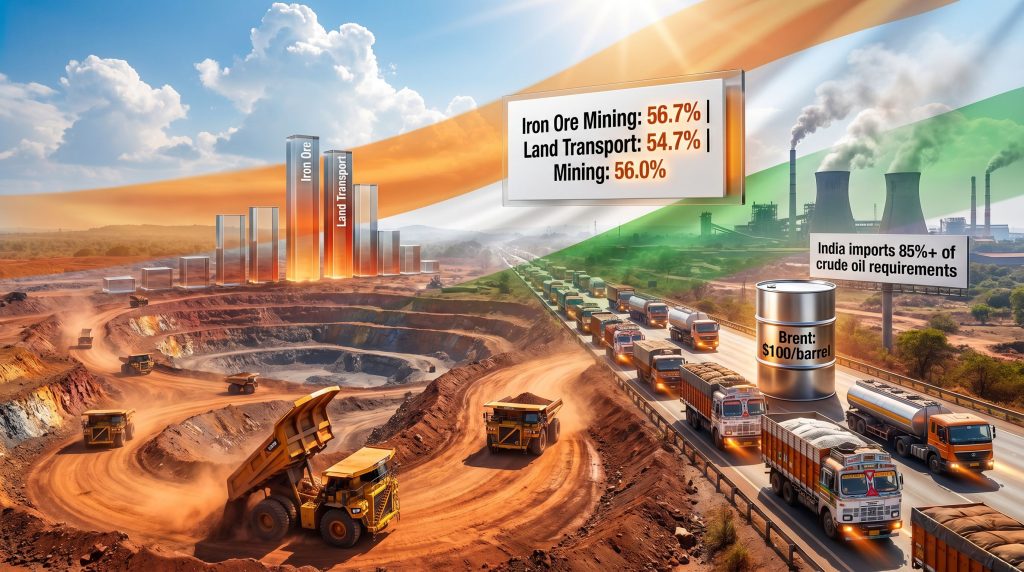
India's relationship with crude oil begins with a stark arithmetic reality. The country sources more than 85% of its crude oil requirements from international markets, placing it among the most import-reliant major economies on the planet. Domestic production, concentrated in ageing fields operated primarily by state-owned entities, covers only a fraction of consumption needs.
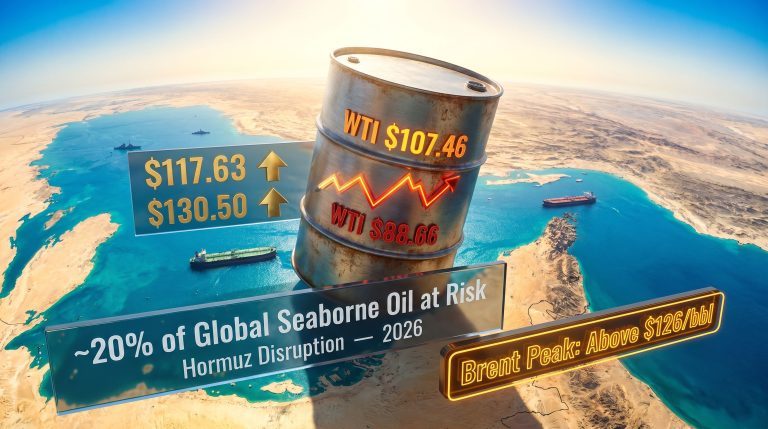
What compounds this dependency is geography. Approximately half of all crude oil imports transit through the Strait of Hormuz, a narrow shipping lane between Oman and Iran that carries some of the world's most consequential maritime energy traffic. The strait's width at its narrowest navigable point is roughly 3.2 kilometres in each direction, making it one of the most strategically vulnerable chokepoints in global energy logistics.
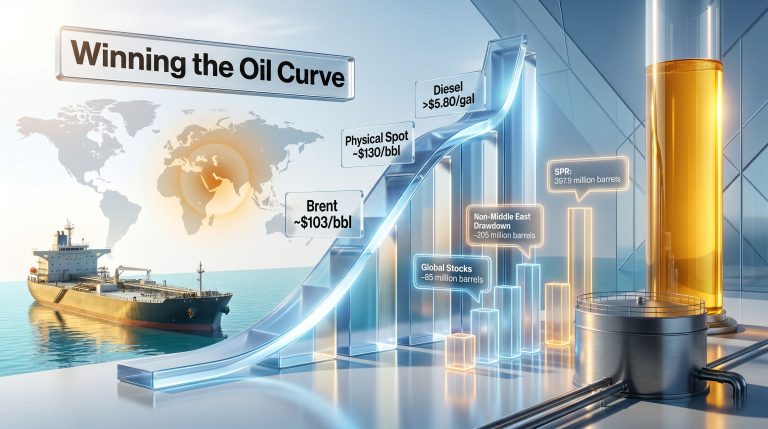
This is not a theoretical risk. Understanding the crude oil market dynamics helps explain why Brent crude prices have climbed from approximately $73 per barrel to around $100 per barrel since geopolitical conflict intensified in the Middle East beginning in early 2026, a move of roughly 37% that transmits with near-mechanical precision into India's domestic cost structures.
What India's Supply and Use Tables Reveal
A New Statistical Benchmark for Measuring Petroleum Exposure
India's Ministry of Statistics released its updated Supply and Use Tables (SUT) for 2023-24 using a revised 2022-23 base year, replacing the long-standing 2011-12 series that had become increasingly unrepresentative of the modern Indian economy. This statistical upgrade matters enormously because the SUT framework provides the most granular official mapping of how energy inputs, including petroleum products, flow through each productive sector.
The headline numbers from the release provide important macroeconomic context:
- Total supply of goods and services at purchaser prices reached ₹669.9 lakh crore in 2023-24, rising from ₹627.2 lakh crore in 2022-23
- Services accounted for roughly 50% of total supply, reflecting India's substantial service sector
- Agricultural goods contributed approximately 11% of total supply
- Mining goods represented around 2%, while manufactured goods accounted for 35-36%
- Goods comprised 72-73% of total intermediate consumption, underscoring the input-intensive character of Indian industrial production
The critical insight buried in these tables is not what services contribute, but what goods-producing sectors consume. With petroleum woven deeply into their intermediate input structures, these sectors carry concentrated exposure to any sustained oil price movement.
Which Indian Sectors Are Most Vulnerable to Rising Oil Prices
The Petroleum Dependency Rankings by Sector
The SUT data enables a precise ranking of which industries face the sharpest cost pressures when crude prices rise. The following table, derived from official 2023-24 data, maps petroleum products as a share of each sector's intermediate consumption:
| Sector | Petroleum as % of Intermediate Consumption |
|---|---|
| Iron Ore Mining | 56.7% |
| Mining (Broad) | 56.0% |
| Land Transport | 54.7% |
| Non-Ferrous Metals | 29.7% |
| Auxiliary Transport Activities | 18.1% |
| Agriculture | 9.2% |
| Railway Transport | 8.7% |
| Air Transport | 7.8% |
| Electricity Generation | 5.8% |
The tiering is striking. Three sectors sit above the 50% threshold, meaning petroleum accounts for the majority of their intermediate input costs. This is not marginal exposure. For iron ore mining, broad mining, and land transport, an oil price increase is effectively a direct tax on operations with limited capacity for immediate substitution.
Iron Ore and Mining: Sectors Most Exposed to Oil Price Shocks
The iron ore sector's 56.7% petroleum dependency is the highest recorded across any major Indian industry category in the 2023-24 SUT data. This level of exposure reflects the mechanically intensive nature of extraction operations, where diesel and petroleum-based fuels power drilling rigs, haul trucks, ore processing equipment, crushing plants, and on-site logistics fleets.
What makes this vulnerability particularly acute is its operational indivisibility. Unlike a manufacturer who might switch input materials or adjust product mix, a mining operator cannot easily reduce fuel consumption without directly curtailing production volumes. There is no viable near-term substitute for diesel in heavy extraction equipment at commercial scale.
Furthermore, a dimension that is often overlooked involves shipping costs. Tracking iron ore price trends reveals how export-oriented iron ore operations face a compound exposure: rising domestic fuel costs increase extraction and logistics expenses, while simultaneously, higher oil prices inflate maritime freight rates, squeezing margins from both directions. For operations measured in thin per-tonne margins, this bilateral pressure can be decisive for project viability.
Land Transport: The Economy's Petroleum-Intensive Circulatory System
Land transport's 54.7% petroleum dependency carries a significance that extends well beyond the sector itself. Road freight is the primary mechanism through which goods move across India's vast interior, meaning that when diesel prices rise, cost inflation does not remain contained within the transport sector. It migrates into every sector that relies on road logistics, which is effectively every sector.
The multiplier effect here is underappreciated. A trucking rate increase of 10-15% following an oil price spike does not merely increase transport line items. It increases the delivered cost of agricultural produce, construction materials, manufactured goods, retail inventory, and industrial inputs simultaneously. This creates a diffuse but persistent inflation pulse that is structurally difficult for monetary policy alone to suppress.
India's trucking fleet is overwhelmingly diesel-powered, and the transition to alternative fuels remains at an early stage. The Indian Foundation of Transport Research and Training has noted that the logistics sector's dependence on diesel-powered vehicles creates systemic price transmission risks during commodity shocks.
Aviation: The Sector with the Fastest Margin Deterioration
Aviation turbine fuel typically represents 40-50% of total operating costs for Indian carriers under normal oil price conditions. Indian airlines have historically maintained limited fuel hedging programmes compared to major international carriers, leaving them disproportionately exposed to spot price movements.
When Brent crude approaches or exceeds $100 per barrel, the financial arithmetic for domestic carriers deteriorates rapidly. As Reuters analysis on India's vulnerable economy highlights, load factors, which have been strong across the Indian aviation market, provide little protection when the cost base itself is expanding faster than revenue can be adjusted. Fare increases face competitive and regulatory constraints, and the lag between cost increases and recoverable passenger revenue can span multiple quarters.
Agriculture: Where Fuel Costs Become Food Prices
Agriculture's 9.2% petroleum dependency in intermediate consumption may appear modest compared to mining or transport, but the downstream implications are disproportionately significant. Diesel powers irrigation infrastructure, tractors and mechanised harvesting equipment, and the cold-chain logistics that connect farms to urban consumption centres.
Critically, fertiliser production depends on petrochemical feedstocks, meaning that oil price rallies simultaneously increase on-farm energy costs and input material costs. This dual pressure on agricultural production costs has a well-documented historical relationship with food price inflation in India, which carries substantial economic and social consequences given the share of household budgets devoted to food expenditure across lower-income segments.
Macro-Level Consequences of a Sustained $100+ Oil Environment
How Oil Prices Stress India's Economic Fundamentals
| Macro Variable | Impact of Sustained High Oil Prices |
|---|---|
| Current Account Deficit | Widens materially as import bill expands |
| Rupee Exchange Rate | Faces depreciation pressure from elevated USD demand |
| Consumer Price Inflation | Accelerates through fuel, food, and logistics channels |
| Government Fiscal Position | Strained if subsidies are deployed to buffer consumers |
| GDP Growth Trajectory | At risk of meaningful reduction if shock is prolonged |
India's oil import bill is denominated in US dollars. This creates a compounding dynamic: as crude prices rise, the rupee typically weakens against the dollar because outflows for oil purchases increase, which in turn raises the rupee cost of the same barrel of oil even further. The currency and commodity price channels reinforce each other during sustained energy shocks.
In addition, the broader oil price trade war impact on global supply chains can exacerbate these pressures, particularly when geopolitical tensions disrupt established trade flows that India depends upon for affordable crude procurement.
Sector Vulnerability Framework: From Moderate to Critical Risk
| Risk Tier | Sectors | Primary Vulnerability Driver |
|---|---|---|
| Critical | Iron Ore, Mining, Land Transport | Petroleum exceeds 50% of intermediate inputs |
| High | Aviation, Non-Ferrous Metals, Auxiliary Transport | Direct fuel costs and minimal hedging capacity |
| Elevated | Paints, Chemicals, Steel, Heavy Manufacturing | Petrochemical input cost inflation |
| Moderate | Agriculture, Railway Transport | Fuel for equipment and logistics chains |
| Indirect | Electricity, Consumer Goods, Financial Services | Downstream transmission and credit stress effects |
Consequently, understanding how commodity prices and mining performance interact is essential for investors assessing exposure across the critical and high risk tiers identified above.
India's Resilience Factors and the Limits of Policy Response
What Partially Buffers the Economy
India's economy is not without structural shock absorbers. The services sector, representing approximately half of total supply, carries far lower direct petroleum exposure than goods-producing industries. Growth in IT services, financial services, and professional services provides a productive base that can continue expanding even during energy cost shocks affecting industrial sectors.
India's domestic refining capacity, operated primarily through state-owned entities, provides some insulation against short-term physical supply disruptions, though it offers no protection against the global price mechanisms that determine crude costs.
Renewable energy capacity additions in solar and wind generation are gradually reducing petroleum's share in the electricity generation mix. This structural shift, over the medium term, will reduce one transmission channel of oil price inflation into industrial electricity costs. However, the pace of this transition remains insufficient to materially alter India sectors vulnerable to rising oil prices within the near-term horizon.
What Cannot Be Easily Fixed
The fundamental challenge is that 85%+ crude import dependency is not a policy preference but a geological and infrastructural reality. India's sedimentary basins have not yielded the scale of recoverable reserves that would meaningfully alter this arithmetic. Strategic petroleum reserves, while valuable for managing short-duration supply disruptions, cannot substitute for sustained supply at commercially viable prices.
The concentration of import routes through the Strait of Hormuz represents a geographic risk that diversification can only partially address. Alternative supply routes from producers outside the Gulf carry their own logistics complexities and cost premiums.
Policy levers available to Indian authorities in an oil shock scenario include excise duty reductions on petroleum products, strategic reserve releases, and intensified diplomatic engagement with Gulf Cooperation Council suppliers. Each carries trade-offs between short-term relief and medium-term fiscal or strategic costs. The broader picture of resource and energy exports from major suppliers also shapes the global supply environment that India must navigate. Furthermore, India's financial conditions have already shown signs of tightening amid oil shocks, rupee weakness, and FPI outflows, underscoring the urgency of these policy considerations.
The next major ASX story will hit our subscribers first
Key Takeaways for Understanding India's Oil Price Exposure
- Iron ore mining and broad mining carry the highest petroleum dependency of any major sector at 56.7% and 56% respectively, creating direct and immediate margin exposure to crude price movements
- Land transport, at 54.7%, functions as an economy-wide cost transmission mechanism, amplifying oil price increases across every sector that relies on road freight
- Aviation faces the fastest financial deterioration due to high fuel cost shares and limited hedging, while agriculture translates oil price increases into food inflation with socially significant consequences
- India sectors vulnerable to rising oil prices span a far broader range than most investor frameworks acknowledge, from critical to indirect exposure tiers
- India's structural import dependency of over 85% combined with Hormuz route concentration creates a vulnerability that no single policy intervention can fully address
- A sustained Brent crude price environment above $100 per barrel creates compounding pressure on the current account, the rupee, consumer inflation, and GDP growth simultaneously
Readers seeking ongoing coverage of developments in India's energy economy and petroleum markets can follow related reporting from ET EnergyWorld.
This article is intended for informational purposes only and does not constitute financial or investment advice. Forecasts and projections referenced herein are based on publicly available data and carry inherent uncertainty. Past relationships between oil prices and economic outcomes may not be replicated in future cycles.
Want to Identify ASX Mining and Resources Stocks Ahead of the Next Major Discovery?
Discovery Alert's proprietary Discovery IQ model scans ASX announcements in real time, instantly identifying significant mineral discoveries across iron ore, non-ferrous metals, and over 30 other commodities — precisely the sectors most exposed to the structural cost pressures explored in this article. Explore how historic mineral discoveries have generated substantial market returns and begin your 14-day free trial today to position yourself ahead of the broader market.