
June 18, 2026
India's agricultural economy stands at the intersection of unprecedented fertilizer demand and complex global supply chain dynamics. With domestic consumption patterns reaching historic peaks, the country's urea market reflects broader macroeconomic forces reshaping both domestic agricultural productivity and international commodity trade flows. These consumption trends reveal critical insights into agricultural modernization, fiscal policy implications, and strategic resource management across one of the world's most significant agricultural economies.
Understanding India's Agricultural Nitrogen Economy
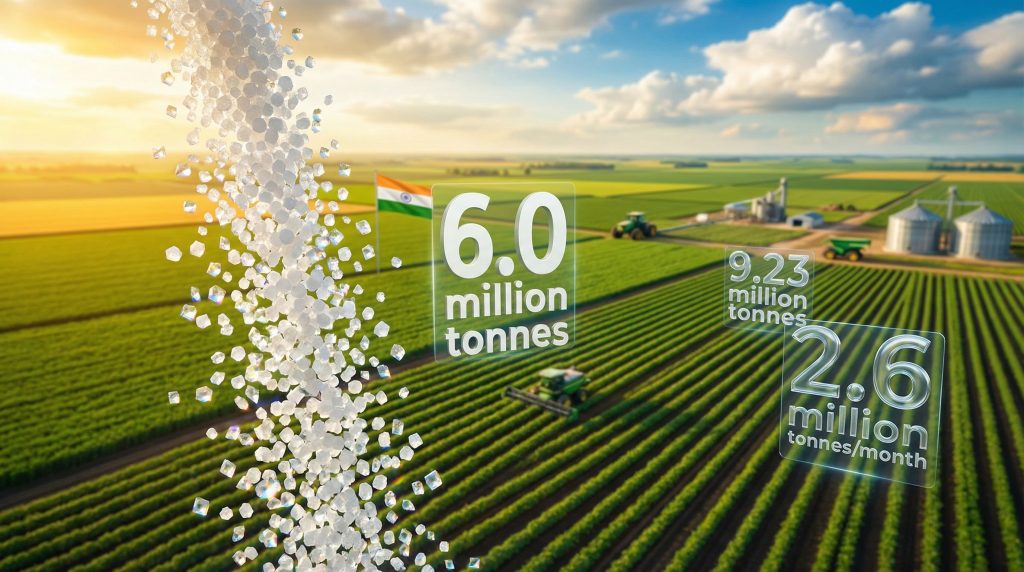
India's position as the world's largest urea consumer stems from fundamental agricultural and economic drivers that extend far beyond seasonal crop cycles. The country's domestic urea production capacity remains fixed at approximately 2.6 million tonnes per month, while consumption demand has reached unprecedented levels, with December 2025 projected to achieve approximately 6 million tonnes in monthly sales (Argus Media, 2025). This represents a structural supply-demand imbalance that has profound implications for both domestic agricultural policy and global commodity trade.
The magnitude of this consumption surge becomes evident when compared to historical patterns. December 2025 urea sales are tracking to exceed the previous monthly record of 5.4 million tonnes achieved in July 2025, representing an 11-15 percent increase over December 2024 sales of 5.2 million tonnes. This growth trajectory indicates that seasonal demand patterns now consistently exceed domestic production capacity by a factor of 2.3x, creating permanent dependency on international markets.
Government Subsidy Mechanisms and Market Dynamics
India's fertilizer subsidy system operates through direct government support that enables farmers to purchase urea at controlled prices significantly below international market rates. This policy framework creates demand that exceeds what would occur under market-clearing prices, essentially establishing an inelastic demand curve during critical agricultural seasons. The effectiveness of this subsidy mechanism is demonstrated by the rapid inventory depletion observed in December 2025, where urea stocks declined from 7.1 million tonnes at the beginning of the month to 6.3 million tonnes by mid-December.
The timing of government procurement decisions provides insight into real-time demand monitoring capabilities. National Fertilizers Limited (NFL) issued a tender on December 17, 2025, seeking 1.5 million tonnes of urea with shipment deadlines through February 20, 2026, and closing on January 2, 2026. Market observers characterised this tender timing as earlier than expected, suggesting that government procurement teams actively adjust import schedules based on consumption velocity rather than predetermined seasonal calendars.
Agricultural Productivity and Crop Intensity Factors
The record consumption levels reflect multiple agricultural productivity factors operating simultaneously across India's diverse agro-climatic zones. Winter crop production, particularly wheat cultivation, requires substantial nitrogen application for optimal yields, with application timing critical to crop response. The December consumption peak aligns with soil preparation and initial fertilisation phases of the rabi season, when nitrogen-responsive crops establish their foundational growth patterns.
Key consumption drivers include:
• Increased area planted under high-yielding crop varieties requiring enhanced fertilisation
• Intensification of cropping systems with multiple seasons per year
• Government agricultural productivity targets driving increased input usage
• Rural income support programmes enabling enhanced farmer purchasing power
• Crop diversification trends increasing per-hectare nutrient requirements
When big ASX news breaks, our subscribers know first
Seasonal Agricultural Cycles and Fertilizer Demand Patterns
The rabi (winter) season creates distinct fertilizer consumption patterns that differ significantly from kharif (monsoon) season demand. December 2025 represents the core period when soil preparation and initial fertilisation for winter crops reaches maximum intensity. The achievement of record indian local urea sales on track for record in december during this period reflects both the timing of agricultural operations and the biochemical requirements of nitrogen-dependent crops.
Rabi Season Nitrogen Requirements
Winter crops in India, particularly wheat, chickpeas, and mustard, exhibit high nitrogen responsiveness during vegetative growth phases. The timing of nitrogen application during December directly correlates with root development and early biomass accumulation, making this month critical for establishing yield potential. Agronomic research indicates that delayed nitrogen application reduces crop response efficiency, creating concentrated demand during optimal application windows.
The monsoon impact on soil nutrient depletion operates through distinct mechanisms compared to winter crop production. Kharif season rainfall creates nitrogen losses through leaching and volatilisation, requiring replacement fertilisation. However, winter season demand stems primarily from crop uptake requirements rather than nutrient replacement, creating more predictable consumption patterns that government procurement teams can anticipate.
Inventory Management and Supply Chain Velocity
The rapid depletion of urea stocks from 7.1 million tonnes to 6.3 million tonnes in just two weeks of December demonstrates consumption velocity exceeding typical seasonal patterns. This 800,000 tonne inventory decline in a 14-day period indicates daily consumption rates approaching 57,000 tonnes, substantially higher than the 50,000 tonnes daily that would be expected from historical December patterns.
Seasonal demand characteristics:
• Peak consumption timing: October-December for rabi season preparation
• Secondary peak: April-June for kharif season applications
• Minimum consumption: August-September between seasons
• Emergency reserve requirements: 4-6 weeks of consumption capacity
Domestic Production Constraints and Import Dependencies
India's structural reliance on urea imports stems from capacity constraints that have persisted despite agricultural demand growth over the past decade. Domestic urea manufacturing operates at approximately 31.2 million tonnes annually (2.6 million tonnes monthly × 12 months), while total consumption requirements approach 72 million tonnes when extrapolating from current monthly demand patterns. Furthermore, these constraints have significant implications for inflation and tariff pressures affecting the broader agricultural economy.
Infrastructure and Resource Limitations
Several interconnected factors limit domestic production expansion beyond current capacity levels. Natural gas availability represents the primary constraint, as urea synthesis requires substantial natural gas inputs for ammonia production. India's domestic natural gas production has not expanded proportionally with fertilizer industry demand, forcing manufacturers to rely on imported liquefied natural gas (LNG) at significant cost premiums compared to domestic supply.
Capital requirements for new urea production facilities typically range from $500-800 million per facility, depending on technological configuration and location-specific infrastructure requirements. Government budgetary constraints and competing infrastructure priorities have limited investment in capacity expansion projects, while existing facilities operate under environmental regulations that increase production costs relative to international competitors.
Import Procurement Strategy and Scale
India's annual urea import requirements reached 9.23 million tonnes through government tenders in 2025, representing approximately 68 percent of total consumption if extrapolated from monthly figures. This import dependency creates both opportunities and vulnerabilities in global fertilizer markets, as India's procurement decisions influence international pricing dynamics and supplier allocation strategies.
The scale of import requirements necessitates sophisticated procurement timing and supplier diversification strategies. Government tender mechanisms consolidate demand into periodic large-volume purchases that provide negotiation leverage with international suppliers while maintaining strategic inventory reserves to buffer against supply disruptions.
Production vs. consumption analysis:
| Metric | Annual Volume | Monthly Average | Percentage of Total |
|---|---|---|---|
| Domestic Production | 31.2 million tonnes | 2.6 million tonnes | 43% |
| Import Requirements | 9.23+ million tonnes | Variable timing | 57%+ |
| Total Consumption | 40.4+ million tonnes | 3.4+ million tonnes | 100% |
Global Market Impact and Strategic Procurement
India's position as the world's largest urea importer creates substantial influence over global market trends and pricing dynamics. The country's procurement decisions through National Fertilizers Limited (NFL) serve as market signals that affect international supplier production scheduling and export allocation strategies across multiple continents.
State-Led Procurement Mechanisms
NFL's tender-based procurement system operates as a sophisticated market intervention tool that balances cost optimisation with supply security objectives. The December 17, 2025 tender seeking 1.5 million tonnes demonstrates how government procurement teams respond to real-time consumption data rather than predetermined seasonal schedules. Market observers characterised this tender timing as earlier than expected, indicating that consumption velocity exceeded forecasted patterns.
The tender process creates transparency in India's procurement intentions while enabling global suppliers to coordinate export schedules around Indian demand cycles. This system provides predictability for international fertilizer markets while allowing India to exercise bulk purchasing power that would be unavailable through fragmented private company imports. Moreover, developments in the global urea market continue to influence these strategic decisions.
International Price Formation and Market Psychology
India's procurement timing and volume decisions influence global urea pricing through several mechanisms. Large-volume tenders create immediate demand signals that affect spot market pricing, while procurement timing affects seasonal price patterns in exporting regions. The concentration of India's demand through government channels provides market transparency that reduces information asymmetries in international fertilizer trade.
Strategic procurement advantages include:
• Bulk purchasing power enabling discount negotiations
• Predictable demand signals stabilising supplier planning
• Geographic diversification reducing supply chain risks
• Strategic timing optimisation relative to international price cycles
• Quality standardisation across multiple supplier sources
Supply Chain Resilience and Geographic Diversification
The 9.23 million tonnes procured through 2025 tenders represents diversified sourcing across multiple supplier countries and companies, reducing dependency on single geographic regions or corporate entities. This diversification strategy provides resilience against supply disruptions while maintaining competitive tension among suppliers to secure favourable pricing terms.
Global suppliers increasingly coordinate their production and export schedules around Indian tender cycles, recognising that securing Indian contracts provides volume certainty that enables efficient capacity utilisation. This dynamic creates symbiotic relationships between Indian demand planning and global production optimisation.
Economic Implications and Policy Framework
The record urea consumption levels create significant macroeconomic implications across fiscal policy, agricultural productivity, and international trade balance considerations. Government subsidy expenditures required to support current consumption levels represent substantial fiscal commitments that must be balanced against competing budgetary priorities and long-term agricultural development objectives. However, global trade impacts also influence these policy decisions.
Fiscal Policy and Subsidy Management
Supporting urea consumption at current levels requires government subsidies that bridge the gap between international import costs and farmer purchase prices. With import requirements exceeding 9.23 million tonnes annually at international prices typically ranging from $300-500 per tonne, total import costs approach $2.8-4.6 billion annually before accounting for logistics and distribution expenses.
The subsidy burden extends beyond direct import costs to include domestic distribution infrastructure, quality control systems, and administrative overhead required to manage the procurement and distribution system. These expenditures represent significant fiscal commitments that must be evaluated against agricultural productivity gains and rural economic development benefits.
Agricultural Productivity and Food Security Returns
Record fertilizer consumption levels correlate with agricultural productivity objectives under government food security initiatives. Enhanced nitrogen application supports higher crop yields that contribute to food grain production targets and agricultural self-sufficiency goals. The economic returns from increased agricultural productivity must be assessed against the fiscal costs of subsidised fertilizer provision.
Productivity multiplier effects include:
• Direct yield increases from optimised fertilizer application
• Rural economic stimulation through increased farm incomes
• Reduced food import requirements from enhanced domestic production
• Agricultural export competitiveness from improved crop quality
• Rural employment generation through intensified agricultural operations
International Trade Balance Considerations
Large-scale urea imports affect India's trade balance and foreign exchange requirements, with annual import costs representing significant outflows that must be balanced against agricultural export revenues and overall economic productivity gains. The timing of import procurement relative to international price cycles affects the fiscal efficiency of subsidy expenditures and overall economic returns from agricultural investment. Additionally, tariff impact analysis suggests these factors will continue influencing procurement strategies.
Future Market Evolution and Strategic Considerations
Current consumption trends indicate structural shifts in India's agricultural economy that will influence long-term fertilizer demand patterns and import requirements. Understanding these evolving dynamics provides insight into future market development and policy adaptation requirements.
Technology and Precision Agriculture Impact
Emerging precision agriculture technologies may influence future fertilizer consumption patterns through improved application efficiency and timing optimisation. Digital agriculture platforms enable farmers to optimise fertilizer application based on soil testing, crop requirements, and weather conditions, potentially reducing per-hectare consumption while maintaining or improving yields.
However, the adoption of precision agriculture technologies varies significantly across farm sizes and regions, with larger commercial operations implementing advanced systems more rapidly than smallholder farmers. Government extension services and technology support programmes will influence the pace and extent of efficiency improvements in fertilizer utilisation.
Sustainable Agriculture and Environmental Considerations
Growing emphasis on sustainable agriculture practices may affect future fertilizer consumption patterns through several mechanisms. Organic farming transitions could reduce conventional fertilizer demand in specific regions, while integrated nutrient management approaches may optimise the balance between organic and synthetic fertilizer applications.
Climate-resilient farming practices require adjusted nutrient management strategies that account for changing precipitation patterns, temperature variations, and soil health considerations. These adaptations may create more complex fertilizer demand patterns that differ from current seasonal consumption cycles. Furthermore, India's urea self-sufficiency targets will significantly influence these developments.
Infrastructure Development and Market Access
Continued infrastructure development in rural areas affects fertilizer distribution efficiency and farmer access to optimal application timing. Improved transportation networks, storage facilities, and digital payment systems can reduce distribution costs while improving farmer access to fertilizers during critical application windows.
Infrastructure development priorities include:
• Port capacity expansion for efficient import handling
• Rural storage facilities reducing distribution bottlenecks
• Transportation network improvements reducing delivery costs
• Digital payment systems streamlining subsidy distribution
• Quality control laboratories ensuring product standards
The next major ASX story will hit our subscribers first
What Does Record December Consumption Mean for 2026?
The trajectory of indian local urea sales on track for record in december reflects broader transformation within India's agricultural economy and global fertilizer trade patterns. This consumption surge demonstrates the effectiveness of government subsidy mechanisms in supporting agricultural modernisation while highlighting the strategic importance of import management and international supplier relationships.
As India continues developing its agricultural sector to meet food security objectives for a growing population, fertilizer consumption patterns will remain a critical indicator of both agricultural productivity and fiscal policy effectiveness. The balance between supporting farmer productivity through subsidised inputs and managing fiscal sustainability will shape future policy frameworks governing fertilizer markets.
Long-Term Strategic Implications
The record consumption levels establish new baseline expectations for future demand planning and import requirements. Government procurement strategies will need to accommodate consistently higher consumption patterns while maintaining cost optimisation and supply security objectives. This shift requires enhanced forecasting capabilities and more sophisticated international supplier relationship management.
Agricultural productivity gains from enhanced fertilizer application create positive feedback loops that support continued demand growth. Higher crop yields generate increased farm incomes that enable farmers to invest in additional productivity enhancements, including optimised fertilizer application rates and improved crop varieties.
The global fertilizer industry increasingly recognises India as a primary demand driver that influences production planning, capacity development, and trade flow optimisation across multiple continents. Understanding these market dynamics provides essential insights for stakeholders across the agricultural value chain, from farmers and policymakers to international suppliers and financial market participants.
Disclaimer: This analysis is based on publicly available market data and industry reporting. Fertilizer consumption patterns and government procurement decisions may vary based on weather conditions, policy changes, and international market dynamics. Readers should consult current government sources and market reporting for the most recent information when making agricultural or investment decisions.
Ready to Capitalise on Agricultural Commodity Opportunities?
Discovery Alert's proprietary Discovery IQ model delivers real-time alerts on significant agricultural commodity discoveries, instantly empowering subscribers to identify actionable opportunities ahead of the broader market. Begin your 30-day free trial today at Discovery Alert and secure your market-leading advantage in the evolving global commodity landscape.