May 17, 2026
How India's Energy Crisis Response Is Reshaping Global Supply Chain Strategy
Energy security has emerged as the defining challenge for major economies navigating an increasingly volatile geopolitical landscape. Complex interdependencies across global supply networks create systemic vulnerabilities that extend far beyond simple import-export relationships, fundamentally altering how nations approach strategic resource management and crisis preparedness frameworks. India's current energy supply disruption demonstrates these challenges while revealing adaptive strategies that influence global market volatility hedging approaches.
When big ASX news breaks, our subscribers know first
Understanding India's Critical Energy Infrastructure Vulnerabilities
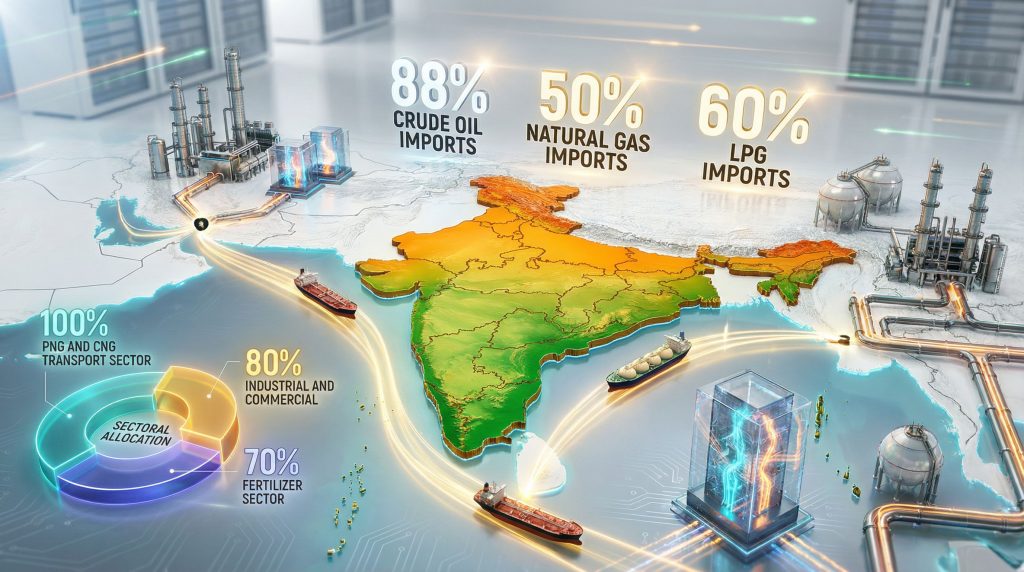
India's position as the world's third-largest energy consumer creates a complex web of dependencies that expose the nation to significant supply chain disruptions. The concentration of energy imports through specific geographical corridors represents one of the most pressing strategic challenges facing policymakers today.
Maritime Chokepoint Dependencies and Geographic Risk Assessment
The strategic importance of maritime energy corridors cannot be overstated in India's energy security calculations. The Strait of Hormuz serves as a critical shipping route through which 20 percent of the world's energy is transported, making it a single point of failure for global energy flows.
Recent developments have highlighted the fragility of this system. Since the West Asia conflict began on February 28, 2026, very few ships have been allowed by Iran to cross the Strait of Hormuz, resulting in severe disruptions to energy supply affecting multiple countries, including India.
This geographic concentration creates several layers of vulnerability:
- Physical infrastructure risks: Pipeline networks, port facilities, and shipping lanes subject to disruption
- Political control mechanisms: Single-nation control over critical transit routes
- Economic leverage dynamics: Price volatility stemming from supply uncertainty
- Alternative routing constraints: Limited capacity for rapid supply chain rerouting
Sectoral Impact Analysis Across Energy Categories
The current crisis has exposed differential vulnerabilities across India's energy portfolio. Furthermore, the pattern of disruption indicates significant exposure across multiple energy categories, similar to patterns observed in global natural gas trends.
Key sectors experiencing immediate impact include:
| Energy Sector | Primary Risk Factors | Alternative Options |
|---|---|---|
| Crude Oil | Maritime route concentration | Overland pipelines, strategic reserves |
| Liquefied Petroleum Gas | Single-source dependency | Regional diversification |
| Natural Gas | Long-term contract constraints | Spot market purchases |
| Refined Products | Processing capacity limits | Domestic refining expansion |
The fertilizer industry represents a particularly vulnerable sector, given its dependence on natural gas as both feedstock and fuel. This creates cascading effects on agricultural productivity and food security considerations.
Government Response Framework and Strategic Coordination
India's response to the current energy supply disruption demonstrates the complexity of crisis management in an interconnected global economy. The government's approach emphasises multi-sector coordination and real-time monitoring capabilities.
Crisis Management Protocols and Institutional Response
Prime Minister Narendra Modi's convening of a ministerial meeting on March 22, 2026, to review petroleum, power, and fertilizer sectors illustrates the integrated approach to energy security management. The focus centres on ensuring uninterrupted supply, stable logistics, and efficient distribution across the country.
The government's stated priorities include:
- Continuous monitoring of global developments to protect consumer and industry interests
- Proactive steps to address emerging supply chain disruptions
- Cross-sector coordination between petroleum, power, and fertilizer industries
- International diplomatic engagement to manage geopolitical risks
Modi emphasised that the government is working relentlessly to address disruptions that have emerged in international supply chains, while continuous efforts are also underway to determine how we can overcome the disruptions that have occurred in the supply chain.
Diplomatic Engagement and International Coordination
The scope of India's diplomatic response reveals the global nature of energy security challenges. Since the conflict began, Modi has conducted telephone conversations with leaders from Saudi Arabia, UAE, Qatar, Bahrain, Kuwait, Jordan, France, Malaysia, Israel, and Iran.
This extensive engagement pattern suggests several strategic objectives:
- Supply diversification negotiations: Securing alternative energy sources
- Transit route coordination: Establishing backup shipping arrangements
- Regional stability initiatives: Managing conflict escalation risks
- Economic cooperation frameworks: Maintaining trade relationships during crisis periods
Economic Implications and Market Adaptation Strategies
The current energy supply disruption creates both immediate operational challenges and longer-term strategic adaptation requirements across India's economic sectors. Understanding these implications provides insight into how energy security intersects with broader economic resilience.
Short-Term Market Disruption Patterns
Energy supply constraints generate cascading effects throughout interconnected industrial systems. The blockade has resulted in severe disruptions in energy supply to many countries, including India, creating immediate operational challenges for energy-intensive industries.
Primary areas of economic impact include:
- Manufacturing sector production constraints
- Transportation fuel availability and pricing
- Chemical and petrochemical industry feedstock shortages
- Power generation fuel supply considerations
- Agricultural input cost pressures
The fertilizer sector faces particular vulnerability due to its dual dependence on natural gas for both production processes and as a primary feedstock. Consequently, this creates potential impacts on agricultural productivity and food security planning.
Supply Chain Resilience and Diversification Strategies
The crisis has accelerated discussions around supply chain resilience that extend beyond immediate energy needs. In addition, long-term strategic planning now focuses on creating redundancy and flexibility within energy import portfolios, similar to approaches being adopted globally following the oil price rally.
Key diversification initiatives under consideration include:
- Alternative sourcing from Russia, West Africa, the United States, and Latin America
- Infrastructure investment in flexible import terminal capacity
- Strategic reserve expansion for crisis preparedness
- Domestic production capacity enhancement where feasible
The challenge lies in balancing energy security objectives with economic efficiency considerations, as diversification often comes with higher costs and more complex logistics arrangements.
Comparative Analysis of International Energy Security Frameworks
Understanding how other major economies manage energy security provides context for evaluating India's response strategies and identifying potential areas for policy innovation. However, each nation's approach reflects its unique vulnerability profile and geopolitical positioning.
Global Best Practices in Crisis Response
Different regions have developed distinct approaches to energy security based on their specific vulnerabilities and resource endowments. The European Union has implemented emergency response protocols that emphasise collective action and resource sharing during supply disruptions.
Japan's approach centres on strategic petroleum reserves with specific withdrawal procedures and minimum inventory requirements. This system provides a buffer against supply shocks while maintaining market stability during crisis periods.
South Korea has pursued aggressive supply diversification strategies including long-term contracts with multiple suppliers and significant investment in LNG terminal infrastructure to support flexible sourcing arrangements. Furthermore, these nations have learned from past disruptions, including those stemming from trade war impact on global energy flows.
Technology Integration for Supply Chain Visibility
Modern energy security frameworks increasingly rely on digital monitoring systems and predictive analytics to anticipate and respond to supply disruptions. These technologies enable:
- Real-time supply chain tracking across multiple transportation modes
- Predictive modelling for demand forecasting and inventory management
- Early warning systems for geopolitical and physical disruption risks
- Coordination platforms for multi-agency crisis response
The integration of digital technologies in energy supply chain management represents a fundamental shift toward proactive rather than reactive crisis management approaches.
Investment Implications and Infrastructure Development Priorities
The current crisis has highlighted specific areas where infrastructure investment can enhance energy security while creating economic opportunities for both public and private sector participants. For instance, countries have begun reassessing their Saudi exploration strategy in light of these vulnerabilities.
Strategic Infrastructure Expansion Requirements
Building energy security resilience requires significant capital investment across multiple infrastructure categories. Strategic storage facility expansion represents one of the most immediate priorities, providing buffer capacity during supply disruptions.
Key investment areas include:
- Underground strategic petroleum reserve facilities
- Flexible import terminal infrastructure supporting multiple energy types
- Pipeline network expansion for alternative supply routes
- Domestic production capacity where economically viable
The fertilizer sector requires particular attention given its strategic importance for agricultural productivity. Investment in alternative feedstock processing capabilities and backup supply arrangements can reduce vulnerability to natural gas supply disruptions.
Risk Assessment Framework for Energy-Dependent Industries
Industries with high energy intensity face varying levels of vulnerability depending on their specific energy mix and operational flexibility. Manufacturing competitiveness can be significantly affected by energy price volatility and supply uncertainty.
Sectoral vulnerability assessment criteria include:
- Energy cost as percentage of total production costs
- Flexibility in energy source substitution
- Inventory carrying capacity for energy inputs
- Geographic distribution of production facilities
- Export market sensitivity to cost increases
Companies in these sectors are increasingly incorporating energy security considerations into their long-term strategic planning and capital allocation decisions.
The next major ASX story will hit our subscribers first
Frequently Asked Questions About India's Energy Security
Why is the Strait of Hormuz so critical to India's energy security?
Iran controls the Strait of Hormuz, a key shipping route through which 20 percent of the world's energy is transported. This geographic chokepoint represents a single point of failure for global energy flows, making it strategically critical for energy-importing nations like India.
The current crisis demonstrates this vulnerability, as since the conflict began, very few ships have been allowed by Iran to cross it, creating immediate supply disruptions for multiple countries including India.
How quickly can India implement alternative supply routes?
Alternative supply route implementation depends on several factors including existing infrastructure capacity, supplier availability, and transportation logistics. Overland pipeline connections and alternative maritime routes require different timeframes for activation.
Short-term alternatives may include increased imports from non-affected regions, while longer-term solutions involve infrastructure development and new supplier relationship establishment.
What sectors are most protected under crisis allocation systems?
During energy supply crises, governments typically prioritise sectors based on strategic importance and social impact. Transportation fuel for public distribution and fertilizer production for agricultural security generally receive high priority in allocation systems.
Essential services including power generation for residential use and critical industrial processes typically maintain priority access to available energy supplies during shortage periods.
How do these supply disruptions affect energy prices for consumers?
Energy supply disruptions create upward pressure on prices through multiple mechanisms including increased transportation costs, supply scarcity premiums, and market volatility effects.
Government intervention through subsidies, strategic reserve releases, and price stabilisation mechanisms can moderate consumer price impacts, though these measures have fiscal implications that must be managed carefully.
Building Long-Term Energy Security and Resilience Frameworks
The current crisis provides valuable lessons for designing energy security frameworks that can withstand future disruptions while maintaining economic efficiency and competitiveness. Moreover, the energy supply disruption has revealed both vulnerabilities and adaptive capabilities within India's energy ecosystem.
Strategic Reserve Development and Management Principles
Optimal inventory levels for crisis preparedness must balance security benefits against carrying costs and storage infrastructure requirements. Strategic reserves serve multiple functions including market stabilisation, emergency supply provision, and diplomatic leverage during negotiations.
Key design principles for strategic reserve systems include:
- Geographic distribution to reduce single-point-of-failure risks
- Product mix optimisation reflecting actual consumption patterns
- Withdrawal procedures enabling rapid response to supply disruptions
- Replenishment strategies maintaining adequate inventory levels over time
Public-private partnership models can leverage private sector efficiency while maintaining government control over strategic assets.
Technology Solutions for Predictive Crisis Management
Digital monitoring and early warning systems enable proactive rather than reactive approaches to energy security management. These systems integrate multiple data sources to provide real-time visibility into supply chain status and emerging risk factors.
Advanced analytics capabilities include:
- Satellite monitoring of shipping traffic and infrastructure status
- Economic modelling of supply disruption scenarios and impact assessment
- Social media and news analysis for early warning signal detection
- Weather and geopolitical risk modelling for predictive planning
Blockchain applications in energy trade transparency can enhance supply chain traceability and reduce counterparty risks in international energy transactions.
Adaptive Governance and Policy Evolution Framework
Modi's characterisation of the energy crisis as a critical test of national character that requires dealing with circumstances through peace, patience, and increased public awareness highlights the governance dimensions of energy security management.
Effective policy frameworks must incorporate:
- Scenario-based planning for different disruption types and durations
- Stakeholder coordination mechanisms between government, industry, and civil society
- International cooperation agreements for mutual assistance during crises
- Regular review and update procedures incorporating lessons learned from actual events
The current crisis provides an opportunity to test and refine these frameworks while building institutional capabilities for future challenges.
Disclaimer: This analysis is based on publicly available information and should not be considered as investment advice. Energy security situations are dynamic and subject to rapid change based on geopolitical developments. Readers should consult official government sources and qualified professionals for specific decision-making purposes. Forward-looking statements involve inherent uncertainties and actual outcomes may differ materially from projections discussed in this analysis.
Ready to Capitalise on Energy Crisis Investment Opportunities?
Discovery Alert's proprietary Discovery IQ model delivers real-time alerts on significant ASX mineral discoveries, helping investors identify actionable opportunities in critical materials and energy sectors ahead of the broader market. Begin your 14-day free trial today to position yourself strategically during these volatile energy transitions.