June 14, 2026
Structural Forces Reshaping India's Metals Recovery Landscape
Global commodity markets undergo periodic structural shifts that reshape regional opportunities and competitive dynamics. The India metal and mining sector recovery currently finds itself at the intersection of multiple transformative forces: domestic infrastructure acceleration, geopolitical supply disruptions, and evolving trade patterns. These converging trends create a complex investment environment where traditional market relationships no longer hold, requiring sophisticated analysis of both cyclical recovery patterns and structural positioning advantages.
The interplay between domestic demand fundamentals and external supply constraints has created unique margin expansion opportunities across ferrous and non-ferrous segments. Understanding these dynamics requires examining how infrastructure spending translates into steel consumption, how geopolitical tensions alter aluminium pricing mechanisms, and how policy frameworks influence competitive positioning within global value chains.
When big ASX news breaks, our subscribers know first
What Drives India's Metal Mining Sector Recovery in 2026?
Domestic Demand Fundamentals and Infrastructure Growth
India's positioning within the global ferrous growth cycle reflects structural advantages that extend beyond typical cyclical patterns. The country maintains strong internal consumption trends driven by sustained infrastructure development, continued urbanisation processes, and manufacturing sector expansion. These demand drivers create a foundation for steel consumption that operates independently of external market volatility.
Infrastructure spending patterns demonstrate consistent year-over-year growth, with government capital expenditure supporting both direct steel consumption and indirect demand through multiplier effects. Urbanisation metrics continue tracking upward, with rural-to-urban migration creating sustained demand for construction steel, while manufacturing expansion requires specialised steel grades for automotive, machinery, and industrial applications.
The relationship between steel capacity utilisation and domestic demand reveals important structural characteristics:
• Primary steel consumption driven by infrastructure projects maintains steady growth patterns
• Secondary steel demand from automotive and appliance sectors shows resilience despite global headwinds
• Specialised steel grades for industrial applications demonstrate premium pricing sustainability
• Import substitution continues across various steel product categories
Commodity Price Rebound and Market Dynamics
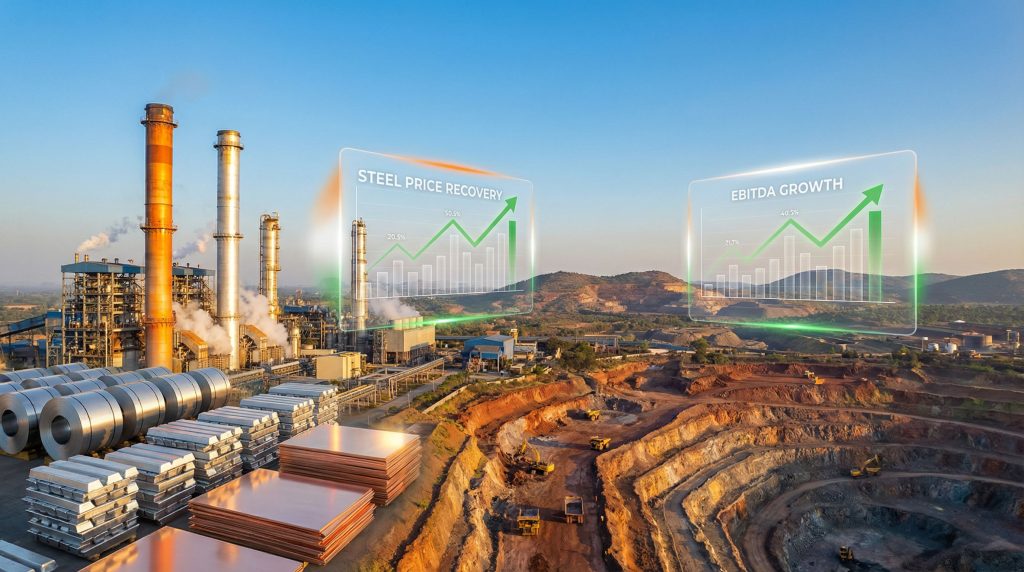
Steel price recovery since December 2025 represents more than typical cyclical movement, reflecting fundamental shifts in supply-demand equilibrium. Domestic steel prices have experienced significant appreciation, providing cushioning effects against rising input costs from coking coal and iron ore price trends pressures.
This pricing dynamic operates through several mechanisms. First, domestic steel producers benefit from import price parity adjustments as global steel prices firm. Second, transportation cost differentials favour local production over imports. Third, quality premiums for specialised grades support margin expansion opportunities.
Input cost pressures from coking coal and iron ore create margin challenges that successful operators offset through operational efficiency improvements and product mix optimisation. Companies with captive raw material access or long-term supply agreements demonstrate superior margin stability compared to spot market participants.
Fourth quarter FY26 profitability outlook indicates strong EBITDA growth potential across ferrous segments, supported by improved realisations and steady domestic demand patterns. This represents a significant shift from previous quarters where margin compression dominated sector performance.
How Are Geopolitical Disruptions Reshaping India's Mining Economics?
Middle East Supply Chain Impact Assessment
Geopolitical disruptions in the Middle East have created supply constraint dynamics affecting approximately 9% of global aluminium supply capacity. This supply reduction triggers pricing mechanisms that extend beyond direct aluminium market impacts, influencing related commodity pricing and freight cost structures across the mining sector.
The aluminium price surge correlates directly with these supply disruptions, creating favourable pricing environments for Indian aluminium producers while simultaneously increasing input costs for aluminium-consuming industries. This dual impact requires careful analysis of net sectoral benefits versus cost pressures.
Iron ore pricing dynamics demonstrate how geopolitical tensions alter traditional market relationships. Despite elevated global inventory levels, iron ore prices maintain support due to supply chain disruption concerns and freight cost increases. This phenomenon indicates structural changes in how commodity markets price risk and supply security.
Freight cost implications extend beyond direct transportation expenses:
• Maritime insurance rates increase due to regional security concerns
• Alternative routing requirements add time and distance to supply chains
• Port congestion at alternative terminals creates bottlenecks and delays
• Currency hedging costs rise due to increased volatility in affected regions
Strategic Supply Security and Import Dependency
Raw material sourcing diversification becomes critical for maintaining operational stability and cost competitiveness. Indian mining companies evaluate geographic concentration risks across their supply chains, seeking to reduce dependency on geopolitically sensitive regions while maintaining cost efficiency.
Trade barrier risks emerge from protectionist policies that governments implement during periods of supply chain stress. Safeguard duties provide policy support mechanisms for domestic producers while creating additional cost pressures for import-dependent operations. Furthermore, the comprehensive tariffs impact analysis reveals how these measures reshape competitive landscapes.
Supply chain resilience building requires substantial capital investments in alternative sourcing arrangements, inventory management systems, and logistics flexibility. Companies that successfully implement these capabilities demonstrate competitive advantages during periods of external disruption.
Policy support mechanisms extend beyond trade protection to include strategic stockpiling initiatives, domestic exploration incentives, and technology development programs aimed at reducing import dependence for critical materials.
Which Sectors Show Strongest Recovery Potential?
Ferrous Metals Performance Analysis
The ferrous metals segment demonstrates the strongest recovery momentum, with sector-wide EBITDA projected for substantial growth supported by improved pricing realisations and steady domestic demand patterns. This growth trajectory reflects both cyclical recovery factors and structural competitive advantages within the Indian market.
Steel sector performance benefits from multiple favourable dynamics. Domestic steel price trends exceed global benchmark improvements, indicating strong local market fundamentals. Production capacity expansion plans proceed despite global uncertainties, suggesting confidence in long-term demand sustainability.
Market share dynamics among leading producers reveal consolidation trends that support pricing discipline and operational efficiency improvements. Larger integrated producers demonstrate superior margin performance compared to smaller specialty operators, indicating scale advantages in the current market environment.
Key performance indicators for ferrous metals recovery include:
• Capacity utilisation rates trending toward optimal levels across major producers
• Product mix optimisation favouring higher-value specialised grades
• Geographic market share consolidation in key consuming regions
• Vertical integration benefits providing cost structure advantages
Non-Ferrous Metals Opportunity Assessment
Non-ferrous metals present differentiated opportunity profiles based on specific supply-demand dynamics and end-market applications. The aluminium sector benefits significantly from supply-constrained market conditions created by geopolitical disruptions, while copper demand drivers from renewable energy transition create structural growth opportunities.
Aluminium sector outlook reflects immediate benefits from supply constraints and elevated pricing, combined with steady domestic consumption from construction and automotive sectors. Import substitution opportunities exist across various aluminium product categories, supporting domestic production expansion.
Copper demand drivers demonstrate strongest growth potential through several channels:
• Renewable energy infrastructure requiring substantial copper content for power generation and transmission
• Electric vehicle adoption creating new demand patterns for copper wiring and components
• Grid modernisation projects necessitating extensive copper infrastructure investments
• Industrial automation driving demand for copper-intensive control systems and robotics
Zinc and lead market fundamentals show steady improvement supported by construction sector growth and battery industry expansion. In addition, the strategic importance of automation in mining continues to grow as the India metal and mining sector recovery advances through technological modernisation.
What Financial Metrics Signal Sector Recovery?
EBITDA Growth Projections and Margin Analysis
Sector-wide earnings momentum indicators point toward substantial margin expansion opportunities across both ferrous and non-ferrous segments. EBITDA growth projections reflect the combined impact of improved pricing realisations, operational efficiency gains, and favourable input cost dynamics for well-positioned operators.
Cost structure optimisation across mining operations demonstrates measurable improvements in several key areas. Energy efficiency initiatives reduce per-unit production costs while environmental compliance investments generate long-term operational savings through waste reduction and resource optimisation.
Working capital management improvements contribute significantly to cash flow generation and return metrics. Inventory turnover optimisation, accounts receivable management, and supplier payment term negotiations create substantial value without requiring additional capital investment.
Return on invested capital trends indicate improving asset utilisation across the sector, with successful operators demonstrating superior performance through:
-
Technology investments that enhance productivity and reduce unit costs
-
Process optimisation initiatives that improve yield and quality metrics
-
Maintenance efficiency programs that maximise equipment uptime
-
Supply chain integration that reduces transaction costs and inventory requirements
Investment Flow and Capital Allocation Patterns
Private sector investment in mining infrastructure accelerates as companies position for sustained demand growth and operational efficiency improvements. These investments focus on technology upgrades, capacity expansion, and environmental compliance systems that support long-term competitive positioning.
Government spending on mining-related projects supports sector growth through infrastructure development, research and development initiatives, and regulatory framework improvements. These investments create positive externalities that benefit private operators through improved logistics, reduced regulatory uncertainty, and technology transfer opportunities.
Foreign direct investment trends in the metals sector reflect growing international confidence in India's structural demand growth and policy stability. Technology partnerships and joint venture arrangements provide access to advanced mining techniques and processing technologies while supporting domestic capability building.
Capital allocation priorities demonstrate clear patterns across successful operators:
• Operational efficiency investments generating immediate returns through cost reduction
• Capacity expansion in high-demand product categories with favourable margin profiles
• Vertical integration initiatives that reduce supply chain dependency and improve margins
• Technology adoption focusing on automation, digitalisation, and environmental compliance
How Do Policy Reforms Support Mining Sector Growth?
Regulatory Environment and Business Climate
Mining lease allocation and approval processes undergo continuous refinement aimed at reducing bureaucratic delays and improving transparency. These reforms create more predictable business environments that support investment planning and operational efficiency.
Environmental compliance framework updates balance development objectives with sustainability requirements. Modern environmental standards encourage technology adoption that reduces environmental impact while maintaining operational efficiency, creating competitive advantages for operators that embrace best practices.
Labour policy reforms impact mining operations through improved workforce flexibility, skill development programs, and safety standard enhancements. These changes support productivity improvements while addressing social and economic development objectives in mining-dependent regions.
Taxation structure modifications for mining companies aim to balance revenue generation with investment incentive creation. Tax policy reforms consider depreciation schedules, exploration expense treatment, and profit-sharing arrangements that encourage sustainable mining development.
Strategic Government Initiatives
Make in India program impact on metals demand creates substantial market opportunities through domestic manufacturing expansion and import substitution initiatives. This program generates sustained demand growth for steel, aluminium, and other metals while supporting domestic value chain development.
Infrastructure development programs provide direct and indirect demand drivers for mining sector output. Government capital expenditure on transportation, energy, and urban infrastructure creates predictable demand patterns that support investment planning and capacity utilisation optimisation.
Export promotion schemes for value-added products encourage domestic processing and manufacturing capabilities. These incentives support movement up the value chain while creating employment opportunities and technology transfer benefits.
Research and development support for mining technology focuses on areas including:
• Exploration technology for improved resource identification and assessment
• Processing efficiency innovations that reduce costs and environmental impact
• Safety systems that protect workers and reduce operational risks
• Environmental remediation techniques for sustainable mining practices
Furthermore, the broader mining industry evolution demonstrates how policy frameworks adapt to technological advancement and market demands.
The next major ASX story will hit our subscribers first
What Risks Could Derail the Recovery Trajectory?
Input Cost Volatility and Margin Pressures
Raw material price fluctuation scenarios present ongoing challenges for margin stability and profitability forecasting. Coking coal and iron ore price volatility creates particular pressure for integrated steel producers, while energy cost fluctuations affect all mining operations through direct consumption and transportation impacts.
Transportation and logistics expense trends demonstrate increasing importance as supply chain disruptions create cost pressures and delivery delays. Companies with diversified logistics arrangements and strategic location advantages demonstrate superior resilience during periods of transportation market stress.
Currency fluctuation effects on imports create additional complexity for companies with significant foreign currency exposure. Import-dependent operations face particular vulnerability to rupee depreciation, while export-oriented companies benefit from currency weakness but face competitiveness challenges during appreciation periods.
Risk mitigation strategies successful operators employ include:
• Long-term supply contracts that provide cost predictability for critical inputs
• Hedging arrangements that manage currency and commodity price exposure
• Operational flexibility that allows adjustment to changing cost conditions
• Alternative sourcing capabilities that reduce dependency on specific suppliers or regions
External Market Dependencies
Global demand slowdown risks present significant challenges for export-oriented mining operations and companies serving multinational industrial customers. Economic weakness in major consuming regions creates demand destruction that affects both pricing and volume metrics.
Trade policy uncertainties emerge from protectionist trends and bilateral trade disputes that affect market access and competitive positioning. Export market development requires navigation of complex regulatory environments and changing trade relationships.
Competition from international producers intensifies as global capacity additions exceed demand growth in certain commodity categories. Low-cost international producers create pricing pressure that requires operational excellence and strategic positioning for competitive response.
Technology disruption threats to traditional mining include automation systems that reduce labour intensity, processing innovations that improve efficiency, and alternative materials that substitute for traditional mining products. However, the ongoing India metal and mining sector recovery demonstrates resilience through adaptation and innovation.
Which Investment Strategies Align with Recovery Trends?
Value Chain Integration Opportunities
Upstream-downstream integration benefits provide compelling strategic advantages for mining companies seeking to capture value across multiple stages of production and distribution. Vertical integration strategies reduce supply chain dependency while providing greater control over quality, timing, and cost structures.
Captive raw material sourcing advantages become increasingly valuable during periods of supply chain disruption and price volatility. Companies with secured access to iron ore, coking coal, or other critical inputs demonstrate superior margin stability and operational predictability.
Processing capability enhancement strategies focus on movement toward higher-value products that command premium pricing and reduced commodity price exposure. Value-added manufacturing capabilities create competitive differentiation while improving customer relationships and market positioning.
Market positioning for premium products requires investments in quality systems, technology capabilities, and customer relationship management that support sustainable competitive advantages:
• Product certification and quality assurance systems that meet international standards
• Customer technical support capabilities that provide application engineering and problem-solving services
• Innovation partnerships with downstream customers that create collaborative development opportunities
• Brand development initiatives that establish recognition and preference in target markets
Technology and Sustainability Investments
Digital transformation in mining operations creates substantial value through improved efficiency, reduced costs, and enhanced safety performance. Automation systems reduce labour intensity while improving consistency and quality control across mining and processing operations.
Environmental compliance technology adoption supports regulatory compliance while creating operational efficiency benefits through waste reduction, energy optimisation, and resource recovery improvements. These investments generate both cost savings and revenue enhancement opportunities.
Energy efficiency improvement programs address both cost reduction objectives and environmental compliance requirements. Renewable energy integration and process optimisation initiatives create sustainable competitive advantages while supporting corporate sustainability commitments.
Circular economy initiatives in metals recycling present growing opportunities for resource recovery and waste reduction. Recycling capabilities reduce raw material dependency while creating new revenue streams from previously discarded materials.
What Does the Early FY27 Outlook Suggest?
Demand Sustainability Assessment
Domestic consumption growth sustainability depends on continued infrastructure development, manufacturing sector expansion, and urbanisation progression. Structural demand drivers provide confidence in sustained growth patterns that extend beyond typical cyclical recovery periods.
Export market development potential demonstrates mixed characteristics across different commodity categories and geographic markets. Some export opportunities benefit from supply chain diversification trends, while others face increased competition and protectionist barriers.
Seasonal demand patterns and cyclical factors require careful analysis for capacity planning and inventory management optimisation. Construction seasonality affects steel demand patterns, while agricultural cycles influence fertiliser and agricultural equipment demand that supports certain mining sectors.
Long-term structural demand drivers include several key trends:
• Infrastructure modernisation requirements that create sustained steel and aluminium demand
• Energy transition investments that generate demand for copper, lithium, and other critical minerals
• Manufacturing capability development that increases domestic metal consumption
• Urbanisation progression that drives construction and consumer goods demand
Competitive Positioning Analysis
Market consolidation trends continue across various mining sectors as scale advantages become increasingly important for competitiveness and regulatory compliance. Larger integrated operators demonstrate superior performance through operational efficiency, financial resources, and market positioning advantages.
Operational efficiency benchmarking reveals significant performance differences across mining companies, with leading operators achieving substantially better cost structures, quality metrics, and environmental performance compared to industry averages.
Innovation and product development priorities focus on sustainability, efficiency, and customer value creation. Companies that successfully implement innovation strategies demonstrate improved competitive positioning and financial performance over time.
Strategic partnership opportunities emerge through technology collaboration, supply chain integration, and market development initiatives that create mutual value for participating companies. Consequently, the India metal and mining sector recovery benefits from collaborative approaches that enhance competitiveness.
How Should Investors Evaluate Mining Sector Opportunities?
Financial Performance Metrics Framework
Key performance indicators for mining companies require comprehensive analysis across operational, financial, and strategic dimensions. Cost per unit metrics provide insights into operational efficiency and competitive positioning, while resource quality indicators assess long-term value potential.
Valuation methodologies for sector assessment must account for commodity price volatility, resource depletion schedules, and capital intensity requirements. Net present value calculations require careful consideration of price assumptions, production schedules, and capital expenditure requirements.
Risk-adjusted return calculations incorporate various risk factors including commodity price volatility, regulatory changes, operational challenges, and environmental liabilities. Monte Carlo analysis techniques help assess probability distributions for financial outcomes under different scenarios.
Portfolio diversification considerations for mining sector exposure include:
-
Geographic diversification across different regulatory environments and market conditions
-
Commodity diversification to reduce exposure to specific price cycles
-
Company size diversification balancing established operators with growth-oriented smaller companies
-
Value chain diversification including upstream, midstream, and downstream exposures
Due Diligence Considerations
Operational efficiency evaluation criteria focus on cost structure analysis, productivity metrics, safety performance, and environmental compliance records. Benchmarking analysis against industry best practices reveals competitive strengths and improvement opportunities.
Management quality assessment frameworks evaluate leadership experience, strategic vision, operational execution capabilities, and stakeholder relationship management. Track record analysis provides insights into management's ability to navigate challenging market conditions and execute strategic initiatives.
ESG compliance and sustainability metrics become increasingly important for investment evaluation as regulatory requirements tighten and stakeholder expectations evolve. Environmental performance indicators assess compliance risks and competitive positioning for sustainable mining practices.
Market positioning and competitive advantage analysis examines factors including resource quality, operational scale, geographic location, technology capabilities, and customer relationships that create sustainable competitive advantages in dynamic market environments. Moreover, government intervention in mining continues to shape the regulatory landscape and investment opportunities.
The India's critical minerals recovery outlook demonstrates promising potential for strategic mineral development, while India's metals and mining sector earnings recovery reflects growing analyst confidence in the sector's fundamentals despite external challenges.
Investment decisions in the mining sector require comprehensive analysis of multiple risk factors, market dynamics, and operational considerations. This analysis is provided for informational purposes and should not be considered investment advice. Potential investors should conduct independent research and consult qualified financial advisors before making investment decisions.
Ready to Capitalise on India's Mining Sector Recovery?
Discovery Alert's proprietary Discovery IQ model delivers real-time alerts on significant ASX mineral discoveries, enabling investors to identify actionable opportunities before the broader market responds. Begin your 14-day free trial today and position yourself to benefit from the next major mining discovery with instant notifications and expert analysis.