July 10, 2026
The Quiet Restructuring of Global Aluminium Trade Routes
When commodity supply chains fracture, they rarely heal along the same lines. The disruption of Gulf-based aluminium flows to Western markets in 2026 is not simply a temporary rerouting problem. It represents one of those infrequent but consequential moments where geopolitical shock and industrial readiness intersect, accelerating structural changes that would otherwise take a decade to unfold. Southeast Asia, and Indonesia in particular, is emerging as the unexpected beneficiary of this inflection point, with the Indonesia Alamtri aluminium exports to the US now marking a pivotal chapter in how global primary metal flows are being redrawn.
When big ASX news breaks, our subscribers know first
Why US Aluminium Buyers Are Looking East
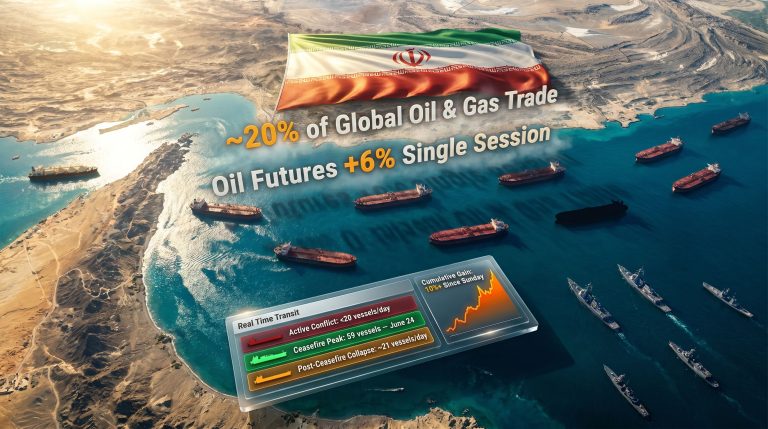
For much of the past two decades, the United States drew a significant portion of its primary aluminium imports from Gulf-region smelters, a supply geography that offered competitive pricing and established logistics. That architecture has been severely tested by the regional conflict involving Iran, which disrupted deliveries from key Gulf producers and created shortfalls in US aluminium availability that the domestic industry could not immediately absorb.
The market response was swift and pronounced. US aluminium tariffs and premium spikes tracked through the benchmark AUPc1 contract reached record highs in June 2026. Premium spikes of this scale do more than attract spot opportunism. They fundamentally alter the economics of long-haul supply, making previously marginal routes commercially compelling and encouraging trading houses to establish new sourcing corridors that persist well beyond the initial shock.
Historical precedent across commodity markets shows that supply chain reconfigurations triggered by geopolitical disruption tend to become structural. The buyers who secure alternative sources under emergency conditions often convert those relationships into long-term offtake arrangements once reliability is demonstrated.
Furthermore, Indonesia's newly commissioned smelting capacity entered this environment at precisely the right moment, offering scale, improving logistics infrastructure, and crucially, a feedstock base that does not rely on conflict-exposed regions.
PT Kalimantan Aluminium Industry: Scale, Location, and Strategic Positioning
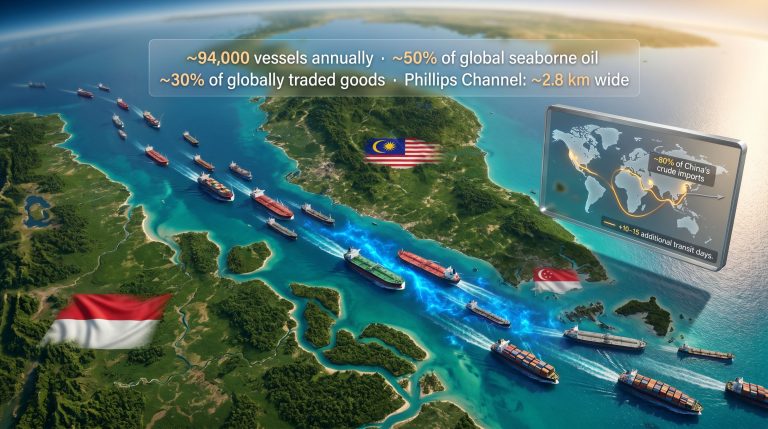
PT Kalimantan Aluminium Industry (PT KAI), a subsidiary of PT Alamtri Resources Indonesia, operates from the Kaltara Industrial Park on the island of Borneo. Its location is not incidental. Borneo offers several structural advantages for large-scale aluminium production, including access to hydroelectric power resources in Kalimantan, proximity to the Strait of Malacca shipping corridor, and relative proximity to domestic bauxite and alumina supply chains.
Phase one commissioning began at the end of 2025, with the facility designed to operate at an initial capacity of 500,000 tonnes per annum (tpa). The longer-term project scope targets up to 1.5 million tonnes of annual production, a scale that would position PT KAI among the most significant single-site aluminium producers in the entire Asia-Pacific region.
| Metric | PT Kalimantan Aluminium Industry |
|---|---|
| Phase 1 Design Capacity | 500,000 tpa |
| Full Project Scope | Up to 1,500,000 tpa |
| First Export Month | June 2026 |
| 2026 Ingot Sales Target | Up to 350,000 tonnes |
| Markets Targeted | US, South Korea, domestic Indonesia |
To contextualise the long-term ambition: global primary aluminium production currently runs at approximately 70 million tonnes per year. A fully operational PT KAI at 1.5 million tonnes would represent roughly 2 to 3% of world supply, a non-trivial addition that could meaningfully influence pricing dynamics in the Asia-Pacific and US premium markets over time.
The Hydroelectric Advantage: Why Does Borneo Matter for Smelting Economics?
Aluminium smelting is one of the most energy-intensive industrial processes in existence, consuming approximately 13 to 15 megawatt-hours per tonne of metal produced. This energy intensity means that the competitiveness of any smelter is fundamentally tied to its access to low-cost, reliable power. Kalimantan's hydroelectric resources offer a meaningful cost advantage over smelters dependent on coal or gas-fired generation.
In addition, in an era where carbon footprint is increasingly embedded in procurement decisions by Western industrial buyers, hydropower-backed production carries an additional premium beyond pure cost. This energy profile is not widely understood outside specialist industry circles but is a critical variable in assessing whether Indonesian aluminium can sustain competitiveness in US markets over the long term, not just during a premium spike.
Indonesia's Export Shift: From Raw Ore to Finished Metal
Understanding the significance of the Indonesia Alamtri aluminium exports to the US requires appreciating the industrial transformation that preceded them. In 2023, Indonesia enacted a ban on raw bauxite exports, forcing domestic and foreign investors to build downstream processing capacity within the country rather than shipping unprocessed ore to smelters elsewhere. Consequently, shifts in global bauxite production patterns have reinforced Indonesia's downstream ambitions considerably.
This policy mirrored Indonesia's earlier playbook with nickel, where export restrictions on raw ore catalysed billions of dollars in domestic processing investment and rapidly transformed Indonesia into a major global nickel products supplier. The aluminium sector is now replicating that trajectory, moving from raw bauxite exports toward finished primary metal.
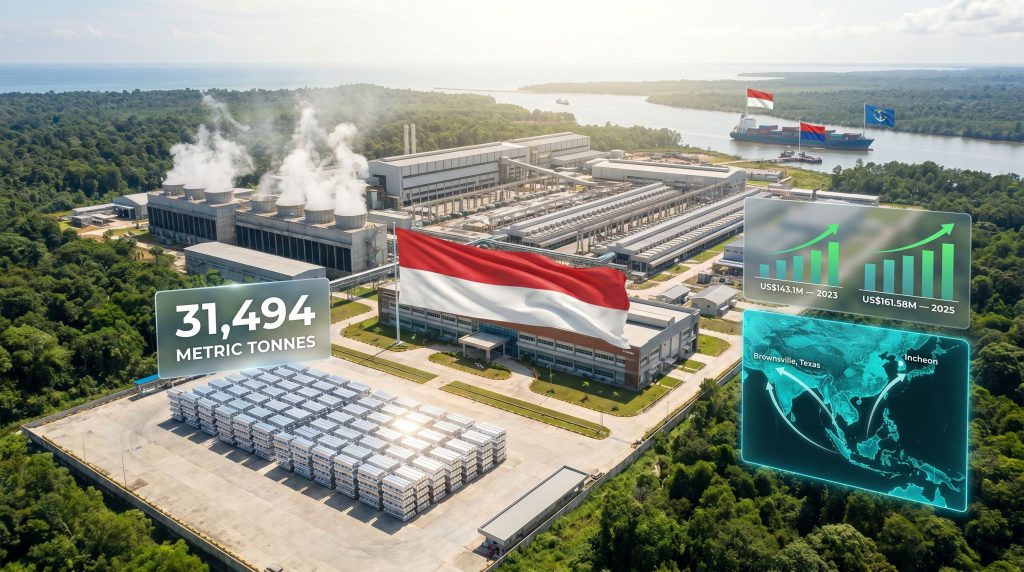
The scale of this shift is visible in the trade data. In 2023, Indonesia's unwrought aluminium exports to the US totalled just US$1.55 million, while aluminium bars, rods, and profiles accounted for US$85.62 million. By 2025, Indonesia's total aluminium exports to the US had grown to US$161.58 million, up from US$143.1 million in 2023. The June 2026 shipment of 31,494 metric tonnes of primary aluminium to the US from PT KAI represents a step-change from processed products toward the highest-value category: primary unwrought metal.
This transition from semi-fabricated aluminium products to primary ingot exports reflects the maturation of Indonesia's downstream processing ecosystem and signals that the country is now competing at the top tier of the global aluminium value chain.
The June 2026 Shipments: A Data-Driven Picture
Trade intelligence platform Export Genius documented both of Alamtri's inaugural export shipments in detail, providing a granular picture of the routes, buyers, and volumes involved.
| Shipment Detail | Data Point |
|---|---|
| Volume to the US (June 2026) | 31,494 metric tonnes |
| Volume to South Korea (June 2026) | 3,569 metric tonnes |
| US Buyer | Mercuria |
| South Korea Buyer | Vitol |
| US Destination Port | Brownsville, Texas |
| South Korea Destination Port | Incheon |
| Departure Date (US shipment) | June 10, 2026 |
| Departure Date (South Korea shipment) | June 29, 2026 |
The involvement of Mercuria and Vitol as counterparties carries significant signal value beyond the headline volumes. Both firms rank among the world's largest commodity trading houses by revenue and by physical throughput. Their participation in first-shipment transactions from a newly commissioned Indonesian smelter reflects institutional-grade due diligence on product quality, logistics reliability, and regulatory compliance.
Trading houses of this calibre do not typically absorb the reputational and operational risk of inaugural shipments unless they are simultaneously building frameworks for sustained future volume. However, the broader context of commodity trade volatility means that even these institutional players are carefully managing their exposure.
Why Brownsville, Texas? The Port Selection Logic
The choice of Brownsville as the US destination port is worth examining. Brownsville sits at the southernmost tip of Texas on the Mexican border, positioning it as a natural gateway not just for Gulf Coast industrial consumers but also for cross-border manufacturing supply chains extending into northern Mexico. Mexico's aluminium-intensive manufacturing sector, particularly automotive and aerospace, could represent a secondary demand pull for Indonesian metal entering via this route. The port selection may reflect deliberate positioning by Mercuria to serve a broader buyer network than purely domestic US consumers.
Two Indonesian Smelters, One Quarter, One US Market
The Alamtri shipment did not arrive in isolation. In March 2026, approximately 18,500 tonnes of primary aluminium were shipped from the Juwan project, an Indonesian smelter developed by Chinese firms Tsingshan and Xinfa, to the United States. Within a single quarter, two distinct large-scale Indonesian smelters had each made primary aluminium deliveries to US ports.
| Project | Developer(s) | US Shipment |
|---|---|---|
| PT Kalimantan Aluminium Industry | Alamtri Resources Indonesia | 31,494 mt (June 2026) |
| Juwan Project | Tsingshan and Xinfa | ~18,500 mt (March 2026) |
This pattern is not coincidental. It reflects the convergence of Indonesia's industrial policy maturation, record US aluminium premiums providing freight-economics justification, and Gulf supply disruption creating an urgent buyer pool. The fact that two separate smelters with different ownership structures and production timelines both targeted the US market in the same quarter suggests the commercial logic is compelling across multiple independent investment theses, not just for a single operator.
The next major ASX story will hit our subscribers first
South Korea: The Parallel Market Story
South Korea's inclusion in the Alamtri inaugural shipment adds an important dimension to the analysis. Like the US, South Korea has historically sourced a meaningful share of its primary aluminium from Gulf-based smelters, and it faces identical supply disruption pressures from the regional conflict involving Iran.
Vitol's purchase of the 3,569-tonne Incheon-bound cargo confirms that Northeast Asian buyers are experiencing the same urgency to diversify away from Gulf supply as their Western counterparts. South Korea's aluminium-intensive manufacturing base, which spans shipbuilding, automotive, electronics, and construction, represents a structurally large and price-sensitive demand pool. Furthermore, China industrial metals demand dynamics are also reshaping regional supply preferences, adding further impetus for buyers to secure Indonesian sources given shipping distance advantages compared to Middle Eastern or Canadian alternatives.
Tariff Architecture and Trade Policy Considerations
Any assessment of the long-term viability of Indonesia Alamtri aluminium exports to the US must engage with the tariff environment. US aluminium imports are subject to Section 232 national security tariffs, which were initially imposed in 2018 and have been modified through country-specific exemptions and quota arrangements in the years since.
Indonesia does not currently hold a blanket Section 232 exemption for aluminium, meaning Indonesian-origin primary metal faces tariff exposure that Canadian or certain other allied-nation suppliers do not. The degree to which this tariff burden is offset by the premium environment and by the relative cost competitiveness of Indonesian production is a live commercial and policy question.
Several factors bear watching:
- Whether rising Indonesian export volumes trigger formal trade discussions between Washington and Jakarta around bilateral frameworks
- How US buyers are structuring landed-cost models under current tariff conditions versus potential future arrangements
- Whether the broader US supply chain security agenda, which has driven preferential arrangements for other materials, extends to aluminium from friendly Southeast Asian producers
These are speculative scenarios rather than confirmed policy directions, but they represent the kind of second-order variables that institutional traders and long-horizon buyers will already be pricing into their sourcing strategies.
Aluminium's Smelter Economics: What Investors and Buyers Should Understand
For readers approaching this topic from an investment or industrial procurement angle, several technical and market dynamics are worth understanding more deeply.
The pot-line ramp challenge: Aluminium smelters use electrolytic reduction cells (pot-lines) that must be carefully managed during start-up to avoid cathode damage. Ramp-up to full capacity typically takes 12 to 18 months from first commissioning, meaning PT KAI's 2026 sales target of 350,000 tonnes against a 500,000-tpa design capacity implies roughly 70% utilisation, an aggressive but achievable ramp trajectory.
The premium market mechanics: US aluminium premiums (AUPc1) represent the surcharge paid above the London Metal Exchange (LME) base price for physical delivery in the US market. When premiums spike as dramatically as they did in June 2026, it shifts the freight-economics calculus for long-haul suppliers, making a Borneo-to-Texas shipment commercially viable even accounting for extended transit times and additional logistics costs.
Trading house involvement as a quality signal: When first-tier trading houses like Mercuria and Vitol purchase inaugural shipments from a new smelter, they are implicitly certifying product quality to downstream buyers. Their involvement provides a degree of quality assurance that benefits the Indonesian producer's market reputation. The broader context of aluminium sector investment globally also reinforces why institutional players are seeking new, reliable supply sources.
What 350,000 Tonnes in 2026 Actually Means
Alamtri's stated target of up to 350,000 tonnes of aluminium ingot sales across domestic and international markets in 2026 is worth contextualising against the broader Indonesian aluminium market. According to Alamtri's FY24 public presentation, the company has been building toward this export-ready position for several years.
Indonesia's domestic aluminium consumption has grown steadily, driven by construction, packaging, and transportation sectors, but it remains far below the production volumes that new smelting capacity will generate. This means export markets are not a secondary consideration for Alamtri but a primary commercial imperative. The US and South Korean shipments in June 2026 represent the earliest demonstration that the export infrastructure, buyer relationships, and logistics network are functional and scalable.
If the 350,000-tonne sales target is achieved in 2026, and the facility continues ramping toward its 500,000-tpa phase one capacity in 2027, Alamtri will have established itself as a credible, large-scale primary aluminium exporter within its first two years of commercial operation. That is a meaningful accomplishment in an industry where greenfield smelters often take considerably longer to reach stable, commercially competitive output.
Key Takeaways for Market Observers
- A new trade corridor is forming: The Indonesia-to-US primary aluminium route, backed by institutional trading houses, is transitioning from opportunistic to structural
- Indonesia's downstream policy is delivering: The 2023 bauxite export ban has produced operational, export-ready primary aluminium capacity within three years, a remarkably compressed industrial development timeline
- Energy economics underpin competitiveness: Kalimantan's hydroelectric power access provides a structural cost and carbon-footprint advantage that will matter increasingly to Western industrial buyers under evolving procurement standards
- Multiple operators, convergent logic: The parallel emergence of PT KAI and the Juwan project as US suppliers in the same quarter confirms that the commercial case for Indonesian aluminium exports is broadly replicable, not dependent on a single project or operator
- Tariff variables remain unresolved: Section 232 tariff exposure for Indonesian-origin aluminium is a material factor that buyers and investors should monitor as volumes scale and bilateral trade discussions evolve
Disclaimer: This article contains forward-looking statements and market projections based on publicly available data as of July 2026. Forecasts regarding production targets, trade volumes, and market dynamics involve inherent uncertainty and should not be construed as financial or investment advice. Readers should conduct independent due diligence before making any commercial or investment decisions based on information contained herein.
Want to Track the Next Major Commodity Shift Before the Broader Market Does?
The structural realignment of global aluminium trade routes illustrates precisely how quickly commodity supply chains — and the investment opportunities within them — can be redrawn. Discovery Alert's proprietary Discovery IQ model delivers real-time alerts on significant ASX mineral discoveries, transforming complex commodity data into actionable insights the moment they hit the exchange — explore historic discoveries and their returns to see what early positioning can mean, then begin your 14-day free trial at Discovery Alert to ensure you're never behind the market when the next major shift unfolds.