
July 16, 2026
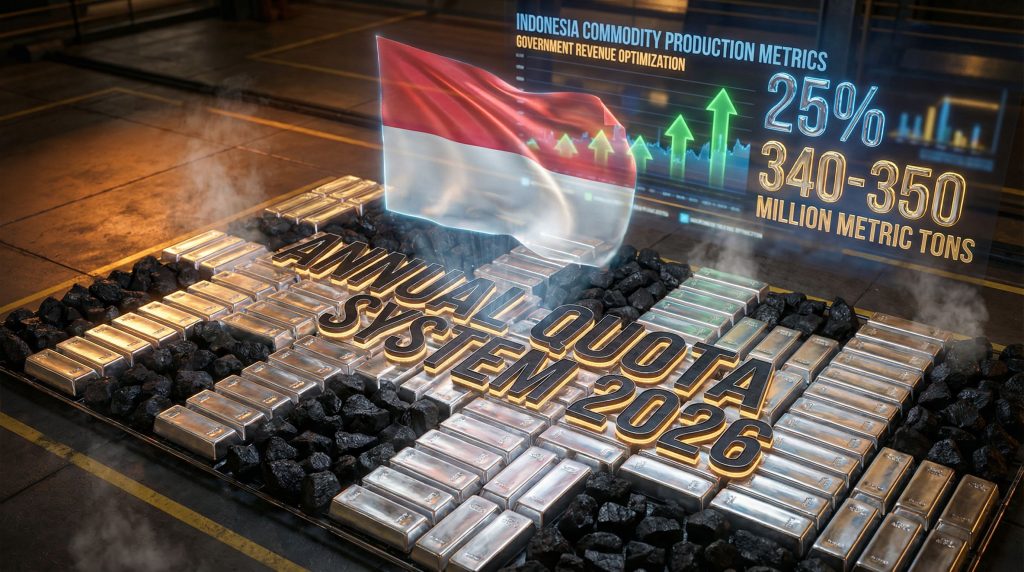
Indonesia's mining output quota policy represents a fundamental shift in how resource-rich nations manage commodity extraction and global supply chains. This transition from three-year production approvals to annual quota assessments creates unprecedented regulatory uncertainty while enabling governments to respond more dynamically to market conditions. Furthermore, this policy transformation demonstrates the growing importance of mining permitting insights in navigating evolving regulatory frameworks.
Understanding Indonesia's New Production Planning Framework
Indonesia has restructured its mining oversight system by transitioning from three-year production approvals to annual quota assessments, creating a more responsive but potentially volatile regulatory environment. This shift affects all mineral extraction operations within Indonesian territory, requiring companies to submit yearly work and budget plans known as RKAB (Rencana Kerja dan Anggaran Biaya) for government approval.
The new framework enables authorities to adjust production volumes annually based on commodity prices, domestic processing capacity, and government revenue objectives. Companies may operate at 25% of their proposed 2026 output levels during the first quarter while applications undergo review, according to Mining Weekly reporting from January 5, 2026.
Key implementation mechanics include:
- Annual RKAB submissions replacing multi-year approvals
- Quarterly production allowances during application processing
- Immediate suspension for operations without approved quotas
- Enhanced government discretion over production volumes
This regulatory architecture represents a significant departure from previous administrative practices, where three-year approvals provided operational certainty but limited government flexibility to respond to market conditions. Additionally, this approach mirrors developments in other jurisdictions, as seen in the evolving mining claims framework implemented across various regions.
When big ASX news breaks, our subscribers know first
Economic Drivers Behind Indonesia's Policy Transformation
Indonesia's shift toward annual mining quotas stems from multiple economic pressures and strategic objectives that became acute during the 2024-2025 commodity downturn. Mining Minister Bahlil Lahadalia explicitly stated the government's intention to reduce mining output quotas to support sluggish commodity prices, particularly in coal markets.
The policy change addresses several converging challenges:
Revenue optimization through dynamic quota management enables the government to adjust production levels based on global market conditions, potentially maximizing royalty collections and export duties during favorable price periods while supporting price recovery during market downturns.
Downstream processing prioritization aligns quota approvals with domestic smelting and refining capacity utilization. Deputy Mining Minister Yuliot Tanjung confirmed that nickel output quotas would be adjusted to meet demand from domestic smelters, indicating a deliberate strategy to favor value-added processing over raw material exports.
Market perception management allows authorities to address oversupply concerns more rapidly than under previous multi-year approval cycles. This responsiveness becomes particularly important in volatile commodity markets where perception often drives price movements independent of actual supply fundamentals.
The economic rationale reflects Indonesia's broader industrial policy objectives, emphasizing domestic value creation and strategic control over critical mineral supply chains essential for global energy transition technologies. This approach aligns with broader critical minerals strategy developments worldwide.
Sector-Specific Impact Assessment
Different mining sectors within Indonesia face varying degrees of disruption based on their strategic importance to government objectives and global market dynamics. The annual quota system creates distinct challenges across commodity categories, particularly affecting minerals crucial to the critical minerals energy transition.
Nickel Operations Face Maximum Scrutiny
Indonesia's nickel sector experiences the most intensive government oversight under the new framework. The suspension of Vale Indonesia's mining activities in early January 2026 due to unapproved RKAB status demonstrates the immediate operational risks companies face during the transition period.
Deputy Minister Yuliot Tanjung's statement that nickel quotas will align with domestic smelter demand signals prioritization of downstream integration over export volume maximization. This approach supports Indonesia's positioning as a battery supply chain hub while potentially constraining global nickel availability.
Coal Sector Balances Export Revenue and Price Support
Coal operations face quota reductions aimed at supporting international price recovery after sluggish market conditions through 2025. The government's explicit focus on coal price support through production management indicates recognition of coal's continued importance to Indonesian export revenues despite global energy transition trends.
Base Metals and Critical Minerals Under Enhanced Control
Copper, tin, and rare earth operations encounter heightened scrutiny as Indonesia seeks to maximize value-added processing before export. The annual review framework enables rapid adjustment of production levels based on downstream processing capacity and strategic mineral stockpiling objectives.
| Commodity | Government Priority | Market Impact |
|---|---|---|
| Nickel | Domestic smelter supply | High volatility potential |
| Coal | Price support through cuts | Export revenue optimization |
| Copper | Downstream processing | Processing capacity alignment |
| Tin | Value-added manufacturing | Strategic stockpiling |
Corporate Strategic Adaptation Requirements
Mining companies operating in Indonesia must fundamentally restructure their operational and investment planning to navigate the annual quota framework successfully. The policy shift creates new risk factors while potentially rewarding companies that align with government objectives, contributing to broader industry consolidation trends.
Enhanced compliance infrastructure becomes critical for securing favorable quota approvals. Companies must invest in government relations capabilities, environmental compliance systems, and social responsibility programs that demonstrate alignment with Indonesian development priorities.
Downstream processing investments emerge as a key differentiator for quota approval success. Operations that contribute to domestic value-added manufacturing likely receive preferential treatment compared to export-focused operations.
Operational flexibility enhancement enables companies to scale production rapidly based on annual quota allocations. This requires modular operational designs and flexible workforce management systems that can respond to quota variations.
Vale Indonesia's operational suspension illustrates the immediate consequences of inadequate preparation for the new regulatory framework. Companies lacking approved RKAB submissions face production halts with significant revenue implications.
The transition period demonstrates that regulatory compliance becomes as important as geological resources and operational efficiency for Indonesian mining success.
Global Supply Chain Restructuring Implications
Indonesia's mining output quota policy creates ripple effects across international commodity markets and supply chain management strategies. The increased regulatory uncertainty forces global consumers to reassess supply chain resilience and diversification strategies, as highlighted in Reuters reporting on the policy implications.
Immediate market responses include increased volatility in commodity futures markets as traders price in quota uncertainty. Nickel and coal futures experience heightened price swings as market participants attempt to anticipate Indonesian production decisions.
Supply security concerns drive major industrial consumers toward alternative supplier development and strategic stockpiling programs. Electric vehicle manufacturers particularly face supply chain risks given Indonesia's dominant position in nickel production for battery manufacturing.
Contract renegotiation pressures emerge as existing long-term supply agreements encounter potential force majeure claims related to quota-driven production constraints. This creates legal and commercial complexities for both Indonesian producers and international buyers.
The policy shift accelerates global supply chain diversification efforts, with consumers seeking non-Indonesian sources to reduce single-country concentration risks. This trend potentially benefits alternative producing regions while reducing Indonesia's long-term market influence.
Investment Portfolio Positioning Strategies
The annual quota framework creates distinct investment opportunities and risks that require sophisticated portfolio positioning strategies. Traditional mining investment models based on resource quality and operational efficiency must incorporate regulatory risk assessment and government relations capabilities.
Regulatory compliance capabilities become key investment criteria when evaluating Indonesian mining assets. Companies with strong environmental, social, and governance practices, established government relationships, and demonstrated commitment to downstream processing present lower regulatory risks.
Downstream processing investments offer potential returns through preferential quota treatment and value-added manufacturing margins. Indonesian smelter and refinery projects benefit from government policy support while accessing preferential raw material supplies.
Alternative supplier development presents opportunities in non-Indonesian mining operations as global consumers diversify supply chains. Projects in the Philippines, Papua New Guinea, and other nickel-producing regions may receive increased investment interest and premium valuations.
| Investment Category | Risk Level | Return Potential | Strategic Rationale |
|---|---|---|---|
| Indonesian Downstream Processing | Medium | High | Government policy alignment |
| Compliant Indonesian Mining | Medium | Medium | Quota preference potential |
| Alternative Suppliers | Low | Medium | Diversification premium |
| Technology Solutions | Low | Medium | Compliance enablement |
Risk mitigation strategies include geographic diversification, strategic partnerships with compliant local operators, and investment in technologies that enhance compliance capabilities. Portfolio construction should balance Indonesian exposure against alternative supplier investments to optimize risk-adjusted returns.
The next major ASX story will hit our subscribers first
Energy Transition Timeline Implications
Indonesia's mining policy shift occurs during a critical period for global energy transition technologies, particularly electric vehicle adoption and renewable energy deployment. The annual quota system introduces supply uncertainty for critical minerals essential to battery manufacturing and clean energy infrastructure.
Battery supply chain constraints may emerge if Indonesian nickel quotas fail to meet global electric vehicle production targets. The government's focus on domestic smelter demand could limit nickel availability for international battery manufacturers, potentially slowing EV adoption rates or increasing battery costs.
Processing capacity bottlenecks represent a key risk factor as Indonesia prioritizes domestic value-addition over raw material exports. Global battery manufacturers may face supply constraints if Indonesian processing capacity cannot scale to meet both domestic quotas and international demand.
Alternative technology acceleration becomes increasingly important as supply chain uncertainty drives investment in nickel-free battery chemistries and recycling technologies. Lithium iron phosphate (LFP) batteries and solid-state technologies gain strategic importance as risk mitigation tools.
The policy creates tension between Indonesia's sovereign resource management objectives and global energy transition acceleration requirements. This dynamic may influence international climate policy discussions and technology development priorities.
Strategic responses include:
- Enhanced battery recycling infrastructure investment
- Alternative chemistry research and development acceleration
- Supply chain diversification beyond Indonesian sources
- Strategic mineral stockpiling by major consuming nations
Navigating Resource Nationalism Trends
Indonesia's annual quota implementation reflects broader global trends toward resource nationalism as commodity-rich countries assert greater control over natural resource extraction and value creation. This policy evolution requires sophisticated understanding of sovereign risk management and government relations strategies.
The framework establishes new competitive dynamics where regulatory compliance, downstream integration capabilities, and alignment with government strategic objectives become as important as traditional mining fundamentals. Companies that successfully adapt to this environment through enhanced environmental stewardship, social responsibility programs, and processing investments position themselves for preferential treatment.
For global markets, this policy signals the need for supply chain resilience strategies that account for increasing government intervention in resource extraction decisions. The energy transition faces near-term headwinds from supply uncertainty, but long-term outcomes may include more balanced critical mineral supply chains less concentrated in single-country sources.
Successful navigation requires:
- Proactive government relations and compliance investment
- Strategic partnerships with compliant local operations
- Downstream processing capability development
- Geographic diversification of supply sources
- Enhanced environmental and social governance practices
The Indonesian experience provides valuable lessons for managing similar policy transitions in other resource-rich jurisdictions as sovereign control over critical minerals becomes increasingly important to national economic strategies. Consequently, understanding Indonesia's mining output quota policy becomes essential for stakeholders navigating this new regulatory landscape and its implications for global commodity markets.
Interested in Capitalising on Mining Policy Shifts?
Discovery Alert's proprietary Discovery IQ model delivers real-time alerts on significant ASX mineral discoveries, enabling investors to identify actionable opportunities in mining companies positioned to benefit from global supply chain disruptions and regulatory changes. Visit Discovery Alert's discoveries page to explore historic examples of exceptional returns from major mineral finds, then begin your 30-day free trial to secure your market advantage.