June 21, 2026
Understanding Indonesia's Strategic Position in Global Nickel Markets
The global battery supply chain faces a fundamental transformation as demand for electric vehicles and energy storage systems continues accelerating beyond traditional forecasting models. This transition has created unprecedented pressure on critical mineral supply chains, particularly for nickel, where processing capabilities and geological advantages determine which nations will control the future of clean energy infrastructure.
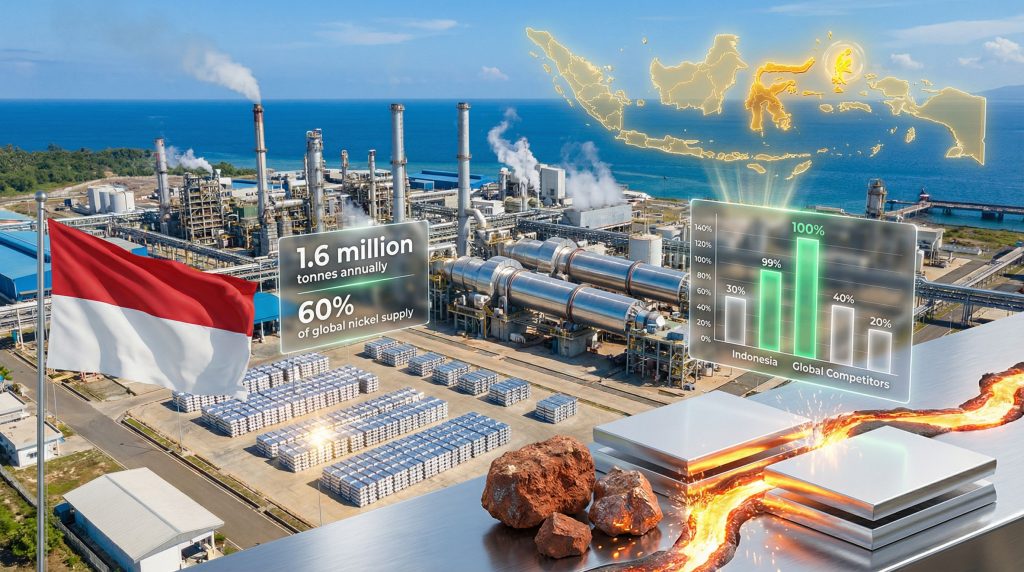
Indonesia has emerged as the dominant force in this critical supply chain, fundamentally reshaping how manufacturers approach nickel sourcing strategies. The country's nickel industries Indonesia operations now control approximately 60% of global production, creating both opportunities and vulnerabilities that extend far beyond traditional commodity markets.
The archipelago nation's strategic positioning stems from unique geological formations, aggressive policy implementation, and substantial foreign investment that has created the world's most integrated nickel-to-battery supply chain within a single geographic region. This concentration represents one of the most significant shifts in global resource economics since the establishment of Middle Eastern oil dominance in the 20th century.
When big ASX news breaks, our subscribers know first
What Makes Indonesian Nickel Operations Structurally Different from Global Competitors?
Geological Advantages and Reserve Distribution
Indonesian nickel deposits differ fundamentally from traditional sulfide operations found in Canada, Russia, or Australia. The country's lateritic nickel ores, formed through tropical weathering of ultramafic rocks over millions of years, create unique processing opportunities that have revolutionised global extraction economics.
These lateritic formations contain 1.6 billion tonnes of identified nickel resources, representing approximately 25% of known global reserves concentrated across three primary geological zones. Furthermore, these deposits showcase distinct characteristics that set them apart from magmatic nickel deposits found elsewhere globally.
| Region | Reserve Characteristics | Annual Production Capacity |
|---|---|---|
| Sulawesi Basin | Low-grade laterites with extensive surface deposits | 800,000+ tonnes nickel content |
| Halmahera Islands | High-grade saprolite layers with minimal overburden | 600,000+ tonnes nickel content |
| West Papua | Ultra-high grade deposits with complex environmental constraints | 200,000+ tonnes potential capacity |
The tropical weathering process that created these deposits results in ore bodies with nickel grades ranging from 1.2% to 2.5%, significantly higher than many global competitors operating sulfide deposits with grades below 1.0%.
Integrated Processing Model vs. Traditional Export Strategy
Indonesia's 2020 nickel ore export ban forced a complete restructuring of the global supply chain, creating the world's most vertically integrated nickel production system. This policy shift eliminated the traditional model where raw materials were exported for overseas processing, instead requiring domestic value addition.
The transformation has created 12 major smelting complexes with combined annual capacity exceeding 2 million tonnes of nickel content, representing a 400% increase in domestic processing capability since 2019. However, this shift has broader implications for mining industry trends worldwide.
How Do Major Production Sites Compare in Scale and Strategic Value?
Tier 1 Operations: Mega-Scale Industrial Complexes
Weda Bay Industrial Complex (North Maluku)
The Weda Bay operation represents the world's largest single nickel mining and processing facility, covering 57,000 hectares of integrated operations. The complex produces over 500,000 tonnes of nickel content annually through a combination of:
- 18 rotary kiln electric furnaces (RKEF) specifically designed for lateritic ore processing
- Integrated mine-to-smelter logistics reducing transportation costs by 65%
- Direct production of battery-grade nickel sulfate for cathode manufacturers
- Annual processing capacity of 30 million wet metric tonnes of ore
Morowali Industrial Park (Central Sulawesi)
This multi-company industrial zone houses 14 operational smelters representing a $12 billion investment in integrated processing infrastructure. The facility's strategic advantage lies in its diversified ownership structure, which includes major international partnerships with Nickel Industries' operations showcasing advanced processing capabilities.
- Tsingshan Holding Group controlling 40% of capacity
- PT Vale Indonesia operating 25% of facilities
- Multiple Chinese battery precursor manufacturers with dedicated processing lines
- Combined annual capacity exceeding 400,000 tonnes of nickel content
Tier 2 Operations: Specialised High-Grade Producers
Sorowako Complex (South Sulawesi)
Operating for over 50 years, this facility represents the most technologically advanced nickel processing operation in Southeast Asia. Key characteristics include:
- Hydrometallurgical processing technology producing Class I nickel for battery applications
- Annual refined nickel production of 65,000 tonnes
- Proven ore reserves extending operational life beyond 2050
- Strategic partnership with major automotive manufacturers for direct supply agreements
What Role Does Chinese Investment Play in Indonesia's Nickel Dominance?
Capital Flow Analysis and Strategic Partnerships
Chinese companies have invested over $25 billion in Indonesian nickel infrastructure since 2019, creating supply chain integration that extends from mining through battery production. This investment pattern reflects systematic strategic planning rather than opportunistic resource acquisition.
The approach taken by Chinese investors mirrors successful strategies employed by companies like those following the Zijin Mining strategy, focusing on vertical integration and long-term market positioning.
Major Investment Structures:
- Tsingshan Holding Group: Controls 75% of Indonesian stainless steel production capacity through 8 major facilities
- Huayou Cobalt: Operates integrated nickel-cobalt extraction producing 45,000 tonnes annually
- CATL and BYD: Direct investments in battery precursor facilities targeting European and North American markets
- CNGR Advanced Material: Produces 120,000 tonnes of cathode active materials annually
Technology Transfer and Operational Efficiency
Chinese investment has introduced processing technologies specifically optimised for Indonesian lateritic ores, including:
- Rotary kiln electric furnace (RKEF) technology achieving 85% nickel recovery rates
- Integrated nickel-cobalt extraction processes reducing waste streams by 40%
- Advanced metallurgical techniques producing battery-grade materials meeting automotive specifications
- Automated logistics systems reducing operational costs by 30% compared to traditional mining operations
How Do Environmental and Social Factors Impact Long-term Operational Sustainability?
Environmental Challenge Matrix
Nickel industries Indonesia operations face unprecedented environmental pressures that could fundamentally reshape industry viability. Current operations impact multiple ecological systems across the archipelago.
Deforestation Impact Assessment:
- Current mining concessions cover 920,000 hectares
- Two-thirds of concessions overlap with existing primary forest cover
- Annual deforestation rate: 18,000-22,000 hectares
- Total ecosystem displacement affecting 450 endemic species
Water Resource Management:
- Acid mine drainage risks affecting 12 major river systems
- Groundwater contamination documented in 6 of 8 major mining regions
- Competition with agricultural water needs affecting 230,000 hectares of rice paddies
- Processing operations requiring 15 million cubic meters of water annually
Regulatory Response and Policy Evolution
Recent government actions indicate fundamental shifts toward environmental protection that could constrain future expansion. Furthermore, these changes reflect broader global trends discussed in Indonesia's nickel policy overview:
- Revocation of four mining permits in Raja Ampat due to marine ecosystem damage
- Enhanced environmental monitoring requiring $50 million in additional compliance investments
- Proposed annual production caps of 2.2 million tonnes beginning in 2026
- New requirement for 30% reforestation of disturbed areas within 5 years
These regulatory changes could reduce planned expansion capacity by up to 25% through 2030.
What Are the Strategic Implications for Global Supply Chain Planning?
Concentration Risk Assessment
Indonesia's dominance creates fundamental supply chain vulnerabilities that extend beyond traditional commodity risk models. In addition, these risks are compounded by broader geopolitical tensions affecting global trade patterns, including US-China trade impacts on mineral supply chains.
Supply Security Benefits:
- Reduced logistics costs for Asian manufacturers by $200-400 per tonne
- Integrated processing eliminating 3-4 intermediate supply chain steps
- Economies of scale reducing production costs by 15-25% compared to dispersed operations
- Strategic stockpiling capabilities supporting 6 months of global battery production
Concentration Risks:
- Single-country dependency for 60% of global nickel supply
- Environmental policy changes potentially affecting 1.2 million tonnes of annual capacity
- Geopolitical tensions risking supply disruption for 80% of global battery manufacturers
- Infrastructure vulnerabilities including earthquake risks affecting 70% of processing facilities
Alternative Sourcing Strategy Development
Companies are developing sophisticated multi-sourcing strategies balancing Indonesian advantages with supply chain resilience. For instance, projects like the Tamarack nickel-copper project represent efforts to diversify supply sources.
Emerging Alternative Regions:
| Location | Development Status | Potential Annual Capacity | Strategic Advantages |
|---|---|---|---|
| Philippines | Advanced exploration | 300,000 tonnes | Similar geology, lower political risk |
| New Caledonia | Operational expansion | 150,000 tonnes | Established infrastructure, French stability |
| Australia | Technology development | 200,000 tonnes | Sulfide deposits, advanced processing |
| Madagascar | Early development | 100,000 tonnes | Lateritic deposits, favourable policies |
The next major ASX story will hit our subscribers first
How Will Production Capacity Evolution Shape Market Dynamics Through 2030?
Expansion Pipeline Analysis
Current confirmed projects indicate continued Indonesian dominance through the decade, with $18 billion in committed investments supporting capacity expansion:
Confirmed Capacity Additions (2026-2028):
- Additional 450,000 tonnes annual capacity from existing operations
- New integrated facilities targeting 200,000 tonnes cathode active material production
- Enhanced processing efficiency reducing energy consumption by 20%
- Advanced waste management systems improving environmental compliance
Market Balance Scenarios
Scenario 1: Continued Rapid Growth
- Indonesian production reaches 2.8 million tonnes by 2030
- Global market share increases to 72%
- Nickel industries Indonesia operations maintain cost leadership through technological advancement
- Non-Indonesian operations face continued pressure with 15% capacity reduction
Scenario 2: Environmental Constraint Implementation
- Production growth limited to 2.2 million tonnes annually
- Enhanced environmental standards increase operational costs by $1,200 per tonne
- Market rebalancing toward alternative sources supporting $22,000 per tonne pricing
- Accelerated development of recycling technologies reducing primary nickel demand by 20%
Strategic Investment Considerations for Market Participants
For Mining Companies and Investors
Nickel industries Indonesia operations require specialised evaluation frameworks addressing unique risk factors:
Operational Due Diligence Focus Areas:
- Environmental compliance costs potentially reaching $150 million per major facility
- Infrastructure resilience against seismic and climate risks affecting 85% of operations
- Technology adaptation requirements for lateritic ore processing optimisation
- Social licence maintenance in communities affecting 340,000 people across mining regions
Financial Performance Metrics:
- Operating margins currently ranging from 25-35% at current nickel prices
- Capital intensity requiring $4-6 billion investment per 100,000 tonne annual capacity facility
- Payback periods of 6-8 years under current market conditions
- Environmental compliance costs representing 8-12% of total operational expenses
For End-User Industries
Battery manufacturers and automotive companies must develop sophisticated sourcing strategies balancing multiple competing priorities:
Supply Chain Optimisation Priorities:
- Direct partnership development with Indonesian producers reducing supply chain intermediaries
- Alternative source cultivation targeting 30-40% non-Indonesian supply by 2030
- Technology investment in nickel-efficient battery chemistries reducing consumption by 25%
- Recycling infrastructure development supporting closed-loop supply chains
Strategic Sourcing Frameworks:
- Long-term contracts securing 60-70% of requirements at fixed pricing
- Diversified supplier networks across 4-6 geographic regions
- Strategic inventory management maintaining 90-120 days of critical material stocks
- Technology partnerships supporting vertical integration into processing operations
Regulatory Framework Evolution and Policy Implications
Indonesian Government Strategy
The Indonesian government has implemented comprehensive policies designed to maximise domestic value addition while maintaining global market leadership:
Policy Implementation Timeline:
- 2020: Complete nickel ore export ban implementation
- 2022: Enhanced environmental monitoring requirements
- 2024: Introduction of production quotas and environmental performance standards
- 2026: Proposed implementation of carbon pricing for smelting operations
Revenue Optimisation Measures:
- Increased royalty rates from 2% to 5% for high-grade nickel operations
- Value-added processing requirements mandating domestic refining
- Export taxes on intermediate products encouraging final product manufacturing
- Infrastructure development funds supporting industrial zone expansion
International Trade Implications
Indonesia's nickel policies have created significant tensions within global trade frameworks:
World Trade Organization Challenges:
- European Union complaints regarding export restrictions affecting stainless steel manufacturers
- United States concerns about supply chain security for defence applications
- Chinese support for Indonesian policies facilitating bilateral investment agreements
- ASEAN coordination on regional supply chain integration policies
Consequently, these trade tensions have implications extending beyond nickel markets, affecting broader industrial relationships and strategic partnerships globally.
Disclaimer: This analysis is for educational purposes only and does not constitute investment advice. Nickel mining investments involve substantial risks including commodity price volatility, environmental liabilities, regulatory changes, and operational hazards. Past performance does not guarantee future results, and investors should conduct thorough due diligence and consult qualified professionals before making investment decisions. The information presented reflects current market conditions and policies, which may change significantly affecting investment outcomes.
Looking to Capitalise on Strategic Mineral Supply Chains?
Discovery Alert's proprietary Discovery IQ model delivers real-time alerts on significant ASX mineral discoveries, helping investors identify actionable opportunities in critical battery minerals and strategic commodities ahead of the broader market. Begin your 14-day free trial today to secure your market-leading advantage in the rapidly evolving global supply chain landscape.