June 9, 2026
When Trade Routes Become Chokepoints: What Indonesia's Nickel Crisis Reveals About Battery Metal Fragility
The global energy transition has created a widely overlooked paradox: the more aggressively the world pursues battery-powered transportation, the more concentrated and fragile the supply chains underpinning that transition become. Nowhere is this paradox more visible right now than in Indonesia's nickel sector, where a convergence of geopolitical disruption, regulatory tightening, and chemical input scarcity is simultaneously threatening the world's most dominant nickel-producing nation at its operational core.
The sulfur squeeze in Indonesian nickel sector is not a single crisis. It is the collision of three independent forces arriving at the same time, amplifying each other in ways that few market participants were positioned to anticipate.
When big ASX news breaks, our subscribers know first
Why HPAL Processing Is the Epicenter of Indonesia's Supply Problem
To understand why sulfur has become such a critical flashpoint, it helps to first understand what high-pressure acid leaching (HPAL) actually does and why Indonesia has invested so heavily in it.
HPAL is a hydrometallurgical processing method specifically designed to extract nickel and cobalt from laterite ores, which are the low-grade, near-surface deposits that dominate Indonesia's geology. Unlike sulphide ores found in places like Canada or Australia, laterite deposits cannot be economically processed using conventional smelting methods at scale. HPAL fills this gap by using sulfuric acid under extreme heat and pressure to chemically dissolve the target metals from the host rock.
The output is mixed hydroxide precipitate, or MHP, which serves as a battery-grade intermediate product that flows directly into cathode precursor manufacturing for the electric vehicle industry. This pathway is central to Indonesia's ambition to move up the battery raw materials supply chain value curve.
The HPAL process operates through four sequential stages:
- Elemental sulfur is imported and burned on-site to produce sulfuric acid
- The sulfuric acid is injected into pressurised autoclave reactors at temperatures exceeding 250 degrees Celsius to dissolve nickel and cobalt from laterite ore slurry
- The metal-rich solution is neutralised and processed to precipitate MHP
- MHP is sold to downstream refiners who convert it into nickel sulfate for battery cell manufacturers
Each stage is chemically dependent on the one before it. Without adequate elemental sulfur supply, the entire chain collapses from the first step. This is not a production optimisation challenge. It is a physical constraint with a hard operational boundary.
Indonesia's HPAL sector produced approximately 450,000 metric tons of nickel in 2025, representing more than 10% of global output. Sulfur currently accounts for between 30 and 35% of total HPAL operating costs, a share that has risen from around 25% before the current disruption as spot prices surged. The country sources between 75 and 80% of its sulfur imports from the Middle East, a geographic concentration that has transformed a manageable supply chain dependency into a systemic vulnerability.
The Strait of Hormuz Factor: How a Geopolitical Shock Became a Battery Metal Crisis
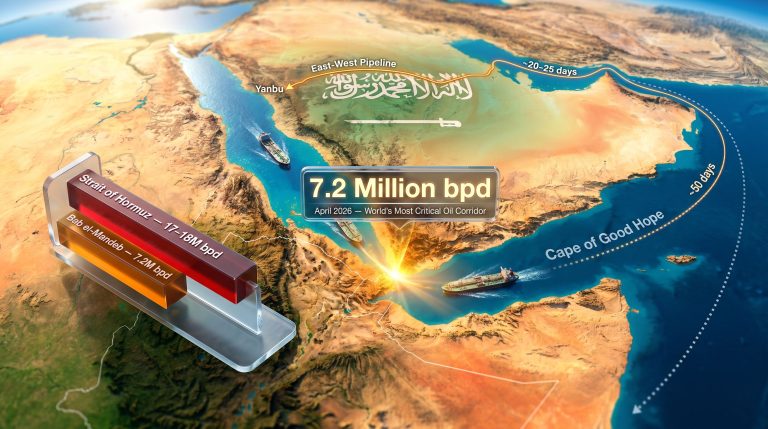
The ongoing US-Israeli conflict with Iran has effectively curtailed commercial shipping through the Strait of Hormuz. The Middle East accounts for approximately 25% of global sulfur supply, making it the single largest regional source of this industrial chemical. For Indonesia, which routes the vast majority of its sulfur procurement through Gulf suppliers, the disruption has been acute and immediate.
The scale of Indonesia's exposure compared to the broader market can be seen clearly when examining the supply dependency gap:
| Supply Metric | Pre-Disruption | Post-Disruption (2026) |
|---|---|---|
| Middle East share of Indonesia's sulfur imports | 75–80% | Severely constrained |
| Middle East share of global sulfur supply | ~25% | Significantly reduced |
| Typical sulfur inventory at HPAL plants | 60–90 days | 30–60 days |
| Buffer at most exposed plants | Adequate | 1–2 months |
The asymmetry here is important. The Middle East represents roughly a quarter of global supply, but it represents three-quarters of Indonesia's supply. This means that even a partial restoration of Middle Eastern sulfur flows would leave Indonesia far more exposed than global aggregate statistics would suggest.
Substitution from alternative sources, including Canada, Kazakhstan, and Russia, faces compounding barriers. Long-term contract structures with Middle Eastern producers create switching costs and logistical inertia. Non-Gulf suppliers operate under different freight economics and transit timelines. Furthermore, spot market procurement from alternative origins introduces both cost volatility and delivery uncertainty that HPAL operations, which require continuous feedstock supply to maintain pressure vessel operations, cannot easily absorb. As reported by Kitco News, Indonesian nickel makers have already begun trimming battery-feed output as the sulphur squeeze bites.
The Price Escalation That Changed the Math on Indonesian Nickel
The speed and severity of sulfur price increases since the Strait of Hormuz closure has been remarkable by any commodity market measure.
| Price Benchmark | Pre-Disruption Baseline | Crisis Level (2026) |
|---|---|---|
| Spot sulfur delivered to Indonesia | ~$500/metric ton | $600–$1,000+/metric ton |
| FOB Middle East contract price (Feb 5, 2026) | ~$273/metric ton | Baseline reference |
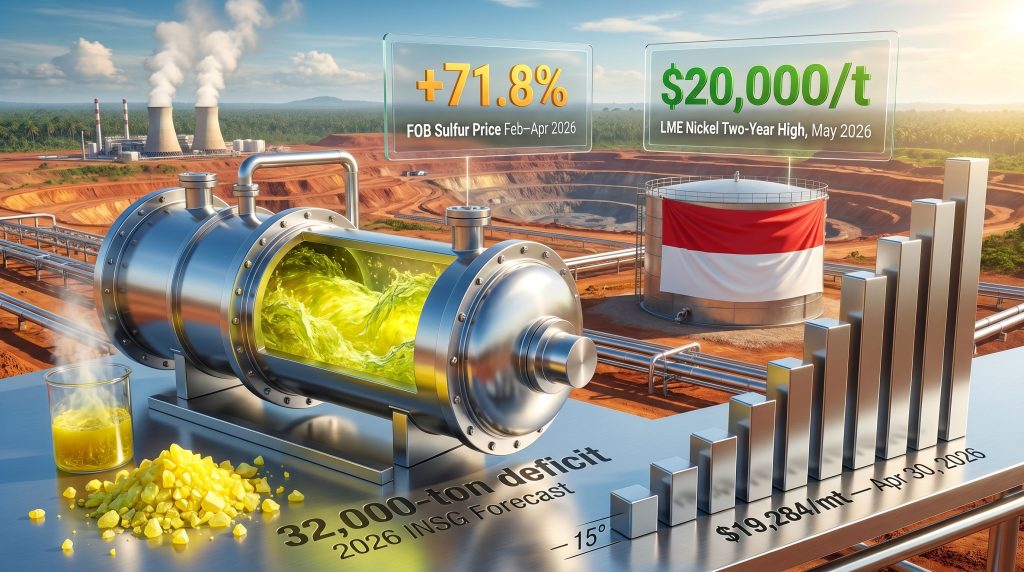
| FOB Middle East contract price (Apr 30, 2026) | $469/metric ton | +71.8% increase |
| MHP production cost increase (estimated) | Nil | +$3,000–$4,000/metric ton |
| HPAL break-even nickel price (Macquarie estimate) | Below $15,000/metric ton | ~$18,000/metric ton |
The cost transmission mechanism is direct and powerful. Sulfur price increases flow immediately into sulfuric acid production costs, which in turn inflate per-tonne HPAL operating costs, which push MHP break-even nickel prices higher. When HPAL break-even costs rise to approximately $18,000 per metric ton as Macquarie Bank estimates, operators whose nickel price realisations fall below this threshold face a binary choice: run at a loss or curtail production.
The differentiation between operator types matters significantly in this environment. Integrated producers with higher nickel price realisations and diversified cost structures have greater capacity to absorb the shock. However, independent HPAL operators with unhedged sulfur exposure face the most acute margin compression and have moved most quickly to implement production cuts.
"The break-even threshold for HPAL producers has risen to levels that make a substantial portion of Indonesian nickel production economically questionable at any nickel price below $18,000 per metric ton, with sulfur and ore pricing pressures both contributing to this deterioration simultaneously."
Production Already Falling: The Operational Evidence
The financial logic of curtailment has translated rapidly into real-world output reductions. Indonesian nickel processors have trimmed battery-feed output by at least 10% since March 2026, with the most significant individual action coming from Zhejiang Huayou Cobalt, which has halted approximately half of its operating HPAL capacity in Indonesia.
French miner Eramet has placed its Weda Bay HPAL operation into care and maintenance, removing another tranche of production from the market. The cumulative impact of these individual decisions is a structural contraction in Indonesian battery-grade nickel output at a scale that has not been seen since the sector's rapid construction phase began several years ago.
The inventory countdown at remaining operating facilities creates a hard timeline for further decision-making:
- Nickel Industries has reported sulfur inventory levels expected to sustain operations through the end of September 2026
- Vale Indonesia has indicated adequate near-term supplies with an optimistic short-run outlook
- Smaller, less capitalised operators face the most immediate risk of forced shutdown as inventory buffers deplete below minimum operational thresholds
- Planned new capacity additions of approximately 100,000 metric tons, cited by Macquarie Bank as expected to come online in 2026, are now broadly considered unlikely to proceed on schedule
The planned capacity additions represent a particularly significant loss for market balance projections. These expansions had been incorporated into multiple supply forecasts as a source of continued Indonesian output growth. Consequently, their deferral removes a significant volume of expected production before a single tonne has been produced.
Indonesia's Regulatory Layer: The Second Jaw of the Vice
The sulfur crisis has compounded an already deteriorating policy environment for Indonesian nickel producers. Jakarta has implemented two significant regulatory changes in 2026 that are independently material and collectively severe. The Indonesia nickel challenges facing operators in 2026 are therefore both chemical and political in nature.
The 2026 nickel ore mining quota has been set at between 260 and 270 million wet metric tons, compared to the 379 million wet metric ton quota in 2025 and the Indonesian Nickel Miners Association's estimate of 340 to 350 million tons as the minimum required to sustain processing operations. The gap between policy allocation and operational necessity represents a feedstock shortfall that would constrain output even without any sulfur disruption.
Simultaneously, a revised government ore pricing formula has pushed processing costs for HPAL operators up by more than $3,000 per metric ton. When combined with sulfur cost escalation, this dual squeeze has raised break-even economics to levels that render a significant portion of existing capacity marginal or unviable at current nickel prices.
Chinese operators, which dominate Indonesia's HPAL processing landscape through entities including Huayou Cobalt, Lygend Resources, and Tsingshan Group, have formally lodged complaints with the Indonesian government. These companies have warned that further foreign investment in Indonesian nickel processing capacity is at risk if quota allocations and ore pricing formulas are not revised. The tension between Jakarta's resource nationalism objectives and its dependence on Chinese capital and operational expertise creates an unresolved structural conflict with no straightforward political resolution.
The mining quotas are subject to mid-year review, creating a policy uncertainty window that could theoretically result in upward revision under industry pressure. However, the sulfur supply constraint operates entirely outside Jakarta's policy jurisdiction. As Reuters columnist Andy Home observed in a May 2026 analysis, the Indonesian government has no control over global sulfur availability, which is emerging as the single most consequential threat to the world's dominant nickel producer.
The next major ASX story will hit our subscribers first
The Market Response: How LME Nickel Has Repriced the Crisis
Financial markets began responding to Indonesia's supply outlook deterioration before the sulfur squeeze emerged as a primary factor. LME three-month nickel broke above its previous ceiling of $16,000 per metric ton in December 2025 as market attention first focused on the planned mining quota reductions.
The subsequent layering of the sulfur disruption accelerated the repricing. By May 2026, LME nickel had reached a two-year high of $20,000 per metric ton, representing a 14.5% year-to-date gain from the January 1, 2026 opening level. The LME cash price on April 30, 2026 settled at $19,284.04 per metric ton, compared to $15,171.13 per metric ton recorded in 2025. The nickel price momentum observed throughout early 2026 has consequently reshaped investment positioning across the sector.
Investment fund positioning reflects a conviction trade on Indonesian supply contraction:
| Positioning Metric | Current Level (May 2026) |
|---|---|
| Collective long position | 35,750 contracts |
| Equivalent tonnage | ~215,000 metric tons |
| Comparison to January 2026 peak | Below peak but elevated |
| Comparison to 2022 levels | Above any level recorded since 2022 |
The speculative long position represents a concentrated bet that Indonesia, which accounts for approximately 60% of global nickel supply, will experience a structural reduction in output rather than a temporary policy adjustment. The distinction matters for trade sizing and risk management.
"The nickel long trade has evolved from a policy speculation, where mid-year quota revisions could unwind the thesis, into a geophysical supply trade, where the underlying constraint lies entirely outside the control of any single government."
This distinction carries meaningful risk implications. A policy-driven supply restriction can be reversed through political negotiation, commercial pressure, or administrative revision. In contrast, a sulfur supply chain disruption driven by military closure of a major shipping corridor is not amenable to the same remediation pathways. The asymmetric reversibility of these two constraints is central to how investors should evaluate position sizing and exit strategies.
The INSG Forecast Reversal: From Surplus to Deficit in One Quarter
The International Nickel Study Group's April 2026 forecast revision represents one of the most dramatic single-cycle adjustments in recent commodity market history. In October 2025, the INSG had projected a 261,000-ton surplus for 2026. By April 2026, that forecast had been revised to a 32,000-ton deficit, a swing of nearly 315,000 metric tons within a single forecasting period.
| Market Variable | October 2025 Forecast | April 2026 Revised Forecast |
|---|---|---|
| Global demand growth (2026) | +6.2% | +4.2% |
| Global production change (2026) | Growth expected | Contraction of 4.3% |
| Indonesian output trajectory | Continued expansion | Sharp slowdown or contraction |
| Market balance (2026) | 261,000-ton surplus | 32,000-ton deficit |
| Comparison to 2025 actual surplus | vs. 283,000-ton surplus | Swing of 315,000+ metric tons |
Critically, the INSG's April 2026 forecast was finalised and released on April 22, 2026, before the full operational impact of the sulfur squeeze in Indonesian nickel sector had been incorporated into industry modelling. The Strait of Hormuz disruption had not been expected to persist at the severity observed. This creates a meaningful possibility that the actual 2026 deficit could be materially larger than the 32,000-ton projection if HPAL curtailments deepen through the second half of the year and planned capacity additions remain suspended.
The 2025 surplus of 283,000 metric tons had itself been the product of Indonesia's explosive production growth, which flooded the global market and depressed nickel prices through 2024 and into 2025. The rapidity with which that surplus has been transformed into a projected deficit illustrates both the concentration of global nickel supply in Indonesian hands and the fragility of single-country-dependent commodity markets when multiple adverse factors converge.
Ripple Effects: Beyond Nickel to Adjacent Markets
The sulfur squeeze in Indonesian nickel sector is not self-contained. The same sulfuric acid supply constraints that are curtailing Indonesian HPAL operations are transmitting cost pressure across multiple adjacent industrial processes. As Mining.com reports, the record-setting sulphur rally is simultaneously squeezing both Indonesian nickel makers and African copper miners.
- African copper producers that rely on sulfuric acid for heap leach and solvent extraction operations face elevated input costs as sulfur price increases flow directly into acid procurement budgets
- Stainless steel manufacturers face feedstock cost uncertainty as nickel supply tightens and uncertainty over Indonesian output persists
- EV battery cathode producers are confronting potential MHP availability constraints that could bottleneck cathode precursor production if Indonesian curtailments deepen
- HPAL project developers globally are reassessing expansion economics as sustained elevated sulfur costs alter the fundamental financial case for new capacity investments
The broader structural lesson from Indonesia's crisis extends beyond nickel. It illustrates the assumption embedded in most commodity supply chain models that chemical inputs will be reliably available from established trade routes at prices approximating historical averages. The Strait of Hormuz disruption has demonstrated that geographic concentration of critical chemical supply, compounded by long-term contract dependency on a single regional source, represents a systemic risk rather than an operational inconvenience.
Furthermore, industry discussions are now accelerating around three potential mitigation pathways: strategic sulfur stockpiling beyond the current 60 to 90 day operational buffer; diversification of procurement across non-Gulf suppliers including Canada, Kazakhstan, and Russia; and the longer-term development of on-site sulfuric acid recycling and recovery technologies that could reduce gross import dependency. For those tracking the battery metals investment landscape, these structural shifts carry significant long-term implications.
Three Scenarios for the Second Half of 2026
The trajectory of Indonesian nickel production over the remainder of 2026 hinges on developments across two independent dimensions: the geopolitical status of Strait of Hormuz shipping access, and Jakarta's policy posture on mining quotas and ore pricing.
Scenario One: Partial Recovery (Base Case)
Strait of Hormuz access partially restores, allowing some resumption of Middle Eastern sulfur flows. Indonesian operators secure alternative supply at elevated but manageable cost premiums. HPAL production stabilises at 10 to 15% below pre-crisis run rates. LME nickel consolidates in the $17,000 to $19,000 per metric ton range.
Scenario Two: Deepening Squeeze (Bear Case for Supply)
The Hormuz disruption persists through the third and fourth quarters of 2026. Sulfur inventories at vulnerable plants fall to critical levels, triggering additional shutdowns. Indonesian output contracts by 15 to 20% year-on-year. LME nickel tests $22,000 to $25,000 per metric ton. The global nickel deficit widens materially beyond the INSG's 32,000-ton projection.
Scenario Three: Policy-Driven Reversal (Upside Risk for Supply)
Jakarta revises mining quotas upward at mid-year review under sustained Chinese industry pressure. Sulfur supply partially restores through alternative routing. A surplus re-emerges in the second half, unwinding speculative long positions. LME nickel retreats toward the $15,000 to $16,000 range. In relation to the broader Indonesian nickel market, this scenario would represent a significant reversal of the current supply narrative.
"Investors positioned long on nickel face asymmetric scenario analysis: the base and bear cases both support the trade thesis, while only the policy reversal scenario presents meaningful downside. The critical variable distinguishing scenario three from the others is whether Jakarta moves quickly enough on quotas to offset the sulfur constraint, which remains entirely outside government control."
Quick Reference: Key Data Points at a Glance
| Metric | Value |
|---|---|
| Indonesia's share of global nickel production | ~60% |
| HPAL nickel output (2025) | 450,000 metric tons |
| Middle East share of Indonesia's sulfur imports | 75–80% |
| Sulfur's share of HPAL operating costs | 30–35% |
| FOB sulfur price increase (Feb to Apr 2026) | +71.8% |
| MHP production cost increase (estimated) | +$3,000–$4,000/metric ton |
| HPAL break-even nickel price (Macquarie estimate) | ~$18,000/metric ton |
| LME nickel YTD price increase (to May 2026) | +14.5% |
| LME nickel two-year high (May 2026) | $20,000/metric ton |
| INSG 2026 market balance revision | From 261,000-ton surplus to 32,000-ton deficit |
| Planned new HPAL capacity now at risk | ~100,000 metric tons |
Disclaimer: This article is for informational purposes only and does not constitute financial advice or a recommendation to buy or sell any securities or commodity positions. All forecasts, price projections, and scenario analyses referenced herein involve inherent uncertainty and may not eventuate. Readers should conduct their own independent research and seek professional financial advice before making any investment decisions. Market conditions in commodity sectors can change rapidly and materially from the circumstances described.
Want to Capitalise on the Next Major Battery Metal Discovery Before the Broader Market Catches On?
While Indonesia's nickel supply crisis highlights the fragility embedded across battery metal supply chains, the most significant investment opportunities often emerge from new discoveries rather than established producers under stress — and Discovery Alert's proprietary Discovery IQ model scans ASX announcements in real time, delivering instant alerts on significant mineral discoveries directly to subscribers. Explore historic examples of major discovery returns and begin a 14-day free trial to position ahead of the next major battery metals find.