
June 15, 2026
When Government Data Becomes the Bottleneck: Indonesia's Nickel Ore Pricing Under Pressure
Commodity markets are built on the assumption that price discovery mechanisms function reliably and consistently. In most cases, they do. However, in markets where pricing authority is concentrated within a single government publication cycle, even a brief administrative interruption can send ripple effects through the entire trading ecosystem. Indonesia's domestic nickel ore market is precisely such a system, and the events of June 15, 2026 exposed a structural vulnerability that deserves far closer attention from traders, smelters, and supply chain strategists than it typically receives.
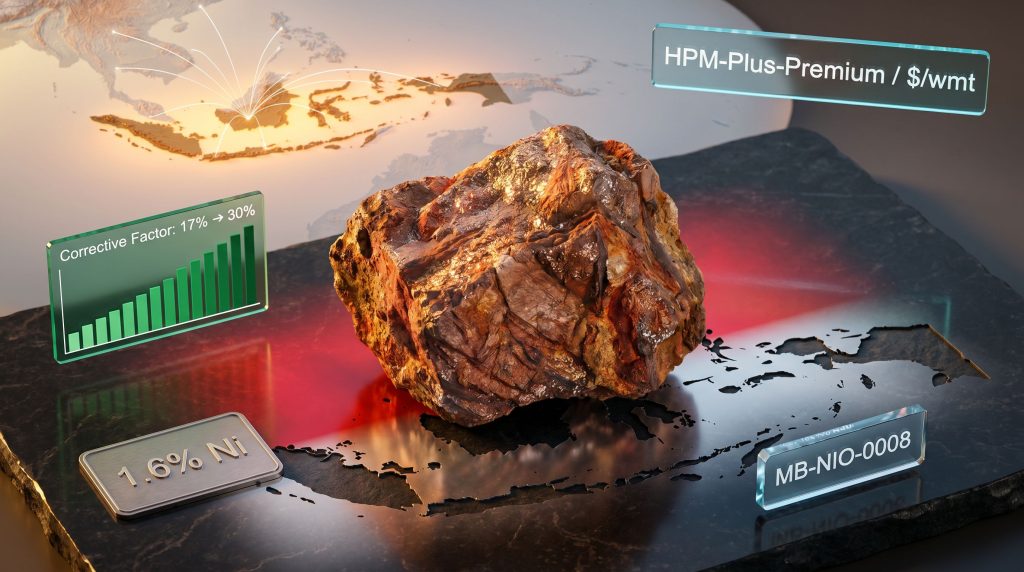
The delayed publication of the MB-NIO-0008 assessment, covering Indonesian laterite ore 1.6% nickel content delayed publication, was not caused by market failure or a shortage of trading activity. It was caused by the Indonesian government's mineral reference price portal entering maintenance mode without any specified restoration timeline, cutting off the foundational data input that underpins the entire domestic pricing framework. Understanding why this matters requires unpacking how Indonesia's nickel ore pricing architecture actually works, and why the April 2026 formula overhaul made the system simultaneously more sophisticated and more sensitive to data gaps.
When big ASX news breaks, our subscribers know first
Understanding Indonesia's Government-Anchored Nickel Ore Pricing Framework
Indonesia's domestic nickel ore market does not operate like the London Metal Exchange, where prices emerge continuously from competitive trading. Instead, pricing is structured around the Harga Mineral Acuan (HMA), a government-set mineral reference price published by the Ministry of Energy and Mineral Resources on the 1st and 15th of each month. This bi-monthly cadence creates a predictable but rigid pricing rhythm that the entire domestic market synchronises around.
From the HMA flows the Harga Patokan Mineral (HPM), a calculated benchmark derived from the raw government reference price using a prescribed formula. The HPM then serves as the base for actual domestic ore transactions, with buyers and sellers negotiating a market premium above the HPM floor. This structure, known as the HPM-plus-premium framework, means that final transacted prices reflect both official government valuations and prevailing market conditions simultaneously.
The table below summarises how each component of the pricing chain connects:
| Pricing Component | Role in the System | Publication Frequency |
|---|---|---|
| HMA (Harga Mineral Acuan) | Government-set mineral reference floor price | Bi-monthly (1st and 15th) |
| HPM (Harga Patokan Mineral) | Calculated benchmark formula derived from HMA | Derived from each HMA release |
| HPM-Plus-Premium | Final negotiated transaction price | Continuous market negotiation |
| Outright Price ($/wmt) | Normalised figure for third-party assessments | Published by price reporting agencies |
For price reporting agencies operating in this framework, the HMA is not optional context. It is the essential input without which a compliant, methodology-consistent assessment cannot be finalised. When the government portal hosting the HMA went into maintenance on June 15, 2026, with no alternative access channel and no published restoration schedule, the chain was broken at its source. Furthermore, Indonesian nickel price trends suggest this type of data disruption can have lasting commercial consequences well beyond the immediate delay.
What Is MB-NIO-0008 and Why Does 1.6% Nickel Content Define a Market Tier?
The Geological Logic Behind the Grade Threshold
Indonesia's laterite nickel deposits are the product of millions of years of intense tropical weathering acting on ultramafic bedrock. This process creates a vertically stratified deposit profile with distinct mineralogical layers, each carrying different nickel concentrations and processing characteristics.
- Limonite layer (typically 0.8% to 1.3% Ni): Iron-rich, dominated by goethite mineralogy, lower magnesium content, more suitable for hydrometallurgical processing via high-pressure acid leach (HPAL) technology
- Saprolite layer (typically 1.4% to 2.0%+ Ni): Magnesium-rich, dominated by serpentine-group minerals, better suited to pyrometallurgical processing in rotary kiln electric furnaces (RKEF) for nickel pig iron (NPI) production
- Transition zone (approximately 1.3% to 1.6% Ni): The commercially critical boundary where processing route decisions are made and grade premiums begin to accelerate
The 1.6% nickel content threshold that defines MB-NIO-0008 sits within the lower saprolite zone, representing the minimum grade at which conventional RKEF processing into nickel pig iron becomes economically attractive under most operating conditions. Ores above this threshold tend to produce better metallurgical recoveries, generate lower slag volumes, and exhibit reduced levels of problematic impurities such as chromium and aluminium that accelerate refractory wear in electric furnaces.
This is why the 1.6% grade is not an arbitrary cutoff. It reflects the intersection of geological reality and processing economics that Indonesian smelters have collectively calibrated their purchasing decisions around. In addition, understanding the mineralogical characteristics of nickel laterite deposits across Sulawesi Island provides important context for how these grade thresholds were established in practice.
How the HPM-Plus-Premium Framework Values This Ore
For saprolite ore at 1.6% nickel, pricing in Indonesia's domestic market centres on the HPM-plus-premium mechanism. Price submitters report transactions as a premium above the prevailing HPM base, and price reporting agencies then normalise these submissions into outright US dollar per wet metric tonne ($/wmt) figures to enable market-wide comparability.
The wet metric tonne convention is itself worth understanding. Unlike sulfide ores, Indonesian laterite ores carry significant moisture content, typically ranging from 25% to 35% depending on deposit type and seasonal conditions. Pricing on a wet basis means moisture content directly affects the effective cost per unit of contained nickel, adding a layer of complexity to price comparisons between different suppliers or shipments.
The April 2026 HPM Formula Revision: A Structural Recalibration
What Changed and Why It Matters
The June 2026 pricing delay did not occur in isolation. It followed one of the most significant structural reforms to Indonesia's nickel ore pricing framework in recent years, which took effect on April 15, 2026. Understanding the scale of that reform helps explain why any disruption to HMA publication now carries amplified consequences.
The April 2026 revision introduced three major changes to the HPM calculation methodology:
- Corrective factor increase: The factor applied to 1.6% Ni ore was raised from 17% to 30%, nearly doubling the adjustment and materially lifting the HPM-derived base price for this grade
- Multi-element valuation expansion: Cobalt, iron, and chromium were added as formal inputs to the HPM calculation alongside nickel content, transforming the formula from a single-element model to a multi-element valuation framework
- Unit standardisation: Pricing was formally transitioned to US dollars per wet metric tonne ($/wmt), providing clearer international comparability
Structural pricing reforms of this magnitude, particularly those that nearly double a corrective factor and introduce entirely new elemental inputs, typically require multiple pricing cycles before market participants fully recalibrate their negotiating expectations and contract templates. The April 2026 revision represents one of the most consequential changes to Indonesia's domestic nickel ore pricing architecture in the current regulatory cycle.
The addition of cobalt, iron, and chromium as valuation inputs reflects a growing recognition within Indonesia's regulatory framework that nickel laterite ores are complex, multi-element resources. Cobalt is a battery-critical material in its own right, and its concentration in laterite profiles, while typically modest, adds meaningful value in battery supply chain contexts. Iron content affects processing economics in both RKEF and HPAL pathways, while chromium levels influence refractory consumption rates in pyrometallurgical operations.
The Normalisation Challenge During Transition
When the corrective factor nearly doubles and three new elemental variables enter the HPM formula simultaneously, the market faces a complex recalibration challenge. Buyers and sellers must renegotiate what constitutes a fair premium above a significantly higher HPM base, while price reporting agencies must develop new normalisation approaches to convert multi-element HPM-plus-premium submissions into consistent outright dollar figures.
This transitional complexity means that even when HMA data is available, pricing signals during this period carry more noise than in a stable framework environment. When HMA data then becomes temporarily unavailable, as occurred on June 15, 2026, the difficulty of generating independent market signals is compounded further. Consequently, global nickel market pressures from trade policy disruptions add yet another layer of uncertainty for participants already navigating a transitional pricing environment.
The June 15, 2026 Delay: What Actually Happened
Government Portal Maintenance and the Data Gap
On June 15, 2026, the Indonesian government's official portal for publishing HMA mineral reference prices entered a maintenance period without providing any notification of the expected duration or any alternative means of accessing the latest reference price data. Because the HMA published on this date would normally update the HPM calculation used in all domestic nickel ore contracts referencing the current pricing period, its absence created an immediate data gap for market participants and price reporting agencies alike.
Fastmarkets confirmed that the latest HMA figure was also not obtainable through any independent alternative channel, meaning the delay was not resolvable through workarounds or secondary sources. The MB-NIO-0008 assessment was placed in a pending state, with the clear disclosure that it would remain pending until either the updated HMA was published or sufficiently clear independent pricing signals emerged from the domestic market to support a standalone assessment.
The Difference Between a Pricing Delay and a Pricing Suspension
A critical distinction that market participants should understand is the difference between a pricing delay and a pricing suspension:
- A pricing delay is a temporary deferral of publication due to missing input data, with the expectation that the assessment will be completed once that data becomes available. The methodology remains intact and the price will be published once conditions permit.
- A pricing suspension is a more significant action, typically involving an indefinite or formal cessation of an assessment, often requiring methodology consultation and market notification processes.
The June 15, 2026 event was clearly a pricing delay rather than a suspension. However, for market participants relying on the MB-NIO-0008 assessment for time-sensitive contract settlements or mark-to-market valuations, the practical impact of even a temporary delay can be significant, particularly when it coincides with a regular bi-monthly pricing date that counterparties are contractually aligned around.
Indonesia's Global Nickel Significance: Why Domestic Pricing Disruptions Have International Consequences
The Supply Chain Context
Indonesia holds the world's largest nickel reserves, with estimates placing its share of global nickel reserves at approximately 22%, and its contribution to global nickel mine output has grown substantially over the past decade. The development of Chinese-invested nickel pig iron and HPAL processing capacity within Indonesia has transformed the country from a raw ore exporter into the central node of the global nickel supply chain.
Higher-grade saprolite ore at 1.6% nickel and above feeds into two primary processing pathways with direct relevance to the global battery supply chain:
- RKEF processing into nickel pig iron (NPI): Primarily used in stainless steel production, though lower-grade NPI is increasingly being refined into nickel matte as a battery precursor
- HPAL processing into mixed hydroxide precipitate (MHP): A direct battery raw material pathway, with MHP serving as a precursor for nickel manganese cobalt (NMC) and nickel cobalt aluminium (NCA) cathode active materials used in electric vehicle batteries
Indonesian nickel in the energy transition is therefore deeply intertwined with the domestic pricing framework, as any instability in the HMA publication cycle can indirectly affect battery supply chain planning at a global level. Furthermore, Indonesia's government has actively pursued downstream value capture through its ore export restriction policy, prohibiting the export of unprocessed nickel ore since 2020, making the domestic pricing framework increasingly central to how nickel value is established across the entire processing chain.
Comparing Indonesia's Pricing Model to Global Alternatives
| Pricing Model | Example Market | Price Discovery Mechanism | Key Vulnerability |
|---|---|---|---|
| Government Reference-Anchored | Indonesia (HMA/HPM) | Bi-monthly state publication | Single-source data dependency |
| Exchange-Traded Benchmark | LME Nickel | Continuous market trading | Speculative positioning, basis risk |
| Spot Market Assessment | Philippines laterite ore | Transacted cargo basis | Low liquidity, sparse data |
| Index-Linked Contract | Chinese NPI feedstock | NPI index reference | Indirect nickel price signal |
Indonesia's model is unique in concentrating so much pricing authority within a single government publication cycle. While this provides a degree of price stability and regulatory clarity for domestic market participants, it also creates a single point of failure that, as June 2026 demonstrated, can disrupt the entire assessment ecosystem when that publication is unavailable.
The next major ASX story will hit our subscribers first
Risk Management for Market Participants Exposed to HPM-Referenced Contracts
Downstream Impacts When HMA Data Is Unavailable
When the HMA is inaccessible, the consequences cascade through the market in several directions:
- Domestic smelters and processors using HPM-referenced purchasing contracts face uncertainty about the applicable base price for the current period, potentially delaying shipment acceptance or payment settlement
- Traders and intermediaries relying on third-party price assessments for mark-to-market portfolio valuations cannot finalise position values during the data gap period
- Export-linked contracts that incorporate domestic Indonesian benchmarks as reference prices may require force majeure or price-determination delay provisions to be formally invoked
- Logistics and hedging operations that depend on confirmed benchmark prices for cargo valuation may face operational pauses until the assessment is published
Building Pricing Resilience Into Supply Agreements
The June 2026 delay event provides a clear signal for how supply agreements in Indonesia's nickel ore market should be structured to manage this type of risk. Key contractual considerations include:
- Government data unavailability clauses: Explicitly address scenarios where HMA publication is delayed or inaccessible, specifying fallback pricing mechanisms or agreed delay periods
- Alternative price reference provisions: Identify secondary pricing signals, such as spot cargo bids, LME nickel prices, or Chinese NPI indices, that can serve as temporary proxies when HMA data is unavailable
- Force majeure definitions: Ensure that government website maintenance events are addressed within force majeure or price determination failure clauses to prevent contractual disputes
- Settlement timing flexibility: Build in grace periods for price-dependent settlement obligations that account for potential bi-monthly HMA publication delays
Market participants whose contract terms were drafted before the April 2026 HPM formula overhaul should review whether their pricing provisions remain fit for purpose under the revised multi-element framework, particularly given the significant increase in the corrective factor applicable to 1.6% nickel content ore.
Frequently Asked Questions: Indonesian Nickel Laterite Ore Pricing
What does 1.6% nickel content mean for laterite ore valuation?
Nickel grade expressed as a percentage of total ore mass determines both the applicable HPM corrective factor and processing route viability. At 1.6% Ni, ore sits within the commercially significant saprolite category, commanding higher base prices than limonite ores typically grading between 0.8% and 1.2% Ni, and qualifying for the higher corrective factor introduced in April 2026.
Why is the HMA published on the 1st and 15th of each month rather than daily?
Indonesia's Ministry of Energy and Mineral Resources operates on a bi-monthly publication cycle to balance administrative manageability with sufficient update frequency to reflect shifting commodity market conditions. Daily publication would require substantially greater administrative infrastructure while providing marginal additional value given the relatively stable short-term nature of domestic ore pricing.
What is the difference between HPM and HMA in practice?
The HMA is the raw official mineral reference price published by the government. The HPM is the calculated benchmark derived from the HMA by applying a grade-specific corrective factor and, since April 2026, incorporating cobalt, iron, and chromium content adjustments. The HPM is what appears in domestic ore contracts as the base price reference.
How did the April 2026 revision specifically affect the 1.6% Ni corrective factor?
The corrective factor for 1.6% Ni ore was raised from 17% to 30%, representing an increase of 13 percentage points or approximately 76% relative to the prior factor. This change substantially raised the HPM-derived base price for this ore grade, requiring buyers and sellers to recalibrate their premium expectations accordingly.
When will the MB-NIO-0008 assessment be published following the June 15, 2026 delay?
The assessment will be updated in Fastmarkets' pricing database upon the release of the updated HMA by the Indonesian government, or when sufficiently clear independent market pricing signals emerge to support a standalone assessment consistent with Fastmarkets' published methodology.
Key Takeaways: What the June 2026 Delay Reveals About Indonesia's Nickel Pricing Architecture
The temporary disruption to the Indonesian laterite ore 1.6% nickel content delayed publication on June 15, 2026 is more than an administrative inconvenience. It exposes a structural characteristic of Indonesia's nickel ore pricing system that deserves systematic attention from every market participant operating within or adjacent to Indonesia's nickel supply chain.
Several conclusions emerge from this event:
- Indonesia's HMA-anchored pricing framework creates an inherent single-point-of-failure risk that materialises whenever the government portal is unavailable, regardless of whether underlying market activity continues normally
- The April 2026 HPM formula overhaul, while representing a more accurate and comprehensive valuation approach for multi-element laterite ores, has increased the data dependency and computational complexity of price assessments, amplifying the impact of any HMA data gap
- The near-doubling of the corrective factor for 1.6% Ni ore from 17% to 30% represents one of the most material recalibrations of Indonesia's domestic nickel ore pricing architecture in recent years, with implications that extend across smelter contracts, offtake agreements, and hedging frameworks
- Indonesia's nickel industry challenges extend beyond pricing mechanics alone, encompassing regulatory, logistical, and environmental dimensions that collectively shape how reliably this pricing framework can function under stress
Furthermore, the prospects for nickel market recovery will depend in part on whether Indonesia can strengthen the resilience of its pricing infrastructure to prevent isolated administrative disruptions from translating into broader market uncertainty. The IISD's research on nickel mining in Indonesia highlights how governance frameworks remain a critical determinant of the sector's long-term credibility and investability.
This article is intended for informational purposes only and does not constitute financial, investment, or trading advice. Forward-looking statements and market assessments are subject to change based on evolving regulatory frameworks, market conditions, and data availability. Readers should consult relevant pricing methodology documentation and seek independent professional advice before making decisions based on commodity price assessments or regulatory frameworks described herein.
Want to Stay Ahead of ASX Nickel and Mineral Discovery Opportunities?
Discovery Alert's proprietary Discovery IQ model scans ASX announcements in real time, instantly identifying significant mineral discoveries across nickel and more than 30 other commodities — converting complex data into clear, actionable insights for traders and investors at every level. Explore historic discoveries and their exceptional market returns, then begin your 14-day free trial to secure a market-leading edge before the broader market catches on.