May 20, 2026
Understanding Indonesia's Critical Role in Global Rare Earth Supply Security
The global critical minerals landscape faces unprecedented disruption as traditional supply chains encounter mounting geopolitical tensions and concentration risks. Southeast Asia's largest economy has emerged as a potential game-changer in this strategic sector, with government officials recently confirming the identification of substantial Indonesia rare earth reserve potential that could reshape international rare earth element markets. This development carries profound implications for supply chain diversification efforts, technological manufacturing security, and the broader transition toward sustainable energy systems.
Indonesia's position as the world's largest archipelago nation, combined with its established mining infrastructure and geological diversity, creates unique opportunities for rare earth development. The country already dominates global nickel production and serves as the primary tin exporter worldwide, demonstrating proven capabilities in large-scale mineral extraction and processing operations. These existing foundations provide critical advantages for expanding into rare earth production, including established export logistics networks, trained workforce capabilities, and regulatory frameworks designed for international mining operations.
The strategic importance of this development extends beyond simple commodity production. Rare earth elements comprise 17 essential materials, including 15 silvery-white metals that power magnetic systems in electric vehicles, mobile communications devices, and defence technologies. Current global production remains heavily concentrated in China, which maintains approximately 60% market share with annual production capacity around 140,000 tonnes. This concentration creates significant supply chain vulnerabilities for technology manufacturers, defence contractors, and renewable energy developers worldwide.
When big ASX news breaks, our subscribers know first
Geographic Distribution and Geological Assessment
Indonesia's rare earth potential spans multiple provinces across its vast archipelago, with eight confirmed mining blocks identified in strategically important regions. These deposits are located primarily in Kalimantan Province, the Sulawesi Region, and the Bangka Belitung Islands, each offering distinct geological characteristics and infrastructure development opportunities.
Kalimantan Province presents particularly attractive development prospects due to its existing transportation networks and proximity to established mining operations. The region's geological formations suggest the presence of monazite placers, which typically contain light rare earth elements with moderate processing complexity but high commercial viability potential. These deposits often occur in alluvial formations that can be extracted using conventional mining techniques, reducing initial capital requirements and operational complexity.
The Sulawesi Region holds special significance as the planned location for initial research projects in Mamuju, West Sulawesi. This central positioning within Indonesia's archipelago facilitates coordinated development across multiple mining blocks while providing access to both domestic and international markets. Government officials have selected this region for parallel geological characterisation and processing technology development, indicating confidence in its commercial potential and operational feasibility.
Bangka Belitung Islands offer unique integration opportunities with existing tin mining operations, potentially enabling co-extraction of rare earth elements alongside traditional mineral production. This approach could significantly reduce development costs and environmental impact while leveraging established processing infrastructure and workforce expertise. Furthermore, the islands' proximity to international shipping lanes provides additional advantages for export operations and foreign investment attraction.
Regional Infrastructure Assessment
The distribution of rare earth deposits across multiple provinces creates both opportunities and challenges for development coordination. Each region requires specific infrastructure improvements to support large-scale mining operations:
• Port facility upgrades for handling bulk mineral exports and processing equipment imports
• Power generation capacity expansion to support energy-intensive rare earth processing operations
• Transportation network improvements connecting mining sites to processing facilities and export terminals
• Water resource management systems for processing operations and environmental protection
Reserve Estimates and Global Competitive Position
Indonesia's rare earth reserve potential requires careful evaluation within the context of global supply patterns and resource classification standards. Current estimates face significant uncertainty due to limited comprehensive geological surveys and the absence of internationally recognised resource classification protocols. This uncertainty creates both opportunities and risks for potential investors and strategic partners.
Global rare earth reserves demonstrate extreme concentration among a small number of countries, with China holding approximately 44 million tonnes of confirmed reserves while maintaining dominant production capacity. Vietnam follows with 22 million tonnes of confirmed reserves but produces only 4,800 tonnes annually, representing just 3% of global market share. Brazil possesses 21 million tonnes of confirmed reserves and produces approximately 8,200 tonnes annually, capturing roughly 5% of global production.
Indonesia's preliminary reserve estimates require urgent verification through comprehensive drilling programmes and geological assessment initiatives. However, the country's current production capacity remains at zero tonnes annually, representing a significant opportunity for market entry if geological studies confirm commercial viability. Meanwhile, meaningful reserve estimates depend on conducting JORC-compliant resource definition studies that meet international reporting standards.
Reserve Classification Challenges
The development of reliable reserve estimates faces several critical challenges that must be addressed before commercial operations can commence:
Resource Definition Requirements: Comprehensive drilling programmes must establish measured, indicated, and inferred resource categories according to international standards
Metallurgical Testing: Processing characteristics and recovery rates require extensive laboratory and pilot-scale validation
Economic Feasibility Assessment: Market conditions, processing costs, and infrastructure requirements must be evaluated through detailed feasibility studies
| Reserve Category | Confidence Level | Required Studies | Investment Stage |
|---|---|---|---|
| Inferred | Low | Regional geology | Early exploration |
| Indicated | Moderate | Grid drilling | Pre-feasibility |
| Measured | High | Dense drilling | Feasibility study |
| Proven | Commercial | Pilot operations | Production planning |
Technical Processing and Infrastructure Development
Rare earth processing represents one of the most technically complex aspects of the mining industry, requiring sophisticated separation techniques, environmental management systems, and specialised workforce capabilities. Consequently, Indonesia's development strategy must address these challenges while building upon existing mining industry evolution and technical expertise.
Processing technology requirements vary significantly depending on the specific rare earth elements contained within each deposit. Light rare earth elements, including cerium, lanthanum, and neodymium, generally require less complex separation processes but offer lower market prices. In contrast, heavy rare earth elements, such as dysprosium, terbium, and yttrium, command premium pricing but demand highly sophisticated processing techniques and specialised equipment.
The planned research projects in Mamuju will focus on developing processing technologies adapted to Indonesian operational conditions and deposit characteristics. This approach recognises that direct technology transfer from other rare earth producing regions may not be optimal due to differences in ore composition, environmental regulations, and workforce capabilities.
Environmental Management Protocols
Rare earth processing generates several categories of environmental challenges that require comprehensive management strategies:
• Radioactive waste streams containing thorium and uranium requiring specialised containment and long-term storage solutions
• Chemical effluents including fluoride-containing solutions and acid waste streams demanding neutralisation and treatment
• Solid residues with environmental persistence requiring secure disposal or beneficial reuse applications
• Water resource protection measures for tropical watersheds and biodiversity conservation
Indonesia's tropical climate and biodiversity-rich ecosystems necessitate environmental protection measures that exceed standard mining industry practices. Therefore, the development of processing facilities must incorporate advanced waste treatment technologies and environmental monitoring systems to ensure compliance with sustainable mining transformation standards.
State-Owned Perminas Development Strategy
The creation of Perminas as a dedicated state-owned mining entity signals Indonesian government recognition of rare earth elements as strategically important national resources requiring coordinated development and management. This institutional framework follows successful models employed by other countries for critical mineral development while adapting to Indonesia's specific regulatory environment and development priorities.
Perminas faces the complex challenge of transforming geological potential into operational mining and processing capabilities within a compressed timeline. The organisation must simultaneously develop technical expertise, secure financing, establish international partnerships, and navigate environmental and social considerations across multiple provinces.
The planned implementation timeline spans three distinct phases designed to minimise risk while accelerating development progress. The initial geological characterisation phase (2026-2027) will focus on converting preliminary estimates into JORC-compliant resource classifications through comprehensive drilling and analysis programmes. This foundation enables subsequent feasibility studies and processing technology development.
Strategic Implementation Framework
Phase 1: Geological Characterisation (2026-2027)
• Resource definition drilling across eight identified mining blocks
• Metallurgical testing and ore characterisation studies
• Environmental baseline assessments and impact evaluation
• Infrastructure requirement analysis and development planning
Phase 2: Pilot Processing Facility (2027-2028)
• Construction of demonstration-scale processing equipment
• Technology optimisation for Indonesian ore characteristics
• Workforce training and capability development programmes
• Regulatory compliance validation and permitting completion
Phase 3: Commercial Feasibility Assessment (2028-2029)
• Market analysis and pricing evaluation
• Financial modelling and investment requirement determination
• Production scaling and expansion planning
• Strategic partnership negotiation and implementation
Investment Implications for Global Markets
Indonesia's entry into rare earth production carries profound implications for international supply chains, market pricing dynamics, and strategic resource security. The mere prospect of significant new supply sources has begun attracting attention from technology manufacturers, defence contractors, and government strategic planning organisations worldwide.
Current market concentration in Chinese production creates substantial vulnerability for global technology supply chains. Alternative suppliers including Myanmar, Vietnam, and the United States operate at relatively modest scales compared to Chinese production capacity, limiting their ability to provide meaningful supply chain diversification. Notably, Indonesia's potential production capacity could represent the first significant challenge to Chinese market dominance since the 1990s.
Investment interest focuses on several key factors that differentiate Indonesian rare earth potential from existing alternative suppliers. The country's established mining infrastructure, political stability, and strategic geographic position provide advantages over many emerging producers. Additionally, Indonesia's existing relationships with major technology importing nations, including Japan, South Korea, and European Union members, facilitate potential long-term supply agreements.
For instance, the US‑China trade impact has intensified demand for supply chain diversification options. This geopolitical backdrop enhances Indonesia's strategic value as an alternative supplier outside the sphere of existing trade tensions.
Market Entry Scenarios and Timeline Assessment
Three distinct development scenarios emerge based on funding availability, technical execution success, and regulatory approval timelines:
Conservative Scenario: Production by 2030-2031
This pathway assumes standard development timelines, comprehensive feasibility studies, and traditional financing approaches. Initial production would likely focus on light rare earth elements with established processing techniques, gradually expanding to heavy rare earth elements as technical capabilities develop.
Optimistic Scenario: Pilot Operations by 2028-2029
Accelerated development through international partnerships and technology transfer agreements could enable earlier production commencement. This scenario requires successful completion of current research projects and rapid scaling of processing capabilities.
Aggressive Scenario: Commercial Mining by 2027-2028
Maximum acceleration through comprehensive international collaboration and significant capital investment could potentially enable production within existing government timelines. However, this pathway carries higher execution risks but offers substantial strategic advantages for early market entry.
The next major ASX story will hit our subscribers first
Regulatory Framework and Policy Development
Indonesia's regulatory approach to rare earth development reflects broader government priorities regarding strategic resource management, domestic value creation, and environmental protection. The country's mining law framework has evolved significantly over the past decade, increasingly emphasising local processing requirements and environmental compliance standards.
Foreign investment participation in Indonesian rare earth operations will likely follow established patterns from nickel and coal mining regulations. Initial foreign ownership may be limited to minority stakes, with requirements for domestic processing and local workforce development. These policies aim to maximise domestic value creation while accessing international technology and financing capabilities.
Export policy considerations represent a critical aspect of regulatory development, particularly regarding the balance between raw material exports and processed product prioritisation. Indonesia's experience with nickel ore export restrictions provides a precedent for similar policies potentially affecting rare earth materials, depending on domestic processing capacity development.
International Trade Compliance Framework
Indonesia's rare earth export policies must navigate complex international trade regulations while advancing domestic development objectives:
• WTO compliance requirements for any export restrictions or preferential treatment policies
• Bilateral trade agreement obligations with key importing nations and strategic partners
• Regional integration frameworks within ASEAN and broader Asia-Pacific trade structures
• Critical mineral security partnerships with allied nations and technology-dependent economies
The development of export policies requires careful balancing of domestic value creation objectives with international market access and trade relationship maintenance. Consequently, successful implementation depends on coordinated development of downstream processing capabilities and strategic partnership agreements with key importing nations.
Environmental and Social Impact Management
Rare earth mining and processing operations in Indonesia's biodiverse tropical ecosystems require unprecedented environmental protection measures and community engagement protocols. The country's rainforest regions contain significant endemic species and provide critical ecosystem services that must be preserved throughout mining development processes.
Indigenous community rights represent a fundamental consideration for mining development in proposed areas. Free, prior, and informed consent (FPIC) processes must be implemented according to international standards, ensuring that affected communities participate meaningfully in development decisions and benefit equitably from mining revenues.
Radioactive waste management presents unique challenges in tropical environments where traditional containment strategies may require adaptation. Long-term storage solutions must account for high rainfall, seismic activity, and potential sea-level changes affecting coastal areas.
Community Development and Revenue Sharing
Sustainable rare earth development requires comprehensive community benefit programmes that extend beyond traditional mining royalty payments:
• Education and training programmes for local workforce development and capacity building
• Healthcare infrastructure improvements addressing occupational health and community medical needs
• Economic diversification initiatives reducing dependence on mining employment and creating alternative livelihood opportunities
• Cultural preservation programmes protecting indigenous traditions and knowledge systems
Future Market Position and Strategic Outlook
Indonesia rare earth reserve potential positions the country to become a significant force in global critical mineral supply chains by the early 2030s. Success depends on effective execution of current development plans, successful technology transfer and adaptation, and coordination between government agencies, state-owned enterprises, and international partners.
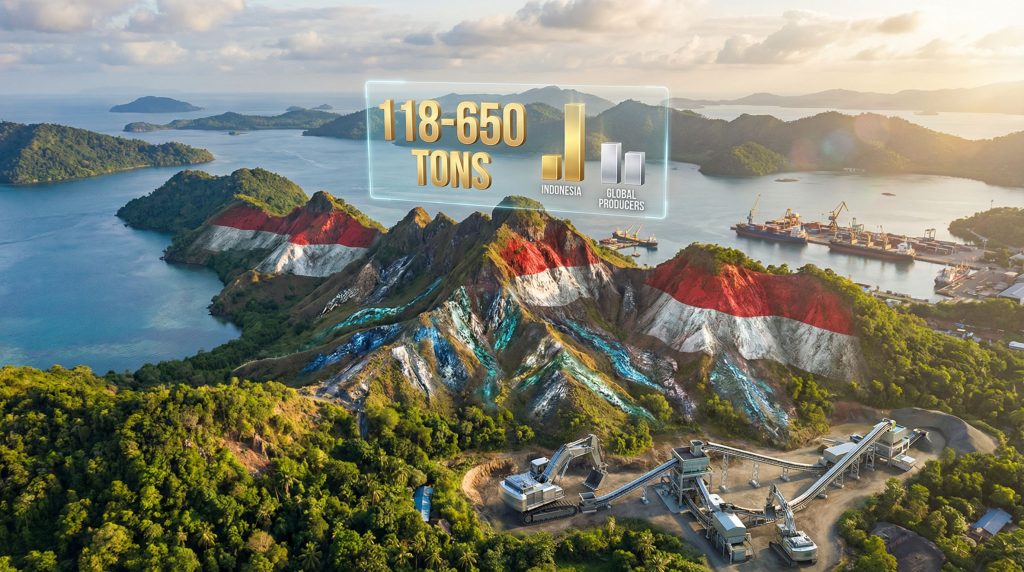
The Indonesian government targets $7.42 billion from rare earth downstream generation by 2030, suggesting ambitious production capacity projections. These estimates indicate Indonesia could potentially achieve annual output between 10,000 and 20,000 tonnes, representing approximately 7-15% of current global production. This scale would establish Indonesia as the third or fourth largest global producer, significantly reducing current market concentration and providing meaningful supply chain diversification for international buyers.
Competitive positioning advantages include Indonesia's established mining infrastructure, political stability relative to other emerging producers, and strategic geographic location facilitating access to major Asian markets. However, technical execution capabilities, environmental management effectiveness, and workforce development success will ultimately determine commercial viability and market acceptance.
The development timeline suggests that Indonesian rare earth production will emerge during a period of rapidly growing global demand driven by renewable energy deployment, electric vehicle adoption, and defence technology advancement. This timing alignment creates favourable market conditions for new supply sources while emphasising the importance of successful implementation through a comprehensive critical minerals strategy.
What Strategic Risks Could Impact Indonesia's Development Success?
Several critical risk factors could influence Indonesia's rare earth development success:
Technical Execution Risks: Processing technology adaptation, infrastructure development, and workforce capability development represent significant implementation challenges requiring sustained focus and resource allocation.
Environmental Management Risks: Tropical ecosystem protection, radioactive waste management, and community impact mitigation demand sophisticated environmental management systems and continuous monitoring protocols.
Market Competition Risks: Chinese production capacity expansion, alternative technology development, and recycling infrastructure advancement could influence long-term demand patterns and pricing dynamics.
Regulatory Stability Risks: Policy changes affecting foreign investment, export regulations, and environmental standards could impact project viability and international partnership agreements.
Conclusion: Indonesia's Path Forward
Indonesia rare earth reserve potential represents one of the most significant developments in critical minerals energy security since the establishment of current market structures. The success of this initiative will influence global supply security, technology manufacturing resilience, and the broader transition toward sustainable energy systems.
While substantial challenges remain, the combination of geological potential, existing infrastructure, and government commitment creates conditions for meaningful market impact within the current decade. The planned development phases provide a structured approach to transforming geological potential into commercial production capacity.
Furthermore, the establishment of Perminas as the coordinating entity demonstrates governmental recognition of rare earth elements as strategic national resources requiring dedicated institutional management. This framework positions Indonesia to navigate the complex technical, environmental, and regulatory requirements inherent in rare earth development.
In conclusion, Indonesia's entry into global rare earth markets could fundamentally alter supply chain dynamics and reduce current concentration risks. The success of this ambitious undertaking depends on effective execution of geological characterisation, processing technology development, and environmental management protocols while maintaining international cooperation and investment partnerships.
Looking to Capitalise on Critical Minerals Investment Opportunities?
Discovery Alert's proprietary Discovery IQ model delivers real-time alerts on significant ASX mineral discoveries, instantly empowering subscribers to identify actionable opportunities ahead of the broader market. Understand why major mineral discoveries can lead to substantial market returns by exploring Discovery Alert's dedicated discoveries page, showcasing historic examples of exceptional outcomes, and begin your 14-day free trial today to position yourself ahead of the market.