May 14, 2026
Understanding the Technical Foundation of Industrial Decarbonization
The transformation of heavy manufacturing through advanced gas infrastructure represents a critical evolution in Australia's industrial landscape. Furthermore, the Santos gas supply agreement for Whyalla Steelworks demonstrates how traditional coal-powered operations can transition to cleaner alternatives while maintaining competitive manufacturing capabilities. As industries face mounting pressure to reduce emissions, the integration of natural gas with cutting-edge steel production technologies offers a pathway to achieve substantial environmental improvements.
Direct Reduced Iron (DRI) technology fundamentally alters the steel production process by eliminating the need for coal-fired blast furnaces. This technology utilizes natural gas as a reducing agent to chemically strip oxygen from iron oxide pellets, creating metallic iron suitable for electric arc furnace steelmaking. The process operates at temperatures between 800-1,050°C, significantly lower than traditional blast furnaces, while maintaining comparable production efficiency.
The technical specifications for industrial-scale DRI operations require precise gas quality standards and consistent delivery pressure maintenance. Natural gas supplied for DRI processes must meet stringent purity requirements, with methane content exceeding 85% and minimal sulfur contamination to prevent equipment degradation and product quality issues.
What Makes Direct Reduced Iron Technology Revolutionary for Steel Production?
Industrial decarbonization through DRI technology relies on several key technical advantages over conventional steelmaking methods. Moreover, these innovations directly support green iron production initiatives across the manufacturing sector.
Process Efficiency Improvements:
• Reduced energy consumption per ton of steel produced
• Lower capital investment requirements for facility conversion
• Enhanced flexibility in raw material inputs
• Simplified environmental compliance protocols
The Santos gas supply agreement for Whyalla Steelworks enables processing of local magnetite ore through DRI technology, creating a vertically integrated supply chain that reduces transportation costs. Magnetite ore, with iron content typically ranging from 25-40%, requires beneficiation to achieve the 67-69% iron content necessary for efficient DRI operations.
Temperature control systems within DRI furnaces maintain optimal reduction conditions through automated gas flow regulation and heat recovery mechanisms. Consequently, these systems capture and recycle waste heat, improving overall thermal efficiency by 15-20% compared to traditional blast furnace operations.
Quality Control Protocols:
• Continuous monitoring of gas composition and flow rates
• Real-time temperature and pressure measurement systems
• Automated iron pellet quality assessment procedures
• Integrated safety shutdown protocols for operational anomalies
How Does Cooper Basin Gas Production Support Large-Scale Industrial Contracts?
The Cooper Basin's established infrastructure provides the foundation for reliable long-term gas supply to industrial customers. Current production from the basin's conventional and unconventional reserves supports both domestic and export markets, with proven reserves sufficient to sustain the 20 petajoule annual commitment over the ten-year contract period.
Production Capacity Framework:
• Total Cooper Basin output: approximately 67 PJ annually from current operations
• Committed allocation: 30% of production dedicated to Whyalla operations
• Reserve longevity: sufficient proven reserves for multi-decade supply commitments
• Infrastructure utilisation: existing pipeline capacity supports expanded delivery volumes
Gas processing facilities at Moomba Central Area enable consistent quality control and delivery scheduling. These facilities include dehydration units, compression stations, and quality monitoring systems that ensure industrial-grade gas specifications are maintained throughout the supply chain.
Transportation infrastructure connecting Cooper Basin production fields to industrial customers includes high-pressure transmission pipelines designed for continuous operation. The existing network's capacity exceeds current demand, providing operational flexibility and redundancy for critical industrial supply commitments.
"The integration of Cooper Basin gas resources with advanced steel production technology demonstrates how established energy infrastructure can support industrial transformation while maintaining supply security and operational reliability."
When big ASX news breaks, our subscribers know first
Analysing the Economic and Operational Transformation Model
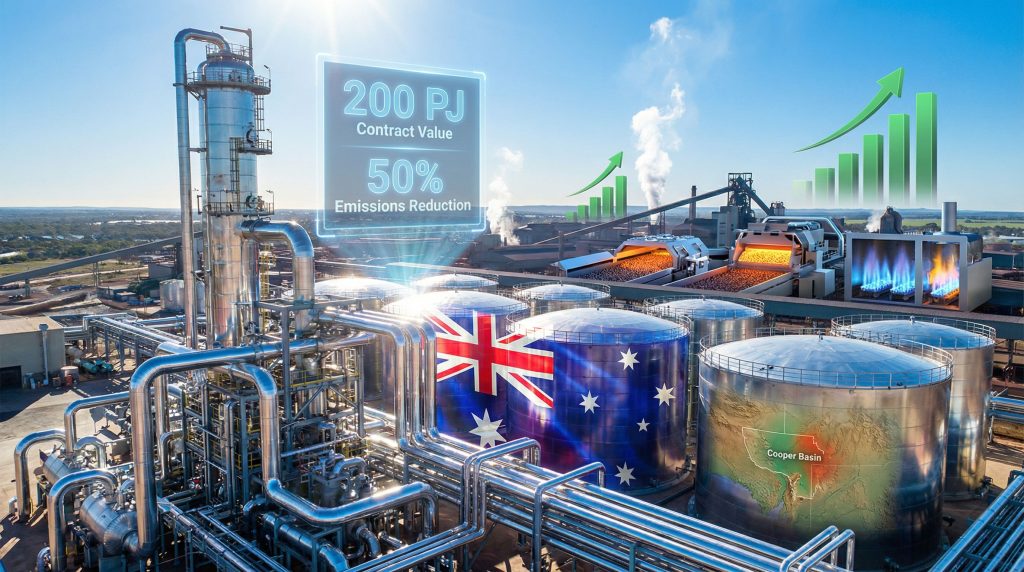
The financial structure underlying this industrial transformation reflects a sophisticated risk-sharing arrangement between public and private sector participants. The 200 petajoule total contract value over ten years establishes predictable revenue streams for gas production while providing cost certainty for steel manufacturing operations.
Long-term contract frameworks typically incorporate volume guarantees, pricing mechanisms linked to market indices, and performance standards that protect both supplier and customer interests. In addition, these agreements often include take-or-pay clauses that guarantee minimum revenue for gas producers while ensuring supply availability for industrial operations.
What Are the Financial Mechanics Behind This Industrial Transition?
Investment Requirements and Return Analysis:
| Investment Category | Estimated Range (AUD) | Timeline |
|---|---|---|
| DRI Furnace Installation | $150-200 million | 24-30 months |
| Gas Infrastructure Upgrades | $50-75 million | 18-24 months |
| Magnetite Processing Facility | $100-150 million | 30-36 months |
| Working Capital Requirements | $25-40 million | Ongoing |
The economic transformation model balances capital expenditure requirements with operational cost savings achieved through improved energy efficiency. However, this shift also demonstrates the industry's commitment to a broader sustainability transformation that extends beyond individual operations. DRI technology typically reduces operating costs by 10-15% compared to coal-fired blast furnace operations when natural gas pricing remains stable.
Revenue projections for the gas supply agreement depend on contracted pricing mechanisms and volume delivery performance. Industrial gas contracts often incorporate pricing formulas that reference oil price indices, domestic gas market rates, and inflation adjustments to maintain economic viability throughout the contract term.
Risk Allocation Framework:
• Volume delivery guarantees protect manufacturing operations from supply disruptions
• Price escalation clauses maintain supplier profitability during inflationary periods
• Force majeure provisions address uncontrollable operational interruptions
• Performance standards ensure gas quality meets industrial specifications
How Does This Agreement Reshape Australia's Manufacturing Competitiveness?
Australia's position in global steel markets benefits from the approximately 50% emissions reduction achieved through DRI technology implementation. This carbon footprint improvement enables access to premium pricing in international markets increasingly focused on sustainable manufacturing practices.
Competitive Positioning Advantages:
• Reduced carbon intensity improves export market access
• Lower environmental compliance costs enhance profitability
• Domestic resource utilisation reduces supply chain vulnerabilities
• Technology leadership positioning attracts additional investment
Green steel certification programmes, such as the SteelZero initiative and EU Green Taxonomy requirements, increasingly influence purchasing decisions in major export markets. For instance, steel produced through DRI technology using natural gas typically qualifies for intermediate sustainability ratings, commanding price premiums of 5-10% over conventional steel products.
Employment preservation represents a critical component of the economic transformation model. The agreement maintains approximately 1,200 direct jobs at Whyalla Steelworks while supporting an additional 800 positions in the Cooper Basin gas production and transportation sectors.
Skills transition requirements for DRI technology operations include specialised training in gas handling systems, automated process control, and environmental monitoring protocols. These capabilities require 6-12 months of technical education for existing steelworkers transitioning from blast furnace operations.
Technical Implementation and Risk Assessment Framework
The successful deployment of DRI technology requires comprehensive planning across multiple technical disciplines, from mechanical engineering to process control systems. Implementation timelines typically span 30-42 months from initial design through full operational capacity, with critical path activities including equipment procurement, site preparation, and systems integration.
Gas infrastructure integration presents unique challenges in retrofitting existing steelworks facilities. Furthermore, these developments align with renewable energy integration efforts across the manufacturing sector. High-pressure gas handling systems require specialised safety protocols, including gas detection systems, emergency shutdown procedures, and personnel protective equipment standards that exceed conventional industrial requirements.
What Are the Critical Success Factors for This Industrial Conversion?
Engineering Execution Requirements:
Phase 1: Design and Procurement (Months 1-12)
• DRI furnace specification and vendor selection
• Gas pipeline design and permitting
• Environmental impact assessment and regulatory approvals
• Long-lead equipment procurement initiation
Phase 2: Construction and Installation (Months 13-30)
• Site preparation and foundation construction
• DRI furnace installation and mechanical completion
• Gas infrastructure construction and pressure testing
• Control system installation and programming
Phase 3: Commissioning and Startup (Months 31-42)
• Systems integration testing and performance verification
• Personnel training and certification programmes
• Production ramp-up and process optimisation
• Quality certification and customer approval processes
Risk mitigation strategies address multiple operational scenarios that could impact production continuity. Gas supply interruptions represent the primary operational risk, requiring backup supply arrangements and strategic inventory management to maintain production schedules.
Operational Risk Categories:
• Supply security: gas delivery interruptions, pipeline maintenance, production outages
• Technology reliability: equipment failures, process control malfunctions, quality deviations
• Market volatility: gas price fluctuations, steel demand variations, currency exchange impacts
• Regulatory compliance: environmental standards, safety requirements, operational permits
How Will This Model Influence Future Industrial Energy Transitions?
The Santos gas supply agreement establishes a replicable framework for industrial decarbonisation across multiple manufacturing sectors. Cement production, aluminium smelting, and chemical processing operations could adopt similar natural gas infrastructure partnerships to reduce emissions while maintaining operational viability.
Scalability Assessment Factors:
• Gas supply capacity constraints limit simultaneous large-scale industrial conversions
• Technology standardisation reduces implementation costs and technical risks
• Policy support mechanisms encourage private sector investment in clean technology
• Skills development programmes ensure workforce capabilities match technology requirements
Australia's total industrial gas demand could increase by 40-60 PJ annually if similar decarbonisation projects proceed across major manufacturing facilities. This demand growth would require additional gas production capacity and infrastructure investment to maintain supply security.
Investment attraction benefits extend beyond individual project economics to include technology ecosystem development, research and development capabilities, and international partnership opportunities. Countries seeking to establish domestic steel production capabilities increasingly prioritise low-carbon technology access and technical expertise.
The next major ASX story will hit our subscribers first
Strategic Market Positioning and Future Outlook
The transformation of Whyalla Steelworks through natural gas infrastructure demonstrates Australia's strategic approach to maintaining industrial competitiveness while achieving environmental objectives. This model balances immediate emissions reductions with long-term economic sustainability, creating a template for similar transformations across heavy manufacturing sectors.
Global steel market dynamics increasingly favour low-carbon production methods as international climate policies impose carbon pricing mechanisms and sustainability reporting requirements. The European Union's Carbon Border Adjustment Mechanism, scheduled for full implementation by 2026, will impose tariffs on high-carbon steel imports, creating significant competitive advantages for Australian producers utilising DRI technology.
What Does This Agreement Signal About Australia's Energy Transition Strategy?
Policy Integration Framework:
Australia's approach to industrial decarbonisation emphasises technology-neutral solutions that leverage existing energy resources while reducing emissions intensity. Moreover, this strategy demonstrates how green transition priorities can be balanced with economic realities. This strategy recognises the importance of maintaining industrial competitiveness during the transition to lower-carbon production methods.
National Strategy Alignment:
• Consistency with Australia's 2030 emissions reduction targets
• Support for regional employment preservation in traditional manufacturing areas
• Integration with existing energy infrastructure to minimise transition costs
• Technology development capabilities that support export opportunities
The agreement aligns with the Australian Government's Modern Manufacturing Strategy, which identifies steel production as a priority manufacturing capability requiring continued domestic capacity. Government support mechanisms include tax incentives for clean technology adoption, infrastructure development grants, and skills development funding.
International competitiveness improvements through reduced carbon intensity enable Australian steel producers to access premium markets in Japan, South Korea, and other countries implementing carbon pricing policies. These markets increasingly prioritise supply chain sustainability and are willing to pay premium prices for certified low-carbon steel products.
How Will This Transform Regional Economic Development Patterns?
Regional Impact Analysis:
The Whyalla region benefits from sustained industrial employment while diversifying its economic base through clean technology expertise. This transformation creates opportunities for supporting industries including equipment maintenance, technical services, and specialised logistics operations.
Economic Development Opportunities:
• Technology service providers supporting DRI operations
• Specialised maintenance and engineering services
• Research and development capabilities in clean steel production
• Export facilitation and logistics services for green steel products
Skills development programmes established for DRI technology operations create transferable capabilities applicable to other clean industrial processes. These skills include advanced process control, environmental monitoring, and specialised safety protocols that support broader industrial transformation initiatives.
The Cooper Basin region experiences sustained economic benefits through continued gas production and enhanced infrastructure utilisation. However, this approach must be carefully balanced with energy transition strategies that consider long-term sustainability goals. Long-term gas supply contracts provide revenue certainty that supports exploration activities and infrastructure maintenance investments.
Long-term Strategic Implications:
Australia's positioning in global clean manufacturing supply chains depends on successful implementation of projects like the Whyalla transformation. Demonstration of commercial viability and technical reliability establishes credibility for technology export opportunities and international partnership development.
Resource sector evolution toward value-added processing creates opportunities for vertical integration across multiple commodity value chains. The combination of abundant natural resources, established infrastructure, and clean technology capabilities positions Australia as a preferred location for low-carbon manufacturing operations.
Technology innovation ecosystem development benefits from the practical experience gained through large-scale industrial implementations. This experience supports the development of Australian expertise in clean industrial technologies that can be exported to international markets facing similar decarbonisation challenges.
International Partnership Development:
The success of natural gas-enabled steel production technology creates opportunities for partnership development with countries seeking to establish or modernise their steel industries. Technology licensing, engineering services, and operational expertise represent potential export opportunities that leverage Australia's practical experience.
Countries in Southeast Asia, the Middle East, and Africa with abundant natural gas resources but limited steel production capabilities represent significant market opportunities for Australian technology and expertise. These partnerships could generate substantial export revenue while supporting global decarbonisation objectives.
Research and development collaboration opportunities with international steel producers, technology companies, and academic institutions create pathways for continued innovation in clean steel production methods. These collaborations support the development of next-generation technologies that further improve environmental performance and economic competitiveness.
The strategic integration of natural gas infrastructure with advanced steel production technology represents a fundamental evolution in Australia's approach to industrial decarbonisation. This transformation demonstrates how established energy resources can support clean manufacturing while maintaining employment and competitiveness in global markets.
The 200 petajoule commitment over ten years establishes a new benchmark for industrial energy partnerships that balance environmental objectives with economic sustainability. Furthermore, the landmark ten-year gas supply deal provides a replicable framework for similar transformations across other heavy manufacturing sectors, supporting Australia's broader industrial decarbonisation goals while preserving critical manufacturing capabilities.
Please note: This analysis contains forward-looking statements and projections that are subject to market conditions, technological developments, and regulatory changes. Investment decisions should consider multiple factors and seek professional advice appropriate to individual circumstances.
Interested in Capitalising on Australia's Industrial Transformation Opportunities?
Discovery Alert's proprietary Discovery IQ model delivers real-time alerts on significant ASX mineral discoveries, including companies benefiting from Australia's shift toward sustainable manufacturing and critical resource development. Explore how major mineral discoveries have generated exceptional returns for early investors, then begin your 14-day free trial today to position yourself ahead of the market.