June 17, 2026
The Industrial Decarbonization Revolution Reshaping Australian Mining
Mining operations across Australia face mounting pressure to eliminate fossil fuel dependencies while maintaining profitability in volatile commodity markets. This challenge has intensified as ESG-focused investors demand measurable emissions reductions and steel producers seek lower-carbon raw materials. The convergence of these forces is driving unprecedented infrastructure investments that could fundamentally alter the economics of remote industrial operations.
Complex technical hurdles have historically limited renewable energy adoption in mining, particularly for continuous operations requiring reliable baseload power. Battery storage limitations, grid stability challenges, and the intermittency of solar and wind generation have created barriers that traditional diesel-powered systems could overcome through fuel stockpiling and consistent output characteristics.
However, recent advances in grid-scale battery technology, intelligent energy management systems, and hybrid renewable configurations are enabling mining companies to pursue aggressive decarbonization strategies. These technological developments coincide with volatile fossil fuel markets that have elevated operational cost risks for remote mining operations dependent on diesel transportation and storage infrastructure.
When big ASX news breaks, our subscribers know first
Strategic Infrastructure Development at Industrial Scale
Fortescue Metals Group's Pilbara Energy Connect represents a paradigm shift in mining sector energy strategy, encompassing an integrated renewable network designed to power iron ore operations across Western Australia's remote Pilbara region. The project's scope extends beyond typical renewable installations, incorporating smart grid technology, advanced forecasting systems, and substantial battery storage capacity to address the unique demands of continuous mining operations.
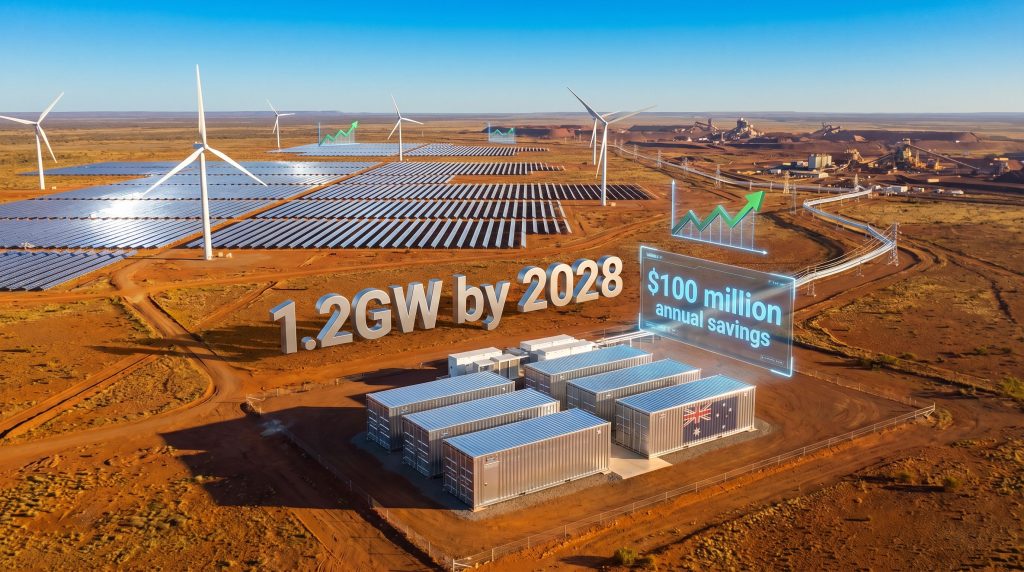
The Fortescue Pilbara green energy infrastructure development includes 1.2 gigawatts of renewable capacity planned across multiple generation sites, supported by 4.5 gigawatt-hours of battery storage for grid stability during low renewable generation periods. This scale represents a fundamental departure from pilot projects or supplementary renewable installations, positioning the system as primary energy infrastructure for substantial mining operations.
Grid integration across 629 kilometers of transmission infrastructure connects multiple mining sites through automated energy management systems. This distributed approach enables load balancing, redundancy planning, and optimized power distribution based on real-time operational requirements and renewable generation availability.
Financial Impact and Cost Structure Analysis
The additional US$680 million investment approved by Fortescue's board accelerates project development timelines while targeting specific operational cost reductions. Financial modelling indicates potential annual fuel cost savings of $100 million from 2027 onwards, with projected unit cost reductions of $2-4 per wet metric ton across iron ore production.
These savings calculations reflect current diesel fuel costs, transportation expenses to remote mining sites, and storage infrastructure requirements. The elimination of fuel price volatility exposure provides additional financial predictability benefits that enhance project economics beyond direct cost savings.
Capital expenditure recovery models depend on sustained fuel cost differentials, renewable energy asset depreciation schedules, and maintenance cost projections for both solar and battery storage components. Furthermore, the Fortescue green energy initiatives project's financial viability assumes continued operation of iron ore mining activities throughout the infrastructure's operational lifespan.
Advanced Energy Management and Grid Integration Technologies
The Pilbara Energy Connect incorporates sophisticated energy management technologies designed to optimise renewable generation distribution across mining operations with varying power demand profiles. Automated systems balance solar and wind generation variability against continuous mining equipment requirements, processing facility loads, and administrative facility consumption.
Key technological components include:
- Real-time weather forecasting integration for renewable generation prediction
- Predictive maintenance systems for renewable energy assets
- Load prioritisation algorithms during periods of limited generation
- Grid stability control systems managing power quality across extended transmission distances
- Integration protocols connecting renewable infrastructure with existing mining equipment control systems
Battery storage architecture enables 24-hour fossil-free operations through strategic discharge management during peak demand periods and low renewable generation windows. The 4.5GWh capacity provides sufficient backup power for critical mining operations whilst maintaining grid stability across the distributed network.
Operational Timeline and Implementation Phases
Project development follows a phased implementation approach targeting specific operational milestones. In addition, the Fortescue Pilbara green energy infrastructure timeline incorporates rigorous testing protocols and performance optimisation measures.
Early 2026 Milestone: 290MW renewable capacity enabling daytime green processing operations whilst maintaining diesel backup systems for evening and overnight production cycles.
Late 2026 Target: Achievement of 24-hour fossil-free operations through optimised battery storage utilisation and demand management protocols during extended periods of low solar generation.
End 2028 Completion: Full grid implementation with complete decarbonisation of Scope 1 and 2 emissions from Pilbara mining operations.
Each phase incorporates testing protocols, performance optimisation, and operational adjustments based on real-world generation patterns and mining demand profiles. This staged approach reduces implementation risks whilst enabling continuous operational improvements.
Innovation Acceleration Through Research Collaboration
The Pilbara Solar Innovation Hub, supported by government funding, focuses on advanced construction methodologies and cost reduction technologies for large-scale renewable deployments. Research initiatives target robotic installation systems, automated construction processes, and optimised maintenance procedures for remote renewable energy infrastructure.
Innovation priorities include:
- Robotic piling systems reducing solar installation labour requirements and construction timelines
- Advanced forecasting algorithms improving renewable generation prediction accuracy
- Maintenance optimisation through predictive analytics and remote monitoring systems
- Grid integration protocols enhancing compatibility with mining equipment and control systems
These technological developments have applications beyond Fortescue's immediate requirements, potentially creating intellectual property and technology licensing opportunities for broader mining sector adoption. Moreover, recent industry investments demonstrate growing confidence in large-scale renewable infrastructure for mining operations.
Competitive Positioning and Market Differentiation
Fortescue's "Real Zero" emissions commitment by 2030 eliminates carbon offset dependencies whilst targeting complete operational decarbonisation. This approach differentiates the company's environmental strategy from competitors relying on offset purchases or limited renewable integration projects.
Enhanced ESG credentials support marketing efforts targeting steel producers with sustainability commitments and investors prioritising climate-aligned portfolios. Green steel value chain participation becomes possible through verifiable emissions reductions in iron ore production processes.
Strategic advantages include:
- Reduced exposure to fossil fuel price volatility
- Enhanced operational predictability through fixed renewable energy costs
- Potential revenue generation through excess renewable energy sales to regional industrial operations
- Technology leadership positioning in mining sector decarbonisation
Market differentiation extends beyond environmental benefits to encompass operational resilience, cost structure optimisation, and strategic positioning for evolving regulatory frameworks addressing industrial emissions.
Industry-Wide Implications and Precedent Setting
The project's scale and technical complexity establish benchmarks for industrial decarbonisation in remote locations where grid connectivity is unavailable. Success demonstrates commercial viability for similar initiatives across Australia's resource sector, potentially accelerating renewable adoption timelines for other mining operations.
Economic multiplier effects include:
- Local employment creation during construction and ongoing maintenance phases
- Technology transfer opportunities for Australian clean energy sector development
- Enhanced energy security for Pilbara region industrial operations
- Demonstration effects influencing policy frameworks for mining sector decarbonisation
Regional economic benefits extend beyond direct project employment to encompass supply chain development, skills training initiatives, and technology cluster formation supporting renewable energy deployment expertise. However, the comprehensive scale of the Fortescue Pilbara green energy infrastructure requires careful management of implementation risks.
Risk Assessment and Mitigation Strategies
Technical risks include weather variability management, grid stability maintenance across extended transmission distances, and integration complexity with existing mining equipment. Mitigation approaches incorporate oversized battery storage capacity, redundant transmission pathways, and comprehensive testing protocols during each implementation phase.
Financial risk factors encompass:
- Capital expenditure recovery sensitivity to commodity price cycles
- Technology performance variations affecting projected cost savings
- Regulatory compliance costs with evolving carbon pricing mechanisms
- Competition from alternative decarbonisation technologies
Operational risks include maintenance requirements for renewable energy assets in remote locations, skilled workforce availability for specialised technical systems, and supply chain dependencies for battery storage and solar panel components.
Future Investment Decision Frameworks
The project's performance metrics will influence capital allocation strategies across the mining sector, particularly for companies evaluating operational decarbonisation versus carbon offset purchasing strategies. Success factors include achieved cost savings, operational reliability, and ESG rating improvements affecting access to sustainable finance options.
Competitive response scenarios suggest potential acceleration of renewable energy adoption by other major miners, technology sharing opportunities within the Australian mining sector, and international mining companies evaluating similar large-scale renewable projects for remote operations.
Investment decision frameworks increasingly integrate energy infrastructure costs into mine development economics, enhanced project financing opportunities through green investment criteria, and operational resilience considerations affecting long-term asset valuations. Consequently, expanding renewable energy projects across the mining sector reflect growing recognition of both financial and strategic benefits.
The next major ASX story will hit our subscribers first
Performance Measurement and Success Metrics
Project success evaluation focuses on complete elimination of Scope 1 and 2 emissions from Pilbara operations by 2030, achievement of projected annual operational cost savings exceeding $100 million, and potential revenue generation through excess renewable energy capacity utilisation.
Key performance indicators include:
- Renewable energy generation reliability and capacity factor achievement
- Battery storage system performance and degradation rates
- Grid stability maintenance across extended transmission infrastructure
- Integration effectiveness with mining operations scheduling and demand management
- Cost per megawatt-hour achievement compared to historical diesel generation costs
Long-term strategic positioning depends on enhanced access to ESG-focused investment capital, premium pricing opportunities for sustainably produced iron ore, and technology leadership positioning in mining sector decarbonisation initiatives.
Investment considerations include the project's demonstration value for similar industrial decarbonisation initiatives, potential technology licensing revenue opportunities, and competitive advantages in markets increasingly focused on supply chain sustainability metrics.
The Fortescue Pilbara green energy infrastructure development represents a convergence of technological advancement, financial optimisation, and strategic positioning that could establish new benchmarks for industrial operations in remote locations. Success will be measured through operational performance, financial returns, and industry influence on broader decarbonisation strategies.
Want to Capitalise on Australia's Green Energy Mining Revolution?
Discovery Alert's proprietary Discovery IQ model delivers real-time alerts on significant mineral discoveries across renewable energy and mining sectors, helping investors identify actionable opportunities before broader market awareness develops. Explore how major discoveries can generate substantial returns and begin your 14-day free trial today to position yourself ahead of the market.