May 20, 2026

Industrial Demand Convergence Transforms Silver Market Dynamics
Silver's transformation from primarily monetary metal to critical industrial commodity has accelerated dramatically throughout 2025, with the silver price surge impact reshaping global mining economics and investment strategies. Modern technological applications now consume approximately 60% of annual silver production, compared to gold's mere 10% industrial usage. This fundamental shift creates price sensitivity to economic growth patterns, manufacturing activity cycles, and technology adoption rates while providing structural demand support independent of monetary policy fluctuations.
The convergence of supply constraints with expanding industrial applications has generated unprecedented market conditions. Solar panel manufacturing alone requires over 100 million ounces annually, while electric vehicle component integration increases per-unit silver consumption across automotive supply chains. Electronics miniaturisation demands higher purity specifications, and medical device applications continue expanding beyond traditional uses.
When big ASX news breaks, our subscribers know first
Strategic Supply Chain Disruptions Reshape Global Silver Markets
China's formal designation of silver as a strategic resource represents the most significant structural change in global commodity markets since rare earth export restrictions began in 2010. With only 44 companies globally now qualifying for Chinese silver export licenses, international trade flows face systematic disruption precisely when Western manufacturing demand accelerates.
This regulatory shift affects pricing mechanisms for producers operating outside Chinese jurisdiction, particularly those positioned in established mining regions including Mexico, Peru, and the United States. The licensed exporter limitation creates artificial scarcity conditions while Western supply chain diversification efforts accelerate domestic production initiatives. Furthermore, understanding the silver market squeeze dynamics reveals how these regulatory changes amplify existing market tensions.
Geopolitical Premium Integration in Pricing Structures
Strategic resource designation embedding within current pricing structures reflects long-term policy commitments rather than temporary trade disputes. Government support programmes for legacy mining cleanup and domestic production capacity expansion suggest sustained elevated pricing environments for operations positioned in Allied jurisdictions.
Industrial sectors driving structural silver demand growth include renewable energy infrastructure requiring sustained silver consumption, technology advancement potentially reducing per-unit requirements in some applications, and emerging quantum computing applications demanding unprecedented purity specifications. Additionally, analysing supply deficit drivers helps explain how these demand pressures interact with constrained supply chains.
Investment Grade Mining Operations Capitalise on Favourable Conditions
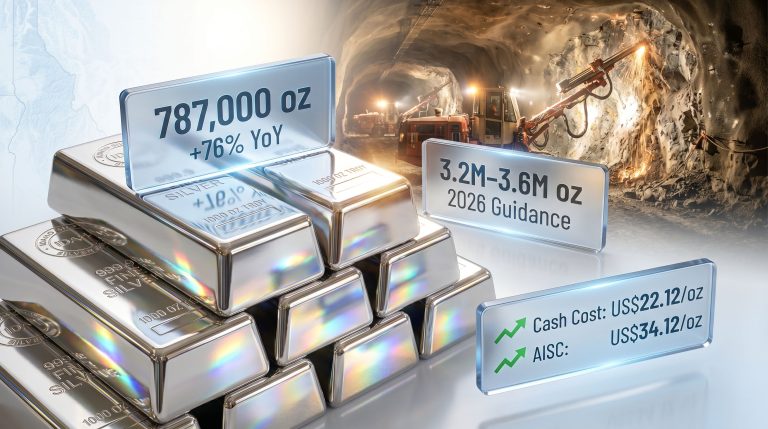
Leading silver producers achieved exceptional operational performance throughout 2025, with year-over-year production increases exceeding 50% at major operations. Record 20-year production levels validate management execution capabilities while demonstrating sector-wide operational excellence under favourable market conditions.
Development-stage projects published feasibility studies showcasing industry-leading economics, including after-tax net present values exceeding $1.8 billion and payback periods under seven months at conservative commodity pricing assumptions well below current market levels.
| Production Category | Performance Metrics | Economic Impact |
|---|---|---|
| Established Operations | 52% YoY growth | Record 20-year highs |
| Development Projects | $1.8B+ NPV | 7-month payback |
| Exploration Programmes | 800-900 g/t grades | Resource expansion |
| Strategic Acquisitions | Proximity advantages | Infrastructure sharing |
Grade advantages providing 2x industry average concentrations distinguish premium silver assets in current market conditions. Infrastructure proximity reduces development capital requirements while jurisdictional quality in established mining regions provides regulatory stability and experienced labour pools.
Operational Excellence Through Technology Integration
Modern mining technologies create operational advantages unavailable during previous price cycles. Improved metallurgical recovery rates and byproduct revenue streams from critical minerals generate financial performance superior to historical periods, while established infrastructure eliminates greenfield development requirements.
Recent operational achievements include production optimisation through advanced processing methods, strategic acquisition integration delivering immediate operational synergies, and exploration success expanding mineable reserves through systematic drilling programmes. Understanding squeeze pricing strategies becomes crucial for operations navigating these market conditions.
Financial Engineering Transforms Sector Capital Structures
Silver mining companies secured substantial financing throughout 2025, with the sector raising over $600 million through equity offerings and project finance facilities. Institutional ownership exceeded 60% at leading companies, providing both investment credibility and enhanced trading liquidity.
Project finance facilities structured as convertible instruments enable development funding while minimising dilution pressure. Equity offerings completed at premium valuations reflect investor confidence in sustained elevated silver pricing and operational execution capabilities.
Capital Allocation Strategies Maximising Returns
Strategic acquisitions of proximal high-grade deposits enable infrastructure sharing and reduced development capital requirements. Properties located within 10 miles of existing processing facilities eliminate separate mill construction costs representing tens to hundreds of millions in capital expenditure savings.
Aggressive exploration programmes targeting system-scale discoveries focus on:
- Resource expansion at high-grade intercepts exceeding 800 g/t silver equivalent
- Systematic testing of newly consolidated property positions
- Conversion of inferred mineralisation into mineable reserves
- Extension of mine life through district-scale exploration
Production optimisation through modern mining technologies includes tailings reprocessing accessing above-ground resources, environmental remediation components attracting ESG capital, and shorter development timelines compared to greenfield projects.
Technical Analysis Reveals Exceptional Project Economics
Current silver pricing near $90 per ounce represents fundamental transformation from feasibility study assumptions utilising conservative $35.50 silver pricing. This creates substantial economic leverage where development projects generate significantly enhanced returns compared to original financial modelling.
| Economic Metric | Conservative Case | Current Pricing Impact |
|---|---|---|
| After-tax NPV | $1.8 billion | $4.5+ billion estimated |
| Internal Rate of Return | 111% | 200%+ estimated |
| Payback Period | 7 months | 3-4 months estimated |
| Annual Cash Flow | $500+ million | $1.2+ billion estimated |
High-grade discoveries consistently exceed 897 g/t silver equivalent, representing double the global average mining grades below 400 g/t. Superior grade mineralisation reduces tonnage requirements by 50%+ for equivalent production while declining processing costs on per-ounce basis.
Processing Technology Advantages
Alternative processing methods accessing above-ground tailings resources provide operational advantages through:
- Environmental remediation components qualifying for government support programmes
- Shorter development timelines compared to traditional mining operations
- Established infrastructure reducing capital requirements
- Contemporary metallurgical technologies improving recovery rates beyond historical methods
Grade variability and metallurgical complexity require thorough bulk sampling programmes, with recent 12.3-tonne bulk samples supporting advanced metallurgical testing and process optimisation initiatives. Market analysts are closely monitoring how these technological advances impact overall market dynamics.
Risk Assessment Framework for Silver Price Sustainability
Multiple factors could influence silver price trajectories, requiring comprehensive risk evaluation frameworks for investment decision-making. Federal Reserve hawkish policy pivots strengthening dollar positions represent primary downside risk scenarios, while industrial demand substitution at elevated price levels poses medium-term challenges.
Important Disclaimer: Silver markets exhibit higher volatility than gold, and investors should prepare for periodic corrections driven by dollar strength fluctuations, regulatory changes, or industrial demand variations. Current analysis reflects information available as of publication date and should not be considered investment advice.
Geopolitical Risk Factors
Trade policy changes affecting international silver flows create both risks and opportunities across different jurisdictions. Critical mineral designation by Western governments supports domestic production while strategic stockpiling programmes by major economies provide additional demand support. However, tariff impacts on silver markets require careful evaluation for risk management purposes.
Speculative position unwinding during broader market volatility periods and regulatory margin requirement increases by commodity exchanges represent technical risk factors requiring monitoring for portfolio management purposes. Recent analysis indicates that broader commodity market sentiment significantly influences silver trading patterns.
The next major ASX story will hit our subscribers first
Investment Framework for Silver Sector Evaluation
Distinguishing superior silver investment opportunities requires systematic evaluation across multiple criteria including management track records, asset quality metrics, and capital structure strength. Companies demonstrating proven development capabilities in established mining jurisdictions command premium valuations reflecting reduced execution risk.
Portfolio Construction Strategies
Optimal portfolio allocation strategies balance exposure across development stages and geographic regions while maintaining adequate liquidity for tactical position adjustments. Pure-play silver companies provide maximum commodity price leverage, while diversified miners offer reduced volatility through multiple revenue streams.
Key Investment Criteria:
- Management Excellence: Proven track records in project development and operational execution
- Asset Quality: Grade advantages, infrastructure proximity, and jurisdictional stability
- Financial Strength: Adequate capital runway and strategic financing capabilities
- Market Positioning: Leverage to commodity cycles and critical mineral exposure
Hedging considerations for commodity price volatility include natural hedging through byproduct revenue streams and strategic positioning within broader portfolio contexts addressing inflation concerns and currency debasement fears.
Future Market Evolution and Structural Themes
Long-term silver market dynamics reflect structural demand evolution through renewable energy infrastructure buildout, emerging applications in advanced materials and quantum computing, and recycling technology improvements affecting primary demand patterns.
Supply response capabilities at current pricing levels include exploration budget increases targeting high-grade discoveries, mothballed operations evaluating restart economics, and byproduct recovery optimisation at base metal operations worldwide. These developments provide valuable market transformation insights for understanding future sector evolution.
Technology Impact Assessment
Renewable energy infrastructure requiring sustained silver consumption over multi-decade timeframes provides structural demand support, while technology advancement potentially reducing per-unit requirements in some applications creates offsetting demand pressures requiring continuous monitoring.
Artisanal mining expansion in developing countries and improved recycling technologies affect supply-demand balance equations, though primary mine production remains essential for meeting growing industrial consumption requirements. The silver price surge impact continues to influence these supply-demand dynamics across multiple market segments.
Strategic Positioning for Silver's Next Development Phase
Critical Success Factors for Silver Sector Investment:
- Focus on operational excellence demonstrated through production growth and cost management
- Prioritise high-grade assets in established mining jurisdictions with proven regulatory frameworks
- Evaluate management teams with demonstrated development track records and operational capabilities
- Consider portfolio diversification across development stages, geographic regions, and market capitalisations
- Monitor macroeconomic indicators affecting commodity cycles and currency relationships
- Assess liquidity requirements for position management flexibility during volatile market conditions
The silver price surge impact extends beyond immediate operational benefits to fundamental restructuring of mining economics, capital allocation priorities, and strategic positioning within global supply chains. Companies demonstrating superior execution capabilities while maintaining strong capital structures are positioned to capitalise on sustained structural demand growth.
Investment Thesis Validation
Structural supply constraints meeting accelerating industrial demand create investment opportunities supported by:
- Record operational performance validating management execution capabilities
- Industry-leading development economics providing exceptional leverage to current pricing
- System-scale exploration discoveries expanding resource potential significantly
- Critical mineral exposure adding strategic value beyond precious metals characteristics
- Strengthened capital structures enabling systematic project advancement
- Proven jurisdictional quality reducing execution risk compared to frontier regions
Frequently Asked Questions
How sustainable are current silver price levels given historical volatility patterns?
While silver exhibits higher volatility than gold historically, current pricing reflects structural supply constraints and expanding industrial demand rather than purely speculative activity. China's export restrictions and Western supply chain diversification create sustained policy support, though investors should prepare for periodic corrections.
What distinguishes high-grade silver discoveries from average mining operations?
Recent drill intercepts exceeding 800-900 grams per tonne silver equivalent represent approximately double the mining grades at operations already ranking among globally high-grade producers. Superior mineralisation reduces tonnage requirements, mining costs, processing expenses, and environmental impact while improving project economics substantially.
Why do acquisitions near existing operations create strategic value?
Proximity enables infrastructure sharing including mills, power systems, and administrative functions, reducing development capital by tens to hundreds of millions compared to standalone operations. Similar ore mineralogy enables direct processing without flowsheet modifications, while shared technical teams optimise operational efficiency.
How do tailings reprocessing projects differ from traditional mining development?
Tailings projects access above-ground material accumulated from historical operations, eliminating drilling, blasting, and underground development costs. Contemporary metallurgical technologies recover metals more efficiently than historical methods, while environmental remediation components may qualify for specialised financing and government support programmes.
What role does industrial demand play compared to investment demand for silver?
Silver's industrial applications consume approximately 60% of annual production versus gold's 10% industrial usage. This creates price sensitivity to economic growth and manufacturing activity while providing structural demand support independent of monetary policy, distinguishing silver from purely monetary precious metals.
Looking to Capitalise on the Silver Market Surge?
Discovery Alert's proprietary Discovery IQ model delivers real-time alerts on significant ASX mineral discoveries, instantly empowering investors to identify actionable opportunities ahead of the broader market. Understand why major mineral discoveries can lead to substantial market returns by exploring Discovery Alert's dedicated discoveries page, showcasing historic examples of exceptional outcomes, then begin your 14-day free trial today to position yourself ahead of the market.