June 11, 2026
Understanding Industrial Energy Economics Through Strategic Pricing
Industrial electricity markets worldwide face a fundamental challenge: balancing utility financial sustainability with manufacturing sector competitiveness. This delicate equilibrium becomes particularly complex when energy-intensive industries represent both significant revenue sources and economic multipliers. The strategic deployment of differentiated pricing mechanisms reflects broader economic policy objectives that extend beyond simple cost recovery models.
Energy-intensive manufacturing sectors typically consume electricity at rates that make traditional pricing frameworks inadequate for maintaining global competitiveness. These industries often operate on thin margins where electricity costs can determine operational viability, location decisions, and long-term investment commitments.
When big ASX news breaks, our subscribers know first
How Eskom's Ferrochrome Tariff Strategy Reshapes Industrial Energy Policy
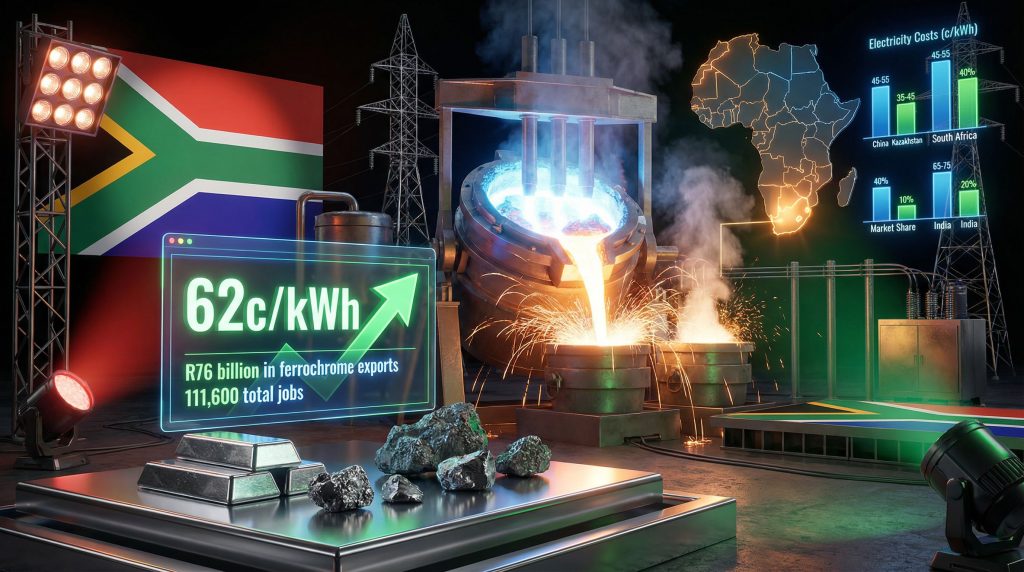
The proposed 62 cents per kilowatt-hour electricity tariff for South African ferrochrome producers marks a decisive shift from cost-recovery pricing toward industrial competitiveness preservation. This Eskom ferrochrome tariff deal acknowledges that strategic industries require specialised tariff structures to maintain operational viability against international competitors operating under different energy cost frameworks.
South Africa controls approximately 70% of global chromium reserves, positioning its ferrochrome industry as a cornerstone of the country's mineral beneficiation strategy. The sector's electricity consumption patterns represent roughly 15% of Eskom's total industrial demand, making these operations critical customers whose production decisions directly impact grid stability and utility revenue streams.
The 62c/kWh rate represents a 29% reduction from the previous interim tariff of 87.74c/kWh, creating economic conditions that could fundamentally alter the industry's operational landscape. This pricing intervention moves beyond traditional utility economics toward recognition of electricity pricing as an industrial policy instrument. Furthermore, the tariffs impact markets across multiple sectors globally.
Global Competitive Context Analysis
International ferrochrome production operates within significantly different energy cost structures that influence global market positioning:
| Region | Electricity Cost (c/kWh) | Market Share | Strategic Advantage |
|---|---|---|---|
| China | 45-55 | 55% | High energy efficiency, scale |
| Kazakhstan | 35-45 | 12% | Low energy costs, proximity |
| South Africa (New Rate) | 62 | 8% | Raw material access |
| India | 65-75 | 6% | Growing domestic demand |
The comparative positioning demonstrates how South Africa's new tariff structure attempts to restore competitiveness while acknowledging higher infrastructure costs compared to regional competitors. The proximity to high-grade chromium ore reserves provides inherent advantages that the new pricing framework seeks to preserve. Similarly, US tariff implications demonstrate how pricing policies affect industrial competitiveness globally.
Revenue Architecture and Financial Engineering
Eskom's approach to funding the tariff reduction through existing debt relief mechanisms demonstrates sophisticated financial engineering that avoids cross-subsidisation burdens on other customer categories. The R10-billion allocation from the National Treasury's R230-billion debt relief package provides immediate funding without imposing additional costs on residential or commercial consumers.
Key Financial Metrics from the Intervention:
- Annual Eskom Revenue: R17.9 billion projected from ferrochrome operations
- Export Value Generation: R76 billion in anticipated ferrochrome exports
- Government Revenue Contribution: R5.5 billion in fiscal receipts
- Employment Impact: 111,600 total jobs supported (direct and indirect)
The revenue architecture relies on Eskom's commitment to achieve cumulative operational savings of R112 billion by 2029, providing the financial foundation for maintaining preferential industrial tariffs while preserving standard tariff stability for other consumer segments.
Operational Efficiency Target Breakdown
Eskom's savings strategy encompasses multiple operational improvement areas:
Coal Procurement Optimisation: R25 billion in projected savings
- Contract renegotiation and supplier diversification
- Transportation cost reduction initiatives
- Quality improvement protocols
Maintenance Cost Reduction: R35 billion in targeted savings
- Predictive maintenance technology deployment
- Component standardisation programmes
- Workforce efficiency improvements
Generation Efficiency Gains: R28 billion in anticipated savings
- Plant performance optimisation
- Fuel efficiency improvements
- Technology upgrade implementations
Transmission Loss Minimisation: R24 billion in expected savings
- Infrastructure upgrades
- Smart grid technology integration
- Distribution network optimisation
Ferrochrome Smelter Reactivation Dynamics
The tariff proposal creates economic conditions for substantial capacity reactivation across South Africa's ferrochrome sector. Current operational analysis indicates that only 11 of 66 furnaces remain active, representing dramatic underutilisation that reflects previous electricity pricing pressures on the industry.
Phase 1 Reactivation Scenario (2026):
- Target Operational Furnaces: 45 by December 2026
- Capacity Improvement: 309% increase from current levels
- Investment Requirements: R8-12 billion in reactivation capital
- Technical Constraints: 10-month furnace restart cycles
Phase 2 Expansion (2027):
- Additional Commissioning: 4 additional furnaces
- Total Operational Capacity: 49 of 66 furnaces (74% utilisation)
- Market Positioning: Restored competitive standing globally
The reactivation timeline reflects technical complexities associated with bringing extended-shutdown smelting equipment back to operational efficiency. Furnace restart cycles require systematic reheating processes, equipment inspections, and workforce retraining initiatives. According to Reuters' report on the electricity tariff cuts, this represents a significant opportunity for industry revitalisation.
Employment Transformation Projections
Current Sector Employment: 11,400 direct positions
Projected Employment by 2027: Over 121,000 total positions
Employment Multiplier Effect: Approximately 8x direct employment impact
The employment projections encompass both direct smelter operations and indirect economic activity generated through supply chain integration, transportation services, and community economic multipliers.
Regulatory Framework and NERSA Approval Process
The National Energy Regulator of South Africa's assessment process introduces regulatory complexity that extends beyond simple tariff approval toward comprehensive stakeholder impact evaluation. NERSA's mandate requires balancing consumer protection objectives with industrial policy considerations across multiple customer categories.
Public Participation Requirements:
- Consultation Periods: 30-60 day stakeholder engagement
- Impact Assessment: Analysis across customer categories
- Cross-subsidy Evaluation: Justification for preferential pricing
- Sustainability Review: Long-term viability assessment
Technical Evaluation Framework:
- Grid Stability Benefits: Load factor optimisation analysis
- Infrastructure Utilisation: Capacity efficiency improvements
- Revenue Adequacy: Utility financial sustainability review
- Demand Management: Industrial load profile contributions
The regulatory process will examine whether the Eskom ferrochrome tariff deal creates precedents for other energy-intensive industries while maintaining overall tariff structure integrity across the customer base.
Strategic Implications for Energy-Intensive Industries
The ferrochrome tariff framework establishes a template for potential interventions across multiple energy-intensive manufacturing sectors. Manganese alloy producers, aluminium smelters, and silicon metal operations could leverage similar arrangements, fundamentally altering South Africa's industrial electricity pricing landscape.
Sector-Specific Application Potential:
Manganese Alloys:
- Similar electricity intensity profiles to ferrochrome
- Export-oriented production models
- Strategic mineral classification alignment
- Established infrastructure and operational expertise
Aluminium Smelting:
- Higher electricity consumption per production unit
- Complex international pricing dynamics
- Greater infrastructure investment requirements
- Technology transfer opportunities
Silicon Metal Production:
- Emerging strategic importance in technology sectors
- Supply chain integration with renewable energy transition
- Growing demand from semiconductor and solar industries
- Potential for value-chain development
This development aligns with broader energy & minerals transition trends affecting strategic industrial sectors globally.
The next major ASX story will hit our subscribers first
Mineral Beneficiation Strategy Integration
The tariff intervention directly supports governmental mineral beneficiation objectives by maintaining local value-addition capacity that might otherwise relocate to lower-cost jurisdictions. This approach recognises that raw material export versus processed product export creates significantly different economic multiplier effects across the value chain.
Economic Value Addition Analysis:
| Processing Stage | Value Multiplier | Employment Factor | Export Revenue |
|---|---|---|---|
| Chrome Ore Export | 1x | 1x | R15 billion |
| Ferrochrome Production | 3-4x | 8x | R76 billion |
| Stainless Steel Manufacturing | 8-12x | 25x | R180+ billion |
The progression demonstrates how maintaining ferrochrome production capacity preserves the foundation for potential downstream manufacturing development, including stainless steel production and specialised alloy manufacturing. This connects directly with Australia's resource energy exports challenges and opportunities.
Supply Chain Integration Benefits
Raw Material Security: Direct access to high-grade chromium ore reserves
Logistics Advantages: Established export infrastructure and transportation networks
Technical Expertise: Accumulated operational knowledge and workforce skills
Market Relationships: Long-term supplier agreements with international consumers
Long-Term Sustainability Framework
The tariff structure's long-term viability depends on Eskom's ability to achieve projected operational efficiencies while maintaining service delivery standards across all customer segments. The utility's commitment to R112-billion cumulative savings by 2029 provides the financial foundation for sustaining preferential industrial tariffs.
Sustainability Risk Mitigation Strategies:
Performance-Based Adjustments: Tariff modifications linked to operational efficiency achievements
Minimum Consumption Requirements: Take-or-pay commitments ensuring revenue predictability
Regular Review Mechanisms: Periodic assessments of market conditions and cost structures
Market Response Protocols: Adjustment procedures for competitive landscape changes
The sustainability framework acknowledges that preferential industrial tariffs require ongoing justification through measurable economic benefits and operational performance improvements. Engineering News provides detailed insights into Eskom's submission process to NERSA.
Global Market Positioning and Competitive Impact
The tariff reduction enhances South Africa's competitive positioning in global ferrochrome markets, particularly against Chinese and Kazakhstani producers who benefit from lower energy costs and different regulatory frameworks. This strategic intervention could help reverse the country's declining market share trajectory.
Competitive Restoration Elements:
- Cost Structure Improvement: Enhanced competitiveness versus Asian producers
- Price Volatility Reduction: Decreased vulnerability to energy cost fluctuations
- Investment Attractiveness: Improved economic conditions for capacity expansion
- Negotiating Power: Enhanced position in international supply contracts
Market Dynamics Considerations:
- Quality Consistency: Maintenance of technical specifications and reliability
- Logistics Efficiency: Optimisation of export procedures and transportation
- Customer Relationships: Strengthening of long-term supply agreements
- Innovation Capacity: Investment in operational and environmental improvements
The intervention recognises that global ferrochrome markets reward both cost competitiveness and operational reliability, requiring sustained excellence across multiple performance dimensions. This reflects broader mining industry trends toward strategic competitiveness enhancement.
Investment Perspective: Energy-intensive industries require stable, predictable electricity costs to maintain long-term operational viability and attract capital investment in an increasingly competitive global marketplace.
The Eskom ferrochrome tariff deal represents a strategic policy intervention that balances immediate industrial competitiveness needs with long-term economic development objectives, establishing precedents that could reshape South Africa's approach to energy-intensive manufacturing sector support.
Ready to Capitalise on Strategic Industrial Policy Shifts?
Discovery Alert's proprietary Discovery IQ model delivers real-time alerts on significant ASX mineral discoveries, instantly identifying actionable opportunities in commodity sectors benefiting from global industrial policy changes like South Africa's ferrochrome tariff interventions. Explore how major mineral discoveries can generate substantial returns by visiting Discovery Alert's discoveries page and begin your 14-day free trial today to position yourself ahead of market developments.