July 19, 2026
Industrial Energy Policy at a Crossroads
South Africa's approach to industrial energy pricing has entered uncharted territory as regulators attempt to balance competing economic pressures through targeted interventions. The National Energy Regulator of South Africa (NERSA) recently approved tariff relief for ferrochrome smelters, marking a significant departure from conventional utility pricing frameworks. This decision reflects broader challenges facing energy-intensive industries worldwide as they navigate the intersection of rising operational costs, global competition, and domestic economic priorities.
The regulatory landscape for industrial electricity pricing has evolved considerably as governments recognise the strategic importance of maintaining manufacturing capacity. Energy costs represent the single largest operational expense for many heavy industries, creating vulnerabilities when utility tariffs exceed competitive thresholds. This dynamic has prompted regulatory bodies to explore innovative pricing mechanisms that preserve industrial employment while maintaining electricity sector financial sustainability.
Contemporary energy policy debates increasingly centre on how to support strategic industries without creating unsustainable fiscal burdens or unfair cost allocation across customer segments. Furthermore, the tariffs impact investment decisions continue to shape industrial competitiveness globally. The ferrochrome sector's recent experience illustrates these tensions and provides insights into emerging regulatory approaches for managing industrial competitiveness challenges.
When big ASX news breaks, our subscribers know first
How NERSA's Tariff Reduction Framework Addresses Industrial Viability
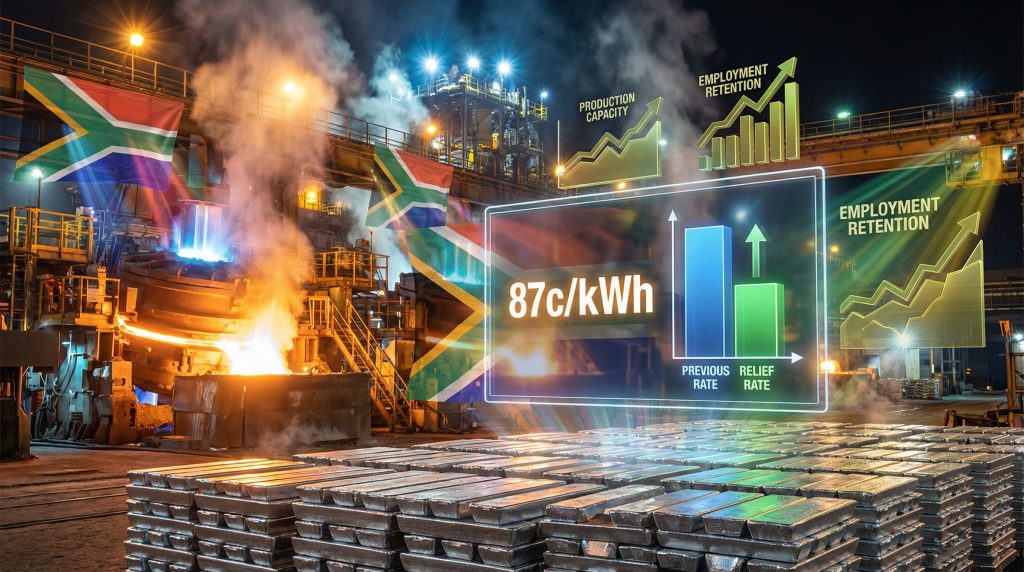
The Energy Regulator's approval of an 87 cents per kilowatt-hour tariff for ferrochrome smelters represents a 35.6% reduction from the standard 135c/kWh industrial rate. This temporary relief mechanism, extending for twelve months, targets Samancor Chrome and the Glencore-Merafe Chrome Venture operations that had experienced significant operational constraints under existing pricing agreements.
Key Relief Parameters:
- Tariff reduction: From 135c/kWh to 87c/kWh
- Duration: 12-month temporary arrangement
- Coverage: Specific ferrochrome production facilities
- Additional relief: Waiver of take-or-pay obligations
The regulatory decision emerged following formal hardship representations from affected companies regarding negotiated pricing agreements (NPAs) that were approved in 2023 and implemented throughout 2024. These arrangements had proven financially unsustainable as global market conditions deteriorated and operational costs exceeded revenue generation capacity.
NERSA's conditional approval included explicit requirements that revenue shortfalls cannot be recovered from standard electricity customers through regulatory clearing account mechanisms. This protection ensures residential and commercial customers avoid cross-subsidisation of industrial relief programs, maintaining equitable cost allocation principles across customer segments.
Consequently, the regulator mandated quarterly progress reports to monitor implementation effectiveness and ensure relief objectives are achieved. These reporting requirements demonstrate regulatory commitment to evidence-based policy adjustments and accountability in tariff intervention programs.
Strategic Importance of Ferrochrome Operations to Economic Stability
Ferrochrome production supports multiple economic objectives beyond immediate employment preservation. The sector contributes significantly to South Africa's export revenue through value-added mineral processing, transforming raw chromite ore into higher-value intermediate products for global stainless steel manufacturing.
Economic Impact factors:
- Export revenue generation from processed minerals
- Employment in mining-dependent communities
- Downstream supply chain maintenance
- Technical expertise and industrial capability retention
- Foreign exchange earnings through value-added exports
The sector's strategic value extends beyond immediate financial metrics to encompass technological capabilities and industrial knowledge retention. Ferrochrome smelting requires specialised expertise in high-temperature metallurgical processes, electrical systems management, and quality control protocols that represent significant national intellectual capital.
Moreover, maintaining operational capacity preserves these capabilities during market downturns, ensuring rapid production resumption when conditions improve. The alternative – facility closure and skills exodus – would require substantial reinvestment and time to rebuild, potentially missing market recovery opportunities.
Global ferrochrome markets exhibit cyclical patterns influenced by stainless steel demand, raw material availability, and energy cost differentials across producing regions. In addition, concerns about US tariffs and inflation continue to impact global trade dynamics. South African producers compete primarily with operations in China, Kazakhstan, and India, where energy costs and regulatory frameworks differ significantly.
Temporary Relief Mechanisms and Revenue Gap Management
The 87c/kWh relief rate addresses immediate viability concerns while NERSA develops longer-term solutions for sustainable industrial pricing. During regulatory hearings, Eskom acknowledged that even this reduced rate would prove insufficient for full production resumption, indicating the magnitude of structural competitiveness challenges.
Relief Structure Analysis:
| Component | Previous Rate | Relief Rate | Impact |
|---|---|---|---|
| Base Electricity Cost | 135c/kWh | 87c/kWh | 35.6% reduction |
| Take-or-Pay Waiver | Required 70% minimum usage | Suspended | 12 months relief |
| Contract Duration | Standard NPA terms | Temporary arrangement | Review after 12 months |
Eskom confirmed during hearings that initiatives are underway targeting a longer-term solution aimed at 62c/kWh pricing, representing an additional 28.7% reduction beyond current relief levels. This target rate would enable full capacity utilisation and potentially attract new investment in ferrochrome production capacity.
However, the revenue gap between approved tariffs and actual costs presents significant challenges for electricity sector financial sustainability. NERSA's approval explicitly requires government funding mechanisms to prevent cost-shifting to standard customers, but specific funding sources remain undetermined as parallel processes continue.
Funding Mechanism Options Under Consideration:
- Direct treasury subsidisation of tariff shortfalls
- Industrial development incentive programs
- Export promotion support schemes
- Strategic sector development funds
The uncertainty surrounding revenue gap closure reflects broader fiscal constraints and competing government priorities. Resolution of this fundamental issue will determine the long-term viability of tariff relief for ferrochrome smelters as an industrial policy tool.
Precedent Implications for Energy-Intensive Industries
The ferrochrome relief decision establishes regulatory precedent for intervention in strategic industrial sectors facing energy cost competitiveness challenges. Other energy-intensive industries operating in South Africa may seek similar arrangements as global competition intensifies and domestic costs increase.
Potential Beneficiary Sectors:
- Manganese alloy production facilities
- Silicon smelting operations
- Vanadium processing plants
- Primary aluminium production
- Titanium dioxide manufacturing
Each sector presents unique economic and strategic considerations that would require individual assessment. For instance, manganese alloy production supports steel industry supply chains while contributing to export revenue. Silicon smelting enables electronics and solar panel manufacturing supply chains with growing strategic importance.
Regulatory authorities must develop consistent frameworks for evaluating relief applications while maintaining electricity sector sustainability. Key evaluation criteria likely include employment impact, export revenue contribution, strategic economic importance, and long-term viability prospects.
Furthermore, the precedent also raises questions about competitive equity among industrial users. Companies operating in similar sectors but not receiving relief may face disadvantages in domestic and international markets, potentially leading to additional applications or legal challenges.
International Competitiveness Benchmarking and Policy Approaches
Global industrial electricity pricing varies significantly across jurisdictions, reflecting different energy resource endowments, policy priorities, and competitive strategies. Understanding these differentials provides context for South African policy development and competitiveness positioning.
International Industrial Electricity Rate Comparison:
| Country/Region | Industrial Rate Range | Policy Framework |
|---|---|---|
| China | 50-80c/kWh equivalent | State-directed pricing support |
| Norway | 35-55c/kWh equivalent | Hydroelectric resource advantage |
| Canada (Quebec) | 45-65c/kWh equivalent | Provincial energy policies |
| Germany | 140-180c/kWh equivalent | Energy transition costs |
| South Africa | 135c/kWh (standard) | Market-based with interventions |
Chinese producers benefit from state-directed energy pricing that supports strategic industries through subsidised electricity rates. This approach prioritises industrial competitiveness over cost-reflective pricing, enabling sustained market share growth in energy-intensive sectors.
Norwegian aluminium and ferrochrome producers leverage abundant hydroelectric resources that provide inherently low-cost electricity. Geographic and resource advantages create sustainable competitive positions without requiring policy interventions.
In addition, Canadian provinces, particularly Quebec, have developed long-term industrial electricity contracts that provide price certainty while reflecting regional energy resources. These arrangements balance industrial competitiveness with utility financial sustainability through structured agreements.
German industrial users face high electricity costs driven by renewable energy transition investments and grid modernisation requirements. However, energy transition challenges remain a global concern as countries balance competitiveness with environmental objectives. Energy-intensive industries receive partial exemptions from renewable energy surcharges to maintain competitiveness.
The next major ASX story will hit our subscribers first
Alternative Industrial Support Mechanisms Beyond Tariff Relief
Tariff reduction represents one approach to supporting industrial competitiveness, but alternative mechanisms may provide more sustainable solutions while addressing broader economic objectives. These approaches can complement temporary relief programs while building long-term competitive advantages.
Demand-Side Management Integration
Energy-intensive industries possess inherent flexibility that can provide value to electricity systems through demand response services. Ferrochrome smelters, for example, can modulate production schedules to align with grid requirements during peak demand periods or renewable energy output variations.
- Load shifting to off-peak periods reduces system costs
- Demand response participation provides additional revenue streams
- Grid stability services support renewable energy integration
- Flexible consumption patterns optimise system efficiency
Performance-Linked Incentive Structures
Policy frameworks can link tariff relief for ferrochrome smelters to specific performance commitments that advance broader economic and social objectives:
- Energy efficiency improvement targets with measurable outcomes
- Local procurement requirements supporting domestic suppliers
- Skills development programs enhancing workforce capabilities
- Environmental performance standards advancing sustainability goals
These approaches transform relief from simple subsidisation into investment in industrial capability development and broader economic advancement.
Renewable Energy Integration Pathways
Industrial users increasingly seek direct renewable energy procurement arrangements that provide long-term price certainty while supporting clean energy development. Large-scale industrial consumers can anchor renewable energy projects through long-term purchase agreements.
Private renewable energy procurement enables industrial users to:
- Secure predictable long-term electricity costs
- Reduce exposure to utility tariff fluctuations
- Support renewable energy project development
- Enhance environmental performance credentials
Long-Term Industrial Energy Policy Development Considerations
Temporary interventions address immediate crisis symptoms but sustainable solutions require comprehensive approaches that enhance fundamental competitiveness while supporting electricity sector development. Policy frameworks must balance multiple objectives across economic, social, and environmental dimensions.
Structural Competitiveness factors:
- Infrastructure efficiency improvements reducing transmission costs
- Technology advancement adoption enhancing productivity
- Market access facilitation supporting export growth
- Investment climate development attracting capital
The 62c/kWh target rate mentioned during NERSA hearings would represent a significant step toward competitive positioning relative to international benchmarks. However, achieving this rate sustainably requires addressing underlying cost structures rather than relying on ongoing subsidisation.
Electricity Sector Sustainability Requirements:
Industrial relief programs must avoid compromising electricity sector financial health or imposing unfair costs on other customer segments. Sustainable frameworks require:
- Clear funding mechanisms that maintain cost-reflective pricing principles
- Performance monitoring ensuring relief achieves intended objectives
- Transition pathways toward long-term competitive sustainability
- Transparent evaluation criteria for relief applications
Innovation and Technology Integration:
Emerging technologies present opportunities for improving industrial energy efficiency and reducing costs through process optimisation, waste heat recovery, and smart manufacturing systems. Consequently, policy frameworks can incentivise adoption of these technologies through targeted support programs.
Advanced metallurgical processes, energy recovery systems, and digitalisation initiatives can significantly reduce electricity consumption per unit of production. Supporting these investments through relief program conditions creates lasting competitiveness improvements.
Monitoring Frameworks and Success Measurement
NERSA's quarterly reporting requirements establish important precedent for monitoring relief program effectiveness and ensuring accountability in public resource utilisation. These frameworks should encompass multiple performance dimensions beyond immediate production metrics.
Key Performance Indicators:
- Production volume recovery and capacity utilisation rates
- Employment levels and skills retention metrics
- Export revenue generation and market share maintenance
- Energy efficiency improvements and productivity gains
- Community economic impact in mining-dependent regions
Comprehensive monitoring enables evidence-based policy adjustments and provides transparency for stakeholders across the electricity sector. Furthermore, regular assessment facilitates early identification of implementation challenges or unintended consequences.
Stakeholder Engagement Processes
Effective relief programs require ongoing consultation with affected communities, labour organisations, customer groups, and industry associations. These stakeholders provide valuable insights into program impacts and improvement opportunities.
Transparent communication about relief program objectives, funding mechanisms, and performance outcomes builds public support and maintains policy legitimacy. Regular stakeholder engagement also helps identify emerging issues before they become significant challenges.
Future Regulatory Framework Development
The ferrochrome tariff relief decision represents an initial step in developing comprehensive frameworks for supporting strategic industries while maintaining electricity sector sustainability. Future policy development should incorporate lessons learned from this experience while addressing broader industrial competitiveness challenges.
Regulatory authorities must balance competing objectives including industrial employment preservation, electricity sector financial health, consumer protection, and long-term economic development. This balancing act requires sophisticated policy tools and ongoing stakeholder engagement.
Emerging Policy Directions:
- Sector-specific relief criteria based on strategic importance and economic impact
- Performance-linked relief arrangements that advance multiple policy objectives
- Technology adoption incentives that enhance long-term competitiveness
- Regional development considerations for mining-dependent communities
The success of current relief programs will influence future policy approaches and determine the scope for similar interventions across other industrial sectors. Moreover, the tariffs economic implications extend beyond domestic considerations as global trade patterns continue evolving.
Careful evaluation and transparent reporting will prove essential for maintaining public confidence and stakeholder support. However, concerns about tariffs impacting industries globally demonstrate the interconnected nature of these challenges.
The South African energy regulator's decision reflects broader international pressures affecting industrial competitiveness. Ultimately, South Africa's industrial energy policy must navigate the complex intersection of global competitiveness pressures, domestic economic priorities, and electricity sector sustainability requirements.
The ferrochrome experience provides valuable insights into both the potential and limitations of tariff relief as an industrial policy tool, while highlighting the need for comprehensive approaches that address underlying structural challenges affecting energy-intensive industries.
Looking to Capitalise on Industrial Policy Changes?
Discovery Alert's proprietary Discovery IQ model delivers real-time alerts on significant ASX mineral discoveries, instantly empowering subscribers to identify actionable opportunities ahead of the broader market as sectors like mining and resources respond to global policy shifts. Begin your 14-day free trial today and secure your market-leading advantage whilst understanding why major mineral discoveries can lead to substantial returns by exploring Discovery Alert's dedicated discoveries page.