
May 21, 2026
Understanding Industrial Training Excellence in Mining and Chemical Operations
Industrial training effectiveness in mining and chemical operations depends on comprehensive competency development frameworks that address the unique challenges of heavy industrial environments. The Mosaic Escola Industrial program exemplifies how modern training systems must balance theoretical knowledge with practical application while ensuring safety compliance and operational efficiency across complex production processes. Furthermore, organisations increasingly recognise that data-driven mining operations require sophisticated workforce capabilities to maximise technological investments.
Core Components of Modern Industrial Education Systems
Effective industrial training programs incorporate multiple interconnected elements designed to build technical competence systematically. Competency mapping methodologies form the foundation, enabling organisations to identify specific skill requirements for each operational role and create targeted learning pathways.
Multi-modal learning delivery systems combine digital platforms, hands-on practice, and mentorship-based instruction to accommodate different learning preferences and operational constraints. The Mosaic Escola Industrial program demonstrates this approach through its integration of video-based content, e-books, and internal multiplicador networks reaching 3,500 employees across multiple facility types.
Performance measurement frameworks establish clear connections between training completion and operational KPIs, enabling organisations to quantify training effectiveness. These systems track metrics including production throughput improvements, safety incident reduction, and equipment maintenance efficiency gains.
Knowledge preservation strategies become critical in industrial environments where experienced technicians hold substantial tacit knowledge. Successful programs systematically capture and document expertise from senior personnel, transforming individual experience into organisational knowledge assets accessible to future employees.
Industry-Standard Training Metrics and Benchmarks
Training hour allocation per employee varies significantly across industrial sectors, with heavy industry typically requiring higher investments due to safety complexity and technical skill requirements. The Mosaic Escola Industrial initiative accumulated 150,000 total training hours across 215 structured courses over a five-year implementation period, averaging approximately 42.9 hours per employee annually.
Course completion rates and competency assessment protocols provide insight into program effectiveness and learner engagement. Industrial training programs typically achieve higher completion rates when content directly correlates with immediate job requirements and operational challenges.
ROI measurement techniques for industrial training investments focus on operational improvements including reduced downtime, improved safety performance, and enhanced production consistency. Organisations measure training effectiveness through decreased maintenance costs, lower employee turnover in technical roles, and improved regulatory compliance scores.
Safety incident reduction correlations with technical training programs demonstrate tangible value creation. Well-designed industrial training programs consistently show inverse relationships between comprehensive technical training completion and workplace incident rates. Moreover, understanding mining evolution trends helps organisations align their training programs with industry best practices.
When big ASX news breaks, our subscribers know first
Training Methodologies That Drive Superior Operational Performance
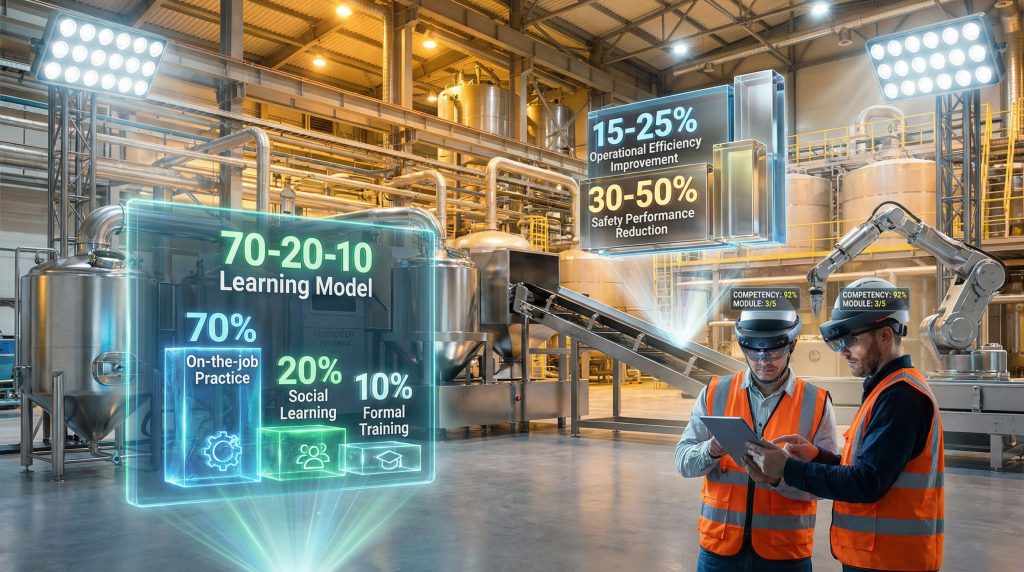
The 70-20-10 learning model has gained widespread adoption in industrial training applications due to its emphasis on practical, experiential learning over traditional classroom instruction. This framework allocates learning resources strategically across different modalities to maximise skill development effectiveness.
The 70-20-10 Learning Model in Industrial Applications
| Learning Type | Percentage | Application Method | Effectiveness Rating |
|---|---|---|---|
| On-the-job Practice | 70% | Direct operational experience | 9.2/10 |
| Social Learning | 20% | Mentorship and peer networks | 8.7/10 |
| Formal Training | 10% | Digital platforms and materials | 8.1/10 |
The 70% allocation to on-the-job practice reflects the reality that industrial competencies develop most effectively through direct engagement with operational equipment, processes, and problem-solving scenarios. This approach acknowledges that technical skills in mining and chemical operations involve substantial procedural knowledge that cannot be fully transmitted through theoretical instruction.
Social learning components leverage internal expertise through structured mentorship and peer development networks. The Mosaic Escola Industrial program implements this through multiplicador systems where experienced employees serve as internal trainers and knowledge facilitators across geographically distributed operations.
Formal training materials serve as scaffolding and reference documentation supporting practical learning activities. Digital content including videos and interactive modules provides standardised information delivery while maintaining consistency across multiple operational sites.
Specialised Training Track Development
Maintenance-specific curricula address the technical complexity of mechanical, electrical, and automation systems common in industrial operations. These programs cover valve systems, pipe configurations, hydraulic mechanics, and diagnostic procedures essential for equipment reliability and operational continuity.
Process-oriented learning paths for mining, beneficiation, and chemical operations focus on the specific technical requirements and safety protocols associated with each operational domain. Training content addresses ore processing techniques, chemical reaction management, and quality control procedures specific to each production stage.
Cross-functional competency building between operational departments enables workforce flexibility and improved problem-solving capabilities. Programs that develop understanding of upstream and downstream processes create more effective technical teams capable of systems-level thinking. Additionally, AI in mining operations requires specialised training modules to ensure workforce readiness for technological integration.
Leadership development integration within technical training frameworks prepares high-performing technicians for supervisory roles while maintaining technical competence. This approach ensures continuity of technical expertise in management positions.
Key Success Factors for Large-Scale Industrial Training Implementation
Successful large-scale industrial training implementation requires systematic organisational change management and structured deployment methodologies that account for operational complexity and geographic distribution challenges.
Organisational Change Management Strategies
Phased rollout methodologies across multiple operational sites reduce implementation risk while allowing methodology refinement between deployment stages. The Mosaic Escola Industrial program followed a deliberate three-phase approach: pilot implementation in maintenance operations, expansion to industrial and distribution facilities, and final extension to mining and beneficiation processes.
Internal champion identification and multiplicador training programs create sustainable training capacity without proportional increases in dedicated training staff. These internal trainers extend program reach while ensuring knowledge retention through repeated teaching and explanation activities.
Technology platform integration with existing HR and operational systems enables comprehensive tracking and performance correlation. The Workday Learning platform provides infrastructure for course management, progress monitoring, and analytics while integrating with broader human capital management systems.
Continuous improvement feedback loops for program optimisation incorporate learner feedback, operational performance data, and changing business requirements. Successful programs establish regular review cycles that update content, delivery methods, and performance metrics based on operational results.
Content Development and Curation Best Practices
Converting tacit operational knowledge into structured, transferable learning materials requires systematic documentation of expert practices, video-based demonstrations, and scenario-based problem-solving exercises that mirror real-world operational challenges.
Content development processes must involve experienced operational personnel who understand both theoretical principles and practical applications. The most effective programs combine subject matter expertise with instructional design capabilities to create materials that bridge the gap between formal technical education and specific operational requirements.
Customisation of training materials within learning management platforms enables role-specific content delivery while maintaining organisational consistency. The Mosaic program customised over 200 distinct materials within their learning platform to reflect operational context specificity across different facility types.
For those new to the industry, implementing a comprehensive mining for beginners guide ensures foundational knowledge across all skill levels.
Measuring Training Impact on Business Outcomes
Operational efficiency improvements post-training implementation provide quantifiable evidence of program effectiveness. Organisations typically measure throughput increases, cycle time reductions, and quality consistency improvements following comprehensive training program completion.
Safety performance correlations with technical competency levels demonstrate clear value creation through reduced incident rates, improved hazard identification, and enhanced emergency response capabilities.
Employee retention rates in technical roles following training participation indicate program effectiveness in career development and job satisfaction. Well-designed programs create clear advancement pathways that encourage long-term employment in technical positions.
Production consistency metrics linked to workforce skill development show the relationship between training completion and operational reliability. Organisations track equipment uptime, product quality variance, and maintenance efficiency as indicators of training effectiveness.
Scaling Technical Training Across Multiple Industrial Sites
Multi-site implementation presents unique challenges requiring careful balance between standardisation and localisation while maintaining consistent quality and effectiveness across diverse operational environments.
Multi-Site Implementation Challenges and Solutions
Standardisation versus localisation balance in training content requires careful consideration of common technical principles while accommodating site-specific equipment, processes, and operational contexts. Successful programs establish core competency frameworks while allowing customisation for local operational requirements.
Resource allocation strategies for geographically distributed operations must account for varying facility sizes, operational complexity, and local infrastructure capabilities. Organisations typically implement hub-and-spoke models where larger facilities serve as regional training centres supporting smaller operations.
Quality assurance protocols across different training delivery teams ensure consistent learning outcomes regardless of geographic location or local training staff. These systems include trainer certification requirements, content standardisation processes, and regular audit procedures.
Technology infrastructure requirements for consistent program delivery across multiple sites demand robust connectivity, platform compatibility, and technical support capabilities. Organisations must invest in reliable digital infrastructure to support distributed learning delivery.
Integration with Broader Organisational Development
Career progression pathway alignment with training completion milestones creates clear advancement opportunities that motivate participation and retention. Programs that connect skill development with promotion criteria and compensation advancement achieve higher engagement rates.
Performance management system integration incorporating competency assessments provides objective measurement of employee development and identifies areas requiring additional training support.
Succession planning coordination with technical skill development programs ensures organisational continuity in critical technical roles. These systems identify high-potential employees and provide accelerated development pathways for future leadership positions.
Innovation culture building through continuous learning initiatives encourages employee engagement in process improvement and technological advancement activities. Recent innovation expo insights highlight the importance of continuous learning in maintaining competitive advantages.
Technology's Role in Modern Industrial Training Programs
Digital technology integration in industrial training programs enables scalable delivery, consistent content management, and comprehensive performance tracking across complex organisational structures and geographic distributions.
Digital Learning Platform Capabilities
Learning Management System (LMS) selection criteria for industrial environments must prioritise reliability, offline accessibility, and integration capabilities with existing enterprise systems. Platforms must support diverse content formats while providing robust tracking and reporting functionality.
Mobile accessibility requirements for field-based operational staff enable training access during shift changes, maintenance windows, and remote work assignments. Mobile optimisation becomes critical for programs serving employees across multiple shifts and geographic locations.
Offline content delivery solutions for remote operational sites address connectivity limitations common in mining and industrial facilities. Programs must provide downloadable content and local synchronisation capabilities to ensure consistent access.
Progress tracking and analytics capabilities for management oversight enable data-driven decision making regarding training effectiveness, resource allocation, and program optimisation. Advanced analytics can correlate training completion with operational performance metrics.
Content Format Optimisation for Industrial Learners
Video-based learning effectiveness in technical skill development provides visual demonstration of complex procedures, equipment operation, and safety protocols that text-based materials cannot adequately convey.
Interactive simulation tools for high-risk operational scenarios enable safe practice of emergency procedures and complex operational sequences without exposure to actual hazards or production disruption.
Augmented reality applications in maintenance and safety training overlay digital information onto physical equipment, providing contextualised learning experiences that bridge theoretical knowledge with practical application.
Microlearning strategies for busy operational schedules deliver training content in short, focused modules that accommodate shift work patterns and operational responsibilities.
Measuring Return on Investment for Industrial Training
Financial impact assessment of industrial training programs requires comprehensive measurement frameworks that capture both direct operational improvements and broader organisational benefits over extended timeframes.
Financial Impact Assessment Methodologies
| Metric Category | Key Indicators | Measurement Period | Target Improvement |
|---|---|---|---|
| Operational Efficiency | Production throughput, downtime reduction | Quarterly | 15-25% improvement |
| Safety Performance | Incident rates, near-miss reporting | Monthly | 30-50% reduction |
| Quality Metrics | Product consistency, rework rates | Weekly | 20-35% improvement |
| Employee Engagement | Retention, satisfaction scores | Bi-annually | 10-20% increase |
Operational efficiency improvements typically manifest through increased production throughput, reduced equipment downtime, and improved maintenance effectiveness. Organisations measure these improvements through baseline comparisons and statistical analysis of performance trends.
Safety performance enhancements provide both financial and regulatory compliance benefits through reduced incident costs, lower insurance premiums, and improved regulatory standing. These improvements often show the most dramatic ROI calculations due to the high cost of industrial accidents.
Quality consistency improvements reduce waste, rework costs, and customer complaints while improving product reliability and market reputation. These benefits compound over time as improved processes become embedded in operational culture.
Long-term Strategic Benefits
Organisational knowledge retention during workforce transitions protects critical technical expertise from loss due to retirements, turnover, or organisational changes. This preservation creates sustainable competitive advantages in technical capability.
Competitive advantage building through superior operational capabilities enables organisations to achieve lower production costs, higher quality standards, and improved reliability compared to competitors with less comprehensive training programs.
Regulatory compliance enhancement through systematic competency development reduces regulatory risk while improving relationships with oversight agencies and industry associations.
Innovation capacity expansion via cross-functional skill building creates workforce capabilities for process improvement, technology adoption, and operational optimisation initiatives. The Mosaic consolidates industrial school training initiative exemplifies how comprehensive programs can strengthen industrial capabilities at scale.
The next major ASX story will hit our subscribers first
Future Trends in Industrial Training and Development
Emerging technologies and evolving industry requirements drive continuous innovation in industrial training methodologies, creating opportunities for enhanced effectiveness and expanded capabilities in workforce development programs.
Emerging Technologies and Methodologies
Artificial intelligence integration for personalised learning paths analyses individual performance data to recommend optimal training sequences, identify knowledge gaps, and predict skill development needs based on career trajectories and operational requirements.
Virtual reality applications in hazardous environment training provide immersive simulation experiences that replicate dangerous scenarios without physical risk, enabling comprehensive emergency response practice and complex procedure rehearsal.
Predictive analytics for identifying skill gaps before they impact operations use workforce data, performance trends, and operational forecasts to anticipate training needs and optimise resource allocation.
Blockchain credentialing systems for portable competency verification create secure, verifiable records of training completion and skill certification that transfer across employers and geographic regions.
Industry Evolution Drivers
Sustainability skill requirements in traditional industrial sectors demand new competencies in environmental management, energy efficiency, and sustainable operational practices as organisations adapt to changing regulatory and market requirements.
Digital transformation competencies for operational technology integration require workforce development in automation systems, data analytics, and digital process management as industrial operations become increasingly connected and intelligent.
Cross-cultural training needs in globally distributed operations address communication, collaboration, and operational coordination challenges as organisations expand across diverse geographic and cultural contexts.
Regulatory compliance evolution requiring continuous competency updates drives ongoing training program adaptation as environmental, safety, and operational regulations continue to evolve and expand. Furthermore, the Mosaic strengthens industrial training capacity approach demonstrates how organisations can scale their training efforts effectively whilst maintaining quality standards.
Disclaimer: This analysis is based on publicly available information and industry research. Training program effectiveness may vary based on organisational context, implementation quality, and operational environment. Organisations should conduct comprehensive needs assessments before implementing large-scale training initiatives.
For organisations seeking additional insights into industrial training methodologies in the mining and fertiliser sectors, the Brazilian Mining Institute (IBRAM) publishes research on workforce development initiatives that provide valuable perspectives on industry best practices and emerging trends in technical training programs.
Looking to Capitalise on Mining Training Innovations?
Discovery Alert's proprietary Discovery IQ model delivers instant notifications when ASX-listed companies announce significant training partnerships or operational improvements that could signal enhanced production capabilities and investment opportunities. Begin your 30-day free trial today to stay ahead of market-moving developments in the mining and industrial sectors.