June 4, 2026
Understanding the Industrial Transformation Through Tariff Architecture
Modern economies face unprecedented decisions about balancing domestic industrial capacity with global competitiveness. The intersection of trade policy and manufacturing strategy requires sophisticated frameworks that address both immediate market dynamics and long-term industrial development. In this context, Trump expected to overhaul steel and aluminum tariffs represents a critical development for reshaping economic landscapes, influencing everything from raw material pricing to finished product competitiveness across international markets.
The complexity of implementing differentiated trade barriers reflects deeper questions about industrial policy effectiveness. When governments attempt to stimulate domestic production while maintaining competitive advantages in value-added manufacturing, they must navigate intricate relationships between upstream suppliers, downstream manufacturers, and global supply chain networks that have evolved over decades.
When big ASX news breaks, our subscribers know first
What Does Trump's Proposed Tariff Restructuring Mean for Global Trade Strategy?
Understanding the Two-Tier Tariff Architecture
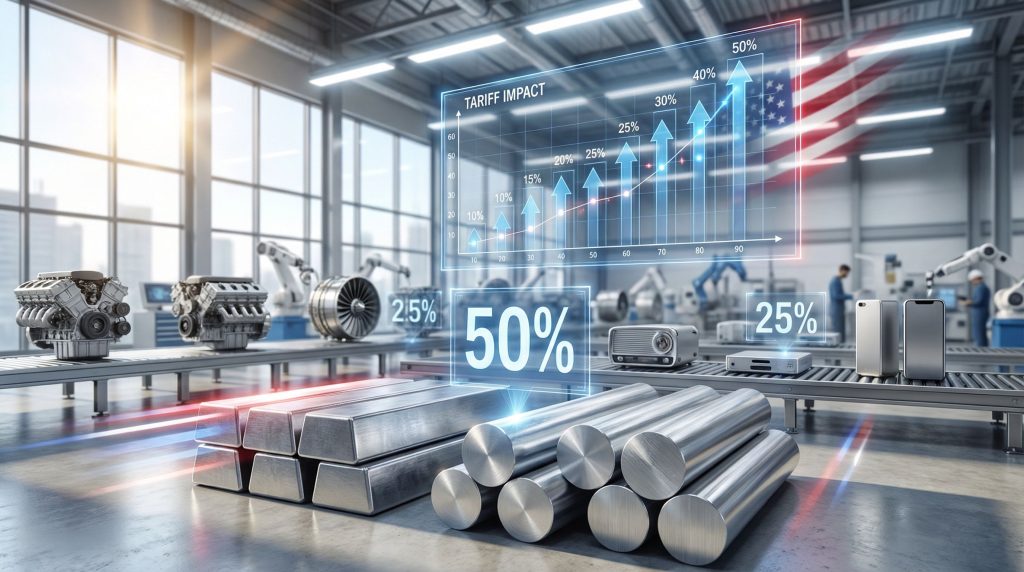
The proposed restructuring involves implementing a 50% tariff on commodity-grade steel and aluminum products while maintaining a 25% rate on finished products incorporating these materials. This represents a fundamental shift from uniform tariff applications toward more nuanced industrial policy tools designed to encourage domestic value-added manufacturing.
According to Reuters reporting from April 1, 2026, citing Wall Street Journal sources, the Trump administration is preparing to issue presidential proclamations that could be implemented as early as that week. This timeline suggests an accelerated implementation process compared to traditional trade policy adjustments.
The differentiated rate structure creates distinct economic incentives:
- Commodity-grade materials: 50% tariff creates substantial protection for domestic basic production
- Finished products: 25% rate maintains competitive pressure while providing measured protection
- Value-added manufacturing: Encourages domestic processing and assembly operations
- Supply chain reconfiguration: Incentivizes companies to establish finishing facilities within tariff-protected markets
Historical Context: From Section 232 to Strategic Industrial Policy
The evolution from uniform tariff structures to differentiated rates represents a significant policy development. Previous Section 232 national security tariffs implemented during Trump's first administration established baseline protection levels, but the new two-tier approach suggests more sophisticated industrial planning objectives.
Market data from the proposed implementation date reveals complex commodity pricing dynamics. On April 1, 2026, aluminum futures traded at $3,314.25 per ton with a decline of 1.21%, while other metals showed varied responses. Copper gained 2.72% to reach $5.6358 per pound, and precious metals demonstrated strong performance with gold futures advancing 3.84% to $4,713.3 per ounce.
However, these price movements occurred against a backdrop of multiple market influences, including geopolitical events affecting Gulf aluminum production. Emirates Global Aluminium halted operations following regional tensions, contributing to aluminum price volatility that reached 2% increases on the London Metal Exchange during the same trading session.
How Will Differentiated Tariff Rates Impact Manufacturing Supply Chains?
Upstream vs. Downstream Industry Effects
The two-tier structure creates fundamentally different economic pressures across the manufacturing value chain. Raw material producers benefit from enhanced protection against international competition, while downstream manufacturers face increased input costs offset by protection for their finished products. Furthermore, the tariffs impact on investments requires careful consideration across sectors.
Upstream sector implications include:
- Enhanced domestic steel and aluminum production viability
- Increased investment incentives for basic industrial capacity
- Protection from low-cost international commodity suppliers
- Potential for domestic capacity expansion projects
Downstream manufacturing considerations involve:
- Higher raw material input costs affecting production economics
- Competitive advantages over imports of finished products
- Incentives to source materials domestically rather than internationally
- Supply chain optimization toward North American sourcing
Strategic Industry Responses and Adaptation Frameworks
Manufacturing companies must evaluate their strategic positioning under the new tariff regime. The differentiated rates create opportunities for vertical integration strategies where companies can capture value across multiple production stages while benefiting from tariff protection.
Key strategic considerations include:
- Supply chain geographic optimization
- Inventory management during transition periods
- Contract renegotiation with international suppliers
- Domestic sourcing partnership development
- Production facility location decisions
The tariff structure particularly influences companies with complex supply chains spanning multiple countries. Organizations must reassess make-or-buy decisions, supplier relationships, and production location strategies to optimize their competitive position under the new trade framework.
What Are the Macroeconomic Implications of Tiered Tariff Structures?
Inflationary Pressure Analysis
Differentiated tariff rates create complex inflationary dynamics that vary across economic sectors. While raw material cost increases affect producers immediately, the extent of price transmission to consumers depends on competitive conditions, substitution possibilities, and demand elasticity across different product categories. Moreover, US tariffs and inflation remain interconnected policy concerns.
Inflationary transmission mechanisms include:
- Direct cost pass-through: Higher raw material costs reflected in finished product pricing
- Indirect substitution effects: Consumer behaviour shifts toward domestic alternatives
- Regional price variations: Geographic differences based on local production capacity
- Temporal adjustment patterns: Price changes occurring over extended implementation periods
The Federal Reserve faces challenges in monetary policy calibration when trade policy creates sector-specific inflationary pressures. Traditional policy tools must account for trade-induced price changes that differ from demand-driven inflation patterns.
International Trade Balance Projections
The tariff restructuring aims to improve domestic trade balances by encouraging import substitution while maintaining competitiveness in value-added exports. This strategy requires sufficient domestic production capacity to meet increased demand for protected products.
Trade balance considerations include:
- Import volume reductions in protected commodity categories
- Export competitiveness changes for finished products
- Retaliatory trade policy risks from international partners
- Supply chain resilience improvements through domestic sourcing
International trading partners may implement responsive measures affecting U.S. export markets. The World Trade Organisation framework provides dispute resolution mechanisms, but trade tensions can escalate before formal resolution processes conclude.
How Do Steel and Aluminum Markets Respond to Policy Uncertainty?
Price Discovery Mechanisms Under Tariff Regimes
Commodity markets demonstrate significant sensitivity to trade policy announcements, with futures markets incorporating expected policy impacts into current pricing. The April 1, 2026 market data illustrates how multiple factors influence price discovery during periods of policy uncertainty.
Market response patterns include:
- Futures curve adjustments reflecting expected supply and demand changes
- Arbitrage opportunities between domestic and international markets
- Volatility increases during policy announcement periods
- Trading volume spikes as market participants adjust positions
Market Insight: The simultaneous occurrence of geopolitical events and trade policy announcements on April 1, 2026 demonstrates how multiple factors can amplify commodity price volatility, making it challenging to isolate individual policy impacts.
Professional commodity traders adjust hedging strategies and inventory positions based on anticipated tariff implementation timelines. Companies with significant raw material requirements often increase inventory levels before tariff implementation to minimise cost impacts.
Global Supply Chain Resilience Testing
The proposed tariff structure tests international supply chain resilience by creating economic incentives for geographic production shifts. Companies evaluate whether to maintain international sourcing relationships despite higher costs or transition toward domestic suppliers.
Resilience factors include:
- Supplier diversification strategies to reduce dependency risks
- Geographic production distribution across tariff jurisdictions
- Contract flexibility provisions for policy change adaptation
- Alternative sourcing capability development for supply security
Long-term supply chain resilience requires balancing cost optimisation with risk management. The tariff structure encourages companies to develop domestic supply relationships that provide security against international trade disruptions.
What Investment Opportunities Emerge from Tariff Restructuring?
Domestic Capacity Expansion Scenarios
The enhanced protection for commodity-grade materials creates investment incentives for domestic steel and aluminum production capacity. Companies can justify capital expenditures based on improved competitive positioning against international suppliers. Additionally, Trump tariff implications extend beyond immediate market effects.
Investment opportunities include:
- Production facility modernisation to improve efficiency and quality
- Capacity expansion projects to meet increased domestic demand
- Technology upgrades for competitive advantage development
- Regional development initiatives in areas with favourable operating conditions
Steel and aluminum production requires substantial energy inputs, making regions with competitive energy costs particularly attractive for capacity expansion. The relationship between energy costs and production economics becomes critical for investment decision-making.
Strategic Sector Positioning for Long-term Growth
Protected domestic markets provide platforms for developing competitive advantages that extend beyond tariff protection periods. Companies can invest in innovation, workforce development, and operational excellence while benefiting from trade protection.
Strategic positioning elements include:
- Research and development investments for technological advancement
- Workforce training programmes for specialised manufacturing skills
- Quality improvement initiatives for premium product development
- Export market development leveraging domestic market strength
The defence industrial base represents a particularly important sector for strategic development. National security considerations support domestic capacity maintenance even when international alternatives offer cost advantages.
The next major ASX story will hit our subscribers first
Regional Integration Under New Tariff Framework
USMCA Considerations
The United States-Mexico-Canada Agreement provides frameworks for regional trade integration that interact with tariff policy implementation. Regional sourcing preferences can amplify the benefits of domestic content requirements while maintaining competitive supply chain options. Furthermore, US tariffs on Canadian industries create specific regional dynamics.
Regional integration benefits include:
- Trilateral supply chain optimisation across North American markets
- Energy resource advantages for energy-intensive manufacturing processes
- Transportation infrastructure utilisation for efficient regional distribution
- Regulatory coordination for consistent operational standards
Mexican steel production facilities and Canadian aluminum smelters represent important components of regional supply networks. The tariff structure may encourage increased integration of these production capabilities with U.S. manufacturing operations.
Long-term Industrial Policy Coherence
Sustainable industrial policy requires coordination across multiple government initiatives including infrastructure investment, research funding, workforce development, and environmental regulations. The tariff structure provides temporary protection while longer-term competitiveness factors develop.
Policy coherence elements include:
- Infrastructure investment coordination for manufacturing support
- Education and training alignment with industrial workforce needs
- Environmental standards integration for sustainable production practices
- Innovation ecosystem development for technological advancement
Clean energy infrastructure development creates substantial demand for steel and aluminum products. Coordination between trade protection and renewable energy initiatives can amplify the benefits of both policy approaches.
Global Trade War Implications
Escalating Trade Tensions
The implementation of Trump expected to overhaul steel and aluminum tariffs occurs within broader patterns of international trade tensions. As countries respond to U.S. tariff policies with retaliatory measures, the risk of escalating trade conflicts increases significantly.
The US‑China trade war effects demonstrate how bilateral disputes can expand into multilateral trade disruptions. European Union officials have indicated potential responses to discriminatory U.S. tariff policies, whilst Asian trading partners evaluate their own protective measures.
Trade war escalation patterns include:
- Sectoral retaliation targeting specific American export industries
- Regional trade bloc formation excluding U.S. participation
- Alternative supply chain development bypassing American markets
- Currency manipulation concerns affecting competitive positioning
Multilateral Trade System Stability
The World Trade Organisation faces challenges maintaining dispute resolution effectiveness when major economies implement unilateral trade measures. The two-tier tariff structure may test WTO principles regarding most-favoured-nation treatment and non-discrimination.
International trade law provides mechanisms for challenging discriminatory tariffs, but enforcement relies on voluntary compliance and retaliatory authorisation. The effectiveness of multilateral trade governance depends on major economies' commitment to rule-based systems.
Frequently Asked Questions
Why implement different rates for raw materials versus finished products?
The differentiated approach balances protection for basic industrial capacity with competitive pressure for value-added manufacturing. This structure encourages companies to establish domestic finishing operations while maintaining basic production capabilities for national security purposes.
How does this compare to previous trade policy approaches?
Earlier tariff implementations typically applied uniform rates across product categories. The two-tier structure represents more sophisticated industrial policy that attempts to optimise outcomes across different stages of the manufacturing value chain.
What timeline should businesses expect for implementation?
Presidential proclamations can be issued rapidly following policy announcements. However, implementation details, exemption processes, and industry transition periods require careful planning to minimise supply chain disruptions.
How will this affect international trade relationships?
Trading partners may implement responsive measures affecting U.S. exports. The differentiated structure may be viewed more favourably than uniform tariffs because it maintains competitive pressure for finished products whilst protecting basic industrial capacity.
What sectors benefit most from the tariff restructuring?
Basic steel and aluminum production receives the highest protection levels, whilst value-added manufacturing benefits from reduced competition for finished products. The optimal positioning involves companies with integrated production capabilities across multiple value chain stages.
Investment Disclaimer: This analysis is for informational purposes only and does not constitute investment advice. Tariff policy implementation involves significant uncertainties, and actual outcomes may differ materially from projections. Investors should conduct thorough due diligence and consider consulting qualified advisors before making investment decisions related to trade policy developments.
Exploring Opportunities in Metal-Related ASX Companies?
Discovery Alert's proprietary Discovery IQ model delivers real-time alerts on significant metal discoveries across the ASX, enabling subscribers to identify actionable opportunities ahead of broader markets during periods of trade policy volatility. Begin your 14-day free trial at Discovery Alert today and secure your market-leading advantage whilst global supply chains restructure.