May 22, 2026
Understanding Industrial Water Infrastructure Through Strategic Lens
South Australia's resource extraction industry operates within increasingly complex water security constraints that fundamentally reshape operational viability across mining, energy production, and industrial manufacturing sectors. The Northern Water Supply Project South Australia represents a transformative infrastructure initiative addressing these challenges through advanced desalination technology and extensive distribution networks. These systemic pressures reflect broader global trends where traditional water sources face mounting stress from climate variability, competing demands, and regulatory frameworks that prioritise environmental sustainability alongside economic development.
The convergence of water scarcity challenges with growing demand for critical minerals positions infrastructure investment decisions as strategic determinants of long-term industrial competitiveness. Furthermore, understanding how industry evolution trends shape water infrastructure requirements becomes essential. When examining large-scale desalination projects targeting resource-rich regions, the analysis must consider interconnected factors spanning geological constraints, market dynamics, technological capabilities, and regulatory environments that collectively influence project viability and regional economic transformation.
When big ASX news breaks, our subscribers know first
The Northern Water Supply Project Architecture
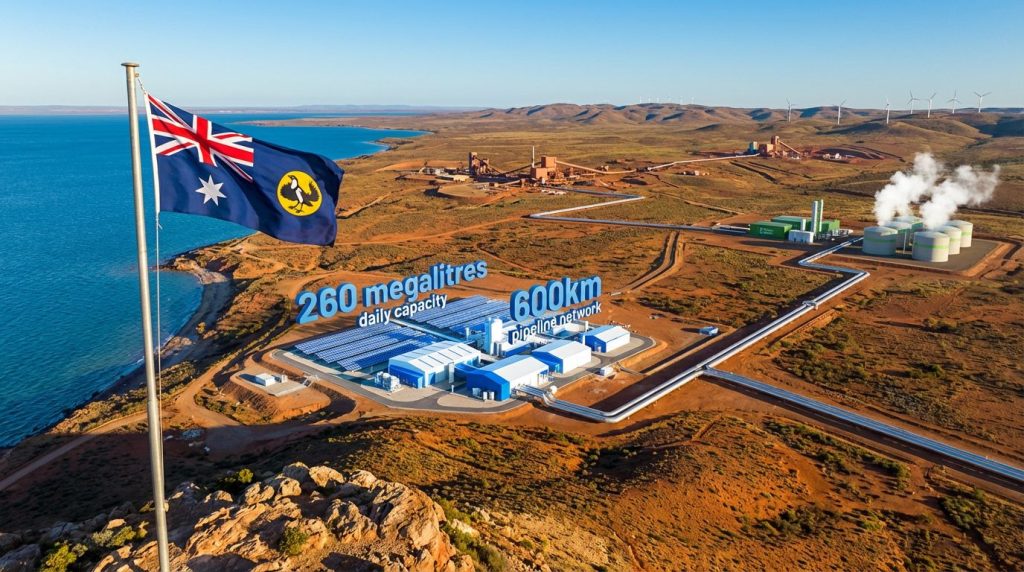
The Northern Water Supply Project South Australia represents a comprehensive approach to addressing industrial water constraints through advanced desalination technology and extensive distribution infrastructure. This initiative targets the delivery of 260 megalitres of desalinated seawater daily across South Australia's Upper Spencer Gulf, Eastern Eyre Peninsula, and Far North regions through a 600-kilometre pipeline network.
The project's technical specifications reflect sophisticated engineering requirements designed to serve industrial operations requiring consistent, high-volume water supplies independent of climatic conditions. The reverse osmosis desalination system will process Spencer Gulf seawater through advanced pre-treatment and membrane filtration technologies, producing industrial-grade water suitable for mining operations, hydrogen production, and other industrial applications.
Project Timeline and Development Phases:
- 2025: Detailed bid preparation and evaluation phase
- 2026/27: Final investment decision target
- 2026: Construction commencement planned
- Late 2020s: Project completion and full operational capacity
The staged development approach allows for capacity scaling based on demand growth and technological optimisation throughout the construction period. This flexibility proves particularly valuable given the long-term nature of industrial offtake agreements and evolving water requirements across different sectors.
Strategic Site Selection and Comparative Analysis
The selection of Mullaquana Station, positioned approximately 20 kilometres south of Whyalla, emerged from comprehensive multi-criteria analysis weighing economic efficiency, environmental impact, and operational feasibility against alternative locations. This analytical framework considered infrastructure development costs, marine ecosystem effects, electrical grid connectivity, and industrial integration opportunities.
Key Location Advantages:
- Infrastructure Cost Reduction: Eliminates approximately 200 kilometres of pipeline construction compared to Cape Hardy alternatives
- Spencer Gulf Access: Direct seawater intake capabilities with established marine infrastructure
- Grid Integration: Proximity to existing electrical transmission networks reduces connection costs
- Industrial Synergies: Strategic positioning near established heavy industry and port facilities
The comparative analysis with Cape Hardy on the eastern Eyre Peninsula revealed significant cost differentials primarily driven by pipeline construction requirements and marine access considerations. Additionally, the South Australian Government's project overview provides detailed technical specifications supporting these site selection decisions. While Cape Hardy offered certain environmental advantages, the economic analysis favoured Mullaquana Station's reduced infrastructure requirements and operational efficiency benefits.
Environmental and Logistical Considerations:
| Factor | Mullaquana Station | Cape Hardy Alternative |
|---|---|---|
| Pipeline Distance | 400km to key users | 600km to key users |
| Marine Access | Direct Spencer Gulf | Eastern Eyre Peninsula |
| Environmental Impact | Moderate marine disruption | Lower marine impact |
| Grid Connectivity | Immediate proximity | Extended connection required |
| Construction Timeline | Accelerated development | Extended development period |
Industrial Beneficiaries and Market Dynamics
The project's industrial focus reflects South Australia's position as host to approximately 70% of Australia's economic copper reserves, positioning the region as strategically important for global mineral supply chains. BHP's copper operations represent the primary offtake commitment, though the infrastructure creates opportunities for broader industrial development across multiple sectors.
Primary Industrial Applications:
Copper Mining Operations
Current copper extraction and processing operations face increasing constraints from traditional groundwater sources, with climate variability creating additional supply uncertainty. The Northern Water Supply Project South Australia provides climate-independent supply security enabling production expansion and operational optimisation without dependence on seasonal precipitation or aquifer sustainability. However, complex permitting insights must be navigated throughout development phases.
Green Hydrogen Manufacturing
Emerging hydrogen production facilities require substantial water inputs for electrolysis processes, with each tonne of hydrogen production requiring approximately 9-10 tonnes of water. The project positions South Australia to capture growing Asian demand for clean hydrogen exports, particularly from Japan and South Korea seeking carbon-neutral energy sources for industrial applications. Furthermore, comprehensive energy transition insights reveal how water security supports broader clean energy objectives.
Advanced Manufacturing
The reliable water supply enables development of downstream processing facilities for battery metals, rare earth elements, and other critical minerals requiring water-intensive refining processes. This vertical integration potential creates additional economic value from raw material extraction while supporting global supply chain diversification objectives.
Regional Economic Impact Projections:
- Construction Employment: Over 4,000 jobs annually during construction phase
- Operational Benefits: Long-term industrial expansion opportunities
- Economic Multiplier Effects: Enhanced regional competitiveness for international investment
- Revenue Structure: User-pays model through commercial offtake agreements
Procurement Strategy and Competitive Framework
The competitive procurement process shortlisted two major consortia for the design, build, operate, and maintain contract structure, reflecting industry best practices for large-scale infrastructure delivery. This approach ensures technical excellence while maintaining cost efficiency through market-tested proposals and competitive bidding processes.
Shortlisted Consortia:
WaterConnector Consortium:
- Acciona Construction Australia
- Acciona Agua Australia
Watermark Consortium:
- Clough (Webuild Group)
- Fisia Italimpianti (Webuild Group)
- CPB Contractors
- Sacyr Water
The initial registration of interest attracted responses from nearly 40 organisations, demonstrating significant industry interest and competitive depth. The subsequent selection process evaluated technical capabilities, financial capacity, operational experience, and delivery methodologies to identify the most qualified consortia for detailed bid preparation.
DBOM Contract Structure Benefits:
- Integrated design and construction accountability
- Long-term operational performance incentives
- Risk transfer to experienced operators
- Lifecycle cost optimisation
- Technology innovation incentives
Technical Engineering and Innovation Requirements
The project's technical complexity requires sophisticated engineering solutions addressing Spencer Gulf's specific environmental conditions, pipeline network optimisation, and renewable energy integration. These technical challenges demand innovative approaches to desalination technology, water distribution systems, and sustainable operations.
Desalination Technology Specifications:
- Reverse osmosis membrane systems designed for Spencer Gulf salinity conditions
- Advanced pre-treatment systems protecting marine life during intake processes
- Energy recovery systems maximising operational efficiency
- Automated monitoring and control systems ensuring water quality consistency
Pipeline Engineering Challenges:
- 600-kilometre distribution network requiring sophisticated pressure management
- Multiple pump station coordination across diverse terrain
- Storage and buffer system integration
- Corrosion protection and maintenance access considerations
Renewable Energy Integration:
The project incorporates clean energy sources to power desalination operations, requiring coordination with South Australia's renewable energy grid infrastructure. This integration supports the state's renewable energy leadership while minimising operational carbon emissions from water production processes. Consequently, achieving decarbonisation benefits becomes integral to operational success.
Technical Performance Parameters:
| System Component | Specification | Performance Target |
|---|---|---|
| Daily Production Capacity | 260 megalitres | 95% availability |
| Energy Consumption | TBD kWh/ML | Industry-leading efficiency |
| Water Quality | Industrial grade | Continuous monitoring |
| Distribution Network | 600km pipeline | 99% uptime target |
| Renewable Energy | Variable capacity | 100% clean energy goal |
The next major ASX story will hit our subscribers first
Climate Resilience and Strategic Water Security
Traditional water sources across South Australia face mounting pressure from climate variability, creating strategic vulnerabilities for industrial operations dependent on consistent supply availability. The Northern Water Supply Project South Australia addresses these challenges by providing climate-independent water security while supporting broader decarbonisation objectives through industrial expansion capabilities.
Climate Vulnerability Reduction:
- Independence from rainfall and seasonal precipitation patterns
- Reduced exposure to drought conditions affecting traditional sources
- Enhanced operational certainty for long-term industrial planning
- Risk mitigation for climate-sensitive agricultural operations
Decarbonisation Support:
The project enables green hydrogen production and renewable energy manufacturing, contributing to Australia's net-zero transition objectives while maintaining industrial competitiveness. This dual benefit creates synergies between water security and climate action initiatives, supporting comprehensive sustainability transformation across industrial sectors.
Regional Water Source Diversification:
| Water Source | Climate Dependency | Industrial Suitability | Long-term Reliability |
|---|---|---|---|
| River Murray | High | Moderate | Declining |
| Great Artesian Basin | Moderate | High | Uncertain |
| Local Groundwater | High | Variable | Poor |
| Desalinated Seawater | None | Excellent | High |
Regulatory Framework and Environmental Stewardship
The project requires comprehensive environmental assessment under the Environment Protection and Biodiversity Conservation Act, addressing marine ecosystem impacts, pipeline construction effects, and long-term operational sustainability. These regulatory requirements ensure environmental protection while enabling economic development objectives.
Environmental Assessment Scope:
- Marine ecosystem impact analysis for seawater intake systems
- Pipeline corridor environmental sensitivity evaluation
- Long-term sustainability and monitoring protocols
- Cumulative impact assessment with existing industrial operations
Stakeholder Engagement Framework:
Ongoing consultation processes address community concerns while maximising local economic benefits and employment opportunities. Traditional landowner negotiations and native title considerations require careful management to ensure cultural heritage protection and appropriate benefit-sharing arrangements. Moreover, the National Water Grid project profile outlines federal coordination requirements.
Cultural Heritage Considerations:
- Traditional landowner consultation and agreement processes
- Native title recognition and compensation frameworks
- Cultural heritage site protection during construction
- Community benefit-sharing mechanisms
Economic Transformation and Competitive Positioning
The Northern Water Supply Project South Australia represents strategic infrastructure investment addressing long-term economic competitiveness and industrial diversification objectives. By removing water constraints from South Australia's resource-rich regions, the project enables industrial expansion while supporting Australia's transition to clean energy economy participation.
Global Context and Strategic Importance:
South Australia's substantial copper reserves position the state as a critical supplier for global decarbonisation efforts, with copper demand projected to increase significantly as renewable energy infrastructure expands worldwide. However, water constraints have historically limited production expansion capabilities and industrial competitiveness.
Investment Attraction Benefits:
- Reduced operational risk for international mining companies
- Enhanced project economics for new developments
- Improved regional competitiveness for capital investment
- Support for value-added processing and manufacturing
Long-term Economic Vision:
The project creates foundation infrastructure supporting diverse industrial development beyond immediate mining applications. Green hydrogen production, advanced manufacturing, and renewable energy component production all benefit from reliable water security while contributing to regional economic diversification.
Success Factors for Implementation:
- Effective procurement management ensuring technical excellence
- Environmental stewardship maintaining community support
- Stakeholder engagement addressing diverse interests
- Financial structuring balancing public and private interests
With construction scheduled to commence in 2026, the Northern Water Supply Project South Australia will fundamentally reshape South Australia's industrial landscape while addressing critical infrastructure needs supporting long-term economic growth and environmental sustainability objectives. The project's success depends on maintaining technical excellence, environmental responsibility, and community engagement throughout the development and operational phases.
Please note: This analysis incorporates forward-looking statements and projections that involve inherent uncertainties. Actual outcomes may vary significantly based on market conditions, regulatory changes, and operational factors not fully predictable at this time. Investment and development decisions should consider comprehensive due diligence beyond the scope of this overview.
Interested in Water-Dependent Mining Investments?
Discovery Alert's proprietary Discovery IQ model delivers real-time alerts on significant ASX mineral discoveries, instantly empowering subscribers to identify actionable opportunities in water-intensive mining operations ahead of the broader market. Begin your 30-day free trial today and secure your market-leading advantage in resource sector investments.