June 30, 2026
Industrial water management across Latin America faces unprecedented transformation as regulatory frameworks shift toward state-controlled resource allocation. This evolution reflects broader global trends where governments reassess water as a strategic asset rather than a tradeable commodity. Furthermore, the reform to the National Water Law in Mexico exemplifies how policy adjustments fundamentally alter how industries secure long-term operational sustainability in water-stressed regions.
Mexico's Shift Toward Centralized Water Control
The proposed reform to the National Water Law in Mexico represents the most comprehensive restructuring of water governance in decades. This legislative overhaul eliminates the transferability of water concessions, treating water access as a non-negotiable public service rather than a market commodity. Consequently, industries that previously relied on secondary water markets to secure operational resources now face a centralized allocation system prioritising domestic consumption and environmental restoration.
The regulatory framework establishes a National Water Registry for Wellbeing (RENAB) designed to monitor industrial water consumption in real-time. This centralised system creates unprecedented transparency in resource allocation while enabling federal authorities to track compliance across sectors. In addition, the expanded scope includes rainwater runoff management, bringing previously unregulated water sources under federal jurisdiction.
Constitutional Framework Changes
The constitutional foundation underlying Mexico's water governance emphasises water as a fundamental human right, requiring industrial users to demonstrate essential service provision to maintain access rights. This priority-based hierarchy places domestic consumption at the apex, followed by environmental restoration, with industrial applications receiving lower priority status.
Moreover, the integration with Mexico's commitments under the Escazú Agreement emphasises participatory decision-making in environmental resource management. This international framework requires enhanced public consultation and environmental justice considerations in water allocation decisions.
When big ASX news breaks, our subscribers know first
Mining Sector Faces Geographic Operational Constraints
Mining operations concentrate predominantly in Mexico's mountainous regions, where the reformed Article 118 creates significant infrastructure development restrictions. The Mining Chamber of Mexico warns that these provisions would practically prohibit essential facility construction in areas where the majority of formal mining operations are located.
According to industry analysis, over 3 million people depend directly or indirectly on mining activities throughout Mexico. This employment dependency extends beyond direct mining jobs to encompass supply chain workers, transportation services, and community-based businesses in mining regions. For instance, understanding the mining claims framework becomes crucial as companies navigate these regulatory changes.
The Chamber emphasises that mining infrastructure authorisation does not involve discharging toxic waste into water bodies. Instead, these facilities represent compliance with nationally regulated and internationally supervised works designed to prevent environmental contamination. The organisation states that the industry does not discharge, nor intends to discharge, toxic waste into channels or basins and their federal zones or bodies of water under any circumstances.
Infrastructure Authorisation Challenges
Mining operations require specialised infrastructure including:
- Waste management facilities designed according to national regulations
- International standard-compliant processing infrastructure
- Wastewater treatment and containment systems
- Tailings management facilities with engineered containment
The Chamber argues that the construction of waste deposits and works for the management of wastewater is essential to operate in a safe and responsible manner, suggesting that infrastructure restrictions could paradoxically undermine environmental protection by preventing proper waste containment systems. Understanding mining permitting insights becomes essential for companies adapting to these new requirements.
Agricultural Sector Dominates National Water Allocation
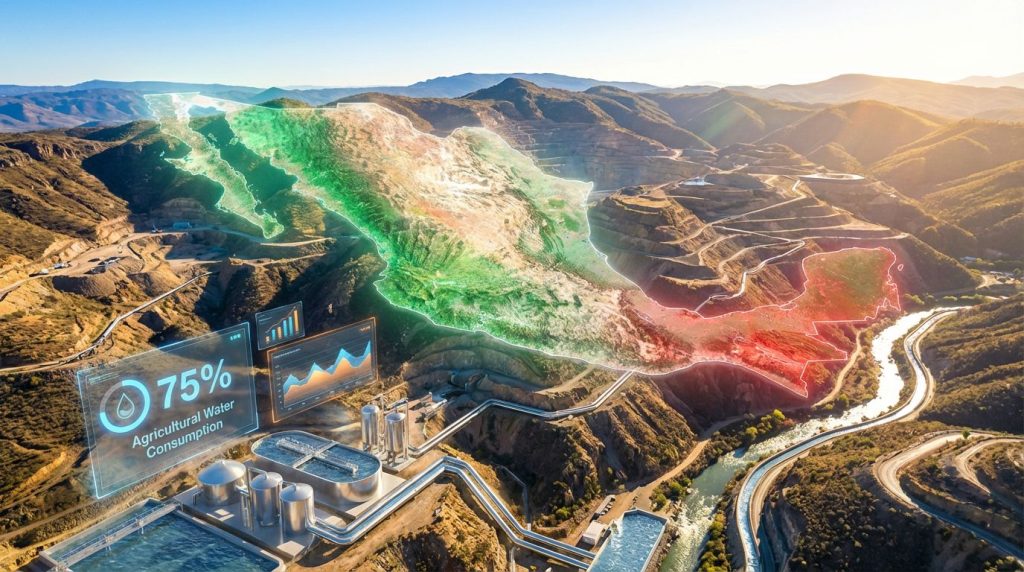
Agriculture currently consumes approximately 75% of Mexico's allocated water, making this sector the primary beneficiary of existing water distribution systems. The reform's priority reallocation toward domestic consumption creates pressure on agricultural operations to demonstrate enhanced efficiency while potentially facing resource reallocation.
| Sector | Current Water Consumption | Priority Level Under Reform |
|---|---|---|
| Agriculture | ~75% of allocated water | Medium (efficiency requirements) |
| Domestic Use | ~15% of allocated water | Highest (human rights priority) |
| Industrial | ~10% of allocated water | Lower (essential service demonstration required) |
Water-intensive agricultural regions must adapt to new efficiency standards while potentially surrendering water allocations to domestic use priorities. This reallocation framework particularly affects export-oriented agricultural operations that require consistent water access for international market commitments.
Manufacturing and Energy Sectors Navigate Compliance Costs
Manufacturing operations face increased operational expenses due to enhanced monitoring requirements and potential geographic restrictions on water access. Water-intensive processes including chemical production, food processing, and textile manufacturing must demonstrate operational necessity to maintain current water allocation levels.
Furthermore, energy sector implications extend to power generation facilities utilising water for cooling systems or hydroelectric production. These operations must balance new regulatory frameworks with energy security objectives, particularly during peak demand periods when water access restrictions could compromise grid stability. This aligns with broader energy transition strategy considerations affecting industrial planning.
Compliance Cost Structure
Companies should prepare for compliance expenses including:
- Legal consultation for water concession review
- Infrastructure assessment against new regulatory standards
- Technology investment in water efficiency systems
- Monitoring equipment for real-time usage reporting
- Environmental impact documentation updates
Industry Engagement and Collaborative Frameworks
The Mining Chamber demonstrates proactive engagement by expressing willingness to collaborate with the federal government within a regulatory framework that is effective, sustainable, and aligned with national objectives. This collaborative approach exemplifies constructive industry-regulator relationships essential for successful policy implementation.
Organisations emphasise that responsible resource extraction provides strategic minerals serving as economic, competitiveness, and regional security pillars. The industry argues that operational continuity supports broader national objectives while maintaining environmental stewardship commitments. This perspective reflects broader industry evolution trends affecting how companies approach regulatory compliance.
Strategic Preparation Recommendations
Companies should immediately initiate:
- Comprehensive water concession audits documenting current usage patterns
- Regulatory authority dialogue to understand specific compliance requirements
- Infrastructure modernisation planning demonstrating environmental responsibility
- Legal expertise engagement specialising in Mexican environmental law
- Operational continuity assessments under various regulatory scenarios
Critical Implementation Timeline
Congress was entering the decisive phase to approve the new General Water Law and the reform to the National Water Law before mid-December 2025, creating an urgent timeline for industrial preparation. Companies have limited time for compliance assessments and strategic adjustments before potential legislative approval.
The compressed implementation schedule requires immediate action on regulatory preparation, particularly for operations in mountainous regions where Article 118 restrictions would have the most significant impact. However, this timeline also highlights the importance of understanding reform to the national water law developments across the region.
The next major ASX story will hit our subscribers first
Investment Climate and Economic Implications
Enhanced state control over water resources influences foreign investment decisions, particularly in water-intensive industries. Companies must factor regulatory uncertainty and compliance costs into long-term strategic planning, potentially affecting capital allocation decisions and expansion timelines.
The legislation's criminal sanctions for water-related violations represent a significant escalation from previous administrative penalties. This enforcement framework aims to ensure compliance while creating additional legal risk considerations for industrial operations.
Investment considerations include:
- Regulatory compliance costs potentially reducing project returns
- Operational flexibility limitations affecting expansion planning
- Legal risk assessment for criminal penalty exposure
- Insurance requirements for regulatory compliance coverage
Technology Innovation Opportunities
The regulatory transformation creates market opportunities for companies specialising in water treatment, management, and efficiency technologies. Organisations demonstrating innovative water stewardship may gain competitive advantages under the new regulatory environment.
Advanced monitoring systems, water recycling technologies, and efficiency optimisation solutions become increasingly valuable as industries adapt to enhanced oversight requirements. Companies investing in environmental technology leadership position themselves favourably for long-term operational continuity.
Regional Impact Variations
Water availability conditions vary significantly across Mexican geographic regions, affecting compliance feasibility differently. Northern desert regions face distinct challenges compared to tropical southern areas, requiring region-specific compliance strategies.
Mountainous mining regions experience the most direct regulatory impact, while coastal manufacturing areas may have alternative water source options including desalination or wastewater reuse systems. Understanding mine reclamation importance becomes crucial in these transitional planning phases.
Long-term Strategic Implications
Mexico's comprehensive water law reform establishes a precedent for state-controlled resource management prioritising social equity and environmental sustainability over market mechanisms. This paradigm shift influences how multinational corporations approach resource planning throughout Latin America.
The success of this regulatory transition depends on effective collaboration between government authorities and industrial stakeholders developing practical implementation strategies. Companies demonstrating environmental stewardship while maintaining economic contributions will likely receive more favourable consideration under the priority allocation system.
Organisations that proactively adapt to centralised water governance maintain competitive advantages in Mexico's evolving regulatory landscape. The framework creates opportunities for companies embracing innovative water management technologies while challenging traditional resource-intensive operational models.
The reform to the National Water Law in Mexico represents Mexico's commitment to sustainable resource management balancing economic development with environmental protection and social equity objectives. Industries navigating this transformation successfully will establish operational resilience for long-term market participation in Mexico's regulated water management environment.
Looking for Investment Opportunities in Mexico's Water Regulation Transformation?
Discovery Alert's proprietary Discovery IQ model delivers real-time alerts on significant mineral discoveries across mining sectors adapting to evolving regulatory frameworks, instantly empowering subscribers to identify actionable opportunities ahead of the broader market. Begin your 30-day free trial today and secure your market-leading advantage as industries navigate Mexico's comprehensive water law reforms.