May 19, 2026
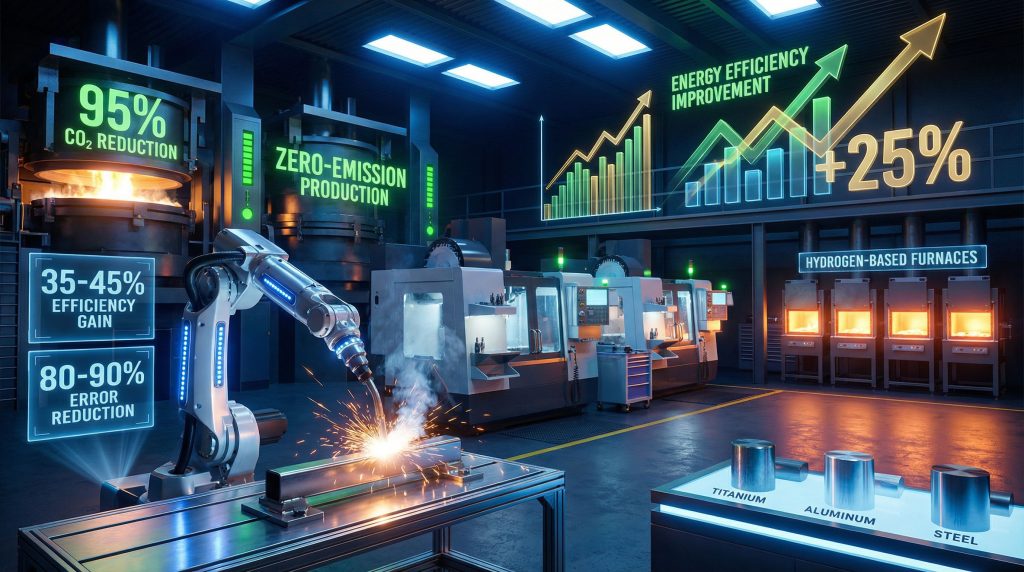
The global metals industry stands at a technological inflection point where traditional production methods converge with advanced digital systems, sustainable energy sources, and circular economy principles. Furthermore, the pace of mining industry innovation is accelerating as innovations in metal production extend beyond simple process improvements, fundamentally restructuring how manufacturers approach energy utilization, material flows, and operational efficiency. Understanding these technological shifts reveals critical opportunities for industrial competitiveness and environmental stewardship in an increasingly carbon-constrained economy.
What Defines Next-Generation Metal Production Innovation?
Modern innovations in metal production emerge from the intersection of three core technological vectors: process digitalization, energy transition, and material optimization. These developments represent a departure from incremental improvements toward systematic industry reorganization that addresses both operational efficiency and environmental sustainability requirements.
Core Technology Categories Reshaping Manufacturing
Contemporary metal production innovation encompasses several interconnected technology categories that work synergistically to transform manufacturing operations:
• Automation-driven precision systems that integrate real-time monitoring with adaptive process control
• Sustainable processing methodologies utilizing renewable energy sources and hydrogen-based reduction processes
• Advanced material engineering approaches focusing on alloy development and surface enhancement technologies
• Integrated production workflows that optimise material flows from raw input through finished product delivery
These technological categories operate within manufacturing ecosystems that increasingly prioritise energy efficiency, emissions reduction, and resource optimisation as primary performance indicators.
Key Performance Metrics for Innovation Assessment
Evaluating innovations in metal production requires measurement across multiple technical dimensions that capture both operational efficiency and environmental impact:
Energy Efficiency Improvements: Modern electric arc furnace technology demonstrates significant advancement, consuming approximately 600-750 kWh per tonne compared to traditional blast furnaces requiring 1,000-1,200 kWh per tonne. In addition, advanced melting practices incorporating optimised thermal management can achieve additional 15-25% energy consumption reductions through precise temperature control and waste heat recovery systems.
Carbon Footprint Reduction: The steel industry, responsible for 7-9% of global CO₂ emissions, faces substantial pressure for decarbonisation. However, transitioning from coal-based to hydrogen-based steelmaking processes offers theoretical emission reductions of 50-95%, depending on hydrogen production methods and renewable energy integration.
Production Speed Enhancements: Automated manufacturing systems consistently demonstrate 20-35% throughput improvements compared to manual operations, with specific performance gains varying based on product complexity and facility configuration.
Quality Consistency Indicators: Modern production systems achieve unprecedented precision in chemical composition variance, dimensional tolerances, and mechanical property repeatability through continuous monitoring and real-time process adjustment capabilities.
When big ASX news breaks, our subscribers know first
Which Automation Technologies Are Revolutionising Metal Processing?
Manufacturing automation in metal processing has evolved from simple task replacement to intelligent system optimisation that incorporates machine learning, computer vision, and predictive analytics. Consequently, these technologies enable manufacturers to achieve precision levels and operational efficiency previously unattainable through conventional methods.
AI-Powered Manufacturing Systems
Artificial intelligence integration in metal processing encompasses multiple technological applications that enhance both productivity and quality outcomes:
Intelligent Robotic Welding: Modern robotic welding systems incorporate multi-sensor fusion technology, combining infrared thermal imaging, ultrasonic monitoring, and real-time arc analysis. Furthermore, these systems can achieve 40-50% productivity improvements while maintaining positional accuracy within ±0.5mm tolerances. Computer vision-based quality monitoring detects defects as small as 0.1mm with 99.8% accuracy rates.
Machine Learning for Predictive Maintenance: Neural networks analysing equipment performance data can predict mechanical failures 7-14 days in advance with 85-92% accuracy. These predictive capabilities reduce unplanned downtime by 25-50% while optimising maintenance scheduling and parts inventory management.
Automated Quality Control Through Computer Vision: Advanced vision systems operating at 30-120 frames per second provide real-time defect detection during production processes. However, these systems require extensive training datasets of 10,000-100,000+ labelled images to achieve production-ready accuracy levels with false positive rates below 2%.
Smart Inventory Management: AI-powered systems integrate production scheduling with material flows, reducing inventory carrying costs by 15-25% while maintaining production continuity through demand forecasting and supplier performance analysis.
Advanced Machining and Fabrication Technologies
Modern machining technologies demonstrate remarkable precision capabilities that enable complex component manufacturing previously requiring multiple processing steps:
CNC Precision Machining: Contemporary CNC systems with adaptive control achieve positional accuracy of ±0.01mm through real-time load monitoring and feed rate adjustment. These systems operate at spindle speeds up to 24,000 RPM with tool change times reduced to 10-15 seconds, enabling continuous production of complex geometries.
Laser Cutting Systems: Advanced laser processing equipment operates at cutting speeds up to 100 metres per minute for thin materials while maintaining edge quality tolerances within ±0.1mm. Moreover, integration with CAD/CAM systems enables automated nesting optimisation that reduces material waste by 10-15%.
Intelligent Press Brake Operations: Modern press brakes incorporate real-time bend angle feedback systems that reduce scrap rates by 15-25% through continuous angle monitoring and automatic correction. These systems handle complex geometries with repeatability tolerances of ±0.1 degrees across production runs.
| Technology Category | Efficiency Gain | Error Reduction | Cost Savings |
|---|---|---|---|
| AI Robotic Welding | 40-50% | 80-95% | 25-30% |
| Smart CNC Systems | 35-45% | 75-85% | 20-35% |
| Automated QC | 60-70% | 95%+ | 15-25% |
How Are Sustainable Production Methods Transforming the Industry?
Environmental sustainability requirements are driving fundamental changes in metal production technologies, with manufacturers increasingly adopting processes that decouple production growth from proportional emissions increases. These transformations require substantial capital investment but offer long-term operational cost advantages and regulatory compliance benefits. Additionally, the industry's sustainability transformation continues to accelerate across all production sectors.
Green Steel Manufacturing Breakthroughs
The steel industry's decarbonisation efforts centre on transitioning from carbon-intensive blast furnace technology to renewable energy-powered alternatives:
Electric Arc Furnace Technology: EAF-based production currently accounts for 30-35% of global steel manufacturing, utilising 50-100% recycled scrap steel as furnace charge. These systems consume 600-750 kWh per tonne while producing 0.4-0.6 tonnes CO₂ per tonne of steel when powered by renewable electricity, compared to 1.8-2.5 tonnes for conventional blast furnaces.
Hydrogen-Based Steelmaking: Pilot projects across Europe demonstrate commercial viability for hydrogen direct reduction processes. The Salzgitter SALCOS facility in Germany produces hydrogen-reduced iron pellets with 95% emission reductions compared to coal-based methods. The HYBRIT joint venture in Scandinavia operates demonstration facilities producing 15 tonnes per day using renewable hydrogen.
Renewable Energy Integration: Manufacturing facilities increasingly utilise direct renewable energy connections or Power Purchase Agreements with wind and solar installations. Battery storage systems providing 4-6 hour capacity help manage intermittency while enabling EAF operations to provide grid balancing services through flexible power consumption.
Circular Economy Implementation: Steel recycling rates vary globally, with Europe achieving 85%, North America 68%, and Asia 60%. Recycled steel production requires 60% less energy compared to primary production while maintaining material properties through precise chemistry control.
Revolutionary One-Step Metallurgy Processes
Integrated processing approaches combine extraction, alloying, and finishing operations within unified production systems. For instance, the decarbonisation benefits extend beyond emissions reduction to include substantial operational cost savings.
Integrated Direct Reduction: Combining direct reduction with electric arc furnacing reduces energy consumption to 8-12 MWh per tonne, representing 40-50% improvement over conventional steelmaking. Theoretical hydrogen-based systems target 4-6 MWh per tonne through optimised thermal management.
Low-Temperature Processing: Hydrogen-based solid-state reduction operates at 500-800°C, significantly lower than traditional blast furnace temperatures. This approach maintains pellet structure integrity while eliminating liquid-phase energy losses.
Zero-Emission Production: Facilities powered entirely by renewable electricity and utilising renewable hydrogen can achieve theoretical zero direct emissions, though lifecycle assessments must account for upstream hydrogen production and transportation impacts.
Modern hydrogen-based steelmaking processes can reduce CO₂ emissions by up to 95% compared to traditional coal-based methods when hydrogen is produced from renewable sources, representing a potential elimination of 1.5-2.2 tonnes of CO₂ per tonne of steel produced.
What Advanced Materials Are Driving Manufacturing Innovation?
Material science innovations continue expanding the performance envelope for metal-based components, enabling applications previously constrained by traditional alloy limitations. These developments support industries requiring extreme performance characteristics while maintaining cost-effectiveness for large-scale deployment.
Next-Generation Alloy Development
Contemporary alloy engineering focuses on optimising multiple performance parameters simultaneously:
High-Strength Low-Alloy (HSLA) Steels: Automotive applications increasingly utilise HSLA formulations that provide 30-50% strength improvements over conventional steels while reducing component weight by 15-25%. These materials enable crash safety improvements while supporting fuel efficiency targets.
Lightweight Composite Materials: Aerospace manufacturers deploy metal matrix composites combining aluminium or titanium with ceramic reinforcements. These materials achieve strength-to-weight ratios 40-60% superior to conventional alloys while maintaining temperature stability to 500-600°C.
Corrosion-Resistant Formulations: Marine and chemical processing applications benefit from advanced stainless steel grades incorporating nitrogen additions and optimised chromium-nickel ratios. These alloys demonstrate corrosion rates 50-75% lower than conventional 316L stainless steel in aggressive environments.
Biocompatible Metals: Medical device manufacturing utilises titanium alloys and specialty stainless steels designed for long-term implantation. These materials undergo extensive biocompatibility testing while maintaining mechanical properties over 20+ year service lives.
Additive Manufacturing and 3D Printing Applications
Metal additive manufacturing technologies enable component geometries impossible through conventional machining or casting:
Metal Powder Processing: Advanced powder production techniques create spherical particles with controlled size distributions, enabling consistent layer formation and mechanical properties. Recycling systems recover and reprocess unused powder, achieving material utilisation rates exceeding 95%.
Complex Geometry Production: Additive manufacturing enables internal cooling channels, lattice structures, and integrated assemblies that reduce component counts by 40-60%. These design capabilities particularly benefit aerospace and medical device applications requiring weight optimisation.
Customised Component Manufacturing: Small-batch production becomes economically viable through additive processes, enabling personalised medical implants and specialised industrial components without tooling investments.
Rapid Prototyping Applications: Development timelines compress from months to weeks through direct metal printing of prototype components, accelerating product development cycles across industries. Furthermore, novel fabrication techniques continue to emerge across various industry sectors.
Surface Enhancement Technologies
Surface treatment innovations extend component service life while reducing maintenance requirements:
Advanced Coating Systems: Physical vapour deposition (PVD) and chemical vapour deposition (CVD) processes create hard, wear-resistant surfaces with coating thicknesses measured in micrometres. These treatments can extend tool life by 300-500% in machining applications.
Nano-Scale Surface Treatments: Surface modification at the nanometre scale enables tailored properties including superhydrophobic surfaces, enhanced adhesion, and controlled friction characteristics for specialised applications.
Multi-Functional Protective Layers: Contemporary coatings provide simultaneous protection against corrosion, wear, and thermal degradation while maintaining electrical conductivity or providing insulation properties as required by specific applications.
How Do Recycling Innovations Support Circular Manufacturing?
Metal recycling technologies have evolved to support closed-loop manufacturing systems where waste streams become feedstock for new production cycles. These innovations address both resource scarcity and environmental impact concerns while maintaining material quality standards required for demanding applications.
Advanced Scrap Metal Processing
Modern scrap processing facilities incorporate sophisticated separation and purification technologies:
High-Purity Metal Powder Production: Advanced processing techniques convert scrap materials into high-quality metal powders suitable for additive manufacturing and powder metallurgy applications. These processes achieve purity levels comparable to virgin materials through controlled atmosphere processing and chemical purification.
Alloy Integrity Preservation: Sophisticated sorting systems utilising X-ray fluorescence spectroscopy and electromagnetic separation maintain alloy compositions during recycling processes. These technologies enable direct reuse of specialty alloys without composition degradation.
Automated Classification Systems: AI-powered sorting equipment identifies and separates different alloy grades with 95%+ accuracy at processing speeds exceeding 1,000 kg per hour. These systems reduce manual labour requirements while improving material recovery rates.
Energy-Efficient Remelting: Induction melting systems optimised for scrap processing achieve energy consumption rates 30-40% lower than conventional furnaces through precise temperature control and heat recovery systems.
Circular Economy Integration Strategies
Manufacturers increasingly design production systems to accommodate circular material flows:
Closed-Loop Manufacturing: Integrated facilities process production waste streams directly into new products, eliminating transportation costs and quality degradation associated with external recycling. These systems achieve material utilisation rates exceeding 98% through comprehensive waste stream capture.
Waste-to-Resource Conversion: Mill scale, grinding swarf, and other production byproducts undergo processing into useful materials for construction, agriculture, and chemical industries. These value-added applications generate revenue streams while reducing waste disposal costs.
Supply Chain Optimisation: Digital tracking systems monitor material flows throughout production and use cycles, enabling manufacturers to optimise recycling logistics and ensure material quality documentation for regulatory compliance.
Quality Standards for Recycled Materials: Industry standards increasingly recognise recycled materials as equivalent to virgin materials for specific applications, reducing performance penalties associated with recycled content utilisation.
Which Industries Benefit Most from Metal Production Innovations?
Metal production innovations create cascading benefits across industrial sectors, with particularly significant impacts in industries requiring high-performance materials under demanding operating conditions. These sectors drive innovation adoption through stringent quality requirements and willingness to invest in advanced materials for competitive advantage.
Aerospace and Defence Applications
The aerospace industry serves as a primary driver for advanced metal technologies due to extreme performance requirements:
Lightweight High-Strength Materials: Aircraft manufacturers utilise aluminium-lithium alloys and titanium composites that reduce structural weight by 15-25% compared to conventional materials. These weight savings translate directly to fuel efficiency improvements and increased payload capacity.
Precision Manufacturing Requirements: Aerospace components require dimensional tolerances measured in micrometres, driving adoption of advanced CNC machining and quality control systems. Automated inspection systems achieve measurement accuracy within ±0.005mm for critical flight components.
Advanced Alloys for Extreme Environments: Jet engine applications utilise superalloys containing nickel, cobalt, and specialised additions that maintain strength at temperatures exceeding 1,100°C. These materials enable higher engine operating temperatures and improved fuel efficiency.
Additive Manufacturing Integration: Boeing and Airbus increasingly utilise metal 3D printing for complex brackets, ducts, and structural components that reduce part counts by 40-60% while maintaining structural performance requirements.
Automotive Industry Transformations
Automotive manufacturing drives metal innovation through lightweighting requirements and electric vehicle development:
Electric Vehicle Battery Components: Battery pack manufacturing requires specialised aluminium alloys and steel grades optimised for thermal management and crash protection. These materials must maintain structural integrity while providing electrical insulation and thermal conductivity as required.
Advanced High-Strength Steels: Modern vehicles utilise AHSS grades providing 1,000+ MPa tensile strength while maintaining formability for complex shapes. These materials enable safety improvements while reducing vehicle weight through reduced section thicknesses.
Aluminium Space Frame Construction: Premium vehicles increasingly adopt aluminium intensive designs reducing vehicle weight by 300-500 kg compared to steel construction. Joining technologies including friction stir welding and structural adhesives enable mixed-material assemblies.
Sustainable Production Methods: Automotive manufacturers increasingly specify recycled content requirements, driving demand for high-quality recycled aluminium and steel that meets automotive performance standards while reducing lifecycle environmental impact.
Renewable Energy Sector Requirements
Clean energy infrastructure creates substantial demand for specialised metal products:
Solar Panel Frame Manufacturing: Photovoltaic installations require corrosion-resistant aluminium extrusions optimised for outdoor exposure over 25+ year service lives. Manufacturing optimisation reduces material costs while maintaining structural performance requirements.
Wind Turbine Component Production: Modern wind turbines utilise high-strength steel castings and forgings for hub assemblies, with individual components weighing 50-100 tonnes. Precision manufacturing ensures dimensional accuracy critical for dynamic balancing and vibration control.
Energy Storage System Materials: Grid-scale battery installations require specialised enclosures providing environmental protection while enabling thermal management and electrical safety. These applications drive demand for fire-resistant materials with controlled electrical properties.
Grid Infrastructure Components: Electrical transmission equipment utilises copper and aluminium conductors optimised for electrical performance and corrosion resistance. Advanced alloy formulations reduce electrical losses while extending service life in harsh environments.
The next major ASX story will hit our subscribers first
What Economic Impacts Drive Metal Production Innovation Adoption?
Financial considerations ultimately determine the pace and scale of innovation adoption in metal production, with manufacturers evaluating technology investments through comprehensive cost-benefit analyses that account for capital requirements, operational savings, and market competitiveness factors. Moreover, data-driven operations enable more accurate financial forecasting and investment decision-making.
Cost-Benefit Analysis Framework
Manufacturing executives evaluate innovations in metal production through multiple financial metrics that capture both direct costs and strategic benefits:
Initial Investment vs. Long-Term Savings: Automation systems typically require $2-5 million capital investment with payback periods of 18-24 months through labour cost reduction and productivity improvements. Green technologies demand higher initial investments of $5-15 million but generate 20-30% annual operational savings through energy cost reduction and regulatory compliance benefits.
Energy Cost Optimisation: Renewable energy integration can reduce electricity costs by 25-40% in regions with abundant wind and solar resources. Manufacturing facilities with flexible power consumption profiles generate additional revenue through grid services, earning $10-30 per MWh through demand response programmes.
Labour Cost Impact: Advanced automation reduces direct labour requirements by 30-50% while creating higher-skilled positions for system monitoring and maintenance. Total labour cost changes vary by region, with some facilities achieving 15-25% reductions in overall labour expenses.
Quality Improvement Benefits: Automated quality control systems reduce scrap rates by 60-80%, with quality-related cost savings often exceeding automation system costs within 12-18 months of implementation.
Market Competitiveness Factors
Innovation adoption directly impacts market positioning through multiple competitive advantages:
Production Speed Advantages: Automated systems enable 24/7 operation with consistent quality levels, increasing effective production capacity by 35-50% compared to manual operations. This capacity improvement enables manufacturers to respond quickly to demand fluctuations and capture market opportunities.
Quality Consistency Improvements: Automated processes achieve statistical process control with Cpk values exceeding 1.33, demonstrating capability to meet customer specifications consistently. This reliability enables premium pricing and reduces warranty costs by 20-40%.
Environmental Compliance Benefits: Sustainable production methods ensure compliance with evolving emissions regulations while positioning manufacturers favourably for carbon pricing mechanisms. Furthermore, innovative production methods continue to provide competitive advantages in global markets.
Customer Demand for Sustainability: Industrial customers increasingly specify recycled content and carbon footprint requirements in purchasing decisions. Manufacturers with documented sustainability credentials achieve 5-15% pricing premiums in certain market segments.
| Innovation Category | Initial Investment | Payback Period | Annual Savings |
|---|---|---|---|
| Automation Systems | $2-5M | 18-24 months | 15-25% |
| Green Technologies | $5-15M | 24-36 months | 20-30% |
| Advanced Materials | $1-3M | 12-18 months | 10-20% |
How Will Future Developments Shape Metal Manufacturing?
The trajectory of metal manufacturing innovation points toward increasing integration of digital technologies, sustainable processes, and advanced materials science. These developments will fundamentally alter industry structure, requiring manufacturers to invest in new capabilities while adapting to changing competitive dynamics and regulatory requirements.
Emerging Technology Trends
Several technological developments promise to reshape metal manufacturing over the next decade:
Quantum Computing Applications: Materials science research increasingly utilises quantum computing for molecular modelling and alloy optimisation. These computational capabilities enable prediction of material properties before physical testing, accelerating development timelines by 40-60% for complex alloy systems.
Blockchain Integration: Supply chain transparency requirements drive adoption of blockchain systems for material traceability and carbon footprint documentation. These systems enable verification of recycled content claims and support carbon credit trading mechanisms.
Internet of Things Expansion: Manufacturing facilities deploy sensor networks providing real-time monitoring of equipment performance, environmental conditions, and material properties. IoT systems generate data streams enabling predictive maintenance and quality optimisation through machine learning analysis.
Artificial Intelligence Optimisation: AI systems analysing production data identify optimisation opportunities human operators might overlook, enabling continuous incremental improvements in energy efficiency, material utilisation, and quality outcomes.
Industry Transformation Predictions
Industry analysts project significant structural changes in metal manufacturing through 2030 and beyond:
Fully Automated Production Facilities: Next-generation manufacturing facilities will operate with minimal human intervention, utilising AI-powered systems for production planning, quality control, and maintenance scheduling. These facilities achieve production consistency impossible through manual operations.
Carbon-Neutral Manufacturing Standards: Regulatory pressure and customer demands drive adoption of carbon-neutral production methods as industry baseline rather than premium offering. Manufacturers unable to demonstrate carbon neutrality face market access restrictions in key regions.
Customised Materials Development: Advanced materials science enables development of application-specific alloys and treatments tailored to individual customer requirements. This customisation capability creates competitive differentiation while commanding premium pricing.
Renewable Energy Integration: Manufacturing facilities increasingly operate as integrated energy systems, combining metal production with renewable electricity generation and energy storage. These systems achieve energy self-sufficiency while providing grid stabilisation services.
Investment and Development Priorities
Strategic planning for metal manufacturing innovation requires prioritisation across multiple technology areas:
Research and Development Funding: Industry R&D investment focuses primarily on hydrogen-based processing, advanced automation, and sustainable materials development. Total industry R&D spending approaches $15-20 billion annually across major producers.
Technology Adoption Strategies: Large manufacturers typically adopt innovation through phased implementation programmes, while smaller producers often rely on equipment supplier financing and government incentive programmes to support technology upgrades.
Workforce Development Requirements: Industry transformation requires extensive retraining programmes as job roles shift from manual operation to system monitoring and data analysis. Educational partnerships with technical schools and universities ensure adequate skilled workforce availability.
Regulatory Compliance Planning: Environmental regulations continue tightening, requiring manufacturers to invest in emissions monitoring, carbon accounting, and sustainable process technologies to maintain market access and avoid penalty costs.
Disclaimer: Future technology developments and market predictions discussed in this analysis involve inherent uncertainty. Actual outcomes may differ significantly from projections due to technological, economic, regulatory, and competitive factors beyond current forecasting capabilities. Investment decisions should incorporate comprehensive risk assessment and professional guidance appropriate to specific circumstances.
Ready to Discover the Next Major Mineral Innovation Opportunity?
Discovery Alert's proprietary Discovery IQ model delivers real-time alerts on significant ASX mineral discoveries, instantly empowering subscribers to identify actionable opportunities ahead of the broader market. See how major mineral discoveries can generate substantial returns by exploring Discovery Alert's dedicated discoveries page, then begin your 30-day free trial today to position yourself ahead of the market.