August 14, 2026
Institutional Investment Psychology Reveals Mining Sector's Strategic Evolution
The global mining industry experienced a fundamental shift in institutional perception during early 2026, as traditional cyclical investment frameworks gave way to strategic resource security considerations. This transformation challenges decades of established commodity investment theory, where geopolitical tensions typically drove capital toward defensive precious metals positioning rather than industrial mining exposure. Furthermore, the critical minerals strategy has become a cornerstone of this evolving investment landscape.
Portfolio managers worldwide have begun reconceptualising mining equities not merely as commodity price proxies, but as critical infrastructure plays essential for economic resilience. This psychological evolution reflects broader concerns about supply chain vulnerability, energy security, and the strategic importance of mineral resources in an increasingly fragmented global economy.
The emergence of this investment paradigm suggests that traditional safe-haven behaviour patterns may be permanently altered, as institutional capital increasingly prioritises operational continuity over purely defensive positioning during periods of geopolitical stress.
When big ASX news breaks, our subscribers know first
Market Forces Behind Counter-Intuitive Mining Performance
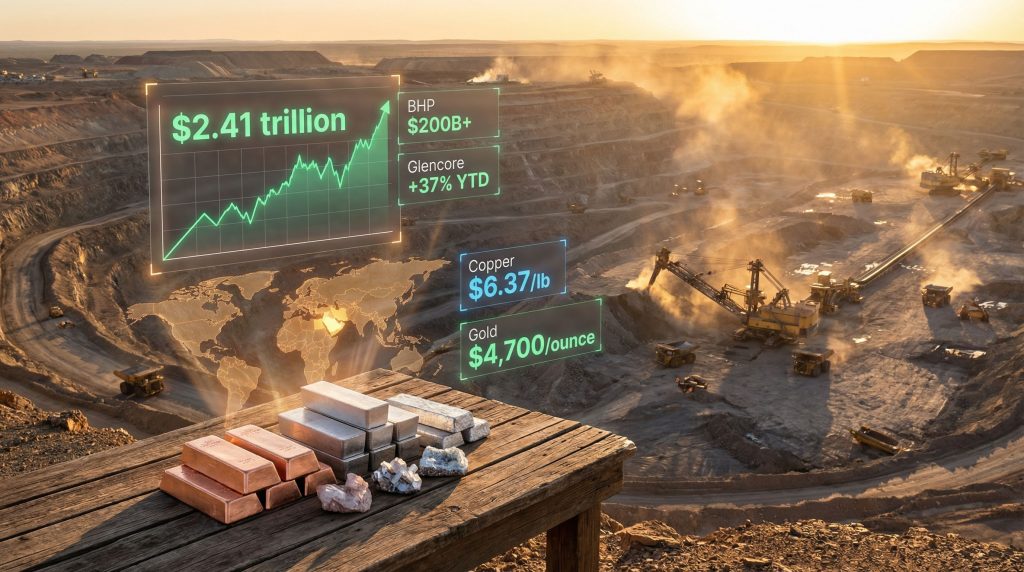
The top 50 mining companies increase value despite Middle East conflict demonstrated remarkable resilience during a period when conventional wisdom suggested significant sector vulnerability. Market capitalisation across these entities increased by approximately $250 billion, reaching a combined valuation of $2.41 trillion despite escalating Middle East tensions and volatile commodity markets.
This performance contradicted established patterns wherein regional conflicts typically trigger flight-to-quality behaviours favouring monetary metals over industrial commodities. Instead, institutional investors appeared to weight supply chain continuity concerns more heavily than traditional risk-aversion strategies. In addition, gold prices record highs failed to overshadow the mining sector's broader strategic appeal.
Energy Security Premium Mechanisms
The relationship between elevated energy costs and mining sector performance created dual benefits that traditional economic models struggle to explain. Higher oil prices simultaneously supported commodity valuations while creating operational barriers for potential new market entrants, effectively protecting incumbent producers' market positions.
Primary energy impact channels included:
- Operational cost escalation: Mining operations with existing infrastructure maintained competitive advantages over greenfield developments
- Capital requirement increases: New project economics deteriorated under elevated energy price assumptions
- Geographic positioning: Miners in stable jurisdictions commanded premium valuations
- Processing efficiency: Companies with energy-efficient operations outperformed high-intensity competitors
Supply Chain Diversification Imperatives
Industrial consumers accelerated efforts to secure alternative supply sources, driving demand beyond traditional price elasticity models. This behaviour reflected strategic stockpiling decisions rather than conventional demand-supply balancing, creating sustained upward pressure on mining valuations regardless of short-term price fluctuations.
Critical factors supporting this trend included government initiatives to reduce dependence on concentrated supply sources, corporate risk management strategies emphasising supply security over cost optimisation, and infrastructure investment programs requiring substantial mineral inputs. Consequently, tariffs impact markets became a secondary consideration compared to supply security imperatives.
Corporate Performance Hierarchy During Crisis Conditions
Tier 1: Diversified Resource Giants
BHP Group achieved a significant milestone by surpassing the $200 billion market capitalisation threshold, driven primarily by its copper-weighted portfolio alignment with infrastructure spending priorities. The company's geographic diversification strategy provided operational resilience that investors valued more highly than pure commodity price exposure.
Strategic advantages contributing to BHP's performance included operational presence across multiple stable jurisdictions, portfolio concentration in infrastructure-critical metals, and disciplined capital allocation maintaining strong balance sheet positioning during volatile market conditions.
Rio Tinto maintained its leadership position through iron ore production dominance during a period of elevated steel demand. The company's investment in automated mining technologies reduced labour-related operational vulnerabilities while supporting consistent production output despite global supply chain disruptions.
Tier 2: Specialised Strategic Producers
Glencore emerged as the standout performer with approximately 37% year-to-date gains, benefiting from its unique position as both mining producer and commodity trading operation. The company's oil trading capabilities provided profit diversification that offset mining-specific volatility while maintaining exposure to commodity price appreciation.
The rehabilitation of thermal coal demand due to energy security concerns provided unexpected support for Glencore's coal operations, reversing years of environmental, social, and governance pressure that had previously constrained valuations in this segment. However, the energy transition security requirements continued to drive broader sector transformation.
Southern Copper reached approximately $119.2 billion in market capitalisation, supported by its Latin American operational focus that avoided direct exposure to Middle Eastern geopolitical risks. The company's position as a low-cost producer provided competitive advantages during periods of elevated operational cost pressures across the industry.
Commodity Price Dynamics and Investor Psychology Evolution
Precious Metals: Expectation Versus Reality
Gold maintained levels above $4,700 per ounce but failed to achieve the dramatic safe-haven flows that historical precedent suggested during comparable geopolitical tensions. This behaviour indicated a fundamental shift in institutional portfolio construction, where industrial security concerns took precedence over traditional monetary hedge positioning.
Market analysis revealed that gold's performance relative to expectations reflected changing institutional priorities rather than diminished conflict severity. Investment managers appeared to prioritise supply chain continuity over pure wealth preservation, suggesting a structural evolution in crisis-response investment strategies.
Base Metals: Supply Security Premium Development
Copper achieved historical peak pricing of $6.50 per pound before experiencing a modest 2% correction from late 2025 levels. Despite market warnings about potential oversupply conditions and overvaluation concerns, underlying demand from infrastructure modernisation and energy transition applications provided fundamental support for elevated pricing levels.
Critical metal price movements reflected strategic demand patterns:
| Metal | Peak Performance | Strategic Applications | Supply Risk Assessment |
|---|---|---|---|
| Copper | Historical highs | Infrastructure, electrical grid modernisation | High concentration risk |
| Aluminium | Strong industrial demand | Transportation, construction, packaging | Moderate geographic diversity |
| Nickel | Energy transition support | Battery production, stainless steel | High Indonesia dependence |
| Zinc | Infrastructure applications | Galvanisation, construction materials | Moderate supply diversity |
Battery Metal Sector Rehabilitation and Strategic Positioning
The lithium market experienced significant rehabilitation as companies like SQM and Albemarle regained positions within the top 50 mining companies increase value despite Middle East conflict rankings. This recovery reflected renewed institutional recognition of energy transition metals' strategic importance rather than purely speculative positioning.
Government critical mineral designations and supply chain localisation policies created valuation support independent of short-term demand fluctuations. Investment managers increasingly viewed battery metal producers through strategic resource security frameworks rather than traditional cyclical commodity exposure models.
Energy Transition Strategic Value Recognition
The lithium sector's performance indicated broader institutional acceptance of energy transition metals as infrastructure necessities rather than speculative growth investments. This classification change provided valuation stability during periods when traditional commodity sectors experienced heightened volatility.
Critical factors supporting battery metal recovery included accelerated electric vehicle adoption timelines, grid-scale energy storage deployment requirements, and strategic stockpiling initiatives by major consuming economies seeking supply chain independence. For instance, the mining evolution trends highlighted the sector's transformation toward strategic resource positioning.
What Drives Geographic Risk Assessment Evolution?
Investment managers developed increasingly sophisticated frameworks for evaluating mining exposure across different jurisdictions, weighing traditional factors like regulatory stability against new considerations including supply chain strategic value and geopolitical alignment.
Regional mining investment attractiveness matrix:
| Jurisdiction | Political Stability | Resource Diversity | Infrastructure Quality | Strategic Value |
|---|---|---|---|---|
| Australia | Excellent | High diversity | World-class | Premium positioning |
| Canada | Excellent | High diversity | World-class | Premium positioning |
| Chile | Good | Moderate diversity | Adequate | Selective exposure |
| Peru | Moderate | High diversity | Variable | Opportunistic approach |
| South Africa | Challenging | Excellent | Declining | Specialised focus |
Risk Management Through Strategic Diversification
Portfolio construction strategies evolved beyond traditional commodity price cycle management toward comprehensive supply chain risk mitigation. Investment managers increasingly emphasised operational resilience, jurisdictional diversification, and strategic mineral exposure over pure financial optimisation.
This approach reflected recognition that mining investments serve dual purposes as both return generators and strategic hedges against supply disruption risks that could impact broader portfolio performance across multiple sectors.
The next major ASX story will hit our subscribers first
How Are Structural Changes Reshaping Mining Investment Logic?
From Cyclical to Strategic Asset Classification
The traditional characterisation of mining stocks as pure commodity price proxies underwent fundamental revision as institutional investors recognised the strategic infrastructure role these companies serve in modern economies. This reclassification supported premium valuations independent of short-term commodity price movements.
Investment managers began applying utility-like valuation methodologies to critical mineral producers, emphasising cash flow stability, strategic asset positioning, and long-term supply security over traditional cyclical metrics like price-to-book ratios and dividend yields.
Environmental, Social, and Governance Integration Accelerating
Sustainability considerations gained increased importance as institutional capital allocation emphasised companies with strong environmental practices, positive community relationships, and robust governance standards. These factors provided competitive advantages during permitting processes and operational risk management.
Key ESG value creation factors:
- Carbon footprint optimisation: Lower-emission operations commanding valuation premiums
- Community relationship management: Social licence advantages reducing operational disruption risks
- Governance excellence: Institutional capital preference for best-in-class management practices
- Technology integration: Automation and digitalisation supporting operational efficiency
Investment Strategy Framework for New Mining Paradigm
Core Portfolio Construction Approach
Professional investment managers developed hybrid strategies combining traditional mining exposure with strategic resource security positioning. This approach emphasised companies with diversified operations, strong balance sheets, and strategic mineral portfolio concentration. According to top 50 mining companies power through geopolitical challenges, the sector's resilience reflects these strategic positioning decisions.
Recommended exposure categories:
- Tier 1 diversified producers: BHP Group and Rio Tinto for stability and scale advantages
- Strategic metal specialists: Copper and lithium producers for growth exposure
- Geographic diversification: Multi-jurisdiction operations reducing single-country concentration
- Technology integration leaders: Companies leveraging automation and operational excellence
Tactical Positioning Considerations
Short-term tactical positioning required balancing commodity price cycle timing with long-term strategic value recognition. Investment managers emphasised companies benefiting from supply chain localisation trends, technology adoption, and ESG leadership positioning.
Risk management protocols incorporated traditional volatility measures alongside new factors including geopolitical exposure assessment, supply chain vulnerability analysis, and regulatory change sensitivity evaluation.
Long-Term Structural Trends Defining Sector Evolution
Infrastructure Modernisation Demand Drivers
Global infrastructure modernisation requirements created sustained demand for industrial metals independent of traditional economic cycles. Defence spending increases, energy grid upgrades, and transportation electrification generated long-term consumption growth patterns supporting elevated mining sector valuations.
Primary infrastructure demand categories:
- Defence modernisation: Specialty metals for advanced weapons systems and infrastructure hardening
- Energy grid transformation: Copper and aluminium for renewable energy integration and transmission
- Transportation electrification: Battery metals for vehicle production and charging infrastructure
- Communication networks: Critical minerals for advanced semiconductor and telecommunications equipment
Supply Chain Reconfiguration Opportunities
The global trend toward supply chain localisation and diversification created opportunities for mining companies positioned in strategically aligned jurisdictions. Companies with operations in politically stable regions aligned with major consuming economies gained competitive advantages through preferred supplier relationships. Furthermore, analysis of Middle East conflict impact on commodity markets reveals the complex dynamics driving this sector transformation.
Near-shoring initiatives, strategic stockpiling programs, and alternative sourcing development provided structural demand support independent of traditional economic growth patterns, creating more stable revenue projections for appropriately positioned mining operations. Consequently, the top 50 mining companies increase value despite Middle East conflict represents a paradigm shift in how investors view mining sector resilience.
Investment Disclaimer: The analysis presented in this article is for educational purposes only and should not be considered as investment advice. Mining sector investments involve substantial risks including commodity price volatility, operational hazards, regulatory changes, and geopolitical factors that can significantly impact returns. Investors should conduct their own research and consult with qualified financial advisors before making investment decisions. Past performance does not guarantee future results, and all mining investments should be considered speculative in nature.
Readers interested in learning more about mining sector performance and strategic resource investing can explore additional educational resources through established financial research platforms and industry analysis publications that provide comprehensive market coverage and investment guidance.
Ready to Invest in the Next Major Mineral Discovery?
Discovery Alert instantly alerts investors to significant ASX mineral discoveries using its proprietary Discovery IQ model, turning complex mineral data into actionable insights. Understand why major mineral discoveries can lead to substantial returns by exploring Discovery Alert's dedicated discoveries page, showcasing historic examples of exceptional outcomes, and begin your 14-day free trial today to position yourself ahead of the market at discoveryalert.com.au.