June 14, 2026
International Energy Policy at a Crossroads
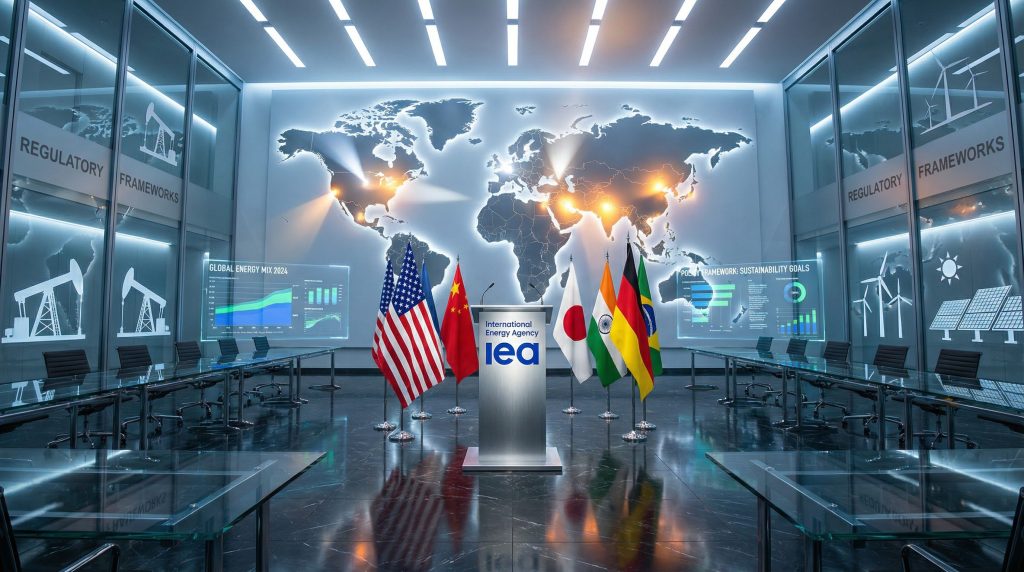
The global energy governance landscape faces unprecedented strain as major powers recalibrate their strategic priorities between traditional energy security concerns and climate transition objectives. Furthermore, the potential for a US withdraw from International Energy Agency reflects deeper questions about multilateral institutions' evolving mandates and their capacity to balance diverse national interests within rapidly changing geopolitical frameworks.
The institutional architecture governing international energy coordination emerged from crisis-driven necessity during the 1970s oil shocks. Yet contemporary challenges require these organizations to navigate between their founding principles of supply security and newer imperatives around climate mitigation, creating fundamental tensions about analytical independence and policy advocacy boundaries.
When big ASX news breaks, our subscribers know first
Understanding the International Energy Agency's Evolving Mandate
The International Energy Agency operates as a critical coordination mechanism for 31 member nations, managing an annual budget of approximately €90-100 million USD equivalent. Founded in November 1974 following the OPEC oil embargo crisis, the organisation maintains sophisticated emergency response protocols and comprehensive energy data collection systems covering more than 190 countries globally.
The agency's governance structure employs weighted voting mechanisms where financial contributions significantly influence decision-making authority. The United States represents the largest single contributor, providing an estimated 25-30% of the organisation's operational budget, translating to approximately $25-30 million USD annually. This substantial financial commitment grants considerable voting power within the organisation's governing board consensus-building processes.
Core Operational Functions
The IEA's mandate encompasses several critical areas:
- Emergency Response Coordination: Maintains protocols for coordinated strategic petroleum reserve releases during supply disruptions
- Energy Data Analytics: Operates the world's most comprehensive energy statistics database
- Technology Policy Development: Facilitates international technology collaboration agreements
- Strategic Analysis: Produces influential World Energy Outlook reports featuring multiple scenario pathways
Historical evolution has transformed the organisation from its original energy security focus toward broader climate integration, particularly following the 2015 Paris Agreement. This shift has created tensions between traditional supply adequacy priorities and newer climate policy considerations within member state delegations, potentially accelerating scenarios where a US withdraw from International Energy Agency becomes more likely.
Policy Tensions in Global Energy Scenario Development
The controversy surrounding IEA analytical frameworks centres on the organisation's Net Zero by 2050 Roadmap, released in May 2021. This comprehensive analysis outlined over 400 individual measures across energy sectors to achieve global net-zero carbon emissions by mid-century. However, the report's prominence in policy discussions has generated significant debate about the appropriate balance between descriptive analysis and prescriptive pathways.
Republican lawmakers have consistently challenged the agency's scenario modelling methodology, arguing that climate-focused projections receive disproportionate emphasis compared to energy security considerations. Congressional Energy Committee hearings throughout 2023-2025 have scrutinised US financial contributions to the organisation, with proposed amendments seeking funding reductions. These developments align with broader US‑China trade tensions affecting global energy markets.
World Energy Outlook Scenario Framework
The IEA employs three primary analytical scenarios:
- Stated Policies Scenario (STEPS): Projects outcomes based on currently implemented government policies
- Announced Pledges Scenario (APS): Assumes full implementation of existing climate commitments
- Net Zero Scenario (NZE): Outlines pathways necessary for achieving 2050 carbon neutrality goals
Critics contend that the Net Zero Scenario applies optimistic assumptions regarding technology deployment rates, particularly for hydrogen infrastructure, carbon capture systems, and renewable energy scaling. The modelling methodology faces scrutiny for potentially underestimating fossil fuel viability in meeting near-term and medium-term global energy demands, especially considering emerging artificial intelligence data centre requirements and global electrification expansion.
"The IEA has defended its analytical approach as standard practice in energy modelling, explicitly distinguishing between descriptive scenarios examining potential futures and prescriptive pathways identifying requirements for specific outcomes," according to recent reports.
Energy Security Imperatives Drive Policy Priorities
Contemporary energy security concerns reflect lessons learned from recent global supply disruptions. The 2022 Russia-Ukraine conflict demonstrated vulnerability within European energy systems, with natural gas prices increasing over 300% during peak crisis periods. These experiences reinforce arguments that reliable energy supply must precede aggressive climate transition policies to avoid economic instability, as highlighted by natural gas trend analysis.
The United States maintains strategic energy infrastructure designed to ensure supply resilience during international disruptions. Current Strategic Petroleum Reserve levels hold approximately 380-400 million barrels within a total capacity of 714 million barrels. This reserve system coordinates with IEA emergency response protocols requiring member nations to maintain minimum reserves equivalent to 90 days of net imports.
Domestic Energy Production Capabilities
US crude oil production has reached approximately 13.0-13.3 million barrels per day as of 2024, representing the highest production levels achieved since 1970. This domestic capacity provides strategic flexibility during international supply disruptions while maintaining diverse energy sourcing to prevent concentration risks. Additionally, US oil production trends influence global market dynamics significantly.
The current US energy portfolio reflects deliberate diversification strategies:
- 37% Natural Gas
- 21% Nuclear
- 19% Coal
- 13% Renewables
- 10% Oil
Critical infrastructure protection frameworks, including Emergency Planning and Community Right-to-Know Act provisions and Cybersecurity and Infrastructure Security Agency standards, establish comprehensive protocols for energy system resilience. These regulatory structures prioritise supply continuity alongside environmental considerations while addressing critical minerals & energy security requirements.
Structural Reform Demands and Governance Implications
Reform proposals targeting IEA operations seek fundamental changes to analytical methodologies and institutional governance structures. These demands reflect broader questions about multilateral organisation mandates and member state influence distribution within international energy coordination mechanisms.
Proposed modifications to scenario modelling would emphasise market-driven energy transitions rather than policy-driven pathways. Alternative approaches would expand natural gas modelling as longer-term bridge fuel while incorporating greater technological uncertainty within renewable energy deployment projections. Cost-competitive analysis between conventional and renewable sources would receive enhanced prominence within analytical frameworks.
Executive Leadership and Accountability Measures
Reform advocates propose rotating executive director positions among member states to ensure balanced regional representation. Additional accountability measures could include explicit mandate restrictions limiting advocacy beyond analytical functions. These structural changes aim to restore organisational focus on energy security priorities while maintaining climate consideration integration.
Member state influence rebalancing proposals suggest restructuring voting weights to reflect contemporary energy market realities. Enhanced representation for oil and gas producing nations could accompany permanent positions for major energy suppliers within decision-making bodies. Nevertheless, such changes require careful consideration of how they might affect potential scenarios for a US withdraw from International Energy Agency.
Economic Consequences of Institutional Withdrawal Scenarios
Potential US withdrawal from the IEA would create substantial operational and financial challenges for the organisation. Loss of the largest single funding source would necessitate either 25-30% budget reductions or significant contribution increases from remaining member states. European nations collectively provide 40-45% of current funding, while Japan contributes approximately 10-12% and Canada provides 3-5%.
Operational Impact Assessment
Minimal Adjustment Scenario:
- EU member states increase contributions by 15-20%
- Other nations collectively contribute additional 5-10%
- Minimal operational disruption
- Additional annual cost to EU: €10-15 million
Moderate Adjustment Scenario:
- 10-15% reduction in analytical staff
- Regional office consolidation
- Non-core research programme elimination
- Compromised emergency response capacity
Significant Restructuring Scenario:
- 25-30% operational capacity reduction
- Non-core market research centre closures
- Limited real-time energy monitoring capabilities
- Reduced member state coordination during crises
Market volatility patterns suggest that US-multilateral organisation tensions correlate with increased energy price fluctuations. Oil price volatility increased 15-20% during previous diplomatic disputes between 2017-2019, as documented in oil price rally insights. Natural gas price correlation with geopolitical uncertainty maintains approximately 0.65 correlation coefficient, indicating significant market sensitivity to institutional stability concerns.
The next major ASX story will hit our subscribers first
Alternative Global Energy Governance Models
Reduced US participation within existing international energy institutions could accelerate development of alternative coordination mechanisms. Regional energy alliance formations might replace multilateral frameworks with bilateral cooperation agreements and private sector coordination initiatives.
Emerging energy powers, particularly China and India, could benefit from decreased US influence within global energy governance structures. These nations possess growing energy market significance and seek enhanced representation within international coordination mechanisms. Middle Eastern producer nations similarly stand to gain increased leverage within restructured governance frameworks.
European Union Strategic Response
The European Union faces complex challenges in maintaining transatlantic energy cooperation while protecting climate policy priorities. Leadership vacuum scenarios would require EU nations to assume greater financial and operational responsibilities within international energy institutions. Enhanced burden-sharing arrangements might necessitate closer coordination between European energy ministries and regulatory bodies.
Carbon pricing mechanism stability depends significantly on international coordination frameworks that could face disruption during institutional restructuring periods. Technology transfer agreements facilitating clean energy deployment across developing nations require multilateral institutional support that withdrawal scenarios might compromise, as highlighted by recent analyses.
Long-term Geopolitical Implications for Energy Diplomacy
Institutional fragmentation within international energy governance creates risks for crisis response coordination during supply emergencies. Historical precedent demonstrates that multilateral mechanisms provide essential communication channels during geopolitical tensions affecting energy markets. Reduced coordination capacity could complicate strategic reserve deployment and emergency response protocols.
US energy diplomacy isolation risks include potential exclusion from multilateral negotiation processes affecting global energy trade flows. Strategic intelligence sharing limitations might reduce early warning capabilities for supply disruption threats. Private sector coordination between US energy companies and international partners could face additional complexity during bilateral relationship management.
Strategic Reserve Coordination Changes
Emergency response protocol modifications would require alternative coordination mechanisms replacing IEA frameworks. Strategic reserve systems rely on synchronised release timing and volume coordination that bilateral agreements might struggle to replicate effectively. Supply chain resilience planning faces additional complexity without standardised multilateral information sharing protocols.
Investment confidence measurement metrics indicate that institutional uncertainty correlates with increased risk premiums within energy sector financing. Long-term project development requires stable regulatory and diplomatic frameworks that governance fragmentation could undermine.
What Are the Monitoring Frameworks for Energy Governance Evolution?
Assessment of ongoing institutional tensions requires systematic tracking of diplomatic engagement outcomes and reform implementation progress. Ministerial meeting results provide key indicators of compromise potential versus escalating confrontation between member states and international organisations.
Key Monitoring Indicators:
- Ministerial Meeting Outcomes: Consensus achievement on reform measures
- Budget Approval Processes: Member state contribution negotiations
- Scenario Publication Reviews: Analytical methodology modifications
- Emergency Response Exercises: Coordination effectiveness assessments
- Private Sector Engagement: Industry participation in institutional processes
Future policy recommendation frameworks must balance energy security imperatives with climate transition requirements while maintaining institutional legitimacy among diverse member state constituencies. Diplomatic engagement pathways should explore compromise solutions preserving analytical independence while addressing legitimate energy security concerns.
Alternative cooperation mechanism design might incorporate hybrid governance structures allowing different emphasis levels on climate versus security priorities among participating nations. This flexibility could maintain broad multilateral participation while accommodating diverse national energy policy priorities.
Conclusion
The evolution of international energy governance will significantly influence global energy transition pathways and crisis response capabilities. Institutional adaptation strategies must address fundamental tensions between energy security and climate objectives while preserving essential coordination functions that prevent market disruptions during supply emergencies. However, the growing possibility of a US withdraw from International Energy Agency represents a critical juncture requiring careful diplomatic navigation to maintain global energy stability.
Disclaimer: This analysis contains forward-looking assessments and speculative projections regarding international energy governance evolution. Actual outcomes may differ significantly from discussed scenarios due to changing geopolitical circumstances, technological developments, and policy modifications by member states and international organisations.
Ready to Capitalise on Energy Sector Market Opportunities?
Discovery Alert's proprietary Discovery IQ model delivers real-time notifications on significant ASX mineral discoveries, including critical energy transition metals and commodities that drive global energy markets. With international energy governance creating market volatility and supply chain uncertainties, subscribers gain immediate insights into actionable trading opportunities whilst major institutional shifts unfold across global energy markets.