August 6, 2026
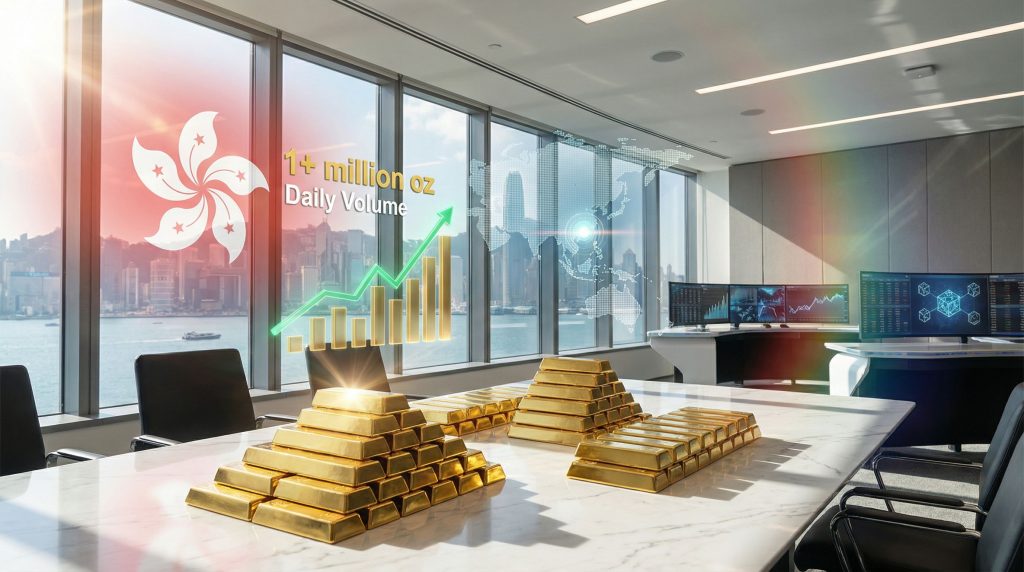
Hong Kong's position as an emerging international gold trading centre Hong Kong represents a significant shift in global commodity market dynamics, driven by strategic government initiatives and the territory's unique regulatory advantages. This transformation occurs amid unprecedented demand for precious metals trading infrastructure that can serve Asia's growing economic influence while maintaining seamless connectivity to international markets.
The territory's ambitious gold hub development strategy combines regulatory innovation, technological advancement, and cross-border cooperation frameworks to create a comprehensive trading ecosystem. Furthermore, Hong Kong's constitutional arrangement under "One Country, Two Systems" provides structural advantages unavailable to competing financial centres, particularly in facilitating both international market access and mainland China integration.
What Makes Hong Kong's Gold Trading Infrastructure Globally Competitive?
Regulatory Framework Advantages Under "One Country, Two Systems"
Hong Kong's unique constitutional arrangement provides unprecedented advantages for international commodities trading that no other financial center can replicate. The territory maintains zero value-added tax on precious metals transactions, creating immediate cost savings of 17-25% compared to European markets where VAT significantly impacts trading economics.
The Hong Kong Dollar's fixed exchange rate system, maintained at approximately 7.78 HKD to 1 USD since 1983, eliminates currency volatility risks that can severely impact international gold transactions. This 40-year track record of monetary stability provides institutional investors with confidence in long-term contract pricing and settlement mechanisms.
Most critically, Hong Kong operates under fully convertible capital accounts with no restrictions on cross-border fund transfers for authorised institutions. This enables same-day settlement capabilities that are essential for high-volume precious metals trading, where timing differences can create significant arbitrage opportunities or settlement risks.
According to the Hong Kong Monetary Authority's Foreign Exchange Management Guidelines, these capital flow mechanisms operate seamlessly with international banking systems. Consequently, this provides 24-hour liquidity access that traditional commodity centres cannot match due to their more restrictive regulatory environments.
Physical Trading Infrastructure and Market Access
The territory's Hong Kong Chinese Gold & Silver Exchange Society maintains accredited assay facilities meeting London Bullion Market Association Good Delivery standards. However, this enables direct international certification compatibility, ensuring that gold processed through Hong Kong systems achieves immediate global market acceptance without additional verification requirements.
Hong Kong's timezone positioning creates optimal market coverage, operating during 9:30 AM to 4:00 PM HKT business hours. This schedule provides overlapping trading windows with European markets (4:30 PM to 1:00 AM GMT) and North American markets (1:00 AM to 9:00 PM EST).
In addition, this positioning enables continuous 24-hour market connectivity when coordinated with London and New York trading sessions. The territory's proximity to mainland China's manufacturing centres creates unique logistical advantages for those implementing effective gold investment strategies.
Shanghai's jewellery manufacturing facilities, located approximately 1,200 kilometres northwest, can receive refined gold on next-business-day delivery schedules. Moreover, they maintain access to international market pricing and settlement through Hong Kong's clearing systems.
Strategic storage and custody infrastructure operates through licensed precious metals vaults that maintain dual compliance frameworks. These include LBMA Good Delivery standards for international market recognition and Chinese national precious metals standards for mainland market integration.
When big ASX news breaks, our subscribers know first
How Does Hong Kong's Gold Market Compare to Other International Trading Centres?
Market Volume and Liquidity Analysis
Global gold trading centres operate with distinct characteristics that reflect their underlying market structures and regulatory environments. Understanding these dynamics becomes essential when analysing the current historic gold surge explained by market fundamentals.
| Trading Center | Daily Volume (Est.) | Key Advantages | Market Focus |
|---|---|---|---|
| London | 14-16 million oz | LBMA standards, price discovery | OTC institutional |
| New York | 3-4 million oz equivalent | COMEX futures depth, regulation | Derivatives focus |
| Hong Kong | 300,000-1+ million oz | Asian gateway, physical trading | Regional hub |
| Shanghai | 800,000-1.2 million oz | Domestic market size, RMB pricing | Mainland China |
London's LBMA OTC market maintains dominance through established institutional relationships and bid-ask spreads of 0.5-0.8 points on standard lot transactions. However, this market operates primarily during European business hours, creating gaps in Asian trading coverage.
New York's COMEX system processes approximately 300,000-400,000 gold futures contracts daily with spreads of 0.1-0.3 cents per troy ounce during active trading. Yet this derivatives-focused approach serves different market participants than those seeking physical gold delivery.
Shanghai Gold Exchange handles substantial volumes through its AU9999 contract but operates within China's capital control framework. Consequently, this limits international participant access and creates pricing disconnects from global markets.
Competitive Positioning in Asian Markets
Hong Kong's strategic advantage emerges from its gateway function for China-bound gold flows while maintaining unrestricted access to international markets. Unlike Singapore or Dubai, which serve as regional trading hubs, Hong Kong uniquely combines international regulatory standards with direct mainland China market access.
The territory's integration with Greater Bay Area manufacturing clusters provides immediate demand sources for processed gold. Furthermore, Shenzhen's electronics manufacturing and Guangzhou's jewellery production centres create consistent industrial demand that supports market liquidity and price stability.
Settlement mechanisms in Hong Kong operate on T+1 business day cycles for physical delivery, compared to T+2 standard in London and daily mark-to-market requirements in New York futures markets. This acceleration provides working capital advantages for international trading firms operating across multiple time zones.
What Strategic Initiatives Are Driving Hong Kong's Gold Hub Development?
Government-Led Commodity Strategy Framework
The Hong Kong government established a Commodity Strategy Committee in December 2025 under Financial Secretary Paul Chan Mo-po's leadership. This marks the first institutional framework specifically dedicated to commodities ecosystem development, representing a significant policy shift toward diversifying Hong Kong's economic base beyond traditional financial services.
Secretary for Financial Services and the Treasury Christopher Hui Ching-yu identified developing an international gold trading centre Hong Kong as a strategic priority within this broader commodities expansion initiative. The government's commitment provides regulatory certainty and policy support essential for attracting international participants to establish operations.
The committee's formation addresses long-standing gaps in Hong Kong's commodities infrastructure by providing centralised coordination between regulatory bodies, industry participants, and technology providers. In addition, this institutional framework enables systematic development rather than ad-hoc market growth.
Government officials emphasised the "enormous potential" of Hong Kong's commodities market development. They specifically cited the free flow of capital, goods, and information under the One Country, Two Systems arrangement as providing structural advantages unavailable to competing financial centres.
Infrastructure Development Roadmap
2025-2026 Immediate Implementation Phase:
- Gold central clearing system establishment to provide centralised counterparty clearing for gold transactions, similar to LME Clear operations in London
- Gold industry association formation to standardise trading practices, market governance, and professional standards across participants
- Shanghai Gold Exchange cooperation deepening through formal protocols enabling product coordination and trading hour optimisation
Medium-term Strategic Objectives:
- International gold pricing influence expansion through coordination with existing benchmark setting mechanisms
- Refinery attraction initiatives leveraging the proposed import-refining-export model
- Technology integration exploration including blockchain applications and digital trading platforms
The central clearing system specifically addresses counterparty risk concerns that have historically limited institutional participation in regional gold markets. By providing clearing house protection similar to established commodity exchanges, Hong Kong can attract international banks and trading houses that require institutional-grade risk management.
Industry association development will focus on establishing professional standards, dispute resolution mechanisms, and technical specifications. These align with international best practices while accommodating regional market characteristics.
How Does the "Hong Kong Import – Shenzhen Refining – Overseas Re-export" Model Work?
Cross-Border Value Chain Integration
The proposed model creates a sophisticated cross-border manufacturing and trading ecosystem that leverages each jurisdiction's comparative advantages. Raw gold materials enter Hong Kong duty-free under the territory's precious metals exemption framework, eliminating immediate import costs that would apply in most other trading centres.
Processing operations in Shenzhen access mainland China's advanced refining technology and skilled workforce while maintaining significantly lower labour costs compared to Swiss or Middle Eastern alternatives. Shenzhen's industrial infrastructure provides economies of scale and technical capabilities that rival established international refining centres.
Re-exportation through Hong Kong enables refined products to enter international markets with Hong Kong's trade documentation and quality certifications. This combination provides end-users with confidence in product quality while achieving cost efficiencies through mainland processing.
Secretary Christopher Hui indicated that overseas firms were already exploring refinery establishment within this framework. Furthermore, this suggests early market validation of the model's economic viability, particularly given current record high gold prices driving industry investment.
The combination of Hong Kong's regulatory environment with Shenzhen's industrial capabilities creates unique value propositions for international refiners seeking competitive advantages in Asian markets.
Economic Benefits and Risk Mitigation
Cost Structure Advantages:
- Elimination of Hong Kong import duties on raw precious metals
- Reduced labour costs through Shenzhen processing compared to European alternatives
- Streamlined logistics within the Greater Bay Area transportation network
- Simplified documentation through Hong Kong's international trade systems
Risk Diversification Benefits:
- Geographic diversification across Hong Kong and mainland China jurisdictions
- Regulatory arbitrage opportunities between international and domestic frameworks
- Supply chain resilience through multiple processing and storage locations
- Currency hedging options through Hong Kong's international banking infrastructure
International refiners operating within this model gain access to Asian demand sources while maintaining operational flexibility to serve global markets. The model particularly benefits companies seeking to establish Asian market presence without committing to full mainland China operations.
What Role Does Technology Play in Hong Kong's Gold Trading Evolution?
Digital Trading Platform Development
Hong Kong's gold trading modernisation emphasises electronic trading system advancement beyond traditional floor-based operations. The proposed central clearing system will integrate real-time price discovery mechanisms with automated settlement capabilities, reducing transaction completion times from hours to minutes.
Integration with international trading networks enables Hong Kong participants to access global liquidity pools while providing Asian market pricing data to international benchmark systems. This connectivity ensures that Hong Kong pricing remains aligned with global markets while reflecting regional supply and demand dynamics.
The territory's advanced telecommunications infrastructure supports high-frequency trading capabilities and algorithmic execution systems that institutional participants require for competitive operations. Fibre optic connectivity to mainland China, Singapore, and international cable landing stations provides latency advantages for time-sensitive trading strategies.
Data feed integration with Shanghai Gold Exchange, LBMA pricing systems, and COMEX futures markets enables comprehensive price discovery. Moreover, this facilitates arbitrage identification across regional markets, supporting more informed gold price forecast analysis.
Blockchain and Tokenisation Opportunities
Emerging technology applications in precious metals trading focus on supply chain transparency and ownership verification. Blockchain-based systems can provide complete audit trails from mining source through refining, trading, and final delivery, addressing growing demand for responsible sourcing verification.
Digital gold certificates enable fractional ownership and trading of physical gold holdings without requiring physical transfer. This capability particularly benefits retail investors and smaller institutions that cannot economically justify large-scale physical storage and custody arrangements.
Smart contract implementation for automated settlement reduces counterparty risk and eliminates manual processing delays that can create settlement failures during volatile market periods. Automated execution based on predetermined criteria enables 24-hour trading even when human operators are unavailable.
Tokenisation frameworks under development could enable Hong Kong-based gold holdings to be traded on international digital asset platforms. Consequently, this expands market access beyond traditional precious metals dealers to cryptocurrency and digital asset investors.
How Does Hong Kong's Gold Strategy Align with China's Financial Market Development?
Shanghai Gold Exchange Cooperation Framework
Deepened cooperation protocols with Shanghai Gold Exchange create opportunities for coordinated product development and cross-listing arrangements. Hong Kong's international access combined with Shanghai's domestic market depth enables comprehensive coverage of both international and Chinese demand sources.
RMB-denominated gold pricing through Shanghai provides an alternative to USD-based international pricing, particularly valuable for Chinese institutions managing currency exposure. Hong Kong's role in RMB internationalisation efforts aligns naturally with gold trading denominated in Chinese currency.
Joint trading standards development ensures compatibility between Hong Kong and Shanghai systems while maintaining each market's distinct regulatory characteristics. This standardisation reduces operational complexity for institutions operating in both markets, supporting broader gold stock market guide principles.
Coordinated trading hours optimisation could extend effective market coverage across Asian time zones. Furthermore, this provides continuous pricing and liquidity during periods when European and American markets are closed.
Greater Bay Area Integration Benefits
Manufacturing cluster proximity creates immediate demand sources for processed gold from electronics, jewellery, and luxury goods production. Shenzhen's electronics manufacturing requires gold for circuitry and component production, while Guangzhou's jewellery industry provides additional industrial demand.
Logistics optimisation across the Hong Kong-Shenzhen-Guangzhou corridor reduces transportation costs and delivery times compared to international supply chains. High-speed rail connections and integrated customs procedures enable same-day movement of high-value shipments.
Talent and expertise sharing between Hong Kong's financial services sector and mainland China's industrial capabilities creates unique knowledge combinations. Financial engineering expertise combined with manufacturing optimisation provides comprehensive solutions for international clients.
Technology transfer opportunities enable Hong Kong financial technology companies to develop solutions specifically for precious metals trading. Meanwhile, mainland industrial companies gain access to international market knowledge and connections.
The next major ASX story will hit our subscribers first
What Challenges and Opportunities Face Hong Kong's Gold Trading Ambitions?
Market Competition and Differentiation Strategies
Established market dominance by London and New York creates significant barriers to market share capture. London's LBMA system has operated for over 300 years with established institutional relationships that are difficult to replicate. New York's COMEX system provides deep derivatives markets with sophisticated risk management tools.
Regional competition from Singapore and Dubai presents immediate challenges. Singapore operates as a regional trading hub with similar timezone advantages and established precious metals storage infrastructure. Dubai's gold souk and trading ecosystem serves Middle Eastern and South Asian markets with centuries of operational history.
Technological advancement requirements demand significant investment in trading platform development, clearing systems, and market data infrastructure. Competing with established electronic trading systems requires both financial resources and technical expertise.
Differentiation opportunities emerge through Hong Kong's unique regulatory position:
- Physical trading focus in an increasingly digitised market appeals to institutions requiring actual metal delivery
- Asian timezone coverage provides natural advantages for regional market makers
- China market access unavailable to purely international competitors
- Cost structure advantages through zero VAT and competitive processing costs
Regulatory and Geopolitical Considerations
International sanctions compliance requirements create operational complexity for institutions operating across multiple jurisdictions. Hong Kong must maintain compatibility with international financial regulations while preserving mainland China market access.
Anti-money laundering frameworks require sophisticated monitoring systems and customer verification procedures. Precious metals trading historically presents elevated AML risks due to the physical nature and high value density of gold transactions.
Political stability maintenance remains essential for long-term institutional confidence. International participants require assurance that regulatory frameworks will remain stable and predictable over multi-year investment horizons.
Know-your-customer protocols must accommodate both international institutional clients and mainland China participants operating under different identification and verification requirements. According to recent market developments, these frameworks are being refined to support the planned 2026 central clearing system launch.
What Investment and Business Opportunities Emerge from Hong Kong's Gold Hub Strategy?
Market Participants and Ecosystem Development
International bullion banks represent primary target participants for Hong Kong's trading centre development. Major global institutions require clearing capabilities, storage infrastructure, and regulatory certainty before establishing significant trading operations.
Regional jewellery manufacturers and distributors provide immediate demand sources and supply chain integration opportunities. Hong Kong's proximity to Asian manufacturing centres creates natural business relationships that support market liquidity.
Technology providers specialising in commodity trading infrastructure face significant opportunities in developing Hong Kong's electronic trading platforms, clearing systems, and market data distribution networks.
Logistics and storage facility operators can establish specialised precious metals custody and transportation services supporting the physical trading focus of Hong Kong's strategy.
Key participant categories include:
- Primary dealers authorised for wholesale market making and clearing
- Refiners and processors utilising the Hong Kong-Shenzhen model
- Institutional investors requiring Asian market exposure
- Technology service providers developing trading and clearing infrastructure
Revenue Generation Potential
Trading commission structures typically range from 0.01% to 0.05% of transaction value for institutional trades, generating sustainable revenue streams for exchange operators and clearing houses as trading volumes expand.
Storage and custody services command premium pricing for precious metals due to security requirements and insurance costs. Annual storage fees typically range from 0.1% to 0.3% of asset value, providing recurring revenue for specialised facilities.
Certification and assay services generate transaction-based revenues while supporting market integrity and quality assurance. Assay and certification fees range from $50 to $200 per batch depending on volume and testing requirements.
Financial services expansion through hedging products, financing arrangements, and risk management services creates additional revenue opportunities. These benefit banks and specialised precious metals dealers establishing Hong Kong operations.
How Will Success Be Measured for Hong Kong's Gold Trading Centre Initiative?
Key Performance Indicators and Benchmarks
Quantitative success metrics focus on market share capture and trading volume growth:
- Daily trading volume targets of 2-3 million ounces within 3-5 years would represent significant market share capture from existing centres
- International participant attraction measured by number of LBMA-member institutions establishing Hong Kong operations
- Transaction value growth tracking total USD value of trades processed through Hong Kong clearing systems
- Market share percentage in Asian gold trading, targeting 25-30% of regional volume within the medium term
Liquidity measurements through bid-ask spread compression and market depth analysis provide indicators of market maturity and efficiency development.
Settlement volume tracking for physical delivery operations demonstrates the success of Hong Kong's physical trading focus compared to purely financial/derivatives approaches.
Long-term Strategic Outcomes
Price discovery influence represents the ultimate measure of Hong Kong's success as a gold trading centre. Meaningful influence on global gold pricing requires sufficient volume and international participation to impact benchmark pricing mechanisms.
Integration into global trading infrastructure through recognition by LBMA, connection to international clearing networks, and inclusion in global market data feeds indicates successful establishment. This demonstrates permanent integration as an element of international gold markets.
Contribution to Hong Kong's financial services GDP through direct trading revenues, employment creation, and ancillary services development provides measurable economic impact assessment.
Enhancement of international financial centre status through commodities trading capabilities supplements Hong Kong's existing strengths in banking, asset management, and capital markets. Furthermore, this creates a more comprehensive financial services ecosystem.
Investment Disclaimer: The development of Hong Kong's gold trading centre involves significant regulatory, market, and geopolitical uncertainties. Potential participants should conduct thorough due diligence and consider professional advice before making investment decisions. Past performance of similar initiatives does not guarantee future success, and commodity trading involves substantial financial risks including total loss of invested capital.
The success of Hong Kong's international gold trading centre Hong Kong initiative ultimately depends on achieving critical mass in participant attraction while maintaining competitive advantages over established markets. Early indicators suggest strong government commitment and industry interest, but execution challenges remain significant in competing with centuries-old trading centres and established institutional relationships.
Want to Stay Ahead of Asia's Precious Metals Market Transformation?
Discovery Alert's proprietary Discovery IQ model delivers instant notifications on significant ASX mineral discoveries, including gold and precious metals opportunities that could benefit from Hong Kong's emerging trading infrastructure developments. Stay positioned ahead of major market movements by exploring Discovery Alert's track record of historic discoveries and begin your 30-day free trial today to access real-time insights powered by advanced AI analysis.