
June 6, 2026
Understanding the Investment Framework Behind Major Mining Expansions
Modern mining enterprises navigate complex investment landscapes where capital allocation decisions determine long-term competitive positioning. The contemporary approach to mine development has evolved beyond traditional single-project focus toward integrated portfolio strategies that balance immediate returns with strategic asset development.
Investment frameworks in mining now encompass multiple operational phases, each designed to optimise resource extraction whilst managing execution risk. This multi-tiered methodology allows companies to phase capital deployment across different risk profiles, from near-term operational improvements to long-term infrastructure development.
Key Investment Metrics Framework:
- Portfolio diversification across geographic regions and commodity types
- Return thresholds typically exceeding 20% IRR for new projects
- Risk-adjusted capital allocation balancing proven reserves with exploration potential
- Operational synergies between existing and new developments
Evolution Mining's recent strategic decisions at Northparkes exemplify this disciplined approach. The company has structured investments totalling $794 million across complementary initiatives, with expected returns ranging from 23% to 48%, significantly above their current portfolio average of 18%.
This strategic framework reflects industry recognition that sustainable growth requires balanced investment across operational optimisation, capacity expansion, and resource base extension. Furthermore, the integration of processing improvements with underground development creates operational synergies that enhance overall project economics. The Evolution Mining Northparkes expansion demonstrates how modern mining industry evolution strategies leverage multiple value-creation initiatives simultaneously.
When big ASX news breaks, our subscribers know first
How Do Block Cave Mining Economics Transform Long-Term Profitability?
Block cave mining represents a fundamental shift in underground extraction methodology, offering superior economics for large-scale, deep-seated ore bodies. This technique enables mining companies to access ore deposits that would be uneconomical using conventional methods, whilst dramatically reducing operational costs per tonne over extended mine life.
E22 Block Cave Development: Capital Investment Strategy
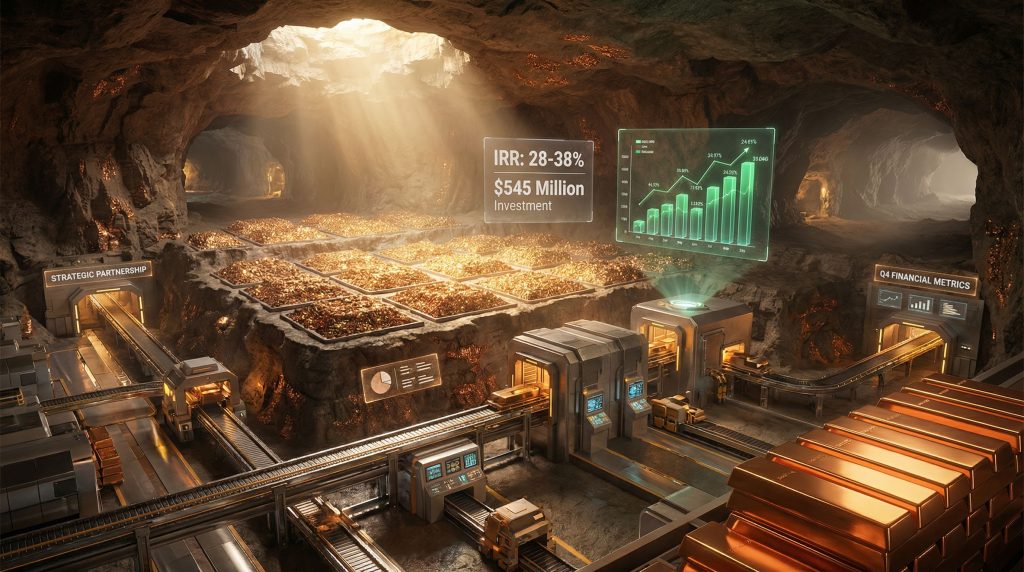
The E22 block cave project at Evolution Mining's Northparkes operation demonstrates the economic advantages of this mining methodology. With a $545 million capital investment, the project targets returns of 28% at base metal prices and 38% under favourable market conditions, with production scheduled to commence by the end of fiscal 2030.
Block Cave Economic Fundamentals:
| Metric | Conventional Underground | Block Cave Mining |
|---|---|---|
| Capital Intensity | Moderate upfront | High initial investment |
| Operating Cost/Tonne | $45-65 | $25-35 |
| Labour Requirements | High personnel density | Automated systems |
| Mine Life Extension | 10-15 years | 25-40+ years |
The methodology relies on gravitational ore movement after systematic undercutting, eliminating the need for extensive drilling and blasting per tonne. This approach delivers several competitive advantages:
- Reduced labour intensity through automated ore handling systems
- Continuous extraction enabling maximum processing plant utilisation
- Scalable production within the same underground footprint
- Extended resource recovery from previously uneconomical zones
Technical Infrastructure Requirements
Block cave operations require sophisticated infrastructure development that justifies the substantial upfront investment. However, the data-driven mining operations approach enables precise monitoring and control of complex extraction processes.
Primary Infrastructure Components:
- Underground conveyor systems for ore transport
- Drawpoint development and management systems
- Advanced ventilation networks
- Real-time seismic and stability monitoring
- Automated ore flow control systems
The technology integration aspect is critical for success. Modern block cave operations incorporate predictive maintenance systems and automated material handling that reduce operational risk whilst improving safety performance. These technological advances enable remote operation capabilities, reducing underground personnel exposure.
Market Conditions Supporting Block Cave Investment
Current commodity market fundamentals support large-scale underground investments. Gold prices have maintained elevated levels above AUD $2,800 per ounce, with analysts projecting gold prices record highs continuing through the medium term, whilst copper demand continues growing due to energy transition requirements. These price environments enhance the economic viability of capital-intensive projects like block cave development.
Risk Mitigation Strategies:
Block cave mining projects incorporate multiple risk management approaches, including phased development schedules, advanced geotechnical monitoring, and flexible production planning to adapt to market conditions.
The long-term nature of block cave operations provides natural hedging against commodity price volatility. Once established, these operations can adjust production rates based on market conditions whilst maintaining positive cash flow generation across commodity cycles.
What Role Does Processing Capacity Play in Mine Expansion Strategy?
Processing capacity optimisation forms a critical component of integrated mine expansion strategies. Modern mining operations recognise that ore extraction capabilities must align precisely with processing throughput to maximise asset utilisation and returns.
Mill Expansion and Processing Optimisation
Evolution Mining's approach to processing enhancement encompasses two strategic initiatives designed to optimise flotation efficiency and expand overall capacity. The $75 million Coarse Particle Flotation Project targets immediate improvements with expected returns of 23% to 43%, whilst a $14 million mill capacity study explores expansion from current 7.5 million tonnes per annum to 10+ million tonnes per annum.
Coarse Particle Flotation Technology Advantages:
- Energy efficiency improvements through reduced grinding requirements
- Recovery rate optimisation for particles typically lost in conventional flotation
- Tailings volume reduction improving environmental performance
- Operational cost reduction of 15-25% per tonne processed
The strategic timing of these investments demonstrates sophisticated project sequencing. Immediate flotation improvements generate positive returns whilst the mill expansion study validates capacity increases timed to coincide with E22 ore availability in 2030. This phased approach exemplifies how successful Evolution Mining Northparkes expansion projects balance immediate value creation with long-term strategic positioning.
Processing Technology Integration
Modern flotation technology has evolved to process coarser particles economically, reducing energy-intensive grinding requirements whilst maintaining metal recovery rates. This technological advancement offers multiple operational benefits:
Technical Improvements:
- High-rate thickener installations for improved dewatering
- Paste thickening technology reducing tailings storage requirements
- Automated filter press systems optimising water recycling
- Enhanced flotation cell design increasing throughput capacity
The integration of these technologies creates operational synergies that compound economic benefits. Reduced grinding costs, improved recovery rates, and lower water consumption contribute to enhanced project economics across the processing value chain.
Capacity Expansion Economic Framework
The proposed mill capacity expansion from 7.5 to 10+ million tonnes per annum represents a 33%+ increase requiring comprehensive infrastructure development. This expansion encompasses multiple processing stages:
Infrastructure Requirements:
- Primary crushing capacity upgrades (additional 2.5 Mtpa throughput)
- Grinding circuit expansion (estimated 8-10 MW additional power requirement)
- Flotation cell capacity increases (33%+ additional cell volume)
- Dewatering infrastructure expansion (enhanced thickener/filter capacity)
- Utilities expansion (power, water, compressed air systems)
The 2-3 year study timeline reflects the comprehensive technical and economic assessment required for such significant capacity expansion. This includes equipment selection, environmental approvals, and detailed engineering to ensure optimal integration with existing operations.
How Do Strategic Partnerships Reshape Mining Finance Models?
Strategic partnerships in mining have evolved to provide innovative financing mechanisms that reduce capital requirements whilst securing long-term commodity offtake agreements. These arrangements enable mining companies to accelerate development timelines whilst sharing project risks with specialised financial partners.
Triple Flag International Partnership Structure
The amended metal purchase agreement between Evolution Mining and Triple Flag International demonstrates how modern partnerships create mutual value through structured financing arrangements. Consequently, the agreement provides a $120 million upfront refundable deposit aligned with E22 development schedules whilst reducing streaming rates on the gold-rich E44 deposit.
Partnership Financial Framework:
| Component | Value/Terms | Strategic Benefit |
|---|---|---|
| Upfront Deposit | $120 million refundable | Reduces Evolution's capital burden |
| Streaming Rate Reduction | E44 deposit (rate undisclosed) | Improved margins for Evolution |
| Minimum Deliveries | Guaranteed framework | Secured revenue for Triple Flag |
| Development Pathway | Additional gold-rich deposits | Future growth optionality |
This structure provides Evolution with immediate capital whilst guaranteeing Triple Flag access to gold and silver production from proven deposits. The arrangement demonstrates how streaming agreements can be structured to benefit both operational efficiency and financial performance.
Innovative Financing Mechanisms
Modern mining partnerships incorporate sophisticated financial instruments that address traditional project financing challenges. In addition, these arrangements often complement comprehensive capital raising strategies that mining companies employ to fund major expansion projects.
Risk Sharing Benefits:
- Development funding reduces upfront capital requirements
- Guaranteed offtake agreements provide revenue certainty
- Flexible streaming rates adapt to market conditions
- Staged funding releases align with project milestones
These partnerships enable mining companies to maintain operational control whilst accessing specialised financing expertise. Streaming companies bring commodity market knowledge and risk management capabilities that complement mining operational expertise.
Market Impact of Partnership Models
Strategic partnerships have become essential for large-scale mining project development, particularly in the current capital-intensive environment. These arrangements provide several market advantages:
Streaming partnerships enable mining companies to advance multiple projects simultaneously whilst maintaining financial flexibility for operational optimisation and exploration investments.
The Evolution-Triple Flag partnership creates a framework for developing additional gold-rich deposits across the Northparkes tenement, providing scalable growth optionality. This approach maximises asset value whilst maintaining development flexibility based on market conditions.
Why Do Multi-Asset Portfolios Drive Superior Mining Returns?
Diversified mining portfolios provide risk mitigation and return optimisation opportunities that single-asset strategies cannot achieve. Modern mining companies construct portfolios across geographic regions, commodity types, and development stages to maximise risk-adjusted returns.
Portfolio Optimisation Across Operations
Evolution Mining's diversified approach extends beyond Northparkes to include complementary investments across multiple jurisdictions. The $160 million Ernest Henry Bert deposit development provides additional mill feed capacity whilst enhancing operational synergies within the portfolio.
Geographic and Commodity Diversification:
- Australian operations provide stable regulatory environment and infrastructure access
- Canadian exploration projects (Two Times Fred and Clisbako) offer jurisdiction diversification
- Gold and copper exposure balances precious metal stability with base metal growth
- Multiple development stages smooth capital deployment and production profiles
This diversification strategy enables companies to optimise capital allocation across different risk-return profiles whilst maintaining production stability. Each asset contributes different characteristics to the overall portfolio performance. Furthermore, the trend towards mining joint ventures allows companies to share risks whilst accessing larger, more complex projects.
Investment Prioritisation Framework
Professional mining portfolio management requires sophisticated capital allocation frameworks that evaluate projects across multiple criteria:
Project Evaluation Matrix:
- Return thresholds (target 20%+ IRR for new investments)
- Risk assessment (geological, technical, regulatory, market)
- Operational synergies (processing, infrastructure, logistics)
- Market timing (commodity cycles, capital availability)
- Strategic fit (geographic, commodity, development stage)
Evolution's current investment portfolio demonstrates this disciplined approach, with new projects targeting 23-48% IRR compared to the existing portfolio average of 18%. This premium reflects both improved project selection and favourable market conditions.
Synergy Creation Through Integration
Multi-asset portfolios create value through operational and financial synergies that single assets cannot achieve:
Operational Synergies:
- Shared processing infrastructure across multiple deposits
- Technical expertise transfer between projects
- Equipment utilisation optimisation across sites
- Bulk purchasing power for consumables and services
Financial Synergies:
- Cash flow diversification across commodity cycles
- Capital efficiency through phased development
- Risk reduction through geographic diversification
- Enhanced debt capacity from portfolio cash flows
These synergies compound over time, creating competitive advantages that justify premium valuations for well-managed diversified mining portfolios.
What Market Conditions Support Large-Scale Mining Investments?
Current commodity market fundamentals provide favourable conditions for substantial mining capital deployment. Multiple factors converge to support long-term investment decisions in gold and copper projects.
Commodity Price Environment Analysis
Gold market dynamics reflect sustained institutional demand combined with currency hedge considerations in an uncertain geopolitical environment. Prices have maintained levels above AUD $2,800 per ounce, providing attractive project economics for high-quality deposits.
Gold Market Drivers:
- Central bank purchasing supporting price floors
- Inflation hedge demand from institutional investors
- Currency debasement concerns driving safe-haven flows
- Geopolitical uncertainty sustaining risk premiums
Copper markets demonstrate even stronger fundamentals driven by energy transition requirements and infrastructure development. Supply constraints from aging mines and declining ore grades support long-term price strength.
Copper Demand Fundamentals:
- Electric vehicle adoption requiring 4x copper content vs conventional vehicles
- Renewable energy infrastructure demanding extensive copper wiring
- Grid modernisation supporting increased copper consumption
- Supply deficit projections through 2030 and beyond
Investment Timing Considerations
Mining investment decisions must consider long-term market cycles given extended development timelines. Block cave projects like E22 require 4-5 years from approval to production, necessitating forward-looking market analysis.
Market Cycle Analysis:
| Factor | Current Status | 5-Year Outlook |
|---|---|---|
| Gold Price | $2,800+ AUD/oz | Sustained higher levels |
| Copper Price | $10,000+ USD/tonne | Supply deficit support |
| Capital Costs | Elevated post-COVID | Stabilising trends |
| Labour Availability | Constrained supply | Gradual improvement |
The timing of major investments like the Evolution Mining Northparkes expansion aligns with favourable long-term market fundamentals whilst current capital costs begin stabilising after post-pandemic inflation.
Risk Mitigation in Market Volatility
Sophisticated mining companies incorporate multiple risk management strategies to protect against market volatility:
Long-term mining investments require comprehensive risk management frameworks that address commodity price volatility, operational risks, and financing considerations across extended development timelines.
Risk Management Strategies:
- Hedging programmes providing price floor protection
- Flexible production planning enabling response to market conditions
- Cost structure optimisation maintaining margins across price cycles
- Financial flexibility through diversified funding sources
These risk management approaches enable companies to proceed with capital-intensive projects whilst maintaining financial resilience across market cycles.
The next major ASX story will hit our subscribers first
How Do Regulatory and Operational Factors Influence Expansion Timing?
Mining expansion projects must navigate complex regulatory frameworks whilst integrating comprehensive environmental and social governance considerations. Modern mining operations require extensive stakeholder engagement and environmental assessment processes that significantly influence project timelines.
Environmental and Social Considerations
Contemporary mining expansions integrate ESG frameworks from project conception through operational implementation. The 2-3 year study timeline for mill expansion at Northparkes encompasses comprehensive environmental impact assessments and community consultation processes.
Environmental Assessment Requirements:
- Water management optimisation addressing regional water security
- Tailings storage strategies incorporating best-practice designs
- Biodiversity impact assessment ensuring ecosystem protection
- Air quality monitoring maintaining community health standards
These assessments require sophisticated technical studies and extensive stakeholder consultation to obtain regulatory approvals. The integration of environmental considerations into project design often identifies operational improvements that enhance long-term sustainability.
Social Licence Considerations
Mining companies increasingly recognise that social acceptance is essential for project success. Community engagement programmes must demonstrate tangible local benefits through employment opportunities and regional economic development.
Community Engagement Framework:
- Local employment prioritisation creating regional job opportunities
- Skills development programmes building local technical capabilities
- Infrastructure investment supporting community development
- Environmental monitoring transparency maintaining community trust
The Northparkes expansion provides significant employment opportunities during construction and ongoing operations, contributing to regional economic stability in rural New South Wales.
Regulatory Approval Timelines
Mining project approvals require coordination across multiple government agencies and regulatory frameworks. The complexity of modern mining operations necessitates comprehensive technical documentation and impact assessments.
Approval Process Components:
- Environmental impact statements (12-18 months preparation)
- Community consultation periods (6-12 months minimum)
- Technical review processes (6-9 months regulatory assessment)
- Conditional approval periods (3-6 months conditions development)
- Construction compliance monitoring (ongoing throughout development)
These timelines require careful integration with project development schedules to ensure regulatory milestones align with construction and commissioning activities.
What Financial Metrics Define Successful Mining Expansion Projects?
Mining expansion success requires sophisticated financial analysis incorporating multiple return metrics and risk assessments. Professional mining investment decisions rely on comprehensive financial frameworks that evaluate projects across various market scenarios.
Return Analysis Framework
Evolution Mining's investment criteria demonstrate disciplined capital allocation with clear return thresholds. New projects must demonstrate superior returns compared to existing portfolio performance whilst maintaining acceptable risk profiles.
Financial Performance Metrics:
| Project | Capital Investment | IRR Range | Strategic Value |
|---|---|---|---|
| E22 Block Cave | $545 million | 28-38% | Long-term production base |
| Coarse Particle Flotation | $75 million | 23-43% | Immediate efficiency gains |
| Ernest Henry Bert | $160 million | Not disclosed | Portfolio synergies |
| Mill Expansion Study | $14 million | Evaluation phase | Capacity optimisation |
The 23-48% IRR range for new projects significantly exceeds the current portfolio average of 18%, demonstrating the value-accretive nature of the expansion strategy.
Investment Prioritisation Matrix
Professional mining companies utilise sophisticated evaluation frameworks that consider multiple factors beyond simple return calculations:
Prioritisation Criteria:
- Risk-adjusted returns incorporating geological and technical uncertainties
- Capital efficiency measuring returns per dollar of investment
- Strategic synergies evaluating operational integration benefits
- Market timing assessing commodity cycle positioning
- Execution risk analysing technical and operational complexity
This multi-dimensional analysis enables optimal capital allocation across competing investment opportunities whilst maintaining portfolio balance.
Capital Efficiency Optimisation
Mining companies increasingly focus on capital efficiency metrics that measure value creation per dollar invested. These measurements help identify projects that generate superior returns whilst minimising capital requirements.
Capital Efficiency Metrics:
- NPV per dollar invested measuring absolute value creation
- Payback periods indicating capital recovery timelines
- Cash flow generation rates assessing operational performance
- Return on invested capital measuring ongoing value creation
Evolution's approach demonstrates capital efficiency through phased investment strategies that generate returns from early phases whilst developing longer-term value creation opportunities.
How Do Technological Advances Enable Modern Mining Expansion?
Contemporary mining operations leverage advanced technologies that enable economic extraction from previously unviable deposits whilst improving safety and environmental performance. Technological integration has become essential for competitive mining operations.
Innovation Integration in Mine Development
Modern mining expansions incorporate sophisticated technology systems that optimise extraction efficiency and operational safety. Block cave operations particularly benefit from technological advances in automated systems and real-time monitoring capabilities.
Block Cave Technology Systems:
- Automated ore handling systems reducing manual intervention requirements
- Real-time seismic monitoring enabling proactive stability management
- Predictive maintenance programmes optimising equipment availability
- Integrated control systems coordinating complex underground operations
These technological systems enable remote operation capabilities that improve safety whilst enhancing operational efficiency. The integration of multiple systems creates operational advantages that compound over time.
Processing Technology Advances
Processing technology has evolved to improve metal recovery whilst reducing energy consumption and environmental impact. Coarse particle flotation represents a significant advancement in flotation methodology.
Technology Benefits:
- Energy efficiency improvements through reduced grinding requirements
- Recovery rate optimisation capturing previously lost metal values
- Environmental performance reducing tailings volume and water consumption
- Operational flexibility enabling processing of variable ore types
The $75 million investment in coarse particle flotation at Northparkes demonstrates how technology upgrades can generate substantial returns through improved operational efficiency.
Digitalisation and Data Analytics
Mining operations increasingly rely on digitalisation and data analytics to optimise performance across all operational aspects:
Digital Technology Applications:
- Predictive maintenance reducing unplanned equipment downtime
- Grade control systems optimising ore selection and processing
- Energy management minimising power consumption costs
- Safety monitoring protecting personnel through real-time systems
- Environmental monitoring ensuring compliance and community protection
These digital technologies create competitive advantages through improved operational efficiency and reduced costs across the mining value chain.
What Long-Term Value Creation Strategies Drive Mining Investment Decisions?
Successful mining companies develop comprehensive value creation strategies that extend beyond individual project returns to encompass portfolio optimisation, operational excellence, and strategic positioning within commodity markets.
Strategic Value Maximisation
Evolution Mining's Northparkes expansion reflects broader industry trends toward integrated asset development that maximises long-term value creation through multiple strategic initiatives.
Value Creation Strategies:
- Asset life extension through advanced mining techniques like block caving
- Resource base expansion via systematic exploration and deposit development
- Operational efficiency improvements through technology integration and process optimisation
- Strategic partnerships providing financial flexibility and risk sharing
These strategies create compounding value over extended time horizons, justifying substantial capital investments in long-life assets.
Market Positioning Excellence
Tier-1 mining assets command premium valuations through superior operational performance and strategic positioning within commodity cost curves. Evolution's investments position Northparkes for sustained competitive advantage.
Competitive Positioning Factors:
- Cost curve positioning maintaining margins across commodity cycles
- Production growth platforms enabling scalable capacity increases
- Resource quality accessing high-grade ore reserves
- Operational flexibility adapting to changing market conditions
The integration of block cave development with processing optimisation creates a competitive position that supports premium returns over extended periods.
Sustainable Growth Framework
Modern mining companies must balance growth ambitions with environmental stewardship and social responsibility. Sustainable growth frameworks integrate ESG considerations into strategic planning processes.
Long-term value creation in mining requires integrated strategies that balance financial returns with environmental stewardship and social responsibility, creating sustainable competitive advantages.
Sustainable Growth Elements:
- Environmental performance exceeding regulatory requirements
- Community partnership creating shared value opportunities
- Workforce development building local capabilities and employment
- Technology leadership enabling efficient resource utilisation
These sustainable growth approaches create long-term competitive advantages whilst ensuring social licence maintenance for ongoing operations.
Evolution Mining's comprehensive approach to the Evolution Mining Northparkes expansion demonstrates how disciplined capital allocation, technological innovation, and strategic partnerships create sustainable value in contemporary mining operations. The integration of multiple growth initiatives across processing, extraction, and partnerships provides a framework for long-term competitiveness in dynamic commodity markets.
This expansion model reflects industry evolution toward sophisticated asset development strategies that balance immediate returns with sustainable long-term value creation, positioning mining operations for success across commodity cycles whilst maintaining environmental and social responsibility standards.
Looking to Capitalise on Major Mining Discoveries and Market-Moving Announcements?
Discovery Alert's proprietary Discovery IQ model delivers instant notifications on significant ASX mineral discoveries, empowering investors to identify actionable opportunities ahead of the broader market. Explore how historic discoveries generate substantial returns and begin your 14-day free trial today to position yourself ahead of major mining developments like the Evolution Mining Northparkes expansion.