
August 8, 2026
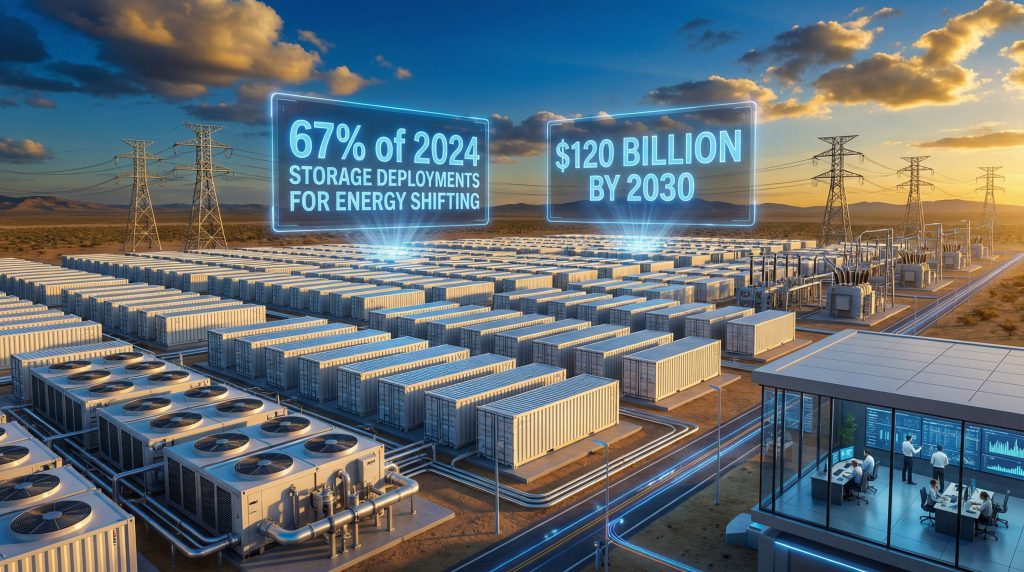
Investment Landscape Transformation Through Grid-Scale Energy Storage
Global energy markets stand at an inflection point where traditional power generation models face unprecedented disruption. The convergence of renewable energy mandates, grid reliability imperatives, and technological maturation has created a unique investment environment centred around utility-scale energy storage infrastructure. This transformation represents more than incremental change; it signals a fundamental restructuring of how electrical grids operate, how energy is valued, and where capital flows within the power sector.
The emergence of large-scale electrochemical storage systems as critical grid infrastructure reflects deeper market forces reshaping energy economics. Unlike previous technology adoption cycles driven primarily by cost reduction, current storage deployment patterns reveal complex value creation mechanisms spanning multiple revenue streams and operational benefits. Understanding these dynamics requires analysing both the technical capabilities enabling grid integration and the economic frameworks driving investment decisions across utility, commercial, and industrial market segments.
When big ASX news breaks, our subscribers know first
Understanding Grid-Scale Battery Energy Storage Systems Architecture
Battery energy storage systems represent sophisticated electrochemical platforms designed for direct grid connection and large-scale energy management. These installations typically consist of containerised battery modules, power conversion systems enabling bidirectional AC-DC conversion, and advanced control software managing real-time grid interactions. The technical architecture enables sub-second response capabilities essential for frequency regulation while providing sustained energy discharge for load balancing applications.
Technical Specifications and Grid Integration Capabilities
Modern battery energy storage systems operate through integrated power electronics that synchronise with grid frequency and voltage requirements. The systems utilise advanced battery management protocols monitoring individual cell performance, thermal conditions, and safety parameters across thousands of battery cells within each installation. Temperature control systems maintain optimal operating conditions while fire suppression technologies address safety concerns inherent in large-scale electrochemical storage.
Grid synchronisation capabilities enable these systems to provide ancillary services including frequency regulation, voltage support, and spinning reserves. Response times typically range from milliseconds for frequency regulation to minutes for energy arbitrage applications, significantly faster than conventional generation resources.
Market Positioning Within Energy Infrastructure Evolution
Battery energy storage systems occupy a strategic position in modern energy infrastructure, bridging the temporal gap between renewable energy generation and electricity demand. Unlike traditional peaker plants requiring startup times measured in hours, these systems provide instantaneous response to grid conditions whilst offering operational flexibility across multiple market participation strategies.
The economic displacement of diesel generators in industrial applications represents a growing market segment. Commercial and industrial facilities increasingly recognise the dual benefits of demand charge management and grid services participation through strategically sized storage installations. Furthermore, the comprehensive storage deployment strategies enable enhanced operational efficiency across diverse applications.
| BESS Application | Response Time | Typical Scale | Primary Function |
|---|---|---|---|
| Frequency Regulation | <1 second | 10-100 MW | Grid stability maintenance |
| Energy Arbitrage | Minutes-Hours | 100-400 MW | Peak demand management |
| Renewable Integration | Real-time | 200+ MW | Intermittency smoothing |
| Backup Power | Instantaneous | 50-200 MW | Emergency grid support |
Economic Value Creation Through Renewable Energy Integration
The integration of battery energy storage systems with renewable energy infrastructure creates multiple value streams that traditional power generation cannot match. Revenue diversification opportunities include participation in capacity markets, provision of ancillary services, energy arbitrage through wholesale market participation, and long-term contracting arrangements with renewable energy developers seeking grid-compatible power delivery profiles.
Revenue Stream Optimisation Strategies
Utility-scale battery energy storage systems generate revenue through sophisticated market participation strategies that stack multiple value streams. Capacity market participation provides steady revenue for maintaining grid reliability reserves, whilst ancillary services markets compensate for frequency regulation, voltage support, and spinning reserve capabilities. Energy arbitrage opportunities arise from purchasing electricity during low-demand periods and selling during peak pricing windows.
The most sophisticated installations participate simultaneously in multiple markets, optimising revenue through advanced algorithms that balance competing opportunities. This operational flexibility enables higher return on investment compared to single-purpose generation assets, with some installations achieving capacity factors exceeding 40% through strategic market participation.
Commercial and Industrial Applications Driving Market Growth
Behind-the-meter battery energy storage systems enable commercial and industrial facilities to optimise electricity costs through demand charge management, peak shaving, and time-of-use arbitrage. Manufacturing facilities with high electricity demand can reduce monthly utility bills by 20-40% through strategic discharge during peak demand periods, whilst simultaneously participating in demand response programs for additional revenue.
Data centres and mission-critical infrastructure represent a rapidly growing market segment seeking uninterruptible power supply alternatives with extended runtime capabilities. These applications often justify investment through avoided diesel generator maintenance costs, improved power quality, and environmental compliance benefits. Additionally, the critical minerals energy transition drives demand for reliable storage solutions.
Commercial BESS Economic Benefits:
• Demand Charge Reduction: 15-30% electricity cost savings for high-demand facilities
• Solar Integration: Enhanced investment tax credit eligibility for paired installations
• Grid Services Revenue: $50-200 per kW annually through utility program participation
• Backup Power: Diesel generator replacement with lower maintenance requirements
Market Insight: Advanced battery energy storage systems installations can achieve comprehensive energy cost optimisation exceeding 25% for strategically managed commercial facilities through integrated demand management and grid services participation.
Technology Landscape and Battery Chemistry Developments
The battery energy storage systems market remains dominated by lithium-ion technology, which offers energy density ranges of 150-250 Wh/kg suitable for utility-scale applications. These systems typically achieve 6,000-10,000 charge-discharge cycles with proper thermal management, translating to 15-20 year operational lifespans under normal operating conditions.
Lithium-Ion Dominance and Performance Characteristics
Lithium iron phosphate (LFP) chemistry has emerged as the preferred solution for stationary storage applications due to enhanced safety profiles and cost optimisation. Unlike automotive applications prioritising energy density, grid-scale installations emphasise cycle life, safety, and cost per kilowatt-hour stored. Round-trip efficiency typically ranges from 85-92%, with minimal performance degradation over system lifetime.
Safety protocols for large-scale installations include sophisticated fire suppression systems, thermal monitoring across individual battery modules, and automated shutdown procedures. Industry data indicates thermal incidents occur at rates of approximately 0.002% across the global fleet, with most events contained through engineered safety systems. However, ongoing lithium market dynamics continue to influence technology development.
Emerging Alternative Chemistries and Market Disruption Potential
Sodium-ion battery technology represents a developing alternative offering enhanced safety characteristics and reduced dependence on lithium supply chains. Whilst current energy density remains 20-30% lower than lithium-ion systems, sodium-ion technology provides superior temperature tolerance and eliminated fire risk through inherently stable chemistry.
Flow battery systems target extended duration storage applications requiring 8+ hour discharge capabilities. These technologies separate energy and power components, enabling independent scaling of storage capacity and discharge power, though at higher system costs and lower round-trip efficiency compared to lithium-ion alternatives. In addition, recent developments in battery recycling breakthrough technologies may further enhance cost-effectiveness.
Technology Performance Comparison:
• Lithium-Ion: 85-92% round-trip efficiency, 15-20 year lifespan, proven grid-scale deployment
• Sodium-Ion: 80-85% round-trip efficiency, enhanced safety profile, emerging commercial deployment
• Flow Batteries: 60-80% round-trip efficiency, unlimited cycle life, suitable for extended duration applications
• CO2-Based Storage: Experimental technology targeting cost reduction through abundant feedstock materials
Market Drivers Accelerating Grid Storage Adoption
Multiple converging factors drive accelerating battery energy storage systems deployment across global markets. Regulatory environments increasingly mandate storage integration to achieve renewable energy targets, whilst declining battery costs have improved project economics. Grid reliability imperatives, particularly following extreme weather events, have elevated storage from optional to essential infrastructure.
Regulatory Environment and Policy Incentives
Net-zero emissions commitments require utility-scale storage to manage renewable energy intermittency and maintain grid stability. The U.S. Investment Tax Credit provides 30% cost reduction for storage systems paired with renewable generation, whilst standalone storage qualifies for accelerated depreciation benefits through Modified Accelerated Cost Recovery System schedules.
Grid modernisation mandates across developed markets require storage capabilities to participate in frequency regulation and voltage support services. Regional transmission organisations increasingly recognise storage as preferred resources for ancillary services, creating long-term revenue visibility for project developers. Furthermore, addressing energy transition challenges requires comprehensive policy frameworks.
Economic Fundamentals Supporting Market Expansion
Battery costs have declined approximately 85% over the past decade, with lithium iron phosphate systems achieving installed costs below $300 per kilowatt-hour for large-scale projects. This cost reduction, combined with increasing renewable capacity requiring grid balancing solutions, creates favourable project economics across multiple market segments.
Data centre electricity demand growth, driven by artificial intelligence computing requirements and expanded cloud infrastructure, creates sustained demand for grid stability services. Electric vehicle charging infrastructure similarly requires peak demand management capabilities best provided through strategically located storage installations.
According to recent market analysis, battery energy storage systems demand is expected to overtake electric vehicle demand as the primary driver for lithium consumption through 2026, reflecting the scale of grid storage deployment requirements. Consequently, enhanced battery-grade lithium refining capacity becomes increasingly critical.
Grid Reliability and Extreme Weather Resilience
Extreme weather events have demonstrated the critical importance of energy storage for maintaining grid stability during supply disruptions. Battery energy storage systems provide black-start capabilities enabling grid restoration following widespread outages, whilst distributed installations can form islanded microgrids protecting critical infrastructure during emergencies.
The systems offer particular value during peak summer demand periods when traditional generation resources face capacity constraints. Instantaneous response capabilities enable grid operators to maintain frequency stability during sudden generation or load changes that would otherwise require expensive peaker plant deployment.
Investment Opportunities Across the Storage Value Chain
The battery energy storage systems value chain presents investment opportunities spanning manufacturing, development, and operations. Upstream opportunities include battery cell production, critical mineral mining, and component manufacturing. Downstream opportunities focus on project development, system integration, and long-term asset ownership.
Manufacturing and Supply Chain Positioning
Battery cell production capacity remains concentrated in Asia, creating supply chain dependencies for global storage deployment. Manufacturing localisation trends driven by supply chain resilience concerns present opportunities for regional production facilities, particularly in markets with strong storage deployment pipelines.
Critical mineral supply security represents a strategic consideration, with lithium, cobalt, and nickel pricing volatility impacting project economics. Recent market analysis suggests battery energy storage systems applications will drive increased lithium demand through 2026, with implications for upstream mining investment opportunities.
Development and Operations Business Models
Independent power producers increasingly develop utility-scale battery energy storage systems projects under long-term power purchase agreements with utilities seeking grid services. Energy-as-a-Service models enable commercial customers to access storage benefits without capital investment, creating recurring revenue opportunities for service providers.
Software and analytics platforms optimising battery energy storage systems operations represent high-margin opportunities within the value chain. Advanced control algorithms maximising revenue across multiple market participation strategies provide competitive advantages for system operators and can justify premium pricing for technology providers.
Technology Innovation and Intellectual Property
Battery management system advancement creates opportunities for companies developing enhanced safety monitoring, predictive maintenance, and performance optimisation technologies. Grid integration software enabling seamless market participation across multiple revenue streams represents a growing market segment as storage deployment accelerates.
Fire suppression and safety technology development addresses ongoing concerns regarding large-scale electrochemical storage installations. Companies providing proven safety solutions for utility-scale deployments can command premium pricing whilst reducing insurance and operational risks for project owners.
The next major ASX story will hit our subscribers first
Global Market Analysis and Regional Opportunities
Regional market development patterns reflect varying regulatory environments, renewable energy penetration rates, and grid infrastructure requirements. North American markets benefit from federal tax incentives and state-level renewable energy mandates driving storage deployment. European markets emphasise grid stability services supporting high renewable penetration levels.
Established Market Development Patterns
The United States maintains the largest battery energy storage systems development pipeline, with over 30 GW under development across utility-scale projects. State-level procurement mandates, particularly California's 50 GW storage target by 2026, create sustained demand visibility for developers and manufacturers.
European markets prioritise storage integration with offshore wind development and grid interconnection projects spanning multiple countries. Regulatory frameworks emphasising grid services compensation create favourable economics for storage projects, whilst environmental regulations drive renewable energy integration requirements.
Emerging Market Infrastructure Development
Asia-Pacific markets benefit from manufacturing scale advantages whilst developing domestic demand for grid storage applications. China's battery energy storage systems deployment supports renewable energy targets and grid stability requirements for rapidly expanding electricity demand.
Emerging markets present opportunities for off-grid and microgrid applications where battery energy storage systems enable electrification without extensive transmission infrastructure investment. Island nations pursuing energy independence strategies increasingly recognise storage as essential infrastructure for renewable energy integration.
Global Market Projections:
• Total Market Size: $120 billion by 2030 (25% compound annual growth rate)
• Utility-Scale Segment: 70% of total market value
• Commercial/Industrial: 35% compound annual growth rate (fastest growing subsegment)
• Geographic Distribution: 40% Asia-Pacific, 30% North America, 20% Europe, 10% Other
Risk Assessment and Market Challenges
Battery energy storage systems investments face technical, economic, and regulatory risks requiring careful evaluation. Battery degradation and replacement cost planning affect long-term project economics, whilst rapid technology advancement creates obsolescence risks for early adopters. Grid interconnection complexity and permitting delays can extend project timelines and increase development costs.
Technical and Operational Risk Factors
Battery degradation patterns affect system economics through reduced capacity and efficiency over system lifetime. Proper thermal management and charge-discharge protocols can extend operational life, but replacement costs after 15-20 years represent significant capital requirements affecting project returns.
Cybersecurity vulnerabilities in grid-connected systems create operational risks as battery energy storage systems become integral to grid operations. Advanced control systems require robust cybersecurity protocols to prevent malicious interference with grid stability functions.
Grid interconnection studies can identify costly transmission upgrades required for large-scale storage installations. Project developers must navigate complex utility interconnection procedures whilst managing construction timeline risks that can affect project financing and offtake agreements.
Economic and Competitive Landscape Pressures
Technology obsolescence risk affects battery energy storage systems investments as innovation cycles accelerate and alternative storage technologies mature. Developers must balance proven technology selection against emerging solutions offering superior performance or cost advantages.
Market saturation potential exists in regions with high storage penetration rates, where additional installations may face reduced revenue opportunities. Wholesale market price impacts from large-scale storage deployment can affect arbitrage revenue streams over time.
Competing storage technologies including pumped hydro storage, compressed air energy storage, and mechanical systems present alternative solutions for specific applications. Long-duration storage requirements may favour alternative technologies over battery-based systems.
Regulatory and Environmental Considerations
Battery recycling and end-of-life management requirements create future cost obligations that must be incorporated in project economics. Environmental impact assessments for large-scale installations can delay project development whilst increasing compliance costs.
Grid code compliance and safety certification processes vary by jurisdiction, creating complexity for developers operating across multiple markets. Evolving safety standards may require retrofit costs for existing installations or enhanced safety systems for new projects.
Investment Evaluation Framework for Storage Markets
Successful battery energy storage systems investment requires systematic evaluation of technology risks, market opportunities, and operational considerations. Due diligence frameworks must assess proven versus emerging battery chemistries, offtake agreement structures, and development team track records across the storage value chain.
Due Diligence Considerations for Storage Investments
Technology risk assessment requires understanding battery chemistry performance characteristics, degradation patterns, and safety profiles for specific applications. Proven lithium iron phosphate technology offers established performance data, whilst emerging chemistries may provide superior long-term economics at higher development risk.
Offtake agreement evaluation must consider contract duration, counterparty credit quality, and revenue stream diversification across capacity markets, energy markets, and ancillary services. Long-term power purchase agreements provide revenue stability but may limit participation in evolving market opportunities.
Operational track record analysis for development teams should emphasise experience with grid interconnection procedures, permitting processes, and construction management for large-scale storage installations. Development risk can significantly impact project returns through timeline delays and cost overruns.
Portfolio Construction Strategies Across Storage Value Chain
Diversification across technology types enables investors to balance proven performance against emerging technology advantages. Geographic risk distribution across multiple regulatory environments reduces exposure to policy changes affecting individual markets.
Timeline considerations require balancing development-stage opportunities offering higher returns against operational assets providing current cash flows. Construction and commissioning phases typically represent peak risk periods requiring careful management and oversight.
Value chain positioning affects risk-return profiles, with upstream manufacturing offering scale advantages but commodity exposure, whilst downstream development provides project-specific returns with development and operational risks.
Investment Risk-Return Matrix:
• High-Return Opportunities: Early-stage technology developers, first-mover market advantages
• Moderate-Risk Profiles: Established utility-scale project developers with proven track records
• Conservative Allocations: Equipment suppliers with diversified customer bases and long-term contracts
• Balanced Strategies: Operational asset ownership with contracted revenue streams
Future Market Evolution and Strategic Considerations
The battery energy storage systems market continues evolving as technology advancement, cost reduction, and regulatory support drive deployment acceleration. Market participants must consider emerging applications, competitive dynamics, and technology transitions affecting long-term investment strategies.
Grid integration requirements will likely become more sophisticated as storage penetration increases, creating opportunities for advanced control systems and market participation software. Seasonal storage applications may emerge as renewable penetration reaches levels requiring extended duration storage capabilities beyond current battery technology.
The transition from lithium-dependent chemistry to alternative materials presents both risks and opportunities for market participants. Investors should monitor sodium-ion, flow battery, and other emerging technologies that may disrupt current market leaders whilst creating new investment opportunities across the storage value chain.
Understanding the complex interplay between technology advancement, regulatory development, and market evolution remains essential for successful battery energy storage systems investment strategies in a rapidly changing energy landscape.
Ready to Capitalise on the Next Energy Storage Breakthrough?
Discovery Alert's proprietary Discovery IQ model delivers real-time alerts on significant ASX mineral discoveries, instantly identifying actionable opportunities in critical minerals powering energy storage systems before the broader market responds. Explore how major mineral discoveries have generated substantial returns and begin your 30-day free trial today to position yourself ahead of the market.