July 25, 2026
Iran's alternative routes in Hormuz Strait have emerged as critical infrastructure components during periods of geopolitical uncertainty, fundamentally reshaping how nations approach supply chain resilience. The development of bypass systems around traditional maritime chokepoints represents a strategic evolution in global energy security, where diversification becomes paramount to maintaining stable flows. These alternative frameworks demonstrate how regional cooperation and infrastructure investment can mitigate risks associated with single-point dependencies in complex international energy markets.
Strategic Maritime Control Systems and Energy Flow Management
The implementation of controlled navigation zones within critical waterways creates new paradigms for international shipping operations. Iran's alternative routes in Hormuz Strait represent a sophisticated approach to managing maritime traffic while addressing safety concerns related to sea mine deployment. These controlled corridors fundamentally alter the dynamics of oil transport by introducing selective access protocols that prioritise safety considerations alongside geopolitical relationships.
The Revolutionary Guards justified their route modifications as necessary measures for maritime safety, specifically citing protection from possible collisions with sea mines in the main shipping zone. This safety-first approach establishes precedent for future maritime corridor management during periods of heightened regional tension.
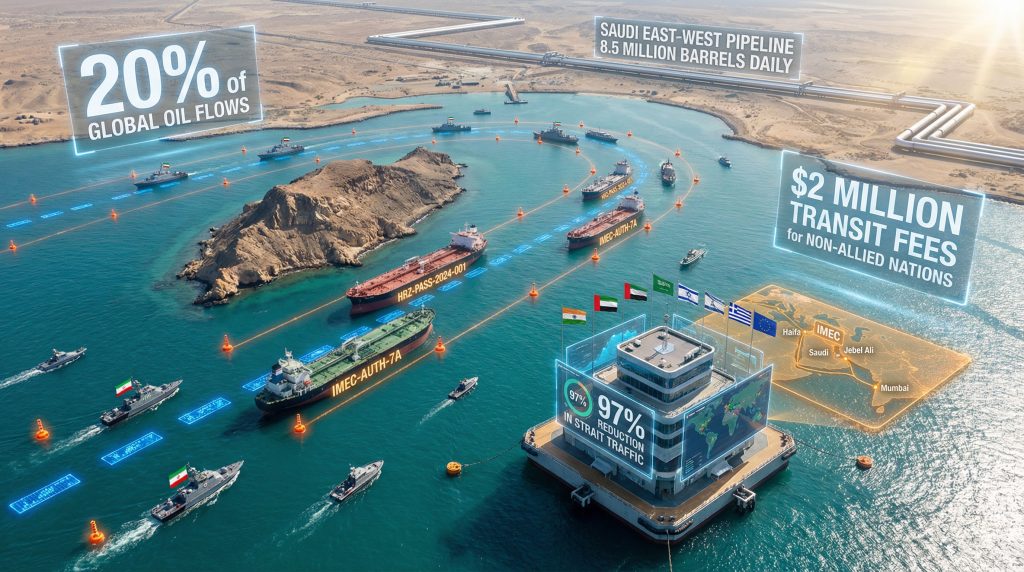
Current navigation protocols require vessels to follow designated pathways through Iranian territorial waters, creating a structured system that can accommodate approximately one-fifth of global oil flows when fully operational. The alternative entry and exit routes provide functional substitutes for traditional navigation channels whilst maintaining operational capacity for international energy commerce.
Traffic Management and Capacity Assessment
The revised shipping protocols demonstrate how maritime authorities can maintain energy flow continuity even under challenging geopolitical conditions. Furthermore, statistics indicate that proper implementation of alternative routing systems can preserve substantial portions of original transport capacity while enhancing safety measures for all participating vessels.
Key operational considerations include:
- Enhanced communication protocols between vessel operators and maritime authorities
- Standardised safety procedures for navigation through controlled corridors
- Coordinated scheduling systems to prevent congestion in alternative routes
- Emergency response capabilities positioned along designated pathways
The success of these alternative systems depends heavily on international cooperation and adherence to established maritime safety standards, creating frameworks that transcend immediate geopolitical tensions.
When big ASX news breaks, our subscribers know first
Regional Pipeline Infrastructure and Bypass Capacity
Pipeline networks across the Middle East provide substantial alternative transport capacity that can compensate for maritime shipping disruptions. The Saudi East-West Pipeline system operates with approximately 5 million barrels per day capacity, connecting Arabian Gulf production centres to Red Sea export terminals. This infrastructure enables crude oil bypass around traditional maritime routes, providing strategic flexibility during periods of shipping uncertainty.
The United Arab Emirates maintains significant pipeline infrastructure through the ADNOC network, particularly the Habshan-Fujairah pipeline system that carries roughly 2 million barrels daily to Gulf of Oman terminals. This capacity represents crucial alternative export capability that reduces dependence on single maritime chokepoints.
Regional interconnected pipeline systems add approximately 1 million barrels per day of additional transport capacity across multiple country networks. These interconnects create redundancy that enhances overall system resilience and provides emergency backup capabilities during crisis periods.
| Pipeline System | Daily Capacity (Million Barrels) | Strategic Function | Export Terminal |
|---|---|---|---|
| Saudi East-West Pipeline | 5.0 | Primary Gulf bypass | Yanbu (Red Sea) |
| UAE Habshan-Fujairah | 2.0 | Alternative Gulf of Oman access | Fujairah |
| Regional Interconnects | 1.0 | Emergency backup systems | Multiple terminals |
| Total Alternative Capacity | 8.0 | Combined bypass capability | Diversified outlets |
Operational Efficiency and Transport Economics
Pipeline transport offers several advantages over maritime shipping during periods of geopolitical uncertainty. These systems provide predictable transit times, reduced weather dependency, and enhanced security compared to vulnerable maritime corridors. However, operating costs remain relatively stable regardless of external geopolitical factors, creating economic predictability for energy producers and consumers.
Pipeline infrastructure also eliminates many of the logistical complexities associated with maritime transport, including vessel scheduling, port congestion, and maritime insurance considerations. This operational simplicity becomes particularly valuable during crisis periods when shipping markets experience significant volatility, as observed in recent oil price dynamics.
Alternative Corridor Development and Multimodal Integration
The India-Middle East-Europe Corridor (IMEC) represents an ambitious multimodal transport initiative designed to create reliable alternatives to traditional maritime routes. This comprehensive system integrates maritime, rail, and overland components across multiple countries, establishing new paradigms for international energy and goods transport.
The corridor's design incorporates existing infrastructure whilst developing new connections that enhance overall system capacity. Maritime segments connect India to the UAE and Greece to European markets, utilising established port infrastructure and shipping networks. These connections provide proven operational foundations for expanded corridor utilisation.
Rail network development forms the corridor's central component, linking UAE facilities through Saudi Arabia to Jordan. This overland segment requires substantial infrastructure investment but offers weather-independent transport capability with predictable scheduling and capacity management.
Multimodal System Components
Maritime Connections:
- India to UAE via Arabian Sea routes
- Greece to European ports via Mediterranean networks
- Established port infrastructure supporting container and bulk cargo operations
- Integration with existing shipping schedules and logistics systems
Rail Infrastructure:
- UAE connection points to Saudi rail networks
- Cross-border coordination for seamless cargo transfer
- Standardised gauge systems enabling efficient operations
- Border crossing facilities designed for streamlined processing
Overland Integration:
- Jordan's strategic position as corridor connector
- Mediterranean access through multiple port options
- Customs coordination across participating countries
- Final distribution networks into European markets
Economic Models for Controlled Access Systems
Controlled maritime access creates new economic frameworks that balance safety requirements with commercial viability. These systems typically incorporate risk-based pricing models that reflect the enhanced safety measures and infrastructure costs associated with alternative routing systems.
The development of selective access protocols demonstrates how maritime authorities can maintain commercial operations whilst addressing legitimate safety concerns. Consequently, this approach creates sustainable economic models that support both infrastructure maintenance and operational safety requirements.
Cost structures in controlled access systems generally reflect the additional safety measures required for secure navigation through sensitive maritime zones. These costs include enhanced communication systems, safety equipment requirements, and coordination services that ensure safe passage for participating vessels.
Risk Assessment and Pricing Frameworks
Modern controlled access systems incorporate sophisticated risk assessment methodologies that account for vessel characteristics, cargo types, and navigation requirements. These assessments enable authorities to establish appropriate safety protocols whilst maintaining commercial viability for legitimate shipping operations.
Insurance considerations play crucial roles in controlled access economics, as enhanced safety measures can reduce overall risk profiles for participating vessels. This risk reduction often translates into lower insurance premiums, offsetting some of the additional costs associated with alternative routing systems.
In addition, operational efficiency improvements through coordinated routing systems can provide economic benefits that justify additional safety-related costs. These efficiencies include reduced congestion, optimised scheduling, and enhanced navigation support services.
Supply Chain Resilience and Strategic Planning
Long-term supply chain resilience requires diversified transport options that can accommodate various operational scenarios. The development of multiple alternative routes creates strategic flexibility that enables energy markets to adapt to changing geopolitical conditions whilst maintaining operational continuity.
Strategic planning for alternative transport systems must account for capacity limitations, operational costs, and coordination requirements across multiple infrastructure types. This comprehensive approach ensures that alternative systems can function effectively when primary routes face disruptions, particularly considering current energy transition challenges.
Investment in alternative infrastructure creates long-term value through enhanced system resilience and reduced vulnerability to single-point failures. These investments generate strategic benefits that extend beyond immediate crisis response capabilities.
Framework for Multi-Route Planning
Capacity Diversification:
- Pipeline infrastructure for predictable transport capacity
- Alternative maritime routes for flexible scheduling
- Multimodal corridors for geographic diversification
- Emergency protocols for rapid route switching
Operational Coordination:
- Real-time monitoring systems across all transport modes
- Standardised communication protocols between operators
- Coordinated maintenance scheduling to prevent simultaneous disruptions
- Emergency response capabilities positioned strategically
Economic Optimisation:
- Cost-benefit analysis for alternative route utilisation
- Risk-adjusted pricing models for different transport options
- Insurance coordination across multiple infrastructure systems
- Long-term investment planning for capacity expansion
Technology Integration and Safety Enhancement
Modern alternative transport systems incorporate advanced technology solutions that enhance safety, efficiency, and operational coordination. These technological improvements create operational capabilities that exceed traditional transport methods in many key performance areas.
Communication systems enable real-time coordination between vessels, pipeline operators, and regulatory authorities, creating integrated networks that can respond rapidly to changing operational conditions. Furthermore, these systems provide the foundational infrastructure necessary for complex multimodal transport operations.
Safety technologies including mine detection systems, navigation aids, and emergency response equipment create enhanced security environments for alternative transport operations. These technologies enable safe operation in challenging environments whilst maintaining commercial viability, particularly important as Iran announces alternative routes to address maritime safety concerns.
Advanced Navigation and Safety Systems
Detection and Monitoring:
- Sonar-based mine detection equipment for maritime safety
- Satellite navigation systems for precise routing
- Real-time weather and sea condition monitoring
- Automated threat assessment and response protocols
Communication Networks:
- Integrated vessel traffic management systems
- Multi-language communication protocols
- Emergency broadcast capabilities
- Coordinated response command structures
Response Capabilities:
- Dedicated rescue vessels positioned along alternative routes
- Emergency repair facilities at strategic locations
- Medical response teams with helicopter access
- Coordinated international rescue protocols
The next major ASX story will hit our subscribers first
Regional Cooperation and Diplomatic Frameworks
The successful implementation of alternative energy transport systems requires extensive regional cooperation that transcends traditional political boundaries. These cooperative frameworks create shared interests in maintaining operational infrastructure whilst addressing legitimate safety and security concerns.
Diplomatic coordination ensures that alternative transport systems can function effectively across multiple jurisdictions, creating seamless operations that serve the interests of all participating countries. This cooperation extends beyond immediate operational requirements to encompass long-term strategic planning and infrastructure development.
International standards and protocols provide the regulatory framework necessary for complex alternative transport systems. For instance, these standards ensure operational safety whilst maintaining commercial viability for international energy trade, particularly as security experts analyse the broader implications of Iran's alternative routes in Hormuz Strait.
Multilateral Coordination Mechanisms
Operational Agreements:
- Standardised safety protocols across participating countries
- Coordinated customs and border crossing procedures
- Shared infrastructure maintenance responsibilities
- Joint emergency response capabilities
Strategic Planning:
- Long-term capacity expansion coordination
- Technology sharing agreements for enhanced capabilities
- Joint investment frameworks for infrastructure development
- Risk sharing mechanisms for operational uncertainties
Market Adaptation and Future Scenarios
Energy markets demonstrate remarkable adaptability when faced with transport disruptions, developing alternative systems that often provide enhanced resilience compared to original infrastructure. This adaptability creates opportunities for long-term improvements in supply chain security and operational efficiency.
Future scenarios for alternative transport systems include enhanced capacity, improved technology integration, and expanded geographic coverage. These developments could fundamentally reshape global energy logistics by reducing dependence on single maritime chokepoints.
The evolution of alternative transport systems creates new competitive dynamics in energy markets, where operational flexibility and route diversification become key strategic advantages. These competitive factors drive continued innovation and investment in alternative infrastructure development, particularly in light of global trade impacts and energy security dynamics.
Scenario Assessment Framework:
Short-term Adaptations (1-2 years):
- Enhanced utilisation of existing pipeline capacity
- Optimisation of alternative maritime routing
- Improved coordination between transport modes
- Emergency response protocol refinement
Medium-term Developments (3-5 years):
- Completion of major multimodal corridor projects
- Technology upgrades for enhanced operational efficiency
- Expanded regional cooperation agreements
- Standardisation of alternative transport protocols
Long-term Evolution (5+ years):
- Fundamental restructuring of global energy logistics
- Reduced strategic importance of traditional chokepoints
- Enhanced resilience through diversified transport networks
- New geopolitical equilibriums based on alternative infrastructure
The current period of alternative route development provides valuable insights for building robust energy supply chains that can adapt to geopolitical changes whilst maintaining economic efficiency. However, these lessons inform future infrastructure planning and international cooperation frameworks, creating foundations for enhanced energy security through diversified transport systems. The implications extend beyond immediate operational concerns to encompass broader considerations of natural gas trends and regional energy dynamics.
Investment Considerations: Market participants should evaluate alternative transport developments as part of broader energy security frameworks, considering both immediate operational impacts and long-term strategic implications for global energy logistics.
Looking to Capitalise on Energy Infrastructure Developments?
Discovery Alert's proprietary Discovery IQ model delivers real-time notifications on significant ASX mineral and energy discoveries, instantly empowering subscribers to identify actionable opportunities in the evolving energy security landscape. Explore how historic discoveries have generated substantial market returns and begin your 14-day free trial today to secure your market-leading advantage.