
July 29, 2026
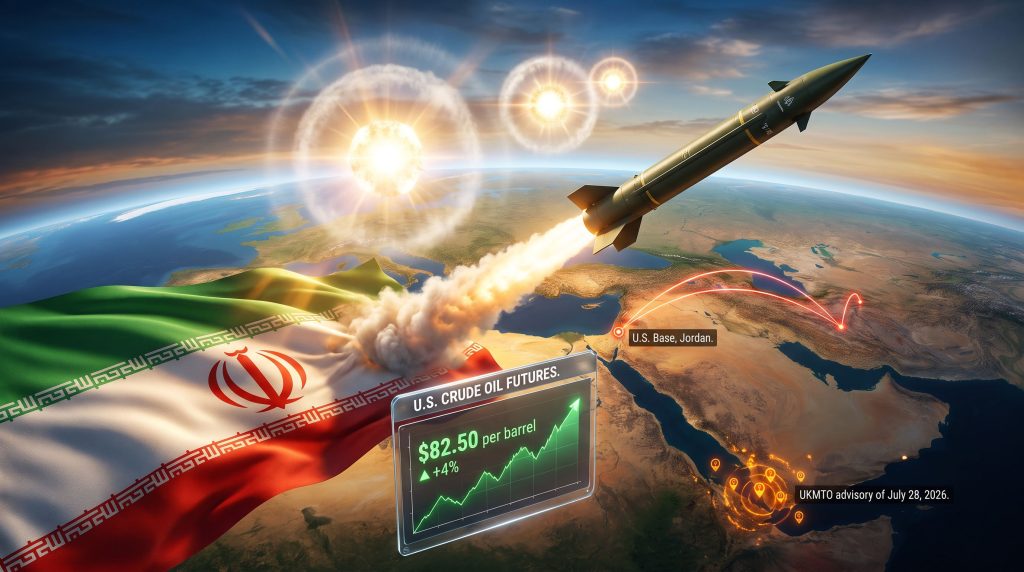
The Escalating Pattern of Direct Iranian Military Action Against American Forces
When nation-states communicate through missile trajectories rather than diplomatic channels, the signal carries unmistakable weight. The trajectory of U.S.-Iran relations over the past six years has increasingly shifted from proxy-mediated confrontation toward something more structurally alarming: the Iran ballistic missile attack on U.S. forces in the Middle East has become a recurring and deeply consequential pattern. Each episode in this escalation cycle tells a story not just about regional geopolitics, but about the durability of deterrence architecture, the limits of missile defence technology, and the fragile equilibrium that keeps a broader war at bay.
Understanding the July 28, 2026 Iranian missile attack on U.S. forces requires stepping back from the headline and examining the deeper mechanisms that made such an event not just possible, but arguably predictable. Furthermore, examining the broader geopolitical landscape helps contextualise why these confrontations keep escalating.
When big ASX news breaks, our subscribers know first
Iran's Ballistic Missile Program: Three Decades of Strategic Development
From Scud Derivatives to a Diversified Strike Platform
Iran's ballistic missile capabilities did not emerge overnight. Built over roughly three decades through a combination of indigenous development, foreign technology acquisition, and iterative battlefield refinement, Iran's arsenal has evolved from rudimentary short-range Scud-derived systems into a sophisticated family of missiles capable of striking targets across the broader Middle East.
Among the most operationally significant systems in Iran's current inventory are the Zolfaghar and Qadr series missiles. Both have been publicly displayed by the Islamic Revolutionary Guard Corps and have transitioned from demonstration assets into active strike platforms. The Zolfaghar, a solid-fuelled ballistic missile, offers improved accuracy and faster launch preparation compared to older liquid-fuelled predecessors. The Qadr series represents a longer-range liquid-fuelled capability, with ranges reportedly exceeding 1,700 kilometres.
Iran's missile doctrine is built around three core objectives:
- Deterrence: Maintaining a credible second-strike threat that complicates adversary decision-making
- Retaliation signalling: Demonstrating willingness to absorb political costs and respond to perceived attacks or provocations
- Force projection without ground engagement: Extending Iranian strategic reach without committing conventional ground forces to high-risk operations
This doctrine makes Iran's ballistic missile force a political instrument as much as a military one, calibrated to communicate resolve while managing escalation risk. In addition, oil trade geopolitics are deeply intertwined with how these military signals are interpreted by global markets.
The IRGC's Command Authority Over Missile Operations
A critical and sometimes underappreciated dimension of Iranian missile launches is institutional. The Islamic Revolutionary Guard Corps operates with a distinct command structure that sits outside Iran's conventional military hierarchy. The IRGC maintains direct authority over ballistic missile launch decisions, giving it an operational independence that can complicate third-party efforts to de-escalate through conventional diplomatic channels.
Since 2020, every confirmed Iranian ballistic missile strike against U.S.-affiliated targets has been attributed to IRGC missile units rather than Iran's regular armed forces. This distinction matters because the IRGC's dual mandate — covering both domestic security enforcement and external power projection — means its leadership calculus involves factors beyond purely military considerations.
Breaking Down the July 28, 2026 Attack
Timeline, Origin, and Confirmed Details
On July 28, 2026, U.S. Central Command (CENTCOM) confirmed via its official channels that IRGC forces launched multiple ballistic missiles originating from inside Iranian territory. CENTCOM characterised the action as an attempted surprise attack against U.S. forces positioned in the Middle East.
Reporting citing U.S. officials indicated the intended target was a U.S. military installation in Jordan, though CENTCOM's public statement did not officially confirm the specific target location. The launch occurred late Tuesday by U.S. Eastern Time, a timing choice that analysts interpret as a deliberate effort to exploit reduced operational visibility during nighttime transition periods.
The outcome, however, did not align with Iran's apparent intent.
U.S. Missile Defence Intercepts Every Incoming Missile
CENTCOM confirmed that all incoming ballistic missiles were successfully intercepted before reaching their intended targets. No U.S. assets or personnel were reported as impacted as a result of the attack. The successful neutralisation of every inbound missile reflects the operational maturity of the layered missile defence architecture the United States has constructed across its regional partner network.
The fact that Iran described this as a surprise attack while CENTCOM neutralised every inbound missile without reported casualties underscores a growing asymmetry between Iran's offensive missile capabilities and the defensive countermeasures now deployed across the theatre.
How the July 2026 Strike Compares to Previous Iranian Attacks
A Comparative Record of Iranian Ballistic Missile Strikes on U.S. Positions
The July 2026 attack did not occur in isolation. It represents the latest episode in a multi-year escalation pattern that has involved direct Iranian ballistic missile use against U.S.-affiliated targets across multiple countries. For further context on the attacks on US bases during this ongoing regional crisis, the documented historical record is extensive.
| Date | Target Location | Missiles Fired | Interception Outcome | Reported Casualties |
|---|---|---|---|---|
| January 2020 | Al Asad & Erbil, Iraq | 12+ ballistic missiles | Partial; base infrastructure struck | 110+ U.S. TBI cases |
| 2024 (multiple incidents) | Jordan, Iraq, Syria | Drone and missile combinations | Mixed results | Casualties reported |
| 2025 | Al Udeid Air Base, Qatar | Multiple ballistic missiles | All intercepted | None reported |
| July 28, 2026 | U.S. base in Jordan | Multiple ballistic missiles | All intercepted | None reported |
What Has Materially Changed Between 2020 and 2026?
The January 2020 strike on Al Asad Air Base in Iraq stands as the most consequential Iranian missile attack on U.S. forces to date in terms of documented personnel harm. Despite initial official statements suggesting no casualties, subsequent assessments confirmed that more than 110 U.S. service members suffered traumatic brain injuries from blast concussions — an outcome that reshaped how the U.S. military accounts for non-penetrating blast injuries in missile strike assessments.
Since 2020, the U.S. has systematically reinforced its regional missile defence posture through several key investments:
- Enhanced deployment of THAAD (Terminal High Altitude Area Defence) batteries across Gulf partner states, providing high-altitude intercept capability during a missile's terminal descent phase
- Expanded Patriot PAC-3 coverage across Jordan, Qatar, and Saudi Arabia, targeting short-to-medium range ballistic missile threats
- Increased Aegis Ballistic Missile Defence naval presence, adding sea-based intercept layers from warships operating in the Persian Gulf and Red Sea
Iran has not stood still during this period either. Its missile accuracy, guidance systems, and payload sophistication have advanced, creating a continuous and costly action-reaction investment cycle in regional missile defence on both sides.
The Red Sea Dimension: Maritime Escalation Runs Parallel
UKMTO Advisory and the Southern Red Sea Incident
Within the same 24-hour window as the Iranian missile launch, the U.K. Maritime Trade Operations Centre (UKMTO) published an advisory reporting that the master of a vessel transiting the southern Red Sea had heard an explosion nearby. The incident itself occurred on Monday, July 27, with the advisory published on Tuesday, July 28, temporally overlapping with the Iran ballistic missile attack on U.S. forces in the Middle East.
No confirmed attribution was made for the Red Sea incident. However, the context is difficult to ignore: the Houthi movement in Yemen had claimed attacks on two Saudi oil tankers in the same corridor just the week prior. Saudi Arabia responded with retaliatory military strikes against Houthi targets in Yemen on July 25, 2026, days before the Iranian missile launch.
Iran's Multi-Domain Pressure Architecture
The Houthi movement operates as a core component of Iran's broader regional alliance network, providing a maritime harassment capability that extends Iranian strategic reach without direct Iranian fingerprints on every operation. The near-simultaneous occurrence of a land-based ballistic missile attack on a U.S. base and suspicious maritime activity in the Red Sea is consistent with a pattern of coordinated multi-domain pressure Iran has employed during previous periods of heightened tension.
The convergence of ballistic missile action against U.S. land infrastructure and maritime disruption activity in the Red Sea within a single operational window reflects a multi-vector strategic pressure model rather than a series of coincidental events.
Energy Market Implications: Why Oil Prices Surged Immediately
Crude Oil's 4% Spike and What It Reveals About Risk Pricing
U.S. crude oil futures surged more than 4% immediately following CENTCOM's announcement, with prices reaching approximately $82.50 per barrel. This reaction occurred even though no physical supply disruption took place and all missiles were intercepted. Consequently, the price movement reflects how efficiently geopolitical risk premiums are priced into energy markets — often in real time, based on perceived threat rather than confirmed disruption. For a broader view of the crude oil market overview, these spikes fit a well-documented pattern of conflict-driven volatility.
The Chokepoints That Make Middle Eastern Escalation an Energy Market Event
| Chokepoint | Estimated Daily Transit Volume | Share of Global Supply | Primary Risk Factor |
|---|---|---|---|
| Strait of Hormuz | ~21 million barrels/day | ~20% of global supply | Iranian closure threat |
| Red Sea / Bab-el-Mandeb | ~6-8 million barrels/day | ~8-10% of global supply | Houthi maritime interdiction |
Any sustained Iranian escalation that credibly threatens transit through the Strait of Hormuz — through which roughly one-fifth of the world's oil supply passes daily — would generate cascading price effects across European and Asian energy import markets. The Red Sea corridor compounds this exposure, as Houthi interdiction operations have already forced commercial shipping to reroute around the Cape of Good Hope, adding weeks and significant cost to energy delivery schedules.
The 4% crude spike on a single intercept event, absent any physical supply impact, illustrates that energy markets price geopolitical risk as a probability-weighted future disruption, not just current reality. Furthermore, understanding the oil market impact of such confrontations provides essential context for investors monitoring this region.
The next major ASX story will hit our subscribers first
Which U.S. Positions Has Iran Targeted Across the Region?
Country-by-Country Breakdown of Iranian Strike Activity
- Iraq: Al Asad Air Base and Erbil were the targets of the January 2020 strike, the most consequential Iranian ballistic missile attack against U.S. forces in terms of documented personnel injury
- Jordan: Reported target of the July 28, 2026 attack; Jordan hosts key U.S. logistics, special operations, and air power infrastructure critical to regional force projection
- Qatar: Al Udeid Air Base, the largest U.S. air installation in the Middle East and home to CENTCOM's forward headquarters, was targeted in a 2025 strike in which all missiles were reportedly intercepted
- Bahrain: Hosts U.S. Naval Forces Central Command (NAVCENT) and the Fifth Fleet, making it a persistent subject of Iranian threat posturing even when not directly struck
- Kuwait: Has hosted U.S. force rotations and falls within range of Iranian ballistic missile systems throughout the escalation cycle
- Syria: U.S. positions in northeastern Syria have faced attacks through Iranian proxy networks using rocket and drone systems rather than direct Iranian ballistic missiles
U.S. Defensive Response and Escalation Management Strategy
The Layered Defence Architecture in Detail
The successful interception of all missiles in the July 2026 attack reflects a deliberately constructed multi-layer defensive posture:
- THAAD: Engages ballistic missiles during their terminal descent phase at high altitude, providing the outermost intercept layer against medium and intermediate-range threats
- Patriot PAC-3: Handles short-to-medium range ballistic missiles at lower altitudes, providing a secondary intercept opportunity if high-altitude systems are saturated or miss
- Aegis BMD: Naval ballistic missile defence systems aboard U.S. warships extend coverage to sea approaches and provide additional intercept geometry that land-based systems cannot always replicate
CENTCOM's public communications strategy following the attack — rapidly confirming all missiles were intercepted and releasing that information transparently — reflects a deliberate posture designed to demonstrate defensive capability without immediately triggering a military escalation spiral.
Reuters reporting has confirmed that U.S. retaliatory strikes on Iranian military targets have been conducted in response to earlier attacks on American forces, indicating the U.S. has maintained a dual-track approach combining demonstrated defensive capability with calibrated offensive deterrence.
Geopolitical Implications and Escalation Pathways
Why the Frequency of Direct Iranian Strikes Represents a Structural Shift
The acceleration in frequency and geographic spread of Iranian ballistic missile attacks against U.S. positions since 2023 signals something more significant than tactical opportunism. It reflects a calculated Iranian judgement that direct missile launches, even when intercepted, carry acceptable political costs while demonstrating strategic resolve and testing defensive limits.
Each intercepted strike carries a paradox: it validates U.S. defensive investment and demonstrates Iranian operational failure, yet it simultaneously incentivises Iranian missile developers to pursue more sophisticated countermeasures, higher launch volumes, or maneuvering reentry vehicle technology designed to defeat existing intercept systems. In addition, commodity market volatility remains closely linked to how these escalation cycles unfold.
Four Scenarios That Could Define the Conflict's Trajectory
- Contained Deterrence Cycle: Iran continues periodic launches; U.S. intercepts successfully; neither side crosses the threshold into direct conventional conflict, maintaining an uncomfortable but stable equilibrium
- Proxy Intensification: Iran redirects pressure through Hezbollah, Houthi networks, and Iraqi militia structures to sustain strategic pressure while reducing direct attribution exposure
- Miscalculation Trigger: A failed interception causing U.S. fatalities could produce a disproportionate U.S. military response that fundamentally alters the conflict's character and regional alignment
- Diplomatic Circuit-Breaker: Intermediary states such as Oman or Qatar, both of which have served as back-channel facilitators in prior tension peaks, create a negotiated pause that allows both sides to step back from the escalation ladder
Frequently Asked Questions About the July 2026 Iranian Missile Attack
Were any U.S. personnel killed or injured?
CENTCOM confirmed that all missiles were successfully intercepted and no U.S. assets or personnel were reported as impacted in the July 28, 2026 strike.
What was the confirmed target?
CENTCOM did not officially name the target location. Reporting citing U.S. officials indicated the missiles were directed at a U.S. military base in Jordan.
Which Iranian force launched the attack?
The Islamic Revolutionary Guard Corps was identified by CENTCOM as the entity responsible for launching the ballistic missiles from inside Iranian territory. The BBC's coverage of Iran's military actions provides additional background on the IRGC's role in recent escalations.
What missile systems does Iran likely use in such attacks?
Iran's operational inventory includes the Zolfaghar solid-fuelled ballistic missile and the longer-range liquid-fuelled Qadr series, both of which have been publicly displayed by the IRGC. The specific systems used in the July 2026 attack were not officially confirmed by U.S. authorities.
How did energy markets respond?
U.S. crude oil futures surged more than 4% immediately following the news, reaching approximately $82.50 per barrel, driven by geopolitical risk premium pricing rather than any confirmed physical supply disruption.
Has Iran attacked U.S. forces with ballistic missiles before?
Yes. The January 2020 strike on Al Asad Air Base in Iraq — in which more than a dozen ballistic missiles were fired — remains the most documented prior incident. Subsequent attacks have targeted installations in Qatar, Jordan, and other regional locations, representing a sustained pattern of Iran ballistic missile attack on U.S. forces in the Middle East that shows no signs of abating.
Disclaimer: This article contains forward-looking analysis and scenario projections based on publicly available information and historical patterns. Geopolitical developments are inherently unpredictable, and readers should not treat escalation scenarios as forecasts or investment recommendations. Energy price data referenced reflects market conditions reported at the time of the July 28, 2026 incident.
Want to Understand How Geopolitical Flashpoints Like This Drive Commodity Markets in Real Time?
Discovery Alert's proprietary Discovery IQ model continuously monitors ASX announcements, instantly identifying actionable mineral discovery opportunities that emerge when geopolitical tensions reshape commodity demand — just as the 4% crude oil spike following the July 2026 Iranian missile strike demonstrated how rapidly markets reprice risk. Start your 14-day free trial at Discovery Alert and explore historic discovery returns to see how informed investors position themselves ahead of the broader market.