July 15, 2026
When Chokepoints Become Weapons: The New Economics of Energy Vulnerability
For most of the past century, the global energy system operated on a foundational assumption: that the world's most critical maritime corridors would remain accessible regardless of political tensions. That assumption rested on American naval dominance, diplomatic deterrence, and a shared recognition that disrupting energy flows was too economically costly for any rational actor. The events unfolding at the Strait of Hormuz in 2026 have dismantled that assumption with remarkable speed, exposing just how fragile the architecture of global energy security truly is.
The Iran blockade and Strait of Hormuz energy exports have become the defining geopolitical flashpoint of the mid-2020s, producing a supply shock with no direct modern parallel, reshaping energy pricing across every import-dependent economy, and forcing a fundamental rethink of how the world manages its most consequential maritime corridor.
When big ASX news breaks, our subscribers know first
The Structural Role of the Strait in Global Energy Markets
Why No Alternative Can Replace Hormuz at Scale
Understanding why the current crisis carries such extraordinary global weight requires grasping something that often gets lost in the political coverage: the Strait of Hormuz is not one of several options for moving Persian Gulf energy to world markets. It is, for practical purposes, the only option at meaningful scale.
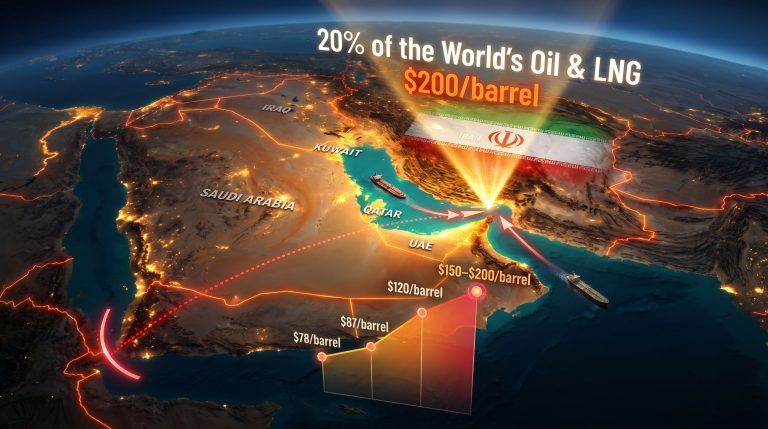
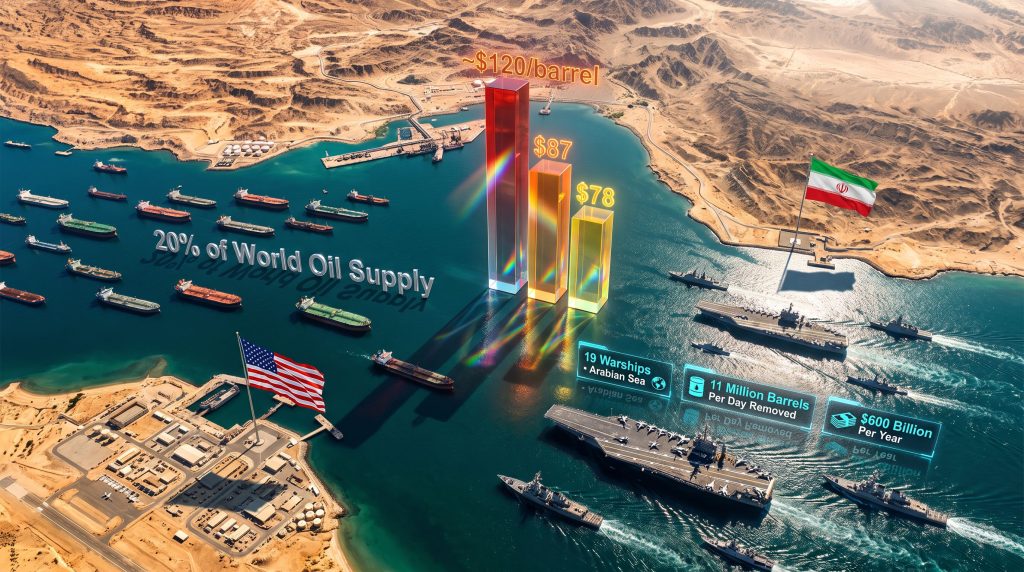
During normal operating conditions, approximately 20 million barrels of oil per day transit this narrow waterway, representing roughly one-fifth of total global oil supply. Alongside this, approximately 20% of the world's liquefied natural gas passes through the same corridor, with Qatar accounting for the largest single share. The combined annual value of energy commodities moving through this 33-kilometre-wide passage is estimated at approximately $600 billion per year.
Two overland pipeline alternatives do exist within the Arabian Peninsula:
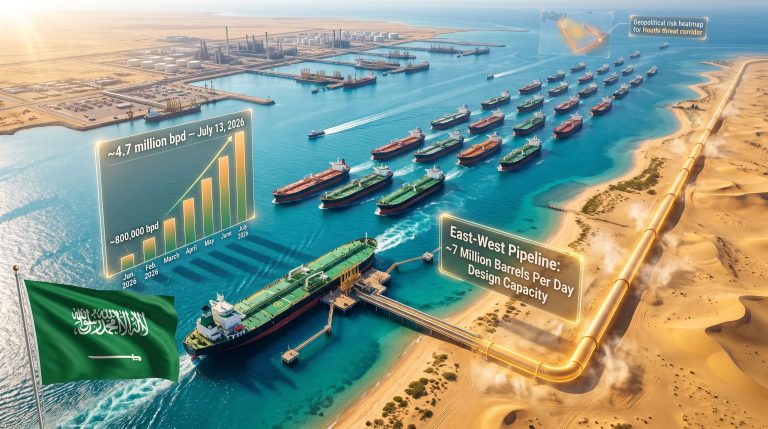
- Saudi Arabia's East-West Pipeline, with a maximum capacity of approximately 5 million barrels per day, connecting the Eastern Province to the Red Sea port of Yanbu
- The Abu Dhabi Crude Oil Pipeline (ADCOP), capable of transporting around 1.5 million barrels per day to the UAE's Fujairah terminal on the Gulf of Oman
Even at full combined utilisation, these alternatives can replace less than one-third of the strait's throughput. They also require significant lead time to activate at scale and cannot accommodate LNG exports at all. The strait, in short, functions as a structural load-bearing pillar of the global energy system, and its disruption does not produce localised scarcity. It triggers cascading price shocks that travel through every supply chain on Earth. For a broader view of these dynamics, the LNG supply outlook underscores just how sensitive global gas markets are to corridor disruptions of this nature.
The Dual-Blockade Scenario: A Modern First
What distinguishes the 2026 crisis from previous Hormuz tension episodes is the simultaneous operation of two separate blockades moving in opposite directions.
| Blockade Actor | Initiation Date | Primary Method | Immediate Market Impact |
|---|---|---|---|
| Iran (against commercial shipping) | Late February 2026 | Drone attacks, vessel intimidation, IRGC toll mandates | Approximately 90% of Gulf commercial maritime activity halted |
| United States (against Iranian ports) | April 13, 2026 | 100+ aircraft, 12+ naval vessels enforcing port blockade | Iran's crude export capacity significantly reduced |
At peak disruption, an estimated 11 million barrels per day of global oil flows were effectively removed from active supply chains. Regional producers including Iraq, Saudi Arabia, Kuwait, the UAE, Qatar, and Bahrain collectively shut in approximately 7.5 million barrels per day of crude production during March 2026 due to the inability to export through the blocked waterway. Hundreds of tankers were trapped inside the Gulf, unable to transit outbound routes, creating a logistical gridlock with no peacetime equivalent. Furthermore, according to Al Jazeera's reporting, the US naval blockade has bled Iran of nearly $6 billion in oil revenues.
How the Interim Deal Collapsed
The Architecture of a Fragile Agreement
The June 2026 interim agreement between the United States and Iran was, by design, a temporary arrangement built on unresolved contradictions. Signed in mid-June 2026, it temporarily suspended both blockades and established a 60-day negotiation window covering Iran's nuclear programme and strait access rights. Under its terms, Iran committed to allowing free passage through the strait for the duration of that window.
The agreement contained a structural flaw that analysts identified immediately: it guaranteed free passage for 60 days but left the post-period governance of the strait entirely undefined. Iran's position asserts a sovereign right to regulate and potentially charge fees for strait traffic. The United States categorically rejects this interpretation under international maritime law. No mechanism existed within the interim framework to bridge this fundamental legal and strategic disagreement.
The deal began unravelling when Iran resumed attacks on vessels transiting a US-supervised corridor near Oman, a route outside Tehran's direct territorial control. As military incidents escalated and diplomatic talks stalled, Washington reimposed the naval blockade on July 14, 2026.
The Transit Fee Proposal: A Landmark Reversal That Lasted Hours
Alongside the blockade reimposition, the US administration announced a 20% transit fee on all vessels passing through the strait. The significance of this proposal extended far beyond its practical economics. For more than seven decades, the United States has been the primary military guarantor of free passage through the world's critical maritime chokepoints. A unilateral fee on Hormuz transit would have represented the most consequential departure from that principle in the modern era.
The proposal was withdrawn within hours of its announcement, following direct diplomatic appeals from Gulf Arab allies. Regional leaders proposed substituting large-scale direct investment commitments into the United States in lieu of transit charges, a framework the administration accepted. Whether these investment pledges represent genuinely new capital commitments or recycled announcements from prior diplomatic engagements remains publicly unresolved.
The brief existence of the proposed Hormuz transit fee represented the most significant challenge to the principle of free maritime passage in the strait's modern history. Its withdrawal within hours demonstrated the residual diplomatic leverage that Gulf Arab states retain, even within a full military escalation scenario.
Iran's Energy Deterrence Doctrine
Collective Hostage-Taking as Strategic Posture
Iran's Islamic Revolutionary Guard Corps issued a direct ultimatum following the US blockade reimposition, asserting that energy exports from the region would either flow for all parties or for none. This statement operationalises a deterrence posture that strategic analysts have theorised about for decades but rarely seen executed at scale.
The logic is deliberately designed to weaponise the economic interdependence of Gulf Arab states. By threatening to halt all regional energy exports, Iran targets not only American strategic interests but also those of Saudi Arabia, Kuwait, the UAE, Qatar, and Bahrain — nations that host US military assets and whose economic survival depends on uninterrupted strait access. It effectively transforms regional neighbours into involuntary stakeholders in the US-Iran confrontation. This dynamic also has significant implications for OPEC market influence, as member states find their production decisions increasingly constrained by forces beyond conventional supply management.
Iran's Export Resilience: The Shadow Fleet Factor
Despite the US naval blockade on Iranian ports, Iran demonstrated a significant capacity to maintain export volumes through alternative logistics channels during the early phases of the conflict. By mid-March 2026, Iran had exported approximately 13.7 million barrels over roughly a month, equivalent to approximately 1 million barrels per day, broadly comparable to pre-conflict export levels.
This resilience was achieved primarily through:
- Utilisation of a shadow fleet of tankers operating outside conventional AIS tracking systems and mainstream insurance frameworks
- IRGC-controlled passage corridors that bypassed US enforcement zones
- Ship-to-ship transfers in international waters to obscure cargo origins
US blockade enforcement from April onward materially reduced this throughput, forcing surplus Iranian crude onto floating storage rather than active delivery. This created a supply overhang with significant downstream market implications.
| Period | Iran's Estimated Export Rate | Status |
|---|---|---|
| Pre-conflict baseline | ~1 million bpd | Normal operations |
| Late Feb to mid-March 2026 | ~1 million bpd (13.7M barrels total) | Maintained via shadow fleet |
| April to mid-June 2026 | Significantly reduced | US blockade enforcement active |
| Late June 2026 post-deal | ~4.8 million bpd (regional combined) | Partial resumption; 35M barrels cleared |
The Military Escalation Landscape
US Force Posture and Strike Operations
As of July 15, 2026, the United States maintained a minimum of 19 warships in the Arabian Sea, including two aircraft carrier strike groups and one amphibious assault ship carrying more than 1,000 Marines. US Central Command confirmed hundreds of military aircraft operating across the broader Middle East theatre.
A single wave of US strikes on July 14 and 15 targeted dozens of sites across Iran over a seven-hour window. US leadership publicly identified bridges and power generation infrastructure as potential next-phase targets, while confirming at least one bridge had already been struck.
The Daily Attrition Pattern Across the Region
The geographic spread of strikes by mid-July 2026 illustrated how comprehensively both sides had expanded their target sets beyond purely military infrastructure:
- Missile alert warnings were activated in Bahrain and Kuwait during the early hours of July 15, described by regional officials as a near-daily occurrence
- Jordan intercepted and destroyed three incoming Iranian ballistic missiles
- Kuwait reported four naval personnel wounded and a military facility set ablaze in an Iranian strike
- Explosions were reported in multiple Iranian cities including Bushehr, Ahvaz, and Bandar Abbas
- Iran's Health Ministry reported more than 260 people wounded in a single overnight strike sequence, the highest single-round casualty figure in recent weeks, indicating a meaningful intensification of strike precision or scale
- Iranian strikes were simultaneously claimed against Bahrain, Kuwait, and Jordan
Why Forcible Reopening Remains Operationally Constrained
US military doctrine has publicly contemplated forcible reopening of the strait, and the administration has issued direct warnings that this option remains on the table. Independent defence analysts assess that a forced reopening would require a substantially larger naval and air armada than currently deployed, potentially including tens of thousands of ground troops for sustained control of the waterway.
This operational ceiling functions as a de facto constraint on US escalation options. It reinforces a counterintuitive strategic reality: the world's most powerful military force faces genuine practical limitations in reopening a corridor it has historically guaranteed, because dominating the surface of the strait does not neutralise Iran's capacity for asymmetric harassment from its coastline, islands, and submarine assets. The Brookings Institution's analysis of chokepoint vulnerabilities provides additional context for understanding these constraints.
Oil Price Dynamics: Peaks, Moderation, and Persistent Volatility
Mapping the Brent Crude Trajectory
| Crisis Phase | Brent Crude Price Range | Primary Driver |
|---|---|---|
| Pre-conflict baseline (early Feb 2026) | Normal market levels | Standard supply-demand dynamics |
| Peak war disruption | ~$120 per barrel | Full strait closure; maximum supply shock |
| Post-interim deal (mid-June 2026) | Declining from peak | Partial flow resumption; 35M barrels released |
| Blockade reimposition (July 15, 2026) | Briefly above $87 per barrel | Renewed supply uncertainty |
| Post-fee-withdrawal announcement | ~$78 per barrel | Partial risk premium reversal |
The movement from above $87 to approximately $78 within a single trading session following the fee withdrawal announcement illustrates a critical characteristic of energy markets under geopolitical stress: policy signals from Washington can move oil prices by nearly 10% intraday, independent of any actual change in physical supply conditions. These movements are consistent with broader crude oil price trends observed throughout this volatile period.
Beyond crude oil, correlated price spikes were recorded across fertiliser markets, war risk shipping insurance premiums, and LNG spot rates during peak disruption phases, reflecting how deeply embedded Gulf energy flows are across seemingly unrelated commodity chains.
The Floating Storage Overhang
The surplus Iranian crude diverted to floating storage during peak blockade enforcement created a supply dynamic that will weigh on prices once full export resumption eventually occurs. The late-June partial reopening released approximately 35 million barrels of previously trapped oil into global supply chains in a compressed timeframe, contributing to the price moderation observed between mid-June and early July. Any full resumption of strait flows would likely trigger a similar, potentially larger, inventory release event.
The next major ASX story will hit our subscribers first
Scenario Analysis: Three Paths Forward for Hormuz Energy Flows
Energy market participants and strategic analysts are currently pricing across three broad scenarios, each with materially different implications for global supply and pricing.
Scenario 1: Negotiated De-escalation
Regional mediators return both parties to the negotiating table, a revised interim framework establishes clearer post-60-day governance mechanisms, and strait flows recover toward 15 to 18 million barrels per day within 30 to 60 days of agreement. Brent crude stabilises in the $75 to $85 range. This represents the base case for diplomatic optimists but requires resolution of the underlying sovereignty and nuclear disagreements that have already derailed one agreement.
Scenario 2: Sustained Attrition Without Full Escalation
Neither side achieves decisive military advantage. The strait remains partially functional under US military escort but at significantly reduced throughput. Global energy markets price in a persistent $15 to $25 geopolitical risk premium on top of fundamental supply-demand pricing. Gulf Arab states accelerate investments in overland pipeline alternatives and diversified export infrastructure.
Scenario 3: Full Escalation and Extended Closure
Iran executes on its collective deterrence doctrine and attempts to close the strait to all traffic. A US campaign to forcibly reopen the waterway triggers a multi-month military engagement. Global oil supply contracts by 10 to 15 million barrels per day for an extended period. Brent crude tests or exceeds the $120 peak, LNG spot prices reach record levels, and global recession risk materially increases. Such an outcome would represent an unprecedented oil price rally, far exceeding the oil price rally pressures already observed in recent years.
The probability-weighted expected outcome for global energy markets involves a prolonged period of elevated volatility, partial flow disruption, and structurally higher risk premiums, regardless of which scenario ultimately dominates.
The Geopolitical Fault Lines Beneath the Surface
Nuclear Complexity as an Unresolved Accelerant
The 60-day negotiation window embedded within the June 2026 interim deal was explicitly designed to address Iran's nuclear programme alongside strait access governance. Talks stalled before producing any substantive framework on either issue. This creates a compounding problem: any resolution of the strait dispute that leaves Iran's nuclear trajectory unaddressed is likely to be politically unsellable in Washington, while any nuclear agreement that constrains Iranian sovereignty over the strait will be rejected in Tehran.
The nuclear dimension introduces a category of strategic complexity that bilateral shipping disputes simply do not carry. It brings in third-party stakeholders including European powers, Israel, Russia, and China, each with distinct interests in the outcome, and each capable of complicating a bilateral resolution.
Asia's Disproportionate Exposure
Among the least-discussed dimensions of the Hormuz crisis is the asymmetric vulnerability it creates for Asian energy importers. China, Japan, India, and South Korea collectively represent the largest consumer base for Gulf crude exports. Their dependence on the strait is structurally higher than that of European or American importers, and their capacity to influence the US-Iran confrontation through diplomatic channels is materially limited.
This exposure has accelerated strategic conversations in Tokyo, Seoul, and New Delhi about long-term energy diversification, including expanded engagement with East African LNG projects, US LNG export agreements, and accelerated domestic renewable buildout. The oil price impacts from this crisis have consequently rippled far beyond the Gulf, affecting economic planning across the entire Asia-Pacific region. Consequently, the crisis has functioned as the most compelling real-world demonstration of oil price impacts that Asian policymakers have witnessed in decades.
Long-Term Structural Implications for Global Energy Architecture
Accelerating Diversification Investment
The crisis has catalysed investment interest in energy infrastructure that reduces Hormuz dependency:
- East African LNG export infrastructure as an alternative supply corridor for Asian buyers
- US LNG export terminal expansion to serve markets displaced from Gulf supply
- Overland Arabian Peninsula pipeline capacity upgrades, including potential expansions of the ADCOP and East-West Pipeline systems
- Strategic petroleum reserve drawdowns across IEA member nations during peak disruption phases provided temporary market stabilisation but highlighted the limits of reserve depth against extended closures
The Recalibration of Maritime Risk Pricing
War risk insurance premiums for Gulf of Oman and Arabian Sea transits reached historically elevated levels during peak disruption phases. Shipping companies began routing vessels via the Cape of Good Hope as an alternative to Hormuz exposure, adding 10 to 14 days to voyage times and materially increasing freight costs. These routing decisions are not costless reversals: once vessels are repositioned and operational patterns adjusted, restoring normal routing patterns takes time even after political conditions improve.
Classification societies and flag states have begun reassessing Gulf operating protocols, and the reinsurance market's pricing of Gulf maritime risk has reset to a structurally higher baseline that is unlikely to fully normalise even under a negotiated de-escalation scenario.
Frequently Asked Questions: Iran Blockade and Strait of Hormuz Energy Exports
What percentage of global oil passes through the Strait of Hormuz?
Approximately 20% of global oil supply, around 20 million barrels per day during normal operating conditions, transits the Strait of Hormuz, making it the world's most critical single maritime energy chokepoint.
Why can't oil exporters simply bypass the Strait of Hormuz?
The strait is the only maritime exit for the Persian Gulf. While limited overland pipeline alternatives exist, their combined capacity is insufficient to replace full strait throughput, and they require significant lead time to activate at scale while being incapable of handling LNG exports.
What happened to oil prices during the Hormuz crisis?
Brent crude reached approximately $120 per barrel at the height of the conflict. Following the June 2026 interim deal, prices moderated. After the US reimposed its blockade in July 2026, prices briefly exceeded $87 before retreating to approximately $78 following the withdrawal of the proposed transit fee.
What is the US military's current presence in the region?
As of mid-July 2026, the US maintained at least 19 warships in the Arabian Sea, including two aircraft carriers and an amphibious assault ship with over 1,000 Marines, along with hundreds of military aircraft operating across the Middle East theatre.
Could the US military forcibly reopen the Strait of Hormuz?
Military analysts assess that forcible reopening would require a significantly larger force than currently deployed, potentially including tens of thousands of ground troops for sustained control. This operational complexity functions as a genuine constraint on US escalation options.
What was the proposed US transit fee and why was it withdrawn?
The US administration proposed a 20% fee on all vessels transiting the strait alongside the July 14 blockade reimposition. The proposal was withdrawn within hours following diplomatic appeals from Gulf Arab allies, who proposed substituting large-scale investment commitments into the United States as an alternative arrangement.
The Strait as a Test of Global Order
Why Tactical Ceasefires Cannot Produce Durable Resolution
The Strait of Hormuz crisis of 2026 is not, at its core, a dispute about shipping lanes. It is a contest over the architecture of regional security, nuclear non-proliferation norms, and the governance of global maritime commons. Tactical ceasefires that leave these underlying disagreements unresolved simply reset the countdown clock to the next escalation cycle.
For Iran, the strait represents simultaneously a sovereign right, a revenue mechanism, and its most powerful deterrence instrument. For the United States, free passage through the world's critical chokepoints is both a strategic interest and a symbolic commitment to the rules-based international order that American power helped construct after 1945. For the rest of the world, the strait is simply infrastructure — infrastructure upon which food security, industrial production, and economic stability depend.
These three framings are not easily reconciled. What the events of 2026 have demonstrated, with unusual clarity, is that the global energy system's dependence on a single 33-kilometre waterway was always a structural vulnerability waiting for the right conditions to be exposed. The Iran blockade and Strait of Hormuz energy exports crisis has provided those conditions in full.
The Strait of Hormuz has long been described as a chokepoint. What 2026 has revealed is that it is also a mirror, reflecting the fragility of the international energy system, the limits of military deterrence, and the irreplaceable role of diplomacy in governing the world's most consequential maritime corridor.
This article contains forward-looking analysis, scenario projections, and price forecasts. These represent analytical assessments based on available information as of the publication date and should not be construed as investment advice. Energy markets are subject to rapid and unpredictable change driven by geopolitical developments.
Want to Know Which ASX Miners Are Positioned to Benefit From Energy Market Volatility?
When geopolitical shocks like the Strait of Hormuz crisis reshape commodity markets overnight, Discovery Alert's proprietary Discovery IQ model scans ASX announcements in real time, instantly identifying significant mineral discoveries — including those in energy-adjacent commodities — and delivering actionable alerts before the broader market catches on. Explore historic discoveries and their returns to understand the opportunity, then begin your 14-day free trial at Discovery Alert to position yourself ahead of the next major market move.