June 20, 2026
When Energy Geography Becomes a Weapon: Understanding the Hormuz Crisis
Few locations on the planet carry the concentrated strategic weight of a narrow body of water measuring roughly 33 kilometres across at its tightest navigable corridor. The Strait of Hormuz, threading between the Persian Gulf and the Gulf of Oman, functions less like a shipping lane and more like a global economic pressure valve. When that valve is threatened, the consequences extend far beyond tanker routes and freight costs into the architecture of international diplomacy, nuclear negotiations, and energy market stability.
The events of June 20, 2026 brought that reality into sharp focus when Iran closes Strait of Hormuz again became the defining headline across global markets, raising immediate questions about whether a fragile interim agreement between Washington and Tehran was already unravelling before its ink had dried.
When big ASX news breaks, our subscribers know first
The Chokepoint That Moves the World
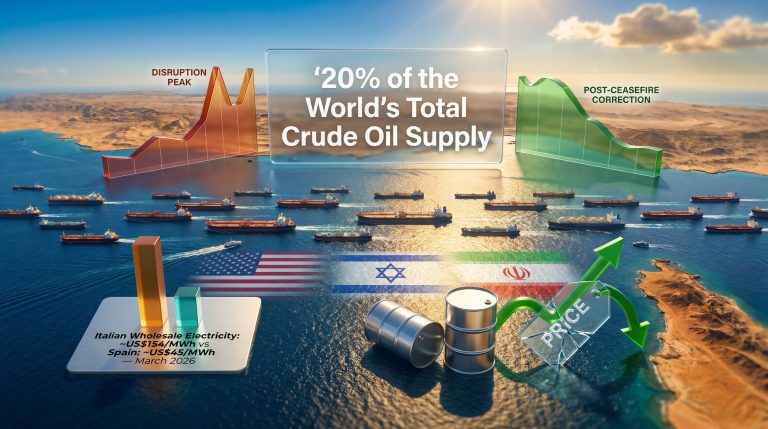
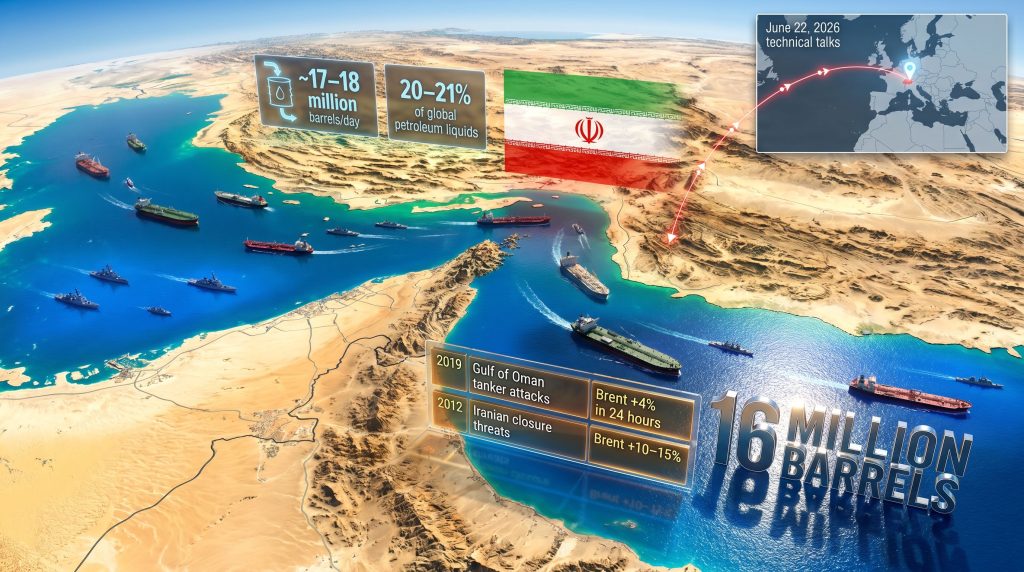
Understanding why this narrow strait commands such outsized attention requires looking at what actually moves through it every day. Approximately 17 to 18 million barrels of crude oil transit the waterway in a single 24-hour period, representing roughly 20 to 21 percent of global petroleum liquids. Alongside that crude volume, approximately 4 billion cubic feet of liquefied natural gas passes through daily, the majority of it originating from Qatar, the world's largest LNG exporter. For context on broader market implications, the LNG supply outlook for 2025 highlights just how tightly global energy markets are tied to this single corridor.
The nations feeding exports through this corridor read like a who's who of OPEC+ production capacity:
- Saudi Arabia, the world's largest oil exporter by volume
- The United Arab Emirates, a critical producer of both crude and condensates
- Kuwait, whose export infrastructure is almost entirely Hormuz-dependent
- Iraq, which routes the bulk of its southern production through Gulf terminals
- Iran itself, which relies on the strait for its own hydrocarbon revenues
- Qatar, uniquely exposed given its near-total LNG export dependency on this single corridor
| Commodity | Daily Transit Volume |
|---|---|
| Crude Oil | ~17-18 million barrels |
| Liquefied Natural Gas | ~4 billion cubic feet |
| Refined Petroleum Products | Significant secondary volumes |
A critical and often underappreciated aspect of Hormuz risk is that markets do not wait for an enforced closure to reprice. Insurance premiums, freight rates, and futures contracts begin moving the moment credible disruption threats emerge, regardless of whether a single tanker has actually been stopped.
Anatomy of the Renewed Closure Threat
What Iran's Military Command Actually Announced
Iran's joint military command, operating in coordination with the Islamic Revolutionary Guard Corps, broadcast warnings across maritime communication channels instructing commercial vessels to avoid the strait entirely. Iranian state television went further, signalling that additional escalatory steps were being prepared if what Tehran characterised as ongoing aggression persisted.
The framing was deliberate: Iran presented the closure not as an unprovoked act of aggression but as a proportionate response within a defined cause-and-effect chain, specifically citing continued Israeli military operations in southern Lebanon and what it described as Washington's failure to honour commitments embedded in the recently signed truce framework.
The Gap Between Declaration and Reality
The critical analytical distinction here is the difference between a declared closure and an operationally enforced one. These are fundamentally different conditions with different market implications.
A declared closure triggers immediate responses across insurance markets, shipping operators, and energy futures traders without a single vessel being physically stopped. War risk insurance clauses activate. Premiums surge. Ship owners divert routes. Oil futures contracts reprice.
An operationally enforced closure requires Iran to physically interdict commercial vessels, which means confronting U.S. naval assets permanently stationed in the region through the Fifth Fleet in Bahrain. That is a categorically more consequential escalation. Analysts tracking crude oil price trends have consistently noted that even the threat of enforcement is sufficient to move markets significantly.
As of June 20, 2026, U.S. Central Command publicly stated that vessel traffic had not stopped flowing. Navy Captain Tim Hawkins, serving as CENTCOM spokesperson, was explicit in stating that Iran does not control the Strait of Hormuz, that traffic continued to flow, and that U.S. forces were actively monitoring the situation. The grey zone between Iranian declaration and American counter-assertion was itself generating market uncertainty of significant magnitude.
The Trigger Chain: How This Escalation Unfolded
The Hormuz closure announcement did not emerge in isolation. It was the product of a rapidly compressing sequence of geopolitical events:
-
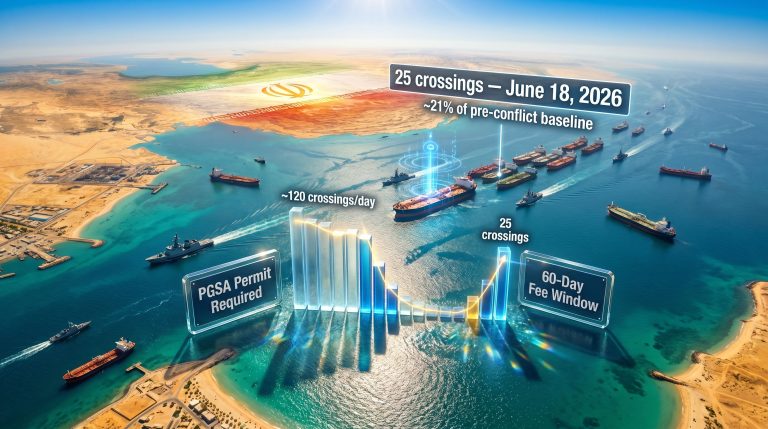
June 17, 2026: A memorandum of understanding was signed between U.S. President Donald Trump and Iranian President Masoud Pezeshkian, establishing an interim framework intended to end hostilities. The agreement explicitly required the immediate cessation of Israeli military operations in Lebanon and the full reopening of the Hormuz strait without Iranian-imposed tolls for a minimum of 60 days.
-
June 20, 2026 (Saturday): Israeli strikes in southern Lebanon killed at least 16 people, including two children, according to Lebanese authorities as reported by AP. Seven individuals remained trapped beneath rubble in Nabatiyeh and surrounding villages.
-
June 20, 2026 (same day): Iran's military command issued the Hormuz closure declaration, citing the continued Israeli operations as a direct violation of the truce framework's ceasefire requirements.
Tehran's position was that Washington had failed to deliver on its commitment to halt Israeli operations, and that the closure was therefore a consequence of U.S. bad faith rather than Iranian aggression. This framing was strategically constructed to assign responsibility for the escalation to Washington and Tel Aviv rather than Iran.
Switzerland Talks: Diplomacy Under Maximum Pressure
What Made the Timing So Significant
The closure declaration arrived at the worst possible diplomatic moment. Technical-level negotiations between Iranian and U.S. delegations were scheduled to begin in Switzerland on Sunday, June 22, 2026, with Iranian negotiators reportedly preparing to travel at the very time the military announcement was broadcast. The simultaneous signals, one military and escalatory, one diplomatic and constructive, reflected the characteristic Iranian approach of maintaining multiple pressure levers simultaneously.
The Substance of the Switzerland Negotiations
The talks were designed to convert the broad interim agreement of June 17 into an operationally durable technical framework. The primary objectives included:
- Securing Iran's enriched uranium stockpile in a manner that would make nuclear program reconstitution effectively impossible
- Establishing verifiable compliance mechanisms for the 60-day Hormuz reopening commitment
- Creating a structured process for rolling back sanctions relief tied to Iranian compliance milestones
- Formalising the roles of Qatari and Pakistani mediators in sustaining communication between Washington and Tehran
The U.S. Diplomatic Posture: Studied Optimism
U.S. Vice President JD Vance maintained a deliberately optimistic public posture in response to the closure threat. Speaking on Fox News, Vance confirmed that Jared Kushner and special envoy Steve Witkoff were in Switzerland actively working through the technical details of the agreement, describing the discussions as progressing well. He indicated his own travel to Switzerland was expected within days, though finalisation of arrangements involving Qatari and Pakistani mediators was still ongoing.
When senior officials maintain calm public messaging in the face of military escalation, the signal is not naivety. It is strategic communication designed to prevent a reactive response from collapsing a negotiating framework before technical talks have even begun.
Vance also highlighted a data point that underscored the stakes of any genuine closure. Following the ceasefire agreement, 16 million barrels of oil transited the Strait of Hormuz in a single day, which he described as a record volume exceeding pre-conflict levels. That figure simultaneously demonstrated the economic recovery possible with a functioning Hormuz and the scale of disruption a genuine closure would impose. For additional context on how geopolitical tensions drive the oil price rally dynamics that amplify these effects, the broader macroeconomic picture is worth considering.
How Oil and Shipping Markets Price Hormuz Risk
War Risk Insurance: The First Market Signal
Shipping insurers, primarily through Lloyd's of London and specialist marine insurance syndicates, respond to Persian Gulf escalation through war risk clause activation. When IRGC activity intensifies, premium surcharges for Hormuz transit can add hundreds of thousands of dollars to individual voyage costs. These surcharges function as a real-time market assessment of closure probability, often moving faster and more accurately than public commentary. Furthermore, OPEC's market influence during such periods adds another layer of complexity to how producers and buyers respond to supply risk.
The Rerouting Economics of Cape of Good Hope Diversion
If vessel operators choose to avoid the strait entirely, the alternative route around the Cape of Good Hope adds approximately 15 to 20 additional transit days for crude shipments heading from the Gulf to European or Asian destinations. For Very Large Crude Carriers operating on ultra-thin freight margins, the economics of that diversion are severe.
The cascading cost implications include:
- Higher bunker fuel consumption across extended voyage distances
- Additional crew costs and vessel utilisation time
- Increased delivery timeline uncertainty affecting downstream refinery scheduling
- Compounding pressure on global freight rates across tanker classes
Historical Price Reactions to Hormuz Disruption Threats
| Event | Approximate Oil Price Response |
|---|---|
| 2012 Iranian closure threats during nuclear sanctions | Brent crude rose ~10-15% within weeks |
| 2019 Gulf of Oman tanker attacks | Brent rose ~4% within 24 hours |
| 2020 U.S.-Iran tensions following Soleimani killing | Brent jumped ~4% overnight |
| 2026 Renewed closure declaration | Market reaction continuing to evolve |
Disclaimer: Historical price reactions to geopolitical events do not reliably predict future market movements. Energy markets are influenced by supply, demand, inventory, and macroeconomic factors beyond geopolitical risk alone. This information is provided for educational context and does not constitute financial advice.
The next major ASX story will hit our subscribers first
Three Scenarios for Where This Crisis Leads
Scenario One: Diplomatic De-escalation Holds
The Switzerland talks proceed on schedule. Iran's closure declaration is treated by both parties as a pressure tactic designed to extract concessions on Israeli operations in Lebanon rather than a genuine operational commitment. U.S. naval presence deters any physical interdiction. Oil markets stabilise as the 60-day Hormuz reopening commitment is reaffirmed through the technical negotiation process.
The strongest evidence supporting this scenario is that Iranian negotiators were reportedly en route to Switzerland simultaneously with the closure announcement, suggesting Tehran's primary intent was leverage rather than escalation.
Scenario Two: Selective Enforcement and Prolonged Uncertainty
Iran avoids a full closure but selectively targets specific vessel categories, potentially those linked to Israeli commercial interests or U.S.-flagged shipping, while allowing broader traffic to continue. War risk insurance premiums surge, effectively imposing an economic toll on global shipping without requiring a formal blockade. The Switzerland talks continue but operate under persistent military pressure.
Historical IRGC behaviour during prior escalation cycles supports this scenario as the most probable near-term outcome, given Tehran's demonstrated preference for calibrated harassment over maximalist confrontation with U.S. naval forces. Consequently, the oil price impacts of prolonged uncertainty could prove as damaging as a genuine closure.
Scenario Three: Full Closure and Regional Escalation
Iran enforces a genuine physical closure through naval and IRGC maritime assets, triggering direct confrontation with the U.S. Fifth Fleet. Global oil prices spike sharply. LNG markets face acute supply disruption, particularly for European and Asian buyers dependent on Qatari volumes. The Switzerland framework collapses.
Most analysts consider this scenario low probability in the immediate term given active diplomatic engagement, but the risk escalates materially if Israeli operations in Lebanon intensify further and Iran concludes that Washington has neither the ability nor the intention to restrain Tel Aviv. Energy Digital's analysis of whether the strait is truly open provides useful context on the real-world operational picture.
What Iran's Leverage Actually Means for Nuclear Talks
The Axis of Resistance Strategic Logic
One of the less widely understood dimensions of the Hormuz closure threat is how it fits within Iran's broader regional strategic framework. Tehran has consistently treated its various pressure levers, Hormuz access, Hezbollah operations, Houthi maritime activities, and nuclear enrichment capacity, as an integrated system rather than isolated instruments.
By explicitly linking the strait's status to Israeli operations in Lebanon, Iran is attempting to make global energy markets function as a constraint on Israeli military decision-making. The logic is sophisticated: if a Hormuz disruption would push Brent crude above $120 to $150 per barrel and trigger strategic petroleum reserve releases across IEA member nations, then the economic cost of Israeli military operations in Lebanon effectively becomes globalised and distributed across all energy-importing economies.
Qatar's Unique Vulnerability and Its Diplomatic Role
Qatar occupies an unusual position in this crisis. As a country that routes virtually all of its LNG production through the Strait of Hormuz, it has enormous economic exposure to any sustained closure. Simultaneously, Qatar maintains functional diplomatic relations with both the United States (hosting significant U.S. military infrastructure at Al Udeid Air Base) and Iran.
This dual positioning makes Qatar an indispensable intermediary in the Switzerland framework, but it also means any genuine Hormuz enforcement would impose severe economic costs on one of the key mediators in the negotiation.
Pakistan's Mediation Role: An Underappreciated Dynamic
Pakistan's involvement as a co-mediator reflects the complex multilateral architecture required when two parties lack direct diplomatic relations. Pakistan maintains historical economic, cultural, and energy ties with Iran, including a long-discussed gas pipeline project, while also managing a close security relationship with the United States. Its presence in the Switzerland process signals that the diplomatic framework extends well beyond bilateral U.S.-Iran dynamics into a regional power structure designed to sustain communication even under maximum pressure.
Key Indicators to Track as the Crisis Evolves
For analysts and investors monitoring this situation, the most informative forward signals include:
- Daily crude transit volumes through Hormuz relative to the 16 million barrel post-ceasefire benchmark cited by Vice President Vance
- War risk insurance premium movements as the most real-time available indicator of market-assessed closure probability
- Progress and tone emerging from the Switzerland technical talks beginning June 22, 2026
- The scale and intensity of Israeli military operations in Lebanon as the stated trigger for Iranian escalation
- U.S. Fifth Fleet positioning and any changes to naval force disposition in the Gulf and Gulf of Oman
- Brent crude futures and Asian LNG spot price movements as forward-looking market signals
- Any communications from Qatari or Pakistani mediators regarding the status of the negotiating framework
The strategic reality of the current situation is this: Iran closes Strait of Hormuz again not by physically stopping every vessel, but by creating sufficient uncertainty that markets, insurers, and operators reprice risk immediately. The declaration itself functions as a form of leverage, one that costs Iran relatively little to maintain but imposes measurable costs on every economy dependent on Persian Gulf energy flows. For a closer look at how this declaration unfolded in real time, the ITV News report on the closure offers detailed on-the-ground reporting.
This article is intended for informational purposes only and does not constitute financial, investment, or geopolitical advice. Energy market conditions, geopolitical developments, and diplomatic negotiations can change rapidly. Readers should consult qualified professionals before making investment decisions related to energy markets or commodities.
Want to Stay Ahead of ASX Mineral Discoveries Linked to Energy Market Shifts?
When geopolitical flashpoints like the Hormuz crisis reshape commodity markets in real time, Discovery Alert's proprietary Discovery IQ model scans ASX announcements daily to deliver instant, actionable alerts on significant mineral discoveries — helping investors position themselves before the broader market reacts. Explore historic discovery returns and begin your 14-day free trial at Discovery Alert to gain a market-leading edge.