August 6, 2026
The World's Most Dangerous Shipping Lane and Why Its Fate Shapes Everything
Every barrel of crude oil, every cargo of liquefied natural gas, every tanker navigating the narrow waters between the Arabian Peninsula and Iran carries with it an invisible weight: the knowledge that a single geopolitical miscalculation could strand it indefinitely. The Strait of Hormuz has always been a pressure valve for global energy markets, but the events of early 2026 transformed it from a theoretical vulnerability into a lived catastrophe for economies worldwide. Now, with a ceasefire framework announced on 14 June 2026 and the Strait of Hormuz reopening after the US-Israel-Iran peace deal dominating global headlines, the fundamental question is not simply whether ships can pass again. It is what this crisis has permanently changed.
When big ASX news breaks, our subscribers know first
Why the Strait of Hormuz Is Unlike Any Other Trade Route
Most chokepoints in global shipping affect a sector or a region. Hormuz affects the world. The strait's navigable corridor stretches approximately 33 kilometres at its narrowest point, connecting the Persian Gulf to the Gulf of Oman and, by extension, to the open ocean and global markets.
What flows through that narrow passage is staggering in scale:
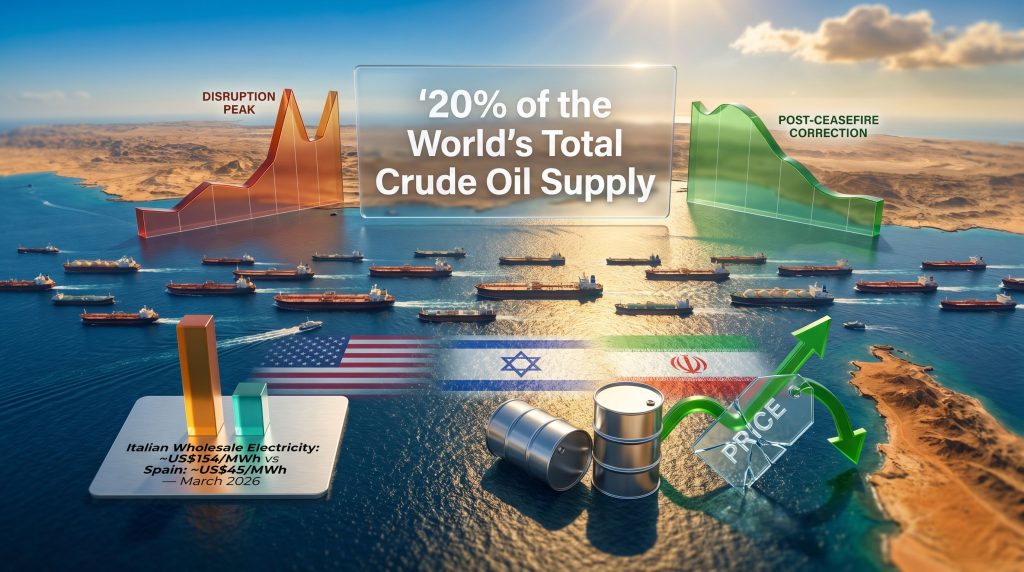
- Roughly 20% of the world's total crude oil supply transits daily through this single corridor
- Major exporters including Saudi Arabia, Iraq, Kuwait, the UAE, Bahrain, and Qatar depend on the strait as their primary maritime export route
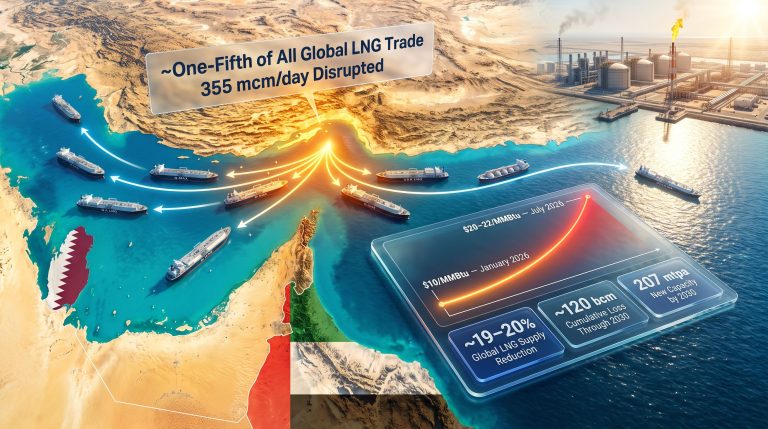
- Beyond crude oil, the strait channels significant volumes of LNG, petrochemical feedstocks, and refined petroleum products
- A disruption at Hormuz simultaneously tightens global oil supply, European gas markets, and Asian LNG pricing within a matter of days
The economic logic is straightforward but brutal. There is no realistic bypass capable of absorbing the full volume of Hormuz traffic in a short timeframe. The Saudi East-West Pipeline and the Abu Dhabi Crude Oil Pipeline offer partial alternatives, but their combined capacity falls far short of the strait's throughput. When Hormuz closes, the global energy system has nowhere else to go.
The Conflict That Triggered the Crisis: A Timeline
The 2026 disruption did not emerge from nowhere. The conflict began on 28 February 2026, when coordinated US and Israeli military strikes targeted Iranian territory. Tehran's military response escalated rapidly, with measures that effectively closed the Strait of Hormuz to commercial shipping, triggering the most severe dual energy shock in modern history.
The ceasefire framework was announced on 14 June 2026, confirmed by Pakistani Prime Minister Shehbaz Sharif as a mediating party. US President Donald Trump announced via Truth Social that an agreement with the Islamic Republic of Iran had been completed. Iranian Deputy Foreign Minister Kazem Gharibabadi confirmed the deal on state television, characterising it as an immediate end to hostilities across all fronts.
However, the critical distinction is this: the announcement describes a preliminary framework, not a ratified treaty. The table below outlines where each element stands.
| Agreement Element | Current Status |
|---|---|
| Ceasefire declaration | Confirmed by both parties |
| Strait of Hormuz reopening | Agreed in principle; implementation ongoing |
| Ceasefire extension period | Approximately 60 days |
| Nuclear programme negotiations | Active; no finalised terms |
| Formal multilateral treaty | Not yet completed |
| Shipping safety verification | Outstanding |
Critical Distinction: The Strait of Hormuz reopening after the US-Israel-Iran peace deal should be read as a conditional agreement, not an operational reality. Physical resumption of full commercial traffic depends on safety verification, mine-clearance operations where applicable, and the removal of naval blockade infrastructure.
Measuring the Economic Damage: Four Months of Closure
The scale of disruption generated by the 2026 conflict places it in historically severe territory. IEA Executive Director Fatih Birol described the crisis as the equivalent of two oil crises and a gas crash occurring simultaneously, a characterisation that energy economists argue is not hyperbole when examined against the data.
Documented impacts during the conflict period include:
- Global fuel prices reached record highs across multiple consumer markets simultaneously
- Italian wholesale electricity prices averaged approximately US$154 per megawatt hour in March 2026 at peak disruption
- The IEA activated emergency reserve releases totalling 400 million barrels of oil to partially offset supply shortfalls
- Governments across Southeast Asia implemented formal energy conservation measures, including work-from-home directives
- Oil futures markets began pricing in a ceasefire premium several days before the formal announcement, causing prices to decline ahead of confirmation
| Historical Crisis | Primary Trigger | Key Impact |
|---|---|---|
| 1973 Yom Kippur War | Arab oil embargo | Oil price quadrupled; Western recession |
| 1979 Iranian Revolution | Political collapse of Shah regime | Global inflation surge; supply shock |
| 2022 Russia-Ukraine War | Military invasion of Ukraine | European gas crisis; energy poverty spike |
| 2026 US-Israel-Iran War | Coordinated strikes; Hormuz closure | Dual oil and gas shock; IEA emergency release; record retail fuel prices |
What separates the 2026 event from prior crises is its dual-commodity nature. Previous shocks typically hit either oil or gas markets acutely. The Hormuz closure hit both simultaneously, because the strait carries both crude oil and LNG export flows from Gulf producers. This simultaneity compressed the usual policy response windows that energy ministries rely on when managing supply emergencies. For further context on how these events affected benchmarks, the crude oil market update provides useful background on price movements leading into the crisis.
The Staged Recovery: How Quickly Can Shipping Normalise?
The announcement of a ceasefire framework does not translate directly into tankers moving through the strait the following morning. The restoration of Hormuz to full operational status is a staged process with its own timeline, and energy markets are watching each stage closely.
Analysts tracking vessel movements and port logistics have outlined a phased recovery scenario:
- Immediate post-announcement phase: Vessels already positioned inside the Gulf, stranded during the closure period, are likely to transit first once safe passage is formally confirmed
- Within 30 days of confirmed implementation: Traffic volumes could recover to approximately 50% of pre-conflict levels, based on estimates from energy shipping analysts citing Kpler vessel tracking data
- 60 to 120 days post-reopening: Physical supply chains begin normalising; spot price premiums compress as inventories are replenished
- Full normalisation: Contingent on nuclear negotiations progressing, war risk insurance premiums declining, and multiple confirmed safe transits establishing operational precedent
First tankers crossing the strait after the deal was confirmed marked a tentative but significant milestone, though shipping operators remain cautious. Factors that could delay full reopening include:
- Stalled or collapsed nuclear negotiations running parallel to the ceasefire track
- Proxy or non-state actor activity in the region operating outside the ceasefire framework
- Tanker operator reluctance to commit vessels before safety is independently verified
- War risk insurance premiums, which historically remain elevated for 30 to 90 days after formal reopening announcements in conflict zones
- Lingering naval infrastructure that requires formal dismantling before insurers revise risk ratings
Market Watch: Shipping freight rates on tanker routes through the Gulf of Oman and the Arabian Sea will serve as a more reliable real-time indicator of actual market confidence in the reopening than diplomatic statements alone. Traders and energy analysts are monitoring these rates closely as a leading signal.
How Markets Are Responding: Price Signals and Forward Indicators
Oil markets began responding to ceasefire signals before formal confirmation, a pattern consistent with how commodity markets handle geopolitical risk premiums. The anticipated removal of the conflict premium embedded in Brent Crude and WTI futures since February 2026 triggered a downward price correction that accelerated upon announcement. Furthermore, the oil price volatility witnessed throughout this period has reinforced the need for more resilient energy frameworks globally.
Key market dynamics to monitor in the post-announcement period:
- Brent Crude and WTI futures: Expected to continue declining as shipping resumption becomes operationally confirmed rather than merely politically announced
- Asian LNG spot prices: Surged significantly during the disruption and now face structural downward pressure as Gulf export terminals prepare to resume operations
- Tanker freight rates: Real-time proxy for market confidence in safe passage; will decline as transits are confirmed and insurance markets re-rate Gulf routes
- War risk insurance premiums: Likely to remain elevated for weeks to months, acting as a partial drag on full cost normalisation for importers
Investor Consideration: Commodity price corrections following ceasefire announcements in prolonged geopolitical conflicts have historically overshot on the downside before stabilising. The initial price decline reflects sentiment as much as fundamentals. With nuclear talks still active and the ceasefire operating on a 60-day extension framework, treating the initial correction as a full normalisation signal carries meaningful risk.
The next major ASX story will hit our subscribers first
Three Scenarios for What Comes Next
The 60-day ceasefire extension creates a defined window of relative stability, but it does not resolve the structural tensions that produced the conflict. Three plausible trajectories exist for the post-announcement period.
Scenario A: Constructive Resolution
Nuclear negotiations progress substantively during the 60-day window. A broader framework agreement emerges. The strait remains fully open. Oil prices stabilise at pre-conflict levels within 90 to 120 days. Probability: Moderate.
Scenario B: Frozen Conflict
The ceasefire holds indefinitely but nuclear talks stall without resolution. The strait remains technically open but shipping continues operating under elevated risk premiums. Energy markets price in a persistent geopolitical discount on Gulf supply. Probability: High.
Scenario C: Re-escalation
Nuclear negotiations collapse. One or more parties resumes hostile action. The strait returns to contested status. Energy markets experience a secondary shock that some analysts believe could be more severe than the initial disruption due to depleted strategic reserves. Probability: Lower but not negligible.
The distinction between these scenarios matters enormously for energy investment planning horizons. A frozen conflict sustained for 12 to 18 months would accelerate capital reallocation away from fossil fuel infrastructure at a pace that a full resolution might not.
Spain's Renewable Shield: The Price Data That Changed the Conversation
Perhaps the most analytically significant data point to emerge from the entire crisis period is the comparison between Spanish and Italian wholesale electricity prices during March 2026.
- Spanish wholesale electricity prices: Approximately US$45 per megawatt hour in March 2026
- Italian wholesale electricity prices: Approximately US$154 per megawatt hour in the same period
- The differential represents a factor of more than three times, sustained throughout the peak disruption period
- Spain's prices were consistently among the lowest in Europe from the conflict's start through the ceasefire announcement
The explanation is not complex, but its implications are profound. Spain's high renewable energy penetration, driven substantially by solar and wind capacity from operators including Iberdrola, reduced the country's exposure to gas price volatility during the Hormuz closure. When gas prices surged because Gulf LNG flows were disrupted, Spain's grid was structurally insulated in ways that gas-dependent grids like Italy's were not.
This data point is being studied by energy ministries across Europe as empirical validation of a core but previously theoretical argument: high renewable penetration functions as a structural hedge against fossil fuel supply disruptions, not merely a climate policy instrument. The broader energy transition debate has consequently shifted in tone, with security now overtaking sustainability as the dominant framing in policy discussions.
Corporate Strategy Shifts: Electrification as Security, Not Just Sustainability
The 2026 crisis has accelerated a reframing of electrification that energy transition analysts have been anticipating but had not yet seen occur at scale. A survey conducted by Public First, polling nearly 2,000 senior executives across 18 countries on behalf of E3G, the We Mean Business Coalition, and the Global Renewables Alliance, produced findings that capture this shift quantitatively.
Key survey findings:
- Four in five businesses reported that the Middle East crisis had made transitioning away from fossil-fuel-powered equipment more urgent
- 91% of respondents said switching to electric alternatives would strengthen their organisation's energy security
- Executives at major multinationals including DSM-Firmenich, Roche, and ACCIONA publicly aligned with the electrification push during the post-conflict period
Structural Shift Signal: What the 2026 crisis appears to have achieved is a reframing of electrification from a sustainability obligation into a supply chain resilience imperative. For the first time in the mainstream corporate conversation, the primary argument for electrification in boardroom discussions is energy security rather than emissions reduction. Energy economists argue this reframing is likely to prove more durable in driving capital allocation decisions precisely because it aligns with commercial rather than normative motivations.
This matters beyond rhetoric. Capital allocation decisions driven by security logic tend to be less susceptible to political cycle reversals than those driven by climate commitments alone. The corporations making these decisions in mid-2026 are doing so because the disruption affected their cost structures directly, not because of regulatory compliance requirements.
Frequently Asked Questions: Strait of Hormuz Reopening After the US-Israel-Iran Peace Deal
Is the Strait of Hormuz fully open again?
As of the ceasefire announcement on 14 June 2026, the reopening has been agreed in principle as part of a preliminary framework. Full operational resumption depends on formal implementation steps, independent safety verification, and the resolution of outstanding negotiation terms. Shipping analysts estimate traffic could recover to approximately 50% of pre-conflict levels within 30 days of confirmed implementation, with full normalisation taking considerably longer.
What caused the Hormuz closure in 2026?
The strait's effective closure followed coordinated US and Israeli military strikes on Iran beginning on 28 February 2026. Tehran's response included measures that blocked or severely restricted commercial shipping through the strait, disrupting approximately 20% of global crude oil supply and significant volumes of LNG flows.
How long will oil prices take to normalise?
Historical precedent from previous Gulf conflict resolutions suggests oil prices typically experience a sharp initial decline following ceasefire announcements, then enter a stabilisation period of 60 to 120 days as physical supply chains adjust. Elevated war risk insurance premiums and the ongoing nuclear negotiation track may slow full price normalisation compared with prior episodes.
What is the 60-day ceasefire extension?
The preliminary framework includes a 60-day extension of the ceasefire period designed to allow nuclear negotiations between the US and Iran to continue. This window is intended to create diplomatic space for a more comprehensive agreement but does not itself constitute a permanent resolution of the underlying geopolitical tensions.
Which countries were most affected by the Hormuz closure?
Major Asian economies including China, India, Japan, and South Korea experienced the most acute supply disruptions as significant importers of Gulf crude. European nations with high gas import dependency also faced severe price impacts. Nations with high renewable energy penetration, most notably Spain, demonstrated considerably greater price resilience throughout the crisis period.
Could the Strait of Hormuz close again?
Yes. The current framework is provisional. The underlying geopolitical tensions, particularly around Iran's nuclear programme, remain unresolved. Energy security analysts broadly recommend that the current reopening be treated as a window of opportunity to accelerate energy diversification rather than a signal that Hormuz supply risk has been permanently eliminated from portfolio planning.
Long-Term Implications: What the 2026 Crisis Has Permanently Altered
The Hormuz disruption of 2026 will be studied alongside the 1973 Arab oil embargo and the 2022 European gas crisis as a defining event in energy security history. However, unlike those predecessors, the 2026 crisis arrived into an energy landscape already mid-transition, which means its long-term effects will interact with an accelerating structural shift rather than simply reinforcing incumbent fossil fuel dependencies.
Strategic imperatives emerging from the crisis:
- Renewable energy as geopolitical insurance: Spain's price performance has provided the clearest empirical validation to date of the energy security argument for high renewable penetration. In addition, renewable energy solutions are increasingly being adopted across industrial sectors that previously considered them peripheral to their core operations
- Supply chain diversification: Corporations are reassessing single-source energy dependencies using the same logic that post-COVID supply chain disruptions applied to manufacturing concentration risk
- Emergency reserve adequacy: The IEA's 400-million-barrel emergency release, while historically significant, highlighted the structural limits of strategic reserves in managing prolonged disruptions extending beyond weeks
- Accelerated electrification investment: Industrial, commercial, and residential sectors are reassessing fossil fuel exposure as a balance sheet risk, not merely a regulatory obligation
- Insurance market restructuring: War risk premium mechanics applied to Gulf shipping routes are being reviewed by underwriters, with implications for long-term cost structures in fossil fuel transport
Furthermore, the surge in critical minerals demand associated with accelerated electrification is already reshaping investment priorities in the mining and resources sectors, as governments and corporations race to secure the supply chains underpinning the next generation of energy infrastructure.
The convergence of security-driven electrification momentum and the provisional nature of the current peace framework creates an unusual dynamic for energy markets in the second half of 2026. Prices may decline as Hormuz reopens, but the underlying capital allocation decisions being made in corporate boardrooms and government ministries during this period are likely to prove far more consequential for the long-term energy landscape than the near-term movement of crude benchmarks.
Readers seeking ongoing coverage of the Strait of Hormuz reopening after the US-Israel-Iran peace deal and its energy market implications can explore related reporting and analysis at energydigital.com.
Want to Track the Resource Opportunities Emerging From This Energy Shift?
The accelerated push toward critical minerals and electrification infrastructure—driven directly by the 2026 Hormuz crisis—is already reshaping ASX discovery activity, and Discovery Alert's proprietary Discovery IQ model delivers real-time alerts the moment significant mineral discoveries are announced, ensuring subscribers can act on actionable opportunities before the broader market catches up. Explore Discovery Alert's discoveries page to understand how historic ASX mineral discoveries have generated substantial returns, and begin your 14-day free trial today to position yourself at the forefront of the next major find.