June 20, 2026
The Global Energy System's Most Vulnerable Nerve: Understanding Iran Transit Terms in the Strait of Hormuz
Think about the architecture of global energy supply not as a network, but as a series of funnels. Most of the world's oil moves freely across open ocean, but at several critical junctures, decades of infrastructure investment, diplomatic architecture, and military posturing converge at a single narrow point. No funnel is more consequential, more contested, or more exposed to sudden disruption than the Strait of Hormuz. And right now, the Iran transit terms in the Strait of Hormuz are being fundamentally rewritten in real time.
When big ASX news breaks, our subscribers know first
Why One Narrow Corridor Controls Global Energy Pricing
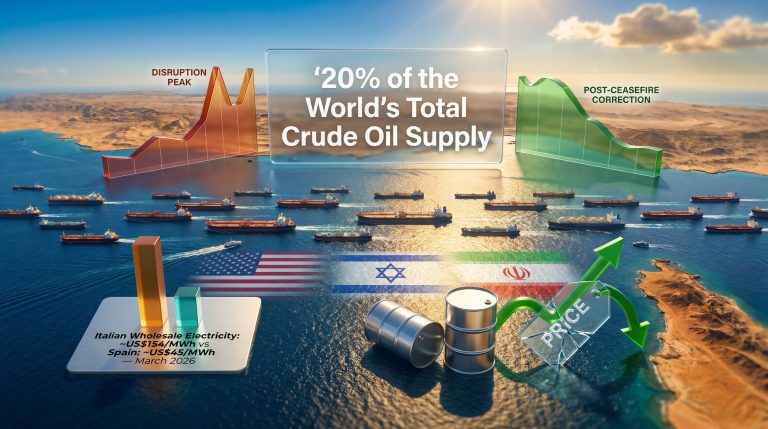
The Strait of Hormuz sits between Iran to the north and Oman and the United Arab Emirates to the south. At its narrowest navigable section, the passage spans roughly 33 kilometres, yet it functions as the primary export corridor for the Persian Gulf's combined petroleum output. Approximately 20 to 21 percent of the world's total oil consumption moves through this waterway, encompassing crude oil, refined petroleum products, and liquefied petroleum gas.
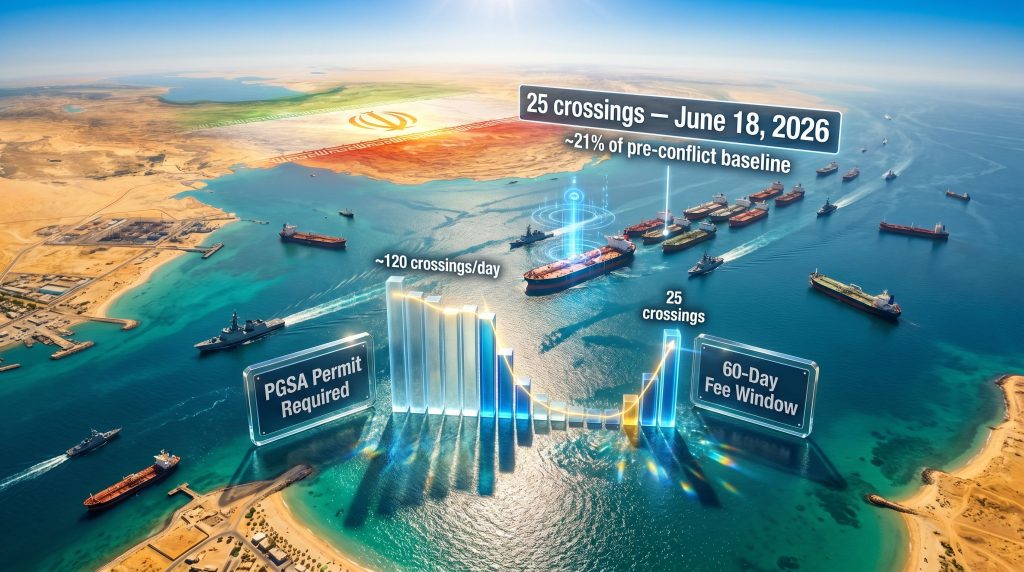
The countries most structurally exposed to any Hormuz disruption include China, Japan, South Korea, and India, each of which depends on Persian Gulf crude for a substantial share of their refinery throughput. Under normal operating conditions, the strait handles approximately 120 commercial vessel crossings per day across these commodity classes. That baseline figure is the operational benchmark against which all current disruption data must be measured.
What makes Hormuz categorically different from other strategic chokepoints is the absence of any viable short-term alternative. The only major bypass route is the Strait of Malacca, which handles different trade flows entirely. Furthermore, any rerouting of Persian Gulf crude toward Asian markets via the Cape of Good Hope adds approximately 10 to 14 additional sailing days per voyage. At scale, that timeline extension translates directly into elevated fuel costs, increased charter hire expenses, extended insurance exposure windows, and delayed cargo delivery — a compounding tax on global energy supply chains that ultimately reaches end consumers.
Iran's New Regulatory Architecture: The PGSA Permit System Explained
Iran's Persian Gulf Strait Authority, referred to within the maritime industry as the PGSA, has positioned itself as the body claiming sole authority to issue passage permits for vessels transiting the strait. In an undated advisory circulated to the maritime industry and reported by Reuters, the PGSA stated explicitly that no vessel may pass through the Strait of Hormuz without holding a valid passage permit issued by the PGSA itself.
The documentation requirements embedded in this framework are operationally significant and commercially disruptive. According to advisories seen by the industry, vessels are reportedly required to provide:
- Full IMO registration number and ownership chain documentation
- Complete cargo manifests with declared destination details
- Full crew lists submitted in advance of transit
- IRGC clearance codes before entry into a designated transit corridor
- Coordination confirmation with Revolutionary Guards naval forces
- Compliance with designated route instructions within an IRGC-escorted corridor
Beyond documentation, the PGSA advisory also reserved the right to introduce insurance fee requirements, compelling shipowners to obtain and periodically renew specified coverage as a condition of passage. The global shipping industry has formally and categorically rejected this fee framework, characterising it as incompatible with established international maritime law. The broader context of oil trade and geopolitics makes this regulatory shift all the more significant for energy markets worldwide.
The Fee Currency Dimension: A Deliberate Dollar Bypass
One dimension of Iran's approach that has received insufficient analytical attention is the reported currency denomination of fees where payment has occurred. Some vessels have reportedly settled fees in Chinese yuan (CNY) rather than US dollars. This is not incidental. Operating outside the US dollar-denominated financial system is a deliberate structural choice that reflects Iran's broader strategy of internationalising its commercial relationships in ways that reduce exposure to US Treasury sanctions architecture.
This yuan-denominated fee mechanism, if it becomes normalised, represents a secondary geopolitical dimension entirely separate from the maritime law dispute. It intersects with the broader trajectory of declining trust in the US dollar and dollar-alternative settlement systems in global commodity trade — a trend that central banks and treasury officials in Washington, Tokyo, and Brussels are monitoring with considerable unease.
The Legal Fault Line: Transit Passage vs. Innocent Passage
The legal dispute underlying Iran's permit system is not merely technical. It represents a foundational disagreement about the nature of sovereignty over an international waterway.
| Legal Concept | Core Principle | Iran's Position | International Standard |
|---|---|---|---|
| Transit Passage | Continuous, expeditious passage through international straits; cannot be suspended | Disputed; Iran asserts sovereign control | Hormuz qualifies under UNCLOS as an international strait |
| Innocent Passage | Non-threatening passage through territorial waters; regulable by coastal state | Preferred by Iran; grants greater control authority | Not applicable to recognised international straits |
Under the United Nations Convention on the Law of the Sea (UNCLOS), the Strait of Hormuz qualifies as an international strait subject to transit passage rights. These rights cannot be suspended by the bordering state, apply to all vessels in continuous expeditious transit, require no prior notification or authorisation from the coastal state, and prohibit the coastal state from imposing conditions that deny or materially hamper passage.
Iran's permit requirements, IRGC clearance codes, and fee reservation authority are structurally incompatible with the UNCLOS transit passage framework as interpreted by the vast majority of maritime nations. Iran disputes this interpretation, preferring a legal characterisation that grants coastal states broader authority over vessels in territorial waters. Accepting Iran's framework, even implicitly through fee payment, would create a legal precedent that maritime law specialists argue could destabilise the governance of other internationally critical straits.
How Hormuz Compares to Other Strategically Governed Straits
| Strait | Governing Framework | Prior Notification Required | Fee System |
|---|---|---|---|
| Strait of Hormuz | UNCLOS transit passage (international consensus) | None under international law | Not permitted under UNCLOS |
| Turkish Straits (Bosphorus) | Montreux Convention (1936) | Advance notice for warships only | No commercial fees |
| Strait of Malacca | UNCLOS transit passage | None | No fees; cooperative safety management |
| Danish Straits | UNCLOS transit passage | None | No fees applicable |
The contrast is stark. No other internationally governed strait currently operates under a permit or fee regime for commercial vessels, making Iran's PGSA framework an unprecedented claim within the modern history of maritime governance.
Traffic Recovery Data: What the Numbers Actually Reveal
The post-ceasefire traffic recovery data, drawn from AXS Marine, presents a picture that is statistically encouraging in the short term but structurally troubling when contextualised against the pre-conflict baseline.
| Period | Average Daily Crossings | Contextual Note |
|---|---|---|
| Pre-conflict baseline | ~120 crossings/day | Normal operational volume |
| First 10 days of June 2026 | ~5 crossings/day (implied) | Peak conflict suppression period |
| June 18, 2026 | 25 crossings | Highest single-day count since April 18 |
| Post-ceasefire trajectory | Rising, but structurally impaired | Well below baseline; risks remain elevated |
Source: AXS Marine, as reported by Reuters (June 20, 2026)
The 25-crossing figure recorded on June 18 was more than five times the average daily level across the preceding 10-day period. In isolation, this reads as a dramatic recovery. Against the pre-conflict baseline of 120 daily crossings, however, it represents less than 21 percent of normal operational volume. The strait is functioning, but at deeply suppressed capacity.
The resumption of AIS transponder broadcasting by commercial vessels is itself a meaningful data point. During peak conflict intensity, ships systematically disabled their tracking signals — a practice called going dark — to reduce targeting exposure. The return of position broadcasting signals a cautious but genuine shift in commercial operator confidence, though it falls well short of confirming operational normalisation.
Gulf Producers Move Rapidly to Capture the Export Window
Gulf state national oil companies responded swiftly to the partial reopening, with Kuwait Petroleum Corporation lifting its force majeure declarations and launching crude tenders for July delivery. Abu Dhabi National Oil Company issued its fourth tender of the month, signalling sustained export ambition. A Japanese-owned crude tanker that had been delayed by conflict conditions successfully completed its exit transit, bound for Japan. Indian-flagged vessels were reported to be preparing resumed sailings following days of enforced operational disruption.
India's government, notably, publicly stated that its flagged vessels were not paying protection fees for passage, representing a direct practical challenge to the PGSA fee framework's enforceability across different national carrier populations. These dynamics are closely tied to the OPEC influence on oil markets, as Gulf producers balance export ambitions against an increasingly complex transit environment.
Physical Risk That Diplomacy Cannot Resolve: The Mine Clearance Problem
Beyond the permit and fee dispute, the Strait of Hormuz carries a category of risk that no diplomatic agreement can eliminate on a short timeline: active mine contamination. The US Navy-led Joint Maritime Information Center issued formal advisories warning mariners of mine risks within the strait, advising vessels to avoid the Traffic Separation Scheme routing lanes established by the UN's shipping agency in 1968 through Iranian and Omani waters.
Naval mine clearance operations were confirmed as ongoing, with no publicly stated timeline for completion. This is a critically underappreciated constraint on traffic recovery. Even in a scenario of full diplomatic resolution and complete withdrawal of Iran's PGSA permit demands, physical mine hazards introduce weeks to months of elevated navigational risk that cannot be resolved through political agreements.
Mines represent a qualitatively different risk category from geopolitical disruption. They persist in the water column regardless of what happens at the negotiating table. Braemar, the specialist ship broker, noted in a client advisory that risks include not only mine exposure but also the possibility of vessels becoming trapped in the Persian Gulf should the ceasefire framework deteriorate and Iran move to close Hormuz again.
Iranian forces demonstrated active enforcement capability on June 19, 2026, when a Hong Kong-flagged tanker and a Saint Kitts and Nevis-flagged bulk carrier were both ordered to turn back by Iranian naval forces, according to British maritime security firm Ambrey.
The next major ASX story will hit our subscribers first
The 60-Day Escalation Window: A Structural Timeline Embedded in the Ceasefire
The most consequential and least widely understood element of the interim US-Iran ceasefire agreement is a provision identified by ship broker Braemar: the deal opens the possibility for Iran to formally implement fees for managing Hormuz transits after a 60-day window. This is not speculative. It is a defined timeline embedded within the agreement's structure.
This provision transforms what might initially appear as a temporary, conflict-driven operational disruption into a potential permanent structural change in the economics of Hormuz transit. Energy traders, tanker operators, and refinery procurement teams should treat this 60-day window as a hard deadline around which commercial planning and contingency arrangements need to be structured. Furthermore, the evolving oil market trade war impact adds an additional layer of complexity to how these transit cost pressures will flow through to global pricing.
Three Scenarios for Hormuz: How the Next 90 Days Could Unfold
Scenario A: Normalisation (Base Case)
Full diplomatic resolution within the 60-day window. PGSA permit requirements are quietly shelved as part of a broader peace framework. Mine clearance progresses without incident. Traffic recovers toward the 120-crossing daily baseline within 90 days. Oil market risk premiums compress as perceived geopolitical risk fades.
Scenario B: Managed Tension (Most Probable Near-Term Outcome)
Partial normalisation continues. IRGC corridor controls persist as a de facto enforcement system. Vessels comply with documentation requirements without formally validating the fee framework through payment. Traffic recovers to 60 to 70 percent of baseline. War risk insurance premiums remain elevated. The fee question remains legally unresolved but commercially managed. This is the scenario that most closely resembles the current trajectory.
Scenario C: Re-escalation (Tail Risk)
Diplomatic talks collapse. Iran formally implements the PGSA fee and permit system in full. Major international shipping lines reroute cargo via the Cape of Good Hope. Gulf producers face export bottlenecks. Brent crude reprices sharply higher as physical supply disruption intersects with sentiment-driven risk premium expansion.
The diplomatic backdrop makes Scenario B the most probable near-term outcome. Switzerland confirmed that planned US-Iran talks on a broader peace agreement were postponed, and a senior US official cancelled a scheduled visit, signalling ongoing friction in the negotiating process. US President Trump's public warning that military operations could resume if commitments are not honoured introduces a conditional deterrence dynamic that keeps all three scenarios in play simultaneously. These developments reflect the broader pattern of geopolitical trade tensions that are reshaping energy markets across 2025 and 2026.
What War Risk Insurance Premiums Tell Energy Markets
For energy traders and refinery procurement analysts, war risk insurance premiums for Persian Gulf-transiting vessels function as one of the most sensitive real-time indicators of market-assessed geopolitical risk. During peak conflict periods, premiums for a single Hormuz transit can escalate from a fraction of a percentage point to multiples of standard rates, adding millions of dollars to individual voyage economics.
This cost does not remain contained within the shipping sector. Elevated transit insurance costs flow directly into crude landed cost calculations for Asian refiners, which in turn influence refined product pricing for end consumers across China, Japan, South Korea, and India. Consequently, the insurance premium trajectory in the weeks ahead will serve as a more reliable leading indicator of Hormuz stability than any single diplomatic statement.
Frequently Asked Questions: Iran Transit Terms in the Strait of Hormuz
What permits does Iran now require for ships transiting the Strait of Hormuz?
Iran's PGSA has stated that no vessel may transit without a valid passage permit. Required documentation includes IMO registration, full ownership chain, cargo manifests, crew lists, and IRGC clearance codes. Vessels are also required to coordinate with Revolutionary Guards naval forces before entry.
Is Iran legally permitted to charge fees for Hormuz transit?
Under UNCLOS, the Strait of Hormuz is governed by transit passage rights, which cannot be conditioned or suspended by the bordering state. The international shipping industry has formally rejected any fee system as legally incompatible with these rights. Iran disputes this legal interpretation.
How much oil transits the Strait of Hormuz under normal conditions?
Under pre-conflict baseline conditions, approximately 120 commercial vessel crossings per day carried roughly 20 to 21 percent of globally traded oil through the strait.
What are the current mine risks in the strait?
The US Navy-led Joint Maritime Information Center has formally warned mariners of active mine risks and advised vessels to avoid established Traffic Separation Scheme routing lanes. Clearance operations are ongoing with no confirmed completion timeline.
Which economies face the greatest exposure to Hormuz disruption?
China, Japan, South Korea, and India collectively account for the dominant share of the strait's commercial traffic by volume, making them the most directly exposed to supply disruption and elevated transit cost scenarios under any deterioration of Iran transit terms in the Strait of Hormuz.
Disclaimer: This article contains forward-looking scenario analysis and market commentary for informational purposes only. It does not constitute financial or investment advice. Readers should conduct independent research before making any decisions based on the information presented. All traffic and pricing data is sourced from publicly available reports as of the time of writing.
Want to Stay Ahead of the Resource Discoveries That Could Be Reshaping Energy Markets?
While geopolitical shifts in the Strait of Hormuz ripple through global commodity pricing, Discovery Alert's proprietary Discovery IQ model delivers real-time alerts on significant ASX mineral discoveries — instantly translating complex resource data into actionable opportunities for traders and investors at every level. Explore how historic discoveries have generated substantial returns on Discovery Alert's dedicated discoveries page, and begin your 14-day free trial today to position yourself ahead of the broader market.